Kirjojen hintavertailu – 12 903 725 kirjaa ja 27 kauppaa

Kirjailija

Tom Frost

Kirjat ja teokset yhdessä paikassa: 7 kirjaa, julkaisuja vuosilta 2021–2026, suosituimpiin kuuluu Unlocking the English Legal System. Vertaile teosten hintoja ja tarkista saatavuus suomalaisista kirjakaupoista.

7 kirjaa

Kirjojen julkaisuvuodet: 2021–2026.

Unlocking the English Legal System

Unlocking the English Legal System

Tom Frost; Rebecca Huxley-Binns; Jacqueline Martin; Shaneez Mithani

TAYLOR FRANCIS LTD
2025
sidottu
Unlocking the English Legal System will help you grasp the main concepts of the legal system in England and Wales with ease. Containing accessible explanations in a clear and logical structure, it provides an excellent foundation for learning and revising. Key features include:Clear learning outcomes at the beginning of each chapter set out the skills and knowledge you will need to get to grips with the subjectKey Facts summaries throughout each chapter allow you to progressively build and consolidate your understandingEnd-of-chapter summaries provide a useful checklist for each topicCases and judgments are highlighted to help you find them and add them to your notes quicklyFrequent activities and self-test questions and sample essay questions are included so you can put your knowledge into practice and prepare you for assessmentA new ‘Critiquing the Law’ feature is designed to foster essential critical thinking skillsThe 8th edition has been fully updated throughout to reflect recent developments and changes in the law, including significant updates to the legal implications of the UK’s exit from the European Union and the running of the new Solicitors Qualifying Examination (SQE). The book is also supported by updated digital learning resources. Part of the Unlocking the Law series, it is essential reading for all core modules on the English Legal System.

Unlocking the English Legal System

Unlocking the English Legal System

Tom Frost; Rebecca Huxley-Binns; Jacqueline Martin; Shaneez Mithani

TAYLOR FRANCIS LTD
2025
nidottu
Unlocking the English Legal System will help you grasp the main concepts of the legal system in England and Wales with ease. Containing accessible explanations in a clear and logical structure, it provides an excellent foundation for learning and revising. Key features include:Clear learning outcomes at the beginning of each chapter set out the skills and knowledge you will need to get to grips with the subjectKey Facts summaries throughout each chapter allow you to progressively build and consolidate your understandingEnd-of-chapter summaries provide a useful checklist for each topicCases and judgments are highlighted to help you find them and add them to your notes quicklyFrequent activities and self-test questions and sample essay questions are included so you can put your knowledge into practice and prepare you for assessmentA new ‘Critiquing the Law’ feature is designed to foster essential critical thinking skillsThe 8th edition has been fully updated throughout to reflect recent developments and changes in the law, including significant updates to the legal implications of the UK’s exit from the European Union and the running of the new Solicitors Qualifying Examination (SQE). The book is also supported by updated digital learning resources. Part of the Unlocking the Law series, it is essential reading for all core modules on the English Legal System.

Unlocking the English Legal System

Unlocking the English Legal System

Tom Frost; Rebecca Huxley-Binns; Jacqueline Martin; Shaneez Mithani

TAYLOR FRANCIS LTD
2022
nidottu
Unlocking the English Legal System will help you grasp the main concepts of the legal system in England and Wales with ease. Containing accessible explanations in clear and precise terms that are easy to understand, it provides an excellent foundation for learning and revising. This new edition offers a brand-new chapter on ‘Ethics and Law’ which details the duties and responsibilities of lawyers and introduces law students to the kinds of ethical dilemmas that they may encounter when they are lawyers. The up-to-date ongoing debates surrounding UK law are discussed, such as the impact Brexit and the coronavirus pandemic have, and continue to have, upon the English Legal System. Further detail on the devolution settlements in Northern Ireland, Scotland, and Wales is provided as well as looking at the question of Scottish independence. Learn how to read cases and statutes, about career skills and interview preparation, and find out further information on how the new Solicitors Qualifying Examination (SQE) will operate and the reaction it’s received from law schools. There is also focus on the impact of racism in the criminal justice system, the new Sentencing Code introduced in 2020, and how technology is changing the way the English Legal System operates. The books in the Unlocking the Law series get straight to the point and offer clear and concise coverage of the law, broken down into bite-size sections with regular recaps to boost your confidence. They provide complete coverage of both core and popular optional law modules, presented in an innovative and visual format.
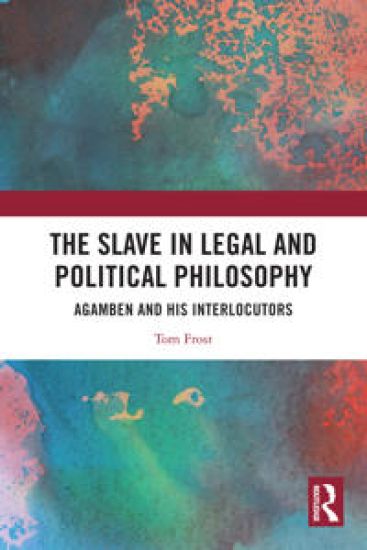
The Slave in Legal and Political Philosophy
This book explores how the figure of the slave has been used to construct ideas of freedom in Western political and legal philosophy. The figure of the slave has supported philosophical and legal defences of colonialism, coloniality and the supremacy of the white subject. Yet for Giorgio Agamben, the slave stands (almost counterintuitively) as an exemplar of a potential form of future positive political existence. Developing this line of thought, the book reads key thinkers Agamben engages with in his thought and writings – including Aristotle, Saint Paul and G W F Hegel – and draws on decolonial theory to argue that the lives of people who were enslaved and unfree, and their actions and gestures, can point towards a paradigmatic form of political belonging. By reading Agamben in a decolonial direction, we can imagine alternative forms of agency, recognition and subjectivity, which can challenge the necropolitical world of racial capitalism in which we live. This study will appeal to scholars, researchers and graduate students with an interest in the thought of Giorgio Agamben, radical politics, legal and political philosophy and decolonial theory.
The Slave in Legal and Political Philosophy
This book explores how the figure of the slave has been used to construct ideas of freedom in Western political and legal philosophy. The figure of the slave has supported philosophical and legal defences of colonialism, coloniality and the supremacy of the white subject. Yet for Giorgio Agamben, the slave stands (almost counterintuitively) as an exemplar of a potential form of future positive political existence. Developing this line of thought, the book reads key thinkers Agamben engages with in his thought and writings – including Aristotle, Saint Paul and G W F Hegel – and draws on decolonial theory to argue that the lives of people who were enslaved and unfree, and their actions and gestures, can point towards a paradigmatic form of political belonging. By reading Agamben in a decolonial direction, we can imagine alternative forms of agency, recognition and subjectivity, which can challenge the necropolitical world of racial capitalism in which we live. This study will appeal to scholars, researchers and graduate students with an interest in the thought of Giorgio Agamben, radical politics, legal and political philosophy and decolonial theory.
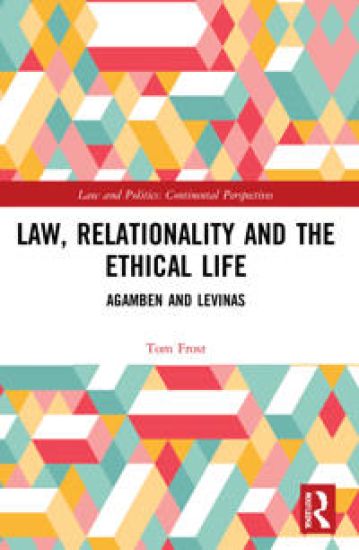
Law, Relationality and the Ethical Life

Law, Relationality and the Ethical Life

Tom Frost

TAYLOR FRANCIS LTD
2023
nidottu
This first book-length study into the influence of Emmanuel Levinas on the thought and philosophy of Giorgio Agamben, Law, Relationality and the Ethical Life, demonstrates how Agamben’s immanent thought can be read as presenting a compelling, albeit flawed, alternative to Levinas’s ethics of the Other. The publication of the English translation of The Use of Bodies in 2016 ended Giorgio Agamben’s 20-year multi-volume Homo Sacer study. Over this time, Agamben’s thought has greatly influenced scholarship in law, the wider humanities and social sciences. This book places Agamben’s figure of form-of-life in relation to Levinasian understandings of alterity, relationality and the law. Considering how Agamben and Levinas craft their respective forms of embodied existence – that is, a fully-formed human that can live an ethical life – the book considers Agamben’s attempt to move beyond Levinasian ethics through the liminal figures of the foetus and the patient in a persistent vegetative state. These figures, which Agamben uses as examples of bare life, call into question the limits of Agamben’s non-relational use and form of existence. As such, it is argued, they reveal the limitations of Agamben’s own ethics, whilst suggesting that his ‘abandoned’ project can and must be taken further. This book will be of interest to scholars, researchers, graduate students and anyone with an interest in the thought of Giorgio Agamben and Emmanuel Levinas in the fields of law, philosophy, the humanities and the social sciences.
Law, Relationality and the Ethical Life
This first book-length study into the influence of Emmanuel Levinas on the thought and philosophy of Giorgio Agamben, Law, Relationality and the Ethical Life, demonstrates how Agamben’s immanent thought can be read as presenting a compelling, albeit flawed, alternative to Levinas’s ethics of the Other. The publication of the English translation of The Use of Bodies in 2016 ended Giorgio Agamben’s 20-year multi-volume Homo Sacer study. Over this time, Agamben’s thought has greatly influenced scholarship in law, the wider humanities and social sciences. This book places Agamben’s figure of form-of-life in relation to Levinasian understandings of alterity, relationality and the law. Considering how Agamben and Levinas craft their respective forms of embodied existence – that is, a fully-formed human that can live an ethical life – the book considers Agamben’s attempt to move beyond Levinasian ethics through the liminal figures of the foetus and the patient in a persistent vegetative state. These figures, which Agamben uses as examples of bare life, call into question the limits of Agamben’s non-relational use and form of existence. As such, it is argued, they reveal the limitations of Agamben’s own ethics, whilst suggesting that his ‘abandoned’ project can and must be taken further. This book will be of interest to scholars, researchers, graduate students and anyone with an interest in the thought of Giorgio Agamben and Emmanuel Levinas in the fields of law, philosophy, the humanities and the social sciences.