Kirjojen hintavertailu – 12 903 724 kirjaa ja 27 kauppaa
Kirjailija
Tom Ginsburg
Kirjat ja teokset yhdessä paikassa: 15 kirjaa, julkaisuja vuosilta 2003–2026, suosituimpiin kuuluu How to Save a Constitutional Democracy. Vertaile teosten hintoja ja tarkista saatavuus suomalaisista kirjakaupoista.
Comparative Constitutional Law and Politics: Analysis, Cases, & Materials is the first comprehensive casebook for the field, offering students an innovative and truly global approach to comparative constitutional law. Written by leading scholars, this pioneering resource integrates state-of-the-art literature and caselaw from constitutional law with insights from social science. Its coverage reaches far beyond the traditional canon to help students understand the full reach of the field, drawing on materials from around the world in a truly global approach. Recognizing that constitution-making and interpretation are increasingly transnational, the book includes cases from six continents, addressing historical gaps in coverage. It incorporates data on global trends, and excerpts from cutting-edge scholarship and key judicial decisions, along with detailed explanations by the casebook's editors. Each chapter is organized around a key concept, beginning with a bird's-eye view of the topic that introduces the current state of scholarly and legislative debate and encourages thoughtful student engagement.
Comparative Constitutional Law and Politics: Analysis, Cases, & Materials is the first comprehensive casebook for the field, offering students an innovative and truly global approach to comparative constitutional law. Written by leading scholars, this pioneering resource integrates state-of-the-art literature and caselaw from constitutional law with insights from social science. Its coverage reaches far beyond the traditional canon to help students understand the full reach of the field, drawing on materials from around the world in a truly global approach. Recognizing that constitution-making and interpretation are increasingly transnational, the book includes cases from six continents, addressing historical gaps in coverage. It incorporates data on global trends, and excerpts from cutting-edge scholarship and key judicial decisions, along with detailed explanations by the casebook's editors. Each chapter is organized around a key concept, beginning with a bird's-eye view of the topic that introduces the current state of scholarly and legislative debate and encourages thoughtful student engagement.
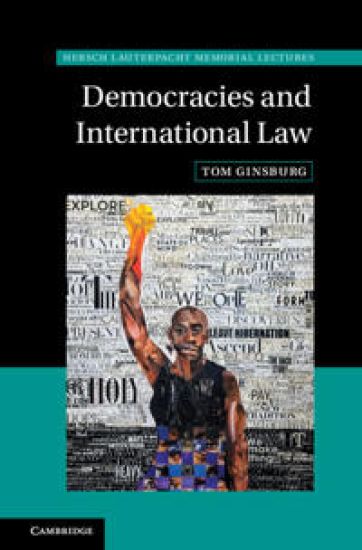
Democracies and authoritarian regimes have different approaches to international law, grounded in their different forms of government. As the balance of power between democracies and non-democracies shifts, it will have consequences for international legal order. Human rights may face severe challenges in years ahead, but citizens of democratic countries may still benefit from international legal cooperation in other areas. Ranging across several continents, this volume surveys the state of democracy-enhancing international law, and provides ideas for a way forward in the face of rising authoritarianism.
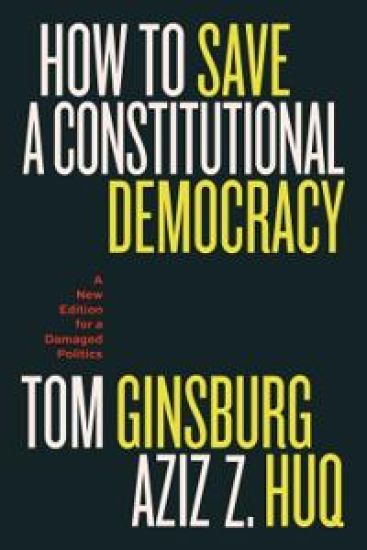
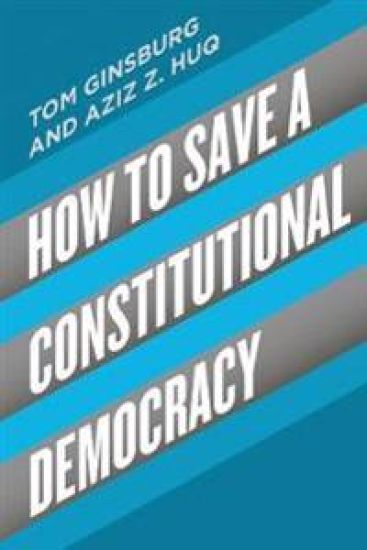
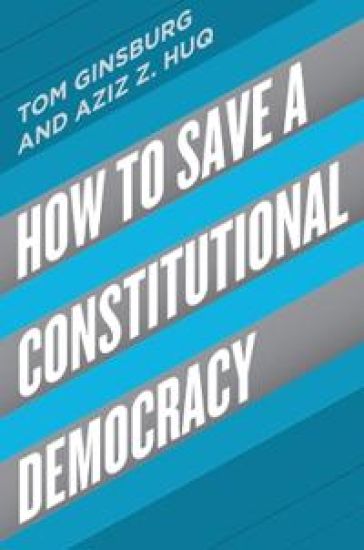
Democracies are in danger. Around the world, a rising wave of populist leaders threatens to erode the core structures of democratic self-rule. In the United States, the tenure of Donald Trump has seemed decisive turning point for many. What kind of president intimidates jurors, calls the news media the "enemy of the American people," and seeks foreign assistance investigating domestic political rivals? Whatever one thinks of President Trump, many think the Constitution will safeguard us from lasting damage. But is that assumption justified? How to Save a Constitutional Democracy mounts an urgent argument that we can no longer afford to be complacent. Drawing on a rich array of other countries' experiences with democratic backsliding, Tom Ginsburg and Aziz Z. Huq show how constitutional rules can both hinder and hasten the decline of democratic institutions. The checks and balances of the federal government, a robust civil society and media, and individual rights--such as those enshrined in the First Amendment--often fail as bulwarks against democratic decline. The sobering reality for the United States, Ginsburg and Huq contend, is that the Constitution's design makes democratic erosion more, not less, likely. Its structural rigidity has had unforeseen consequence--leaving the presidency weakly regulated and empowering the Supreme Court conjure up doctrines that ultimately facilitate rather than inhibit rights violations. Even the bright spots in the Constitution--the First Amendment, for example--may have perverse consequences in the hands of a deft communicator who can degrade the public sphere by wielding hateful language banned in many other democracies. We--and the rest of the world--can do better. The authors conclude by laying out practical steps for how laws and constitutional design can play a more positive role in managing the risk of democratic decline.
Democracies are in danger. Around the world, a rising wave of populist leaders threatens to erode the core structures of democratic self rule. In the United States, the election of Donald Trump marked a decisive turning point for many. What kind of president calls the news media the “enemy of the American people,” or sees a moral equivalence between violent neo-Nazi protesters in paramilitary formation and residents of a college town defending the racial and ethnic diversity of their homes? Yet, whatever our concerns about the current president, we can be assured that the Constitution offers safeguards to protect against lasting damage—or can we? How to Save a Constitutional Democracy mounts an urgent argument that we can no longer afford to be complacent. Drawing on a rich array of other countries’ experiences with democratic backsliding, Tom Ginsburg and Aziz Z. Huq show how constitutional rules can either hinder or hasten the decline of democratic institutions. The checks and balances of the federal government, a robust civil society and media, and individual rights—such as those enshrined in the First Amendment—do not necessarily succeed as bulwarks against democratic decline. Rather, Ginsburg and Huq contend, the sobering reality for the United States is that, to a much greater extent than is commonly realized, the Constitution’s design makes democratic erosion more, not less, likely. Its structural rigidity has had the unforeseen consequence of empowering the Supreme Court to fill in some details—often with doctrines that ultimately facilitate rather than inhibit the infringement of rights. Even the bright spots in the Constitution—the First Amendment, for example—may have perverse consequences in the hands of a deft communicator, who can degrade the public sphere by wielding hateful language that would be banned in many other democracies. But we—and the rest of the world—can do better. The authors conclude by laying out practical steps for how laws and constitutional design can play a more positive role in managing the risk of democratic decline.
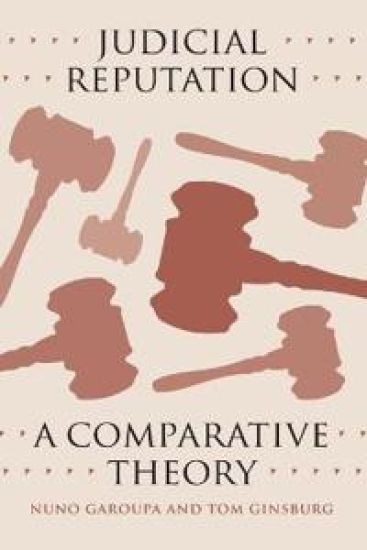
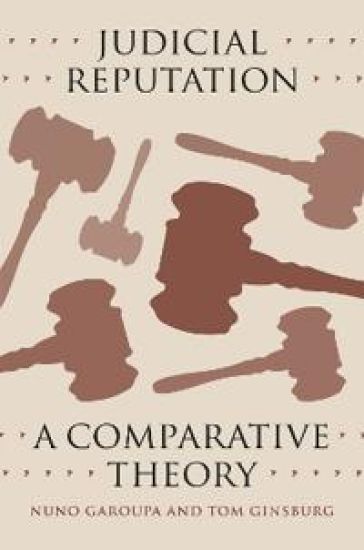
Judges are society's elders and experts, our masters and mediators. We depend on them to dispense justice with integrity, deliberation, and efficiency. Yet judges, as Alexander Hamilton famously noted, lack the power of the purse or the sword. They must rely almost entirely on their reputations to secure compliance with their decisions, obtain resources, and maintain their political influence. In Judicial Reputation, Nuno Garoupa and Tom Ginsburg explain how reputation is not only an essential quality of the judiciary as a whole, but also of individual judges. Perceptions of judicial systems around the world range from widespread admiration to utter contempt, and as judges participate within these institutions some earn respect, while others are scorned. Judicial Reputation explores how judges respond to the reputational incentives provided by the different audiences they interact with lawyers, politicians, the media, and the public itself and how institutional structures mediate these interactions. The judicial structure is best understood not through the lens of legal culture or tradition, but through the economics of information and reputation. Transcending those conventional lenses, Garoupa and Ginsburg employ their long-standing research on the latter to examine the fascinating effects that governmental interactions, multicourt systems, extrajudicial work, and the international rule-of-law movement have had on the reputations of judges in this era.
Judges are society's elders and experts, our masters and mediators. We depend on them to dispense justice with integrity, deliberation, and efficiency. Yet judges, as Alexander Hamilton famously noted, lack the power of the purse or the sword. They must rely almost entirely on their reputations to secure compliance with their decisions, obtain resources, and maintain their political influence. In Judicial Reputation, Nuno Garoupa and Tom Ginsburg show how reputation is not only an essential quality of the judiciary as a whole, but also of individual judges. Perceptions of judicial systems around the world range from widespread admiration to utter contempt, and as judges participate within these institutions some earn respect, while others are scorned. Transcending the conventional lenses of legal culture and tradition that are used to analyze this variation, Garoupa and Ginsburg approach the subject through their long-standing research on the economics of judiciary information and status, examining the fascinating effects that governmental interactions, multi-court systems, extrajudicial work, and the international rule-of-law movement have on the reputations of judges in this era.
Public Law in East Asia is a collection of the leading English-language articles on constitutional and administrative law in the Asian region, written by many of the leading scholars from this area. The region has its own distinct legal and political traditions, and its systems of government have facilitated dynamic economic growth, but the role of public law has not been well understood. Covering a wide range of jurisdictions in a single volume, this collection provides insights into the ways in which institutions of Western origin have been integrated into Asian political and legal cultures, producing new syntheses.
Law in Korea has historically been viewed as merely a tool of authoritarian rule, but since the transition to democracy in 1987 it has served a more important and visible role as a force for social change. With contributions from leading US and Korean scholars, Legal Reform in Korea explores this response to domestic and international pressures, applying a socio-legal perspective to both legal practices and the legal institutions themselves, which have become a major political issue throughout the developing world. An invaluable resource for students of Asian law and Korean studies.
Constitutions are supposed to provide an enduring structure for politics. Yet only half live more than nine years. Why is it that some constitutions endure while others do not? In The Endurance of National Constitutions Zachary Elkins, Tom Ginsburg and James Melton examine the causes of constitutional endurance from an institutional perspective. Supported by an original set of cross-national historical data, theirs is the first comprehensive study of constitutional mortality. They show that whereas constitutions are imperilled by social and political crises, certain aspects of a constitution's design can lower the risk of death substantially. Thus, to the extent that endurance is desirable - a question that the authors also subject to scrutiny - the decisions of founders take on added importance.
Constitutions are supposed to provide an enduring structure for politics. Yet only half live more than nine years. Why is it that some constitutions endure while others do not? In The Endurance of National Constitutions Zachary Elkins, Tom Ginsburg and James Melton examine the causes of constitutional endurance from an institutional perspective. Supported by an original set of cross-national historical data, theirs is the first comprehensive study of constitutional mortality. They show that whereas constitutions are imperilled by social and political crises, certain aspects of a constitution's design can lower the risk of death substantially. Thus, to the extent that endurance is desirable - a question that the authors also subject to scrutiny - the decisions of founders take on added importance.
Law in Korea has historically been viewed as merely a tool of authoritarian rule, but since the transition to democracy in 1987 it has served a more important and visible role as a force for social change. With contributions from leading US and Korean scholars, Legal Reform in Korea explores this response to domestic and international pressures, applying a socio-legal perspective to both legal practices and the legal institutions themselves, which have become a major political issue throughout the developing world. An invaluable resource for students of Asian law and Korean studies.
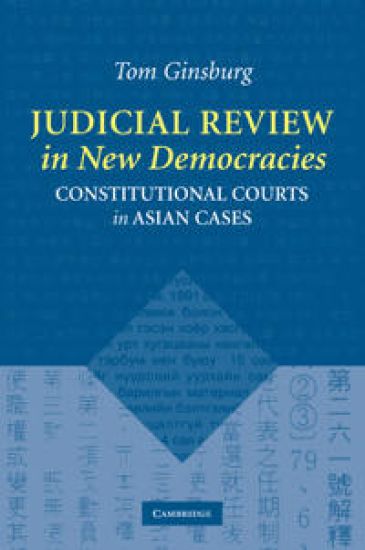
New democracies around the world have adopted constitutional courts to oversee the operation of democratic politics. Where does judicial power come from, how does it develop in the early stages of democratic liberalization, and what political conditions support its expansion? This book answers these questions through an examination of three constitutional courts in Asia: Taiwan, Korea, and Mongolia. In a region that has traditionally viewed law as a tool of authoritarian rulers, constitutional courts in these three societies are becoming a real constraint on government. In contrast with conventional culturalist accounts, this book argues that the design and functioning of constitutional review are largely a function of politics and interests. Judicial review - the power of judges to rule an act of a legislature or national leader unconstitutional - is a solution to the problem of uncertainty in constitutional design. By providing 'insurance' to prospective electoral losers, judicial review can facilitate democracy.
New democracies around the world have adopted constitutional courts to oversee the operation of democratic politics. Where does judicial power come from, how does it develop in the early stages of democratic liberalization, and what political conditions support its expansion? This book answers these questions through an examination of three constitutional courts in Asia: Taiwan, Korea, and Mongolia. In a region that has traditionally viewed law as a tool of authoritarian rulers, constitutional courts in these three societies are becoming a real constraint on government. In contrast with conventional culturalist accounts, this book argues that the design and functioning of constitutional review are largely a function of politics and interests. Judicial review - the power of judges to rule an act of a legislature or national leader unconstitutional - is a solution to the problem of uncertainty in constitutional design. By providing 'insurance' to prospective electoral losers, judicial review can facilitate democracy.