Kirjojen hintavertailu – 12 903 724 kirjaa ja 27 kauppaa

Kirjailija

Tom Huhn

Kirjat ja teokset yhdessä paikassa: 5 kirjaa, julkaisuja vuosilta 1998–2018, suosituimpiin kuuluu Wake of Art. Vertaile teosten hintoja ja tarkista saatavuus suomalaisista kirjakaupoista.

5 kirjaa

Kirjojen julkaisuvuodet: 1998–2018.

Wake of Art

Wake of Art

Arthur C. Danto; Gregg Horowitz; Tom Huhn; Saul Ostrow

Routledge
1998
nidottu
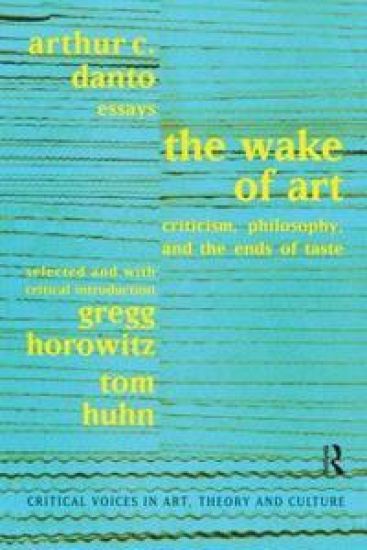
Since the mid-1980s, Arthur C. Danto has been increasingly concerned with the implications of the demise of modernism. Out of the wake of modernist art, Danto discerns the emergence of a radically pluralistic art world. His essays illuminate this novel art world as well as the fate of criticism within it. As a result, Danto has crafted the most compelling philosophy of art criticism since Clement Greenberg. Gregg Horowitz and Tom Huhn analyze the constellation of philosophical and critical elements in Danto's new- Hegelian art theory. In a provocative encounter, they employ themes from Kantian aesthetics to elucidate the continuing persistence of taste in shaping even this most sophisticated philosophy of art.
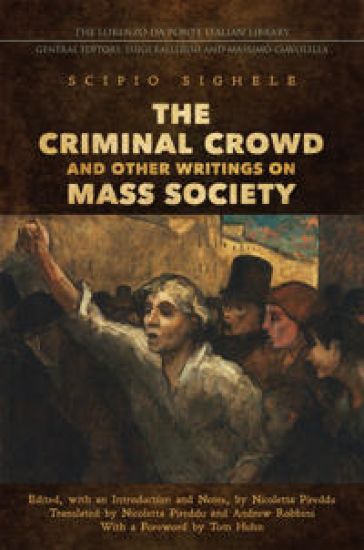
The Criminal Crowd and Other Writings on Mass Society

The Criminal Crowd and Other Writings on Mass Society

Scipio Sighele; Tom Huhn

University of Toronto Press
2018
sidottu
The Criminal Crowd and Other Writings on Mass Society is the first collection in English of writings by Italian jurist, sociologist, and cultural and literary critic Scipio Sighele (1868-1913). In post-unification Italy and internationally Sighele was an important figure in contemporary debates on such issues as popular unrest, the problematic borders between individual and collective accountability, the role of urbanization in the development of criminality, and the emancipation of women. This volume draws an intricate portrait of a provocative thinker and public intellectual caught between tradition and modernity in fin de siècle Europe. It features new English translations of Sighele's seminal work, The Criminal Crowd, along with a selection of his later studies on criminality and on individual and group behaviour. Nicoletta Pireddu's introduction and annotation provide valuable context and insights on Sighele's contribution to the emerging field of collective psychology, on his relationships with his predecessors Cesare Lombroso and Enrico Ferri and with his French rivals Gustave Le Bon and Gabriel Tarde, and on the significant scientific, literary, and cultural developments of his time.
Imitation and Society

Imitation and Society

Tom Huhn

Pennsylvania State University Press
2004
pokkari
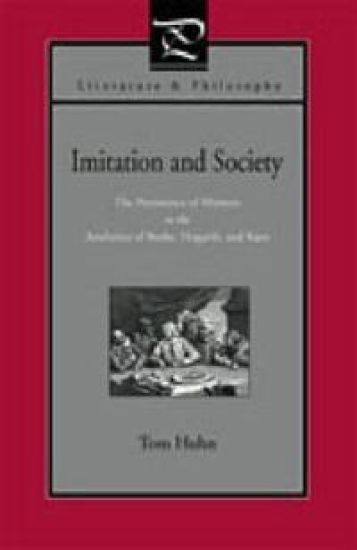
This book reconsiders the fate of the doctrine of mimesis in the eighteenth century. Standard accounts of the aesthetic theories of this era hold that the idea of mimesis was supplanted by the far more robust and compelling doctrines of taste and aesthetic judgment. Since the idea of mimesis was taken to apply only in the relation of art to nature, it was judged to be too limited when the focus of aesthetics changed to questions about the constitution of individual subjects in regard to taste. Tom Huhn argues that mimesis, rather than disappearing, instead became a far more pervasive idea in the eighteenth century by becoming submerged within the dynamics of the emerging accounts of judgment and taste. Mimesis also thereby became enmeshed in the ideas of sociality contained, often only implicitly, within the new accounts of aesthetic judgment. The book proceeds by reading three of the foundational treatises in aesthetics—Burke’s Philosophical Enquiry into the Origin of Our Ideas of the Sublime and Beautiful, Hogarth’s Analysis of Beauty, and Kant’s Critique of Judgment—with an eye for discerning where arguments and analyses betray mimetic structures. Huhn attempts to explicate these books anew by arguing that they are pervaded by a mimetic dynamic. Overall, he seeks to provoke a reconsideration of eighteenth-century aesthetics that centers on its continuity with traditional notions of mimesis.
Imitation and Society

Imitation and Society

Tom Huhn

Pennsylvania State University Press
2004
sidottu
This book reconsiders the fate of the doctrine of mimesis in the eighteenth century. Standard accounts of the aesthetic theories of this era hold that the idea of mimesis was supplanted by the far more robust and compelling doctrines of taste and aesthetic judgment. Since the idea of mimesis was taken to apply only in the relation of art to nature, it was judged to be too limited when the focus of aesthetics changed to questions about the constitution of individual subjects in regard to taste. Tom Huhn argues that mimesis, rather than disappearing, instead became a far more pervasive idea in the eighteenth century by becoming submerged within the dynamics of the emerging accounts of judgment and taste. Mimesis also thereby became enmeshed in the ideas of sociality contained, often only implicitly, within the new accounts of aesthetic judgment. The book proceeds by reading three of the foundational treatises in aesthetics—Burke’s Philosophical Enquiry into the Origin of Our Ideas of the Sublime and Beautiful, Hogarth’s Analysis of Beauty, and Kant’s Critique of Judgment—with an eye for discerning where arguments and analyses betray mimetic structures. Huhn attempts to explicate these books anew by arguing that they are pervaded by a mimetic dynamic. Overall, he seeks to provoke a reconsideration of eighteenth-century aesthetics that centers on its continuity with traditional notions of mimesis.
Wake of Art

Wake of Art

Arthur C. Danto; Gregg Horowitz; Tom Huhn; Saul Ostrow

Routledge
1998
sidottu
Since the mid-1980s, Arthur C. Danto has been increasingly concerned with the implications of the demise of modernism. Out of the wake of modernist art, Danto discerns the emergence of a radically pluralistic art world. His essays illuminate this novel art world as well as the fate of criticism within it. As a result, Danto has crafted the most compelling philosophy of art criticism since Clement Greenberg. Gregg Horowitz and Tom Huhn analyze the constellation of philosophical and critical elements in Danto's new- Hegelian art theory. In a provocative encounter, they employ themes from Kantian aesthetics to elucidate the continuing persistence of taste in shaping even this most sophisticated philosophy of art.