Kirjailija
Tom Johnson
Kirjat ja teokset yhdessä paikassa: 24 kirjaa, julkaisuja vuosilta 2006–2025, suosituimpiin kuuluu Thirty-Nine Sixty. Vertaile teosten hintoja ja tarkista saatavuus suomalaisista kirjakaupoista.
24 kirjaa
Kirjojen julkaisuvuodet: 2006–2025.
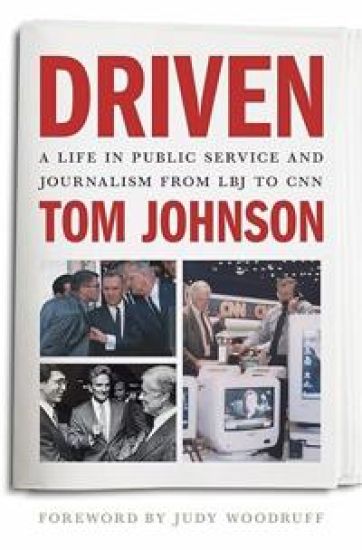
Driven brings a seasoned perspective to today’s conversations about government, media, and the future of truth in the form of a long-awaited autobiography by Tom Johnson, an award-winning journalist who helped shape the twenty-four-hour news media as we know it. Johnson’s storied career in politics and journalism spans the Lyndon B. Johnson administration, where he was privy to painful negotiations on Vietnam and notified the president that Dr. Martin Luther King Jr. had been assassinated, through the executive leadership of the LA Times and, finally, Ted Turner’s upstart CNN in Atlanta. From his perspective “inside the room,” Johnson provides eyewitness accounts of Lyndon B. Johnson’s triumphs and disasters and his on-the-ground view of the magnificent achievements and significant shortfalls of late twentieth-century American journalism. Johnson is also candid about his lifelong struggle with depression and mental health and recovery advocacy. With more than eight decades behind him, Driven is not just Johnson’s look at the past but a chance for his story to offer guidance about finding balance in an uncertain future.
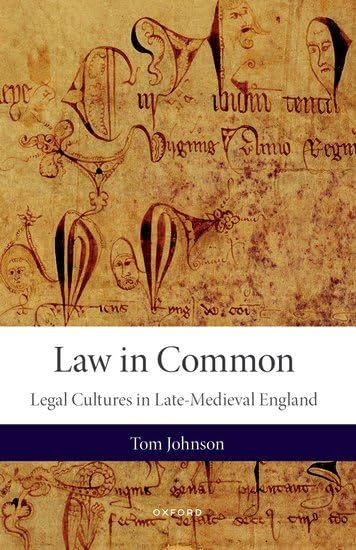
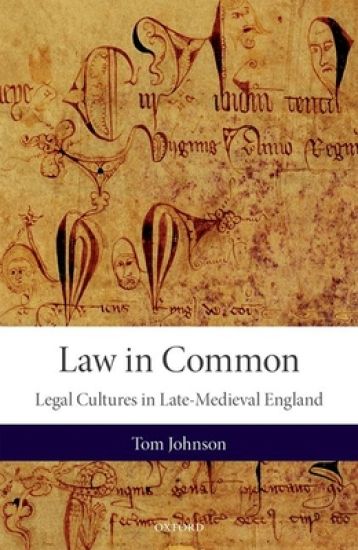
There were tens of thousands of different local law-courts in late-medieval England, providing the most common forums for the working out of disputes and the making of decisions about local governance. While historians have long studied these institutions, there have been very few attempts to understand this complex institutional form of 'legal pluralism'. Law in Common provides a way of understanding this complexity by drawing out broader patterns of legal engagement. Tom Johnson first explores four 'local legal cultures'—in the countryside, in forests, in towns and cities, and in the maritime world—that grew up around legal institutions, landscapes, and forms of socio-economic practice in these places, and produced distinctive senses of law. Johnson then turns to examine 'common legalities', widespread forms of social practice that emerge across these different localities, through which people aimed to invoke the power of law. Through studies of the physical landscape, the production of legitimate knowledge, the emergence of English as a legal vernacular, and the proliferation of legal documents, the volume offers a new way to understand how common people engaged with law in the course of their everyday lives. Drawing on a huge body of archival research from the plenitude of different local institutions, Law in Common offers a new social history of law that aims to explain how common people negotiated the transformational changes of the long fifteenth century with, and through, legality.
C'mon, Get Happy
David Fantle; Tom Johnson; Savion Glover
UNIVERSITY PRESS OF MISSISSIPPI
2023
sidottu
Halvin toimitettuna 39,40 €
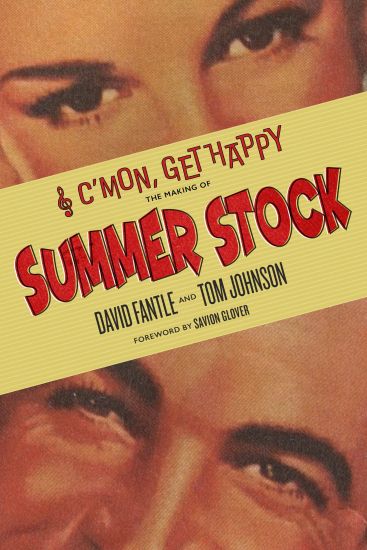
In their third and final screen teaming, Judy Garland and Gene Kelly starred together in the MGM musical Summer Stock. Despite its riveting production history, charismatic lead actors, and classic musical moments, the movie has not received the same attention as other musicals from MGM’s storied dream factory. In C’mon, Get Happy: The Making of "Summer Stock," authors David Fantle and Tom Johnson present a comprehensive study of this 1950 motion picture, from start to finish and after its release. The production coincided at a critical point in the careers of Kelly and an emotionally spent Garland. Kelly, who starred in An American in Paris just one year later, was at the peak of his abilities. On the other hand, Summer Stock was Garland’s final film at MGM, and she gamely completed it despite her own personal struggles. Summer Stock includes Kelly’s favorite solo dance routine and Garland’s signature number "Get Happy." The authors discuss in rich detail the contributions of the cast (which included Gloria DeHaven, Eddie Bracken, Phil Silvers, and Marjorie Main); the director (Charles Walters); the producer (Joe Pasternak); the script writers (George Wells and Sy Gomberg); the songwriters (which included Harry Warren and Mack Gordon); and top MGM executives (Louis B. Mayer and Dore Schary). The volume features extensive interviews, conducted by the authors, with Kelly, Walters, Warren, and others, who shared their recollections of making the movie. Deeply researched, C’mon, Get Happy reveals the studio system at work during Hollywood’s Golden Era. Additionally, the authors have written a special section called "Taking Stock" that buttonholes numerous contemporary dancers, singers, choreographers, musicians, and even Garland impersonators for their take on Summer Stock, its stars, and any enduring legacy they think the film might have. Artists from Mikhail Baryshnikov, Ben Vereen, and Tommy Tune to Garland’s and Kelly’s daughters, Lorna Luft and Kerry Kelly Novick, respectively, offer their unique perspective on the film and its stars.
There were tens of thousands of different local law-courts in late-medieval England, providing the most common forums for the working out of disputes and the making of decisions about local governance. While historians have long studied these institutions, there have been very few attempts to understand this complex institutional form of 'legal pluralism'. Law in Common provides a way of understanding this complexity by drawing out broader patterns of legal engagement. Tom Johnson first explores four 'local legal cultures' - in the countryside, in forests, in towns and cities, and in the maritime world- that grew up around legal institutions, landscapes, and forms of socio-economic practice in these places, and produced distinctive senses of law. Johnson then turns to examine 'common legalities', widespread forms of social practice that emerge across these different localities, through which people aimed to invoke the power of law. Through studies of the physical landscape, the production of legitimate knowledge, the emergence of English as a legal vernacular, and the proliferation of legal documents, the volume offers a new way to understand how common people engaged with law in the course of their everyday lives. Drawing on a huge body of archival research from the plenitude of different local institutions, Law in Common offers a new social history of law that aims to explain how common people negotiated the transformational changes of the long fifteenth century with, and through legality.
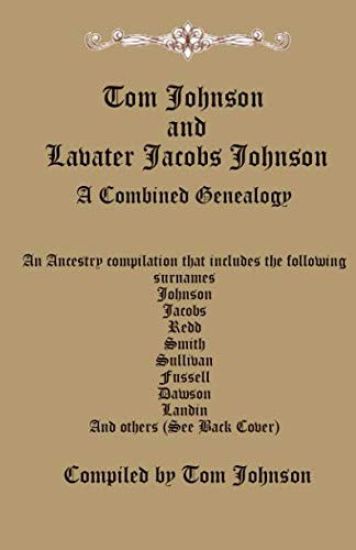
Tom Johnson and Lavater Jacobs Johnson: A Combined Genealogy
Tom Johnson
Createspace Independent Publishing Platform
2019
nidottu
The Combined Genealogy of Thomas and Lavater Jacobs Johnson
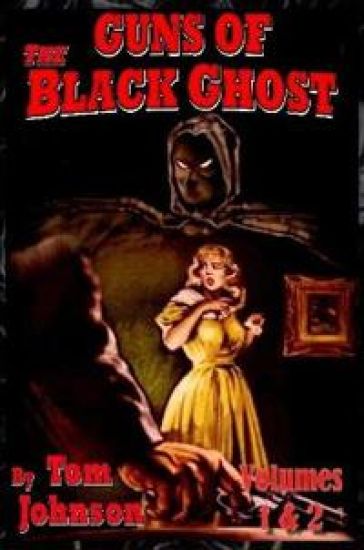
The Black Ghost is my homage to Walter B. Gibson and his famous character The Shadow. Volume 1 contains the first four novelettes, Murder Town, Calling The Black Ghost, The Black Ghost At Bay! And Dark Night of The Black Ghost. Set in contemporary times, Jimmy Malone dons a black hood and cape sending fear into the hearts of evildoers, as he battles the underworld in the tradition of a modern day Shadow or Spider. Volume 2 contains four novelettes, Town of Fear, Death And The Black Ghost, Highways In Hiding & Bullets of Terror. Set in contemporary times, Jimmy Malone dons a black hood and cape sending fear into the hearts of evildoers, as he battles the underworld in the tradition of a modern day Shadow or Spider. Burning eyes, a mocking laugh, and blazing automatics announce his entrance into an affray. Gangsters cringe when they come up against the guns of the Black Ghost!
A genealogy of the southern Jacobs, Redd, Dawson and Fussell families from South Carolina, Georgia and Florida. Other surnames include Adams, Cargill and Covington
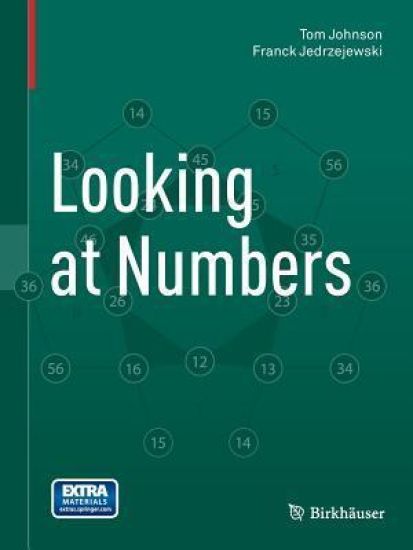
Galileo Galilei said he was “reading the book of nature” as he observed pendulums swinging, but he might also simply have tried to draw the numbers themselves as they fall into networks of permutations or form loops that synchronize at different speeds, or attach themselves to balls passing in and out of the hands of good jugglers. Numbers are, after all, a part of nature. As such, looking at and thinking about them is a way of understanding our relationship to nature. But when we do so in a technical, professional way, we tend to overlook their basic attributes, the things we can understand by simply “looking at numbers.” Tom Johnson is a composer who uses logic and mathematical models, such as combinatorics of numbers, in his music. The patterns he finds while “looking at numbers” can also be explored in drawings. This book focuses on such drawings, their beauty and their mathematical meaning. The accompanying comments were written in collaboration with the mathematician Franck Jedrzejewski.?
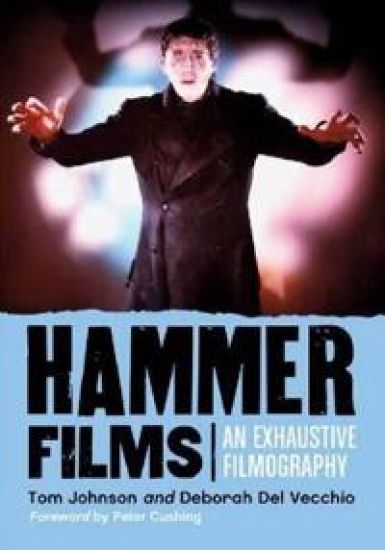
Though best known for its horror films, Hammer produced a wide variety of movies in many genres. The British studio was famous for its exciting stories and expert action--all on very small budgets and short shooting schedules. From The Public Life of Henry the Ninth (1935) to The Lady Vanishes (1978), this is the definitive work on Hammer's 165 films. Complete filmographic data are provided for each film, including release dates in both the United Kingdom and the United States, running time, length, distributor, complete cast and production credits, and alternate titles. These data are followed by an extensive plot synopsis, including contemporary critical commentary and behind-the-scenes information from many of the players and crew members.
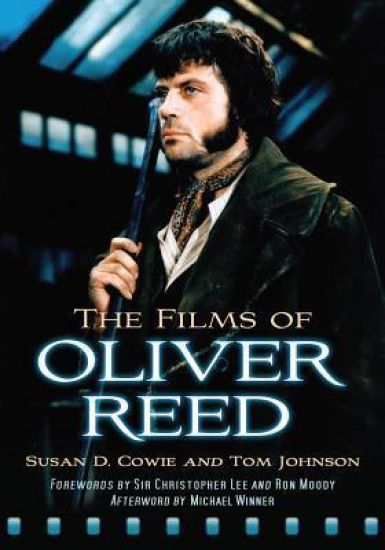
From the obscure 1958 Sonja Henie vehicle Hello London to the 2000 Academy Award winner Gladiator, the screen career of dynamic British actor Oliver Reed (1937-1999) is thoroughly documented in this illustrated filmography. Following a concise biography, the authors chronologically list all 96 of Reed's films, among them The Curse of the Werewolf, Oliver!, The Devils, The Three Musketeers and Tommy. Each entry contains extensive cast and production credits, a synopsis, critical commentary and contemporary reviews. Included are forewords by actors Sir Christopher Lee and Ron Moody, and an afterword by Oliver Reed's frequent director Michael Winner. Additional comments by Reed's friends and coworkers Janette Scott, Catherine Feller, William Hobbs, Jennie Linden, Jimmy Sangster and Samantha Eggar provide fascinating and insightful offscreen glimpses of a major cinema icon.
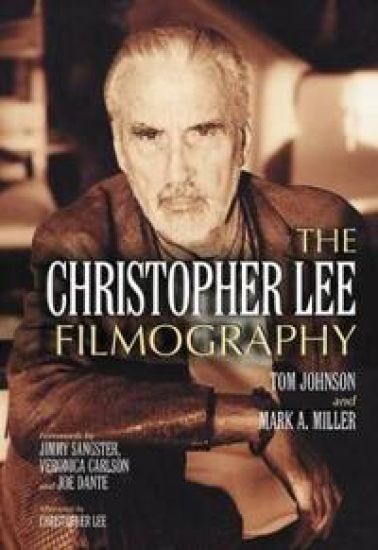
The career of Christopher Lee has stretched over half a century in every sort of film from comedy to horror and in such diverse roles as the Man With the Golden Gun, Frankenstein's monster, Fu Manchu and Sherlock Holmes. From Corridor of Mirrors in 1948 to Star Wars: Episode II-Attack of the Clones in 2002, this reference book covers 166 theatrical feature films: all production information, full cast and crew credits, a synopsis, and a critical analysis, with a detailed account of its making and commentary drawn from some thirty hours of interviews with Lee himself. Two appendices list Lee's television feature films and miniseries and his short films. The work concludes with an afterword by Christopher Lee himself. Photographs from the actor's private collection are included.
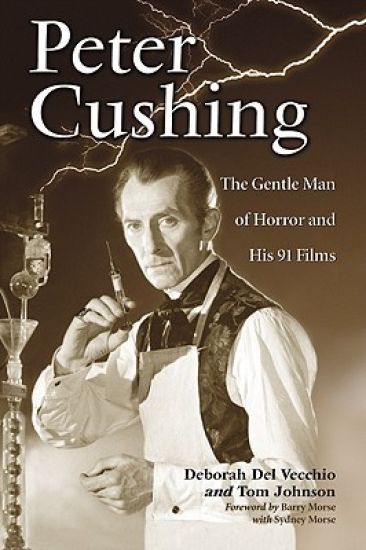
From his film debut in The Man in the Iron Mask (1939) through Biggles (1985), here is the movie career of Peter Cushing, known as "the gentle man of horror." From interviews and extensive personal correspondence, the authors are able to provide Cushing's own views on many of his 91 films. A plot synopsis for each film is followed by production data and credits and contemporary reviews.
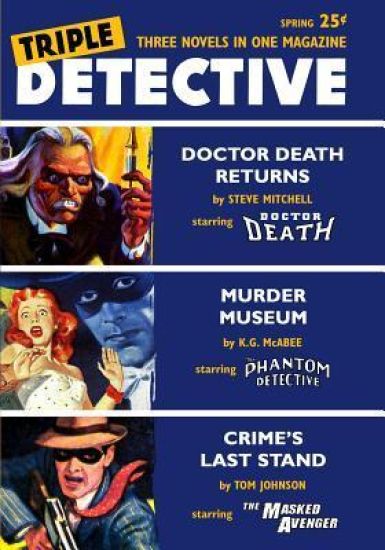
Triple Detective #2 (Spring 1956)
K. G. McAbee; Steve Mitchell; Tom Johnson
Createspace Independent Publishing Platform
2008
nidottu