
Kirjojen hintavertailu – 12 903 732 kirjaa ja 27 kauppaa

Kirjailija

Tom McIntosh

Kirjat ja teokset yhdessä paikassa: 2 kirjaa, julkaisuja vuosilta 1999–2001, suosituimpiin kuuluu Federalism, Democracy and Labour Market Policy in Canada. Vertaile teosten hintoja ja tarkista saatavuus suomalaisista kirjakaupoista.

2 kirjaa

Kirjojen julkaisuvuodet: 1999–2001.

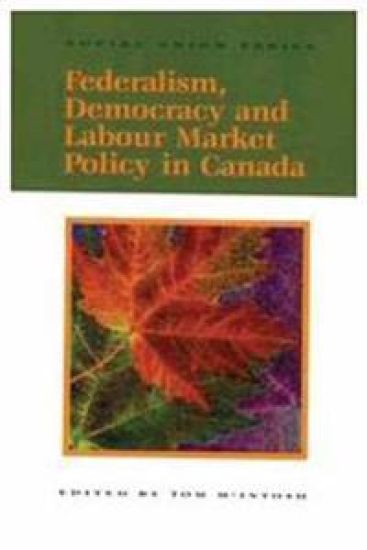
Federalism, Democracy and Labour Market Policy in Canada
Labour market policy occupies a space at the intersection of social policy and economic policy and as such has important implications for each. With the signing of the Social Union Framework Agreement between Ottawa and nine provincial governments, Canada has embarked on an ambitious restructuring of virtually all aspects of social policy. Canada's emerging social union is predicated on finding new forms of governance to meet the challenges of a post-deficit era characterized by globalization and domestic decentralization. The authors provide comprehensive assessments of the current state of governance within the areas of income support for the unemployed, active labour market measures, and youth policy. The analysis focuses on how the current state of governance reflects a combined commitment to specific social policy goals, principles of federalism, and democratic oversight of the policy making process. This volume sheds new light on the complex nature of the intergovernmental regimes governing labour market policy. It makes recommendations concerning how different governance structures might better serve both Canadians and the federation. Contributors include Gerard W. Boychuk (University of Waterloo), Rodney Haddow (St Francis Xavier University), Thomas R. Klassen (Trent University), Stephen McBride (Simon Fraser University), Tom McIntosh, and Peter Stoyko (Carleton University).

Canada: the State of the Federation 1998/99

Canada: the State of the Federation 1998/99

Harvey Lazar; Tom McIntosh

Queen's University
1999
nidottu
The last twenty or so years have seen a different kind of state emerge in Canada and elsewhere. The questioning of Keynesian macroeconomic policy in light of crises in Western economies coupled with the rise of neo-conservative and neo-liberal politics (and the attendant rethinking of the modern state's regulatory and redistributive roles) has resulted in significant restructuring and retrenchment of the state in Canada, both federal and provincial. Similarly, Canadians' sense of citizenship has undergone significant changes that need to be explored. Canada: The State of the Federation 1998 is a timely exploration of the current state of the ties that bind the federation together. Are they strong enough to survive in the context of a smaller (or at least different) state? Is Canadians' sense of citizenship sufficiently vibrant to maintain itself in an increasingly globalized world? How have Canada's civic and political institutions responded to these challenges? Is "Canadian culture," however defined, still a viable concept in the midst of the kinds of communications advances we have seen of late? How are global economic forces changing the east-west economic linkages that have been fostered since Confederation and how will Canada fit into a globalized political economy? These are but a few of the questions that the volume explores. Contributors include Reg Whitaker (York), Avigail Eisenberg (UBC), Ted Magder (NYU), Florian Sauvageau (Laval), Pierre Juneau (former chair of the CRTC), John Helliwell (UBC), François Vaillancourt and Marc Vachon (Montréal), Claire Turenne-Sjolander (Ottawa), Tom McIntosh (Queen's), Matthew James (UBC), Kathleen Day and Quentin Grafton (Ottawa), Brian Tanguay (Wilfred Laurier), Howard Leeson (Regina), Frank Graves (EKOS Research), and Melissa Kruger (Queen's).