Kirjojen hintavertailu – 12 859 819 kirjaa ja 27 kauppaa
Kirjailija
Tom Nichols
Kirjat ja teokset yhdessä paikassa: 19 kirjaa, julkaisuja vuosilta 2007–2026, suosituimpiin kuuluu Tactical Nuclear Weapons and NATO. Vertaile teosten hintoja ja tarkista saatavuus suomalaisista kirjakaupoista.
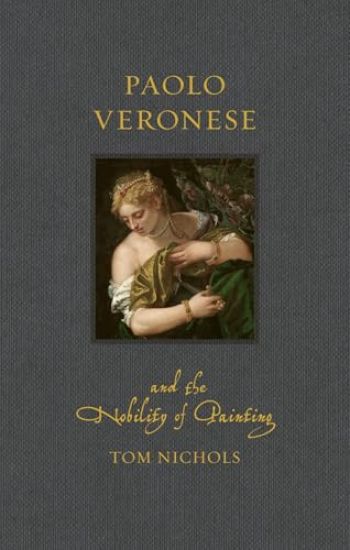
Paolo Veronese’s sumptuous paintings, with their vibrant colours and theatrical elegance, have often been admired for their surface beauty but also questioned for perceived excess and detachment. In this incisive study, Tom Nichols reconsiders Veronese’s pictorial language not as superficial display, but as a deliberate visual strategy that resisted the hierarchies and exclusions of sixteenth-century Venetian society. Through detailed analysis of major works, Nichols highlights the painter’s striking inclusion of marginal figures – women, servants, people of colour and the poor – within scenes of civic and sacred grandeur. Far from a passive decorator, Veronese emerges as a subtle commentator on power, dignity and the possibilities of art.
Building on his enormously successful first edition, Tom Nichols confirms his thesis that events, such as the COVID pandemic, prove that the assault on expertise has only intensified. Fully updated chapters continue to address how technology and increasing levels of education have exposed people to more information than ever before. These societal gains, however, have also helped fuel a surge in narcissistic and misguided intellectual egalitarianism that has crippled informed debates on any number of issues. Over the past several years, the rise of populism and conspiracy theories have taken this to new levels. All voices, even the most ridiculous, demand to be taken with equal seriousness, and any claim to the contrary is dismissed as undemocratic elitism. Tom Nichols' The Death of Expertise, Second Edition, follows up on how this rejection of experts has occurred: the openness of the internet, the emergence of a customer satisfaction model in higher education, the transformation of the news industry into a 24-hour entertainment machine, and importantly, the election of Donald Trump. Paradoxically, the increasingly democratic dissemination of information, rather than producing an educated public, has instead created an army of ill-informed and angry citizens who denounce intellectual achievement. When ordinary citizens believe that no one knows more than anyone else, democratic institutions themselves are in danger of falling either to populism or to technocracy or, in the worst case, a combination of both.
Building on his enormously successful first edition, Tom Nichols confirms his thesis that events, such as the COVID pandemic, prove that the assault on expertise has only intensified. Fully updated chapters continue to address how technology and increasing levels of education have exposed people to more information than ever before. These societal gains, however, have also helped fuel a surge in narcissistic and misguided intellectual egalitarianism that has crippled informed debates on any number of issues. Over the past several years, the rise of populism and conspiracy theories have taken this to new levels. All voices, even the most ridiculous, demand to be taken with equal seriousness, and any claim to the contrary is dismissed as undemocratic elitism. Tom Nichols' The Death of Expertise, Second Edition, follows up on how this rejection of experts has occurred: the openness of the internet, the emergence of a customer satisfaction model in higher education, the transformation of the news industry into a 24-hour entertainment machine, and importantly, the election of Donald Trump. Paradoxically, the increasingly democratic dissemination of information, rather than producing an educated public, has instead created an army of ill-informed and angry citizens who denounce intellectual achievement. When ordinary citizens believe that no one knows more than anyone else, democratic institutions themselves are in danger of falling either to populism or to technocracy or, in the worst case, a combination of both.
A contrarian yet highly engaging account of the spread of illiberal and anti-democratic sentiment throughout our culture that places responsibility on the citizens themselves. Over the past three decades, citizens of democracies who claim to value freedom, tolerance, and the rule of law have increasingly embraced illiberal politicians and platforms. Democracy is in trouble--but who is really to blame? In Our Own Worst Enemy, Tom Nichols challenges the current depictions of the rise of illiberal and anti-democratic movements in the United States and elsewhere as the result of the deprivations of globalization or the malign decisions of elites. Rather, he places the blame for the rise of illiberalism on the people themselves. Nichols traces the illiberalism of the 21st century to the growth of unchecked narcissism, rising standards of living, global peace, and a resistance to change. Ordinary citizens, laden with grievances, have joined forces with political entrepreneurs who thrive on the creation of rage rather than on the encouragement of civic virtue and democratic cooperation. While it will be difficult, Nichols argues that we need to defend democracy by resurrecting the virtues of altruism, compromise, stoicism, and cooperation--and by recognizing how good we've actually had it in the modern world. Trenchant, contrarian, and highly engaging, Our Own Worst Enemy reframes the debate about how democracies have ended up in this dire state of affairs and what to do about it.
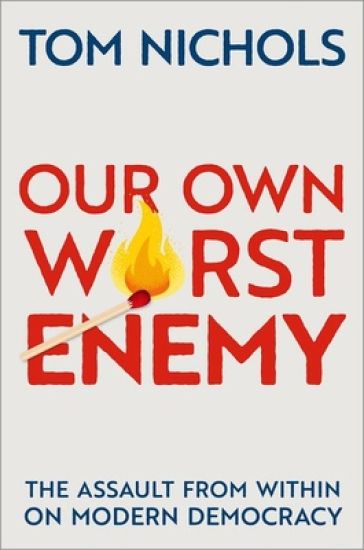
A contrarian yet highly engaging account of the spread of illiberal and anti-democratic sentiment throughout our culture that places responsibility on the citizens themselves. Over the past three decades, citizens of democracies who claim to value freedom, tolerance, and the rule of law have increasingly embraced illiberal politicians and platforms. Democracy is in trouble—but who is really to blame? In Our Own Worst Enemy, Tom Nichols challenges the current depictions of the rise of illiberal and anti-democratic movements in the United States and elsewhere as the result of the deprivations of globalization or the malign decisions of elites. Rather, he places the blame for the rise of illiberalism on the people themselves. Nichols traces the illiberalism of the 21st century to the growth of unchecked narcissism, rising standards of living, global peace, and a resistance to change. Ordinary citizens, laden with grievances, have joined forces with political entrepreneurs who thrive on the creation of rage rather than on the encouragement of civic virtue and democratic cooperation. While it will be difficult, Nichols argues that we need to defend democracy by resurrecting the virtues of altruism, compromise, stoicism, and cooperation—and by recognizing how good we've actually had it in the modern world. Trenchant, contrarian, and highly engaging, Our Own Worst Enemy reframes the debate about how democracies have ended up in this dire state of affairs and what to do about it.
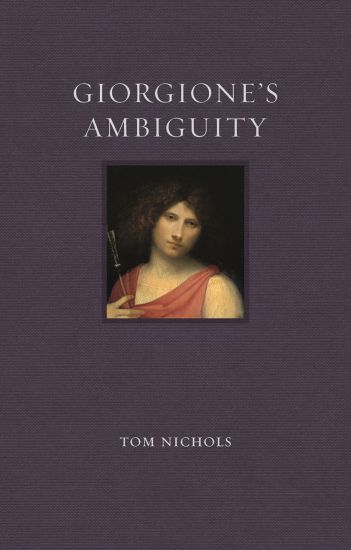
The Venetian painter known as Giorgione or ‘big George’ died at a young age in the dreadful plague of 1510, possibly having painted fewer than 25 works. But many of these are among the most mysterious and alluring in the history of art. Paintings such as the Three Philosophers and The Tempest remain compellingly elusive, seeming to deny the viewer the possibility of interpreting their meaning. Tom Nichols argues that this visual elusiveness was essential to Giorgione’s sensual approach, and that ambiguity is their defining quality. Through detailed discussions of all Giorgione’s works, Nichols shows that by abandoning the more intellectual tendencies of much Renaissance art, Giorgione made the world and its meanings appear always more inscrutable.
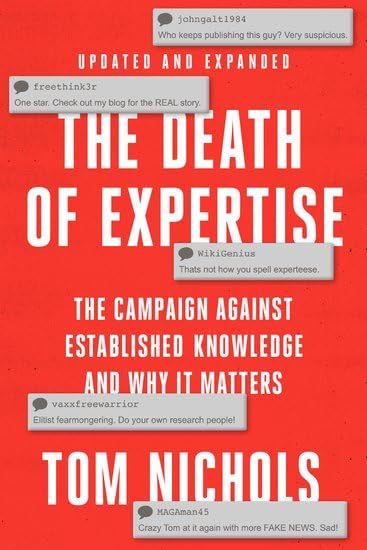
People are now exposed to more information than ever before, provided both by technology and by increasing access to every level education. These societal gains, however, have also helped fuel a surge in narcissistic and misguided intellectual egalitarianism that has crippled informed debates on any number of issues. Today, everyone knows everything; with only a quick trip through WebMD or Wikipedia, average citizens believe themselves to be on an equal intellectual footing with doctors and diplomats. All voices, even the most ridiculous, demand to be taken with equal seriousness, and any claim to the contrary is dismissed as undemocratic elitism. As Tom Nichols shows in The Death of Expertise, this rejection of experts has occurred for many reasons, including the openness of the internet, the emergence of a customer satisfaction model in higher education, and the transformation of the news industry into a 24-hour entertainment machine. Paradoxically, the increasingly democratic dissemination of information, rather than producing an educated public, has instead created an army of ill-informed and angry citizens who denounce intellectual achievement. Nichols has deeper concerns than the current rejection of expertise and learning, noting that when ordinary citizens believe that no one knows more than anyone else, democratic institutions themselves are in danger of falling either to populism or to technocracy--or, in the worst case, a combination of both. The Death of Expertise is not only an exploration of a dangerous phenomenon but also a warning about the stability and survival of modern democracy in the Information Age.
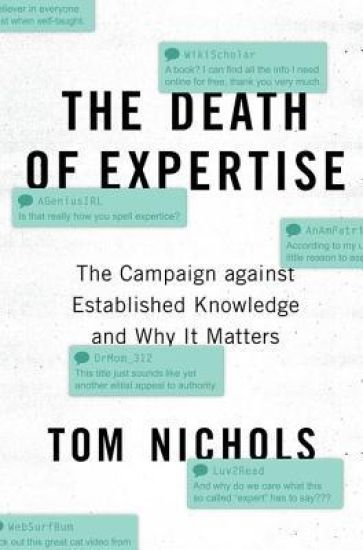
People are now exposed to more information than ever before, provided both by technology and by increasing access to every level of education. These societal gains, however, have also helped fuel a surge in narcissistic and misguided intellectual egalitarianism that has crippled informed debates on any number of issues. Today, everyone knows everything: with only a quick trip through WebMD or Wikipedia, average citizens believe themselves to be on an equal intellectual footing with doctors and diplomats. All voices, even the most ridiculous, demand to be taken with equal seriousness, and any claim to the contrary is dismissed as undemocratic elitism. As Tom Nichols shows in The Death of Expertise, this rejection of experts has occurred for many reasons, including the openness of the internet, the emergence of a customer satisfaction model in higher education, and the transformation of the news industry into a 24-hour entertainment machine. Paradoxically, the increasingly democratic dissemination of information, rather than producing an educated public, has instead created an army of ill-informed and angry citizens who denounce intellectual achievement. Nichols has deeper concerns than the current rejection of expertise and learning, noting that when ordinary citizens believe that no one knows more than anyone else, democratic institutions themselves are in danger of falling either to populism or to technocracy-or in the worst case, a combination of both. The Death of Expertise is not only an exploration of a dangerous phenomenon but also a warning about the stability and survival of modern democracy in the Information Age.
Teknologian kehityksen ansiosta informaatiota on nyt enemmän ja helpommin tarjolla kuin koskaan. Tulos ei kuitenkaan ole uudenlainen valistuksen aika. Päin vastoin. Valtio-opin tutkija ja Yhdysvaltain Venäjän suhteiden asiantuntija kertoo tässä teoksessa, miten perinteinen asiantuntemus on syrjätetty ja miten on yleisesti alettu ajatella, että kaikki mielipiteet, ajatukset ja totuudet ovat samanarvoisia. Paradoksaalisesti informaation lisääntynyt demokrattinen leviäminen ei ole tuottanut aikaisempaa oppineempaa kansaa, vaan huonosti informoitujen ja vihaisten kansalaisten armeijoita.
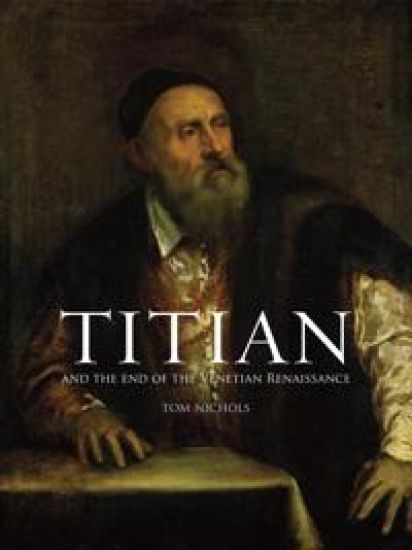
Titian’s works are often seen as embodying the famous tradition of Venetian Renaissance painting. But how ‘Venetian’ was Titian, and can his unique works be taken as truly representative of his adoptive city? This comprehensive new study, covering Titian’s long career and varied output, highlights the tensions between the individualism of his work and the conservative mores of Venice. Titian and the End of the Venetian Renaissance argues that Titian’s works were self-consciously original, freely and intentionally undermining the traditional, more modest approach to painting in Venice – a position that frequently caused disputes with local artists and patrons. This book, now available in paperback, charts Titian’s early stylistic independence from his master Giovanni Bellini, his radical innovations to the classical altarpiece and his meteoric break from the normal con?nes of Venice’s artistic culture. Titian competitively cultivated a professional identity and his dynamic career was epitomized by the development of his ‘late style’, which set him apart from all predecessors and was intended to defy emulation by any followers. It was through this ?nal individualistic departure that Titian effectively brought the Renaissance tradition of painting to an end. This ground-breaking interpretation will be of interest to all scholars and students of Renaissance and Venetian art history.
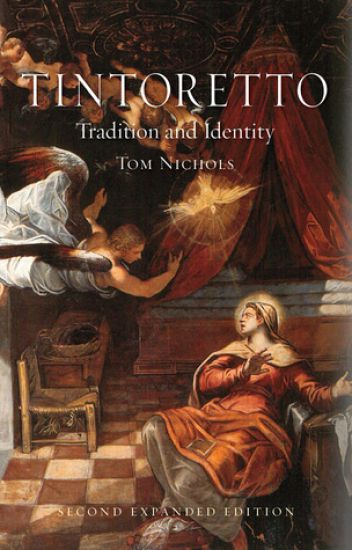
The Venetian painter Jacopo Tintoretto (1518–1594) is an ambiguous figure in the history of art. Critics and writers such as Vasari, Ruskin and Sartre all placed him in opposition to the established artistic practice of his time, noting that he had abandoned the values that typified the venerable Venetian Renaissance tradition. He was even expelled as an apprentice from the workshop of Titian. This informative and generously illustrated book offers a long-overdue re-evaluation of Tintoretto’s unique work and entertaining life.
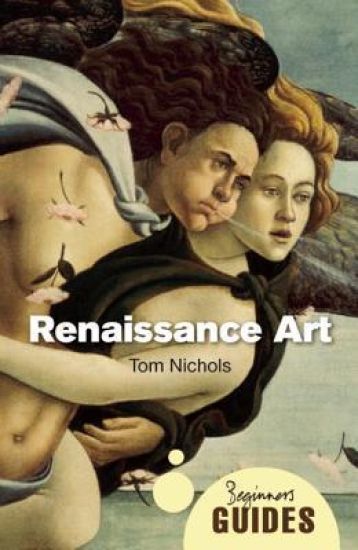
The fifteenth century saw the evolution of a distinct and powerfully influential European artistic culture. But what does the familiar phrase Renaissance Art actually refer to? Through engaging discussion of timeless works by artists such as Jan van Eyck, Leonardo da Vinci, and Michelangelo, and supported by illustrations including colour plates, Tom Nichols offers a masterpiece of his own as he explores the truly original and diverse character of the art of the Renaissance.
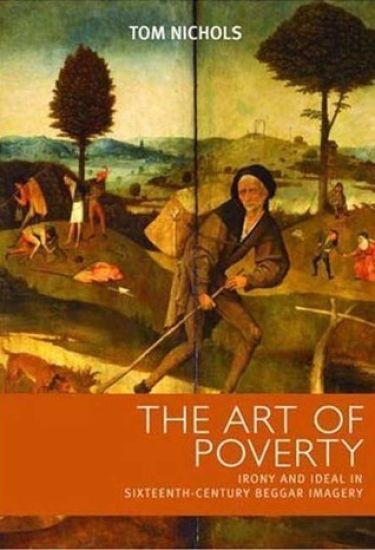
The art of poverty is the first book in English to analyse depictions of beggars in sixteenth-century European art. Featuring works from Germany, the Low Countries, Britain, France and Italy, it discusses a diverse body of imagery in many different media, from crude woodcuts to monumental church altarpieces. It develops a striking thesis, arguing that these works largely conformed to two paradoxical, though mutually supportive, representational approaches. The earlier chapters follow the emergence of a trenchantly negative approach in Northern art, in which beggars are shown as vagabonds, whose idleness and thievery threatened the values of sixteenth-century society (especially its growing emphasis on the need to work). In the other predominant visual mode, beggars are exalted as examples of sacred purity. In many Italian religious paintings, beggars are morally exalted with reference to sacred texts, and made formally beautiful with reference to revered artistic models. Though these approaches reflect the impact of religious reform, it is shown that, by the end of the century, they happily co-existed within Protestant and Catholic cultures. The final part of the book is concerned with the issue of artistic style and with the growing tendency of the beggar image to mediate and dissolve the didactic traditions through which it had originally been defined. The art of poverty will be of special interest to scholars and students of Renaissance art history, and its progressive approach and cross-disciplinary theme and perspective will also make it vital reading for those concerned with the development of early modern European culture.