
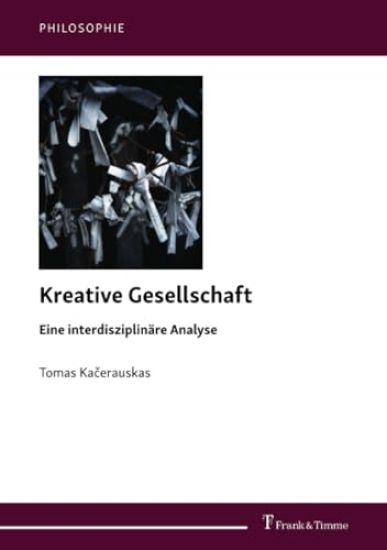
Kirjailija
Tomas Kacerauskas
Kirjat ja teokset yhdessä paikassa: 5 kirjaa, julkaisuja vuosilta 2020–2024, suosituimpiin kuuluu Kreative Gesellschaft. Vertaile teosten hintoja ja tarkista saatavuus suomalaisista kirjakaupoista.
5 kirjaa
Kirjojen julkaisuvuodet: 2020–2024.

The book’s focus is on freedom of speech and what content can place it in jeopardy. The sources, discussions and limitations of free speech, the relationship between ideology, freedom of speech in the media, and public issues are analyzed. From historical point of view, the citizens of more or less democratic societies assume freedom of speech as a basic right to challenge dictatorships, totalitarianisms and authority of any kind. Freedom of speech cannot be understood without the fundamental principles of democratic society, including a tolerance of others, their right to express various and unique opinions, open to challenge by others, and requiring mutual respect. Three domains for social responsibility concerning freedom of speech are addressed: practical, ecological and creative.
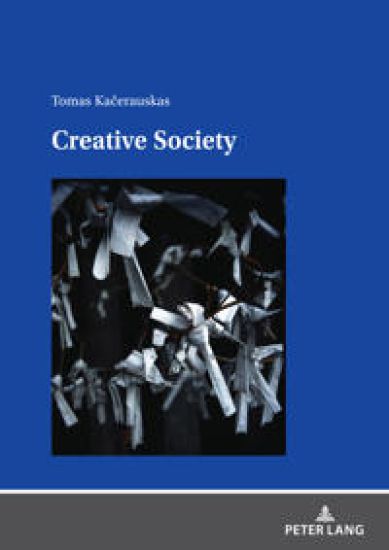
The monograph analyses the concept of creative society. The main themes are as follows: culture industry and creative industries, management of creativity, creative ecology, regions of creativity, political aspects of creativity, technologies in the creative society, the problems of an empirical approach towards creativity, and creative phenomenology.
In Between Communication Theories Through One Hundred Questions
Tomas Kacerauskas; Algis Mickunas
Springer Nature Switzerland AG
2021
nidottu
This book takes the form of a dialogue. It presents two authors, specialized in the phenomenolog?, posing questions to each other and offering complex answers for critical discussion. The book includes both presentation of different communication schools and philosophizing on the issues of communication. The authors debate numerous topics by providing the definition and etymology of communication, examining the limits of communication, and using a poli-logical base of communication. The issue which pervades all domains is that of mediation: how things, such as identities, styles, and bodies are mediated by culture, history, and tradition, and what the limits are of such mediation. This question leads to more complex issues of “mediated mediations” such that an explication of one medium is framed by another medium, leading to a question of meta-language as a fundamental, unmediated medium. This involves some fine points of mediation: perspectivity, discursivity, ethics of communication, ideology, private and public. Throughout the mutual, interrogative dialogue, the authors touch upon, but avoid the daunting commitment to, a theory of metacommunication, as well as the “transcendental” problematic of accessing the numerous theoretical, thematic, and historical aspects of communication.
In Between Communication Theories Through One Hundred Questions
Tomas Kacerauskas; Algis Mickunas
Springer Nature Switzerland AG
2020
sidottu
This book takes the form of a dialogue. It presents two authors, specialized in the phenomenolog?, posing questions to each other and offering complex answers for critical discussion. The book includes both presentation of different communication schools and philosophizing on the issues of communication. The authors debate numerous topics by providing the definition and etymology of communication, examining the limits of communication, and using a poli-logical base of communication. The issue which pervades all domains is that of mediation: how things, such as identities, styles, and bodies are mediated by culture, history, and tradition, and what the limits are of such mediation. This question leads to more complex issues of “mediated mediations” such that an explication of one medium is framed by another medium, leading to a question of meta-language as a fundamental, unmediated medium. This involves some fine points of mediation: perspectivity, discursivity, ethics of communication, ideology, private and public. Throughout the mutual, interrogative dialogue, the authors touch upon, but avoid the daunting commitment to, a theory of metacommunication, as well as the “transcendental” problematic of accessing the numerous theoretical, thematic, and historical aspects of communication.