
Kirjojen hintavertailu – 12 859 824 kirjaa ja 27 kauppaa

Kirjailija

Tomas Sedlacek

Kirjat ja teokset yhdessä paikassa: 3 kirjaa, julkaisuja vuosilta 2011–2013, suosituimpiin kuuluu Det gode og det ondes økonomi. Vertaile teosten hintoja ja tarkista saatavuus suomalaisista kirjakaupoista.

Nimi esiintyy myös muodoissa: Tomás Sedlácek

3 kirjaa

Kirjojen julkaisuvuodet: 2011–2013.

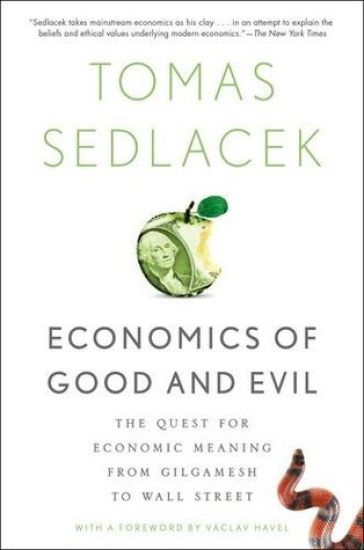
Economics of Good and Evil

Economics of Good and Evil

Tomas Sedlacek; Vaclav Havel

Oxford University Press Inc
2013
nidottu

Halvin toimitettuna 25,20 €

Tomas Sedlacek has shaken the study of economics as few ever have. Named one of the "Young Guns" and one of the "five hot minds in economics" by the Yale Economic Review, he serves on the National Economic Council in Prague, where his provocative writing has achieved bestseller status. How has he done it? By arguing a simple, almost heretical proposition: economics is ultimately about good and evil. In The Economics of Good and Evil, Sedlacek radically rethinks his field, challenging our assumptions about the world. Economics is touted as a science, a value-free mathematical inquiry, he writes, but it's actually a cultural phenomenon, a product of our civilization. It began within philosophy--Adam Smith himself not only wrote The Wealth of Nations, but also The Theory of Moral Sentiments--and economics, as Sedlacek shows, is woven out of history, myth, religion, and ethics. "Even the most sophisticated mathematical model," Sedlacek writes, "is, de facto, a story, a parable, our effort to (rationally) grasp the world around us." Economics not only describes the world, but establishes normative standards, identifying ideal conditions. Science, he claims, is a system of beliefs to which we are committed. To grasp the beliefs underlying economics, he breaks out of the field's confines with a tour de force exploration of economic thinking, broadly defined, over the millennia. He ranges from the epic of Gilgamesh and the Old Testament to the emergence of Christianity, from Descartes and Adam Smith to the consumerism in Fight Club. Throughout, he asks searching meta-economic questions: What is the meaning and the point of economics? Can we do ethically all that we can do technically? Does it pay to be good? Placing the wisdom of philosophers and poets over strict mathematical models of human behavior, Sedlacek's groundbreaking work promises to change the way we calculate economic value.
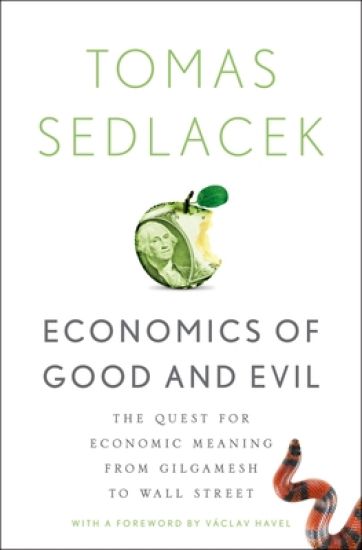
Economics of Good and Evil

Economics of Good and Evil

Tomas Sedlacek

Oxford University Press Inc
2011
sidottu
Tomas Sedlacek has shaken the study of economics as few ever have. Named one of the "Young Guns" and one of the "five hot minds in economics" by the Yale Economic Review, he serves on the National Economic Council in Prague, where his provocative writing has achieved bestseller status. How has he done it? By arguing a simple, almost heretical proposition: economics is ultimately about good and evil. In The Economics of Good and Evil, Sedlacek radically rethinks his field, challenging our assumptions about the world. Economics is touted as a science, a value-free mathematical inquiry, he writes, but it's actually a cultural phenomenon, a product of our civilization. It began within philosophy--Adam Smith himself not only wrote The Wealth of Nations, but also The Theory of Moral Sentiments--and economics, as Sedlacek shows, is woven out of history, myth, religion, and ethics. "Even the most sophisticated mathematical model," Sedlacek writes, "is, de facto, a story, a parable, our effort to (rationally) grasp the world around us." Economics not only describes the world, but establishes normative standards, identifying ideal conditions. Science, he claims, is a system of beliefs to which we are committed. To grasp the beliefs underlying economics, he breaks out of the field's confines with a tour de force exploration of economic thinking, broadly defined, over the millennia. He ranges from the epic of Gilgamesh and the Old Testament to the emergence of Christianity, from Descartes and Adam Smith to the consumerism in Fight Club. Throughout, he asks searching meta-economic questions: What is the meaning and the point of economics? Can we do ethically all that we can do technically? Does it pay to be good? Placing the wisdom of philosophers and poets over strict mathematical models of human behavior, Sedlacek's groundbreaking work promises to change the way we calculate economic value.
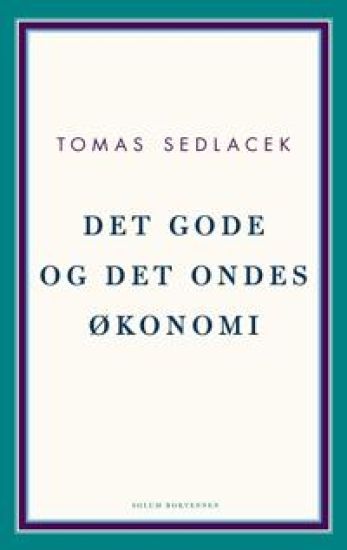
Det gode og det ondes økonomi

Det gode og det ondes økonomi

Tomás Sedlácek

Solum Bokvennen
sidottu
Med utgivelsen av «Det gode og ondes økonomi - Økonomiens historie fra Gilgamesh til Wallstreet», har Tomás Sedlácek klart kunststykket å filleriste økonomifaget ved å vende opp ned på vante forestillinger som har sementert seg ved læringsinstitusjoner og i praktisk økonomi. Boken er både provoserende og nesten kjettersk i sin påstand om at økonomifaget i bunn og grunn handler om «godt» og «ondt». Sedlácek, som i dag er respektert og beundret av kollegaer verden over, er kåret til en av fem skarpeste hjernene inne økonomifaget av det renommerte tidsskriftet Yale Economic Review. Han arbeider til daglig ved Det nasjonale økonomiske råd i Tsjekkia, der boken også har blitt en stor bestselger. Tomás Sedlácek ser på økonomifaget med friske øyne, og utfordrer på den måten oss alle. Mye er gått galt i det globale økonomiske systemet de siste årene, og flere en noen gang betrakter finansinstitusjoner, spekulanter og fagmiljøer som snylter på skattebetalernes penger, som onde tallknusere og sjelløse vesner som snylter på samfunnets slitere. Men det er ikke datamaskiner og kunstig intelligens som driver disse menneskene i deres søken på rikdom, det er ganske enkelt menneskelige instinkter.