Kirjojen hintavertailu – 12 903 725 kirjaa ja 27 kauppaa

Kirjailija

Tommaso Padoa-Schioppa

Kirjat ja teokset yhdessä paikassa: 5 kirjaa, julkaisuja vuosilta 1988–2019, suosituimpiin kuuluu Warum Sich Europa Lohnt: Pladoyers Fur Politische Vernunft. Vertaile teosten hintoja ja tarkista saatavuus suomalaisista kirjakaupoista.

5 kirjaa

Kirjojen julkaisuvuodet: 1988–2019.

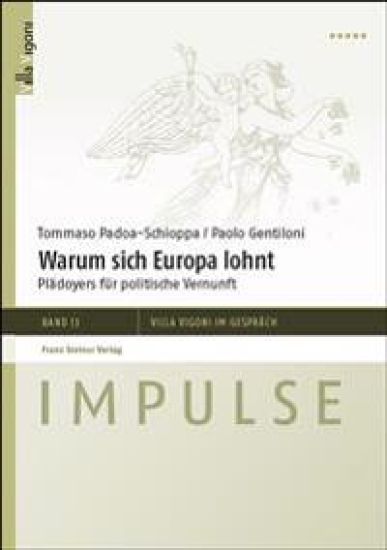
Warum Sich Europa Lohnt: Pladoyers Fur Politische Vernunft

Warum Sich Europa Lohnt: Pladoyers Fur Politische Vernunft

Paolo Gentiloni; Tommaso Padoa-Schioppa

Franz Steiner Verlag Wiesbaden GmbH
2019
sidottu
Tommaso Padoa-Schioppa (1940-2010) war ein prominenter italienischer Okonom, Politiker, Universitatslehrer und Intellektueller - zugleich war er italienischer Patriot, leidenschaftlicher Europaer und uberzeugter Vertreter des Gedankens der Einen Welt, in der Frieden, Gerechtigkeit und Wohlstand nicht langer exklusive Guter einzelner Nationen oder Kontinente sein konnen und sein durfen. Der in diesem Band zum ersten Mal in deutscher Sprache veroffentlichte Essay hat seinen Ursprung im terroristischen Angriff auf das World Trade Center 2001, geht aber als Pladoyer fur eine Politik des Augenmasses und der Vernunft programmatisch daruber hinaus: Padoa-Schioppa zeigt, dass es im Politischen keine einfachen Losungen gibt, auch wenn zahlreiche politische Formationen mit gegenteiligen Versprechen Anhanger gewinnen. Der zweite Beitrag, die Rede des ehemaligen italienischen Ministerprasidenten Paolo Gentiloni, vertieft diese Perspektive und nimmt die aktuellen nationalpopulistischen Tendenzen in Europa in den Blick. Die von den Populisten angebotenen Heilmittel fur Enttauschungen und Erwartungen, die sie selbst zum Teil schuren, sind alter als die EU und erscheinen vielen attraktiv. Diesen Kreislauf gilt es zu durchbrechen.

Europe, a Civil Power

Europe, a Civil Power

Tommaso Padoa-Schioppa

Federal Trust for Education Research
2004
nidottu
These essays expound with great clarity some important lessons to be learned from the uniting Europe over the past half century. Tomasso Padoa-Schioppa, drawing on his broad knowledge of European history, politics, economics and culture as well as his deep experience of European and international co-operation, analyses a number of the fundamental relationships involved: between the member states and the European Union, and between Britain and the Union in particular; between national cultural heritages and the making of Europe; between economics and the politics and institutions; and between European integration and the proocess of globalisation. He shows both extraordinary achievements of this adventure and the contradictions and incompletness that still characterise it. Tomasso Padoa-Schioppa, drawing on his broad knowledge of European history, politics, economics and culture as well as his deep experience of European and international co-operation, analyses a number of the fundamental relationships involved: between the member states and the European Union, and between Britain and the Union in particular; between national cultural heritages and the making of Europe; between economics and the politics and institutions; and between European integration and the proocess of globalisation.
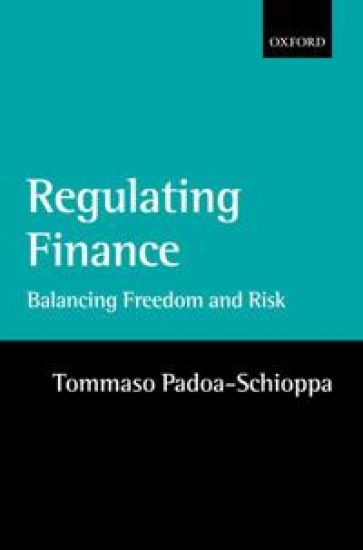
Regulating Finance

Regulating Finance

Tommaso Padoa-Schioppa

Oxford University Press
2004
sidottu
Grounding its analysis in the historical evolution of financial regulation, this book addresses a range of public policy issues that concern the design of financial regulation and its enforcement, and contributes several new ideas to the debate in this field. Financial systems have become more competitive across sectors of financial institutions and nations, and direct regulations have been removed in pursuit of efficiency. However, as the risk of institutional failures has increased, de-regulation has had to be followed by re-regulation. In which form should this happen? This book answers this question. First revisiting the issue of "why to regulate", Padoa-Schioppa argues that the need to continue to regulate banks in a special way follows from their key role as liquidity providers. At the same time, his argument recognizes the need for close interplay in the regulation of different financial sectors. The book goes on to discuss "how" regulation should be carried out in the modern environment. It should be market-friendly, but the balance between official intervention and market discipline is difficult to get right. Moreover, in an increasingly international context, financial regulation has to be evenly applied across countries to avoid regulatory arbitrage. The final part of the book turns to issues specifically connected with developments in the European Union. One major issue is the maintenance of financial stability in the Euro area where the financial system is becoming especially integrated. Another major issue is the appropriate role of central banks. As the literature and practice are still very much under development, Padoa-Schioppa analyses the general aspects of the financial stability function of central banks -- particularly in relation to the monetary policy and supervision functions -- as well as the tools available for the Eurosystem.
The Road to Monetary Union in Europe

The Road to Monetary Union in Europe

Tommaso Padoa-Schioppa

Oxford University Press
2000
nidottu
This book provides an indispensable guide to the economic, political and diplomatic process that led to the creation of the European single market and the signing of the Maastricht Treaty. In this new, expanded edition Padoa-Schioppa presents a lucid assessment of the opportunities and risks that EMU entailed; assesses the economic, monetary, political, and institutional significance of the euro; and reconsiders the rationale and underlying philosophy of EMU in the light of recent developments. Padoa-Schioppa has brought together a selection of his papers and speeches, covering 1982-94, from his work as Deputy Director General of the Banca d'Italia, and has edited them thoroughly to illuminate the recent history of European integration. A central theme of his book is the belief that a group of sovereign countries cannot for long sustain free trade, unrestricted capital movement, fixed exchange rates and full autonomy of national macroeconomic policies, and so need to move towards a single currency. He discusses extensively such issues as the single currency, the tasks of a European central bank, the ECU, the role of budgetary rules, currency competition, and the relationship between EMU and political union. The author has created an insider's guide to this topical issue for students, academics, policymakers and commentators alike. This book contains extracts from documents and an extensive chronology which will be of particular use for readers.
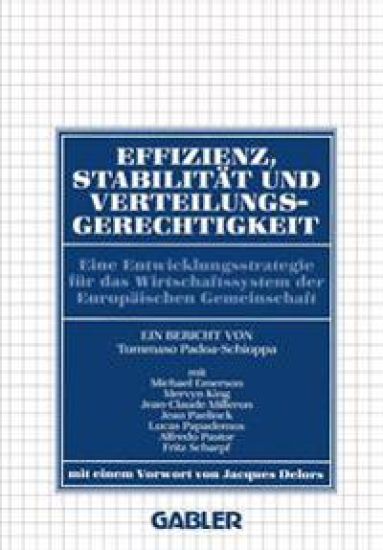
Effizienz, Stabilität und Verteilungsgerechtigkeit

Effizienz, Stabilität und Verteilungsgerechtigkeit

Tommaso Padoa-Schioppa; Michael Emerson

Gabler
1988
nidottu
Die Wissenschaft kann durch nichts ersetzt werden. Sie achtet darauf, daB die Re- geln der Kunst eingehalten werden. Auch auf die Gefahr hin, uns mitunter zu ermU- den, macht sie uns darauf aufmerksam, daB die verschiedenen Teile eines Werkes ein ausgewogenes Ganzes bilden mUssen. Kohiirenz und Geschlossenheit sind ihr ein Be- durfnis. Der Berieht, mit dem die Kommission der Europaischen Gemeinschaft eine kleine Gruppe von Wirtschaftswissenschaftlern unter der Leitung von T. Padoa-Schioppa beauftragt hat, ist ein wissenschaftliehes Werk. Das heiBt jedoch nicht, daB es nicht realitatsbezogen ware: Primar aus der Sieht der Wirtschaftswissenschaft wird nach einer Antwort auf zwei aktuelle Fragen gesucht, namlich welche Schwierigkeiten sich auf dem Weg zur Verwirklichung des groBen Binnenmarktes bis 1992 ergeben werden und wie das funktionale System der Gemeinschaft angepaBt werden sollte, urn diesen Schwierigkeiten bestmoglich zu begegnen. Wer praktische Erfahrungen beim Aufbau Europas gesammelt hat, wird bei der Aufzahlung der Schwierigkeiten nicht Uberrascht sein. Ich mochte allerdings auf den originellen Ansatz hinweisen, den die Verfasser des Beriehts zur Darstellung dieser Schwierigkeiten gewahlt haben. Nach Ansicht der Autoren erhellt dieser Ansatz, weshalb sieh bestimmte "natUrliche" Wege der Wirtschaftsintegration in der Praxis als zu eng herausgestellt haben: - Die Regel des komparativen Vorteils fUr bestimmte Sektoren, die haufig zur Be- grUndung der Bewegung und des Nutzens des AuBenhandels angefUhrt wird, ist nach Auffassung unserer Autoren nicht mehr alleinige Antriebskraft der Handels- integration. Die mikrookonomische Komplementaritat zwischen ahnlich struktu- rierten Wirtschaften dUrfte nieht weniger ausschlaggebend sein.