Kirjojen hintavertailu – 12 859 827 kirjaa ja 27 kauppaa

Kirjailija

Tommie Shelby

Kirjat ja teokset yhdessä paikassa: 9 kirjaa, julkaisuja vuosilta 2005–2024, suosituimpiin kuuluu The Racial Contract. Vertaile teosten hintoja ja tarkista saatavuus suomalaisista kirjakaupoista.

9 kirjaa

Kirjojen julkaisuvuodet: 2005–2024.

The Idea of Prison Abolition

The Idea of Prison Abolition

Tommie Shelby

PRINCETON UNIVERSITY PRESS
2024
pokkari
An incisive and sympathetic examination of the case for ending the practice of imprisonmentDespite its omnipresence and long history, imprisonment is a deeply troubling practice. In the United States and elsewhere, prison conditions are inhumane, prisoners are treated without dignity, and sentences are extremely harsh. Mass incarceration and its devastating impact on black communities have been widely condemned as neoslavery or “the new Jim Crow.” Can the practice of imprisonment be reformed, or does justice require it to be ended altogether? In The Idea of Prison Abolition, Tommie Shelby examines the abolitionist case against prisons and its formidable challenge to would-be prison reformers. Philosophers have long theorized punishment and its justifications, but they haven’t paid enough attention to incarceration or its related problems in societies structured by racial and economic injustice. Taking up this urgent topic, Shelby argues that prisons, once reformed and under the right circumstances, can be legitimate and effective tools of crime control. Yet he draws on insights from black radicals and leading prison abolitionists, especially Angela Davis, to argue that we should dramatically decrease imprisonment and think beyond bars when responding to the problem of crime. While a world without prisons might be utopian, The Idea of Prison Abolition makes the case that we can make meaningful progress toward this ideal by abolishing the structural injustices that too often lead to crime and its harmful consequences.
The Idea of Prison Abolition

The Idea of Prison Abolition

Tommie Shelby

PRINCETON UNIVERSITY PRESS
2022
sidottu
An incisive and sympathetic examination of the case for ending the practice of imprisonmentDespite its omnipresence and long history, imprisonment is a deeply troubling practice. In the United States and elsewhere, prison conditions are inhumane, prisoners are treated without dignity, and sentences are extremely harsh. Mass incarceration and its devastating impact on black communities have been widely condemned as neoslavery or “the new Jim Crow.” Can the practice of imprisonment be reformed, or does justice require it to be ended altogether? In The Idea of Prison Abolition, Tommie Shelby examines the abolitionist case against prisons and its formidable challenge to would-be prison reformers. Philosophers have long theorized punishment and its justifications, but they haven’t paid enough attention to incarceration or its related problems in societies structured by racial and economic injustice. Taking up this urgent topic, Shelby argues that prisons, once reformed and under the right circumstances, can be legitimate and effective tools of crime control. Yet he draws on insights from black radicals and leading prison abolitionists, especially Angela Davis, to argue that we should dramatically decrease imprisonment and think beyond bars when responding to the problem of crime. While a world without prisons might be utopian, The Idea of Prison Abolition makes the case that we can make meaningful progress toward this ideal by abolishing the structural injustices that too often lead to crime and its harmful consequences.
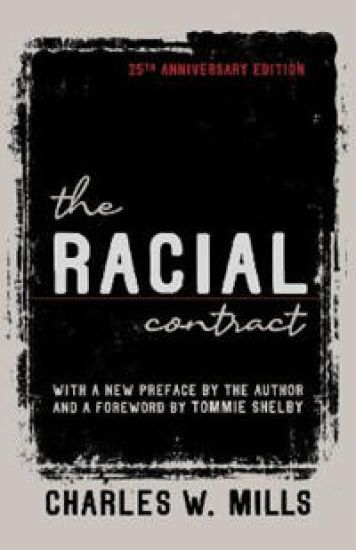
The Racial Contract

The Racial Contract

Charles W. Mills; Tommie Shelby

CORNELL UNIVERSITY PRESS
2022
pokkari

Halvin toimitettuna 32,50 €

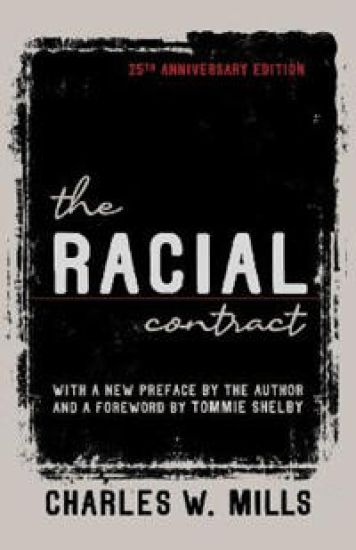
The Racial Contract puts classic Western social contract theory, deadpan, to extraordinary radical use. With a sweeping look at the European expansionism and racism of the last five hundred years, Charles W. Mills demonstrates how this peculiar and unacknowledged "contract" has shaped a system of global European domination: how it brings into existence "whites" and "non-whites," full persons and sub-persons, how it influences white moral theory and moral psychology; and how this system is imposed on non-whites through ideological conditioning and violence. The Racial Contract argues that the society we live in is a continuing white supremacist state. As this 25th anniversary edition-featuring a foreword by Tommy Shelbie and a new preface by the author-makes clear, the still-urgent The Racial Contract continues to inspire, provoke, and influence thinking about the intersection of the racist underpinnings of political philosophy.
The Racial Contract

The Racial Contract

Charles W. Mills; Tommie Shelby

CORNELL UNIVERSITY PRESS
2022
sidottu
The Racial Contract puts classic Western social contract theory, deadpan, to extraordinary radical use. With a sweeping look at the European expansionism and racism of the last five hundred years, Charles W. Mills demonstrates how this peculiar and unacknowledged "contract" has shaped a system of global European domination: how it brings into existence "whites" and "non-whites," full persons and sub-persons, how it influences white moral theory and moral psychology; and how this system is imposed on non-whites through ideological conditioning and violence. The Racial Contract argues that the society we live in is a continuing white supremacist state. As this 25th anniversary edition-featuring a foreword by Tommy Shelbie and a new preface by the author-makes clear, the still-urgent The Racial Contract continues to inspire, provoke, and influence thinking about the intersection of the racist underpinnings of political philosophy.
Dark Ghettos

Dark Ghettos

Tommie Shelby

The Belknap Press
2018
nidottu
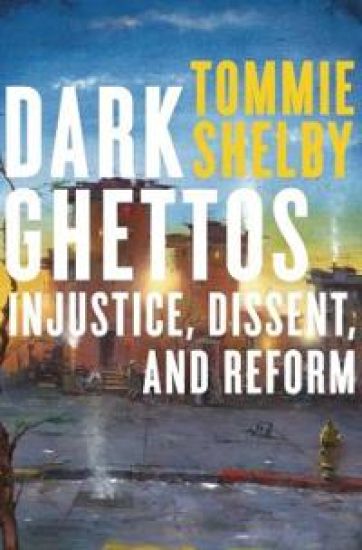
Winner of the Spitz Prize, Conference for the Study of Political ThoughtWinner of the North American Society for Social Philosophy Book AwardWhy do American ghettos persist? Scholars and commentators often identify some factor—such as single motherhood, joblessness, or violent street crime—as the key to solving the problem and recommend policies accordingly. But, Tommie Shelby argues, these attempts to “fix” ghettos or “help” their poor inhabitants ignore fundamental questions of justice and fail to see the urban poor as moral agents responding to injustice.“Provocative…[Shelby] doesn’t lay out a jobs program or a housing initiative. Indeed, as he freely admits, he offers ‘no new political strategies or policy proposals.’ What he aims to do instead is both more abstract and more radical: to challenge the assumption, common to liberals and conservatives alike, that ghettos are ‘problems’ best addressed with narrowly targeted government programs or civic interventions. For Shelby, ghettos are something more troubling and less tractable: symptoms of the ‘systemic injustice’ of the United States. They represent not aberrant dysfunction but the natural workings of a deeply unfair scheme. The only real solution, in this way of thinking, is the ‘fundamental reform of the basic structure of our society.’”—James Ryerson, New York Times Book Review
To Shape a New World

To Shape a New World

Tommie Shelby

The Belknap Press
2018
sidottu
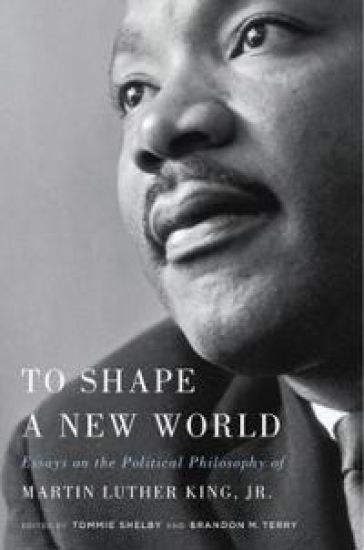
Martin Luther King, Jr., may be America’s most revered political figure, commemorated in statues, celebrations, and street names around the world. On the fiftieth anniversary of King’s assassination, the man and his activism are as close to public consciousness as ever. But despite his stature, the significance of King’s writings and political thought remains underappreciated. In To Shape a New World, Tommie Shelby and Brandon Terry write that the marginalization of King’s ideas reflects a romantic, consensus history that renders the civil rights movement inherently conservative—an effort not at radical reform but at “living up to” enduring ideals laid down by the nation’s founders. On this view, King marshaled lofty rhetoric to help redeem the ideas of universal (white) heroes, but produced little original thought. This failure to engage deeply and honestly with King’s writings allows him to be conscripted into political projects he would not endorse, including the pernicious form of “color blindness” that insists, amid glaring race-based injustice, that racism has been overcome. Cornel West, Danielle Allen, Martha Nussbaum, Robert Gooding-Williams, and other authors join Shelby and Terry in careful, critical engagement with King’s understudied writings on labor and welfare rights, voting rights, racism, civil disobedience, nonviolence, economic inequality, poverty, love, just-war theory, virtue ethics, political theology, imperialism, nationalism, reparations, and social justice. In King’s exciting and learned work, the authors find an array of compelling challenges to some of the most pressing political dilemmas of our present, and rethink the legacy of this towering figure.
Work Inequality Basic Income

Work Inequality Basic Income

Brishen Rogers; Philippe van Parjis; Dorian Warren; Tommie Shelby; Diane Coyle

Boston Review/Boston Critic Inc.
2017
pokkari
Technology and the loss of manufacturing jobs have many worried about future mass unemployment. It is in this context that basic income, a government cash grant given unconditionally to all, has gained support from a surprising range of advocates, from Silicon Valley to labor. Our contributors explore basic income's merits, not only as a salve for financial precarity, but as a path toward racial justice and equality. Others, more skeptical, see danger in a basic income designed without attention to workers' power and the quality of work. Together they offer a nuanced debate about what it will take to tackle inequality and what kind of future we should aim to create.
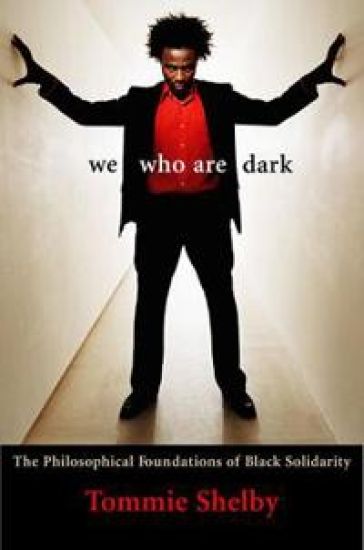
We Who Are Dark

We Who Are Dark

Tommie Shelby

The Belknap Press
2007
nidottu
African American history resounds with calls for black unity. From abolitionist times through the Black Power movement, it was widely seen as a means of securing a full share of America's promised freedom and equality. Yet today, many believe that black solidarity is unnecessary, irrational, rooted in the illusion of "racial" difference, at odds with the goal of integration, and incompatible with liberal ideals and American democracy. A response to such critics, We Who Are Dark provides the first extended philosophical defense of black political solidarity. Tommie Shelby argues that we can reject a biological idea of race and agree with many criticisms of identity politics yet still view black political solidarity as a needed emancipatory tool. In developing his defense of black solidarity, he draws on the history of black political thought, focusing on the canonical figures of Martin R. Delany and W. E. B. Du Bois, and he urges us to rethink many traditional conceptions of what black unity should entail. In this way, he contributes significantly to the larger effort to re-envision black politics and to modernize the objectives and strategies of black freedom struggles for the post-civil rights era. His book articulates a new African American political philosophy--one that rests firmly on anti-essentialist foundations and, at the same time, urges a commitment to defeating racism, to eliminating racial inequality, and to improving the opportunities of those racialized as "black."
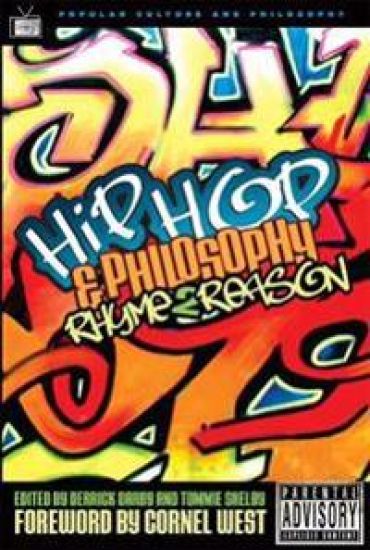
Hip-Hop and Philosophy

Hip-Hop and Philosophy

Derrick Darby; Tommie Shelby; Cornel West

Open Court Publishing Co ,U.S.
2005
pokkari
Is there too much violence in hip-hop music? What’s the difference between Kimberly Jones and the artist Lil' Kim? Is hip-hop culture a "black" thing? Is it okay for N. W. A. to call themselves niggaz and for Dave Chappelle to call everybody bitches? These witty, provocative essays ponder these and other thorny questions, linking the searing cultural issues implicit ? and often explicit ? in hip-hop to the weighty matters examined by the great philosophers of the past. The book shows that rap classics by Lauryn Hill, OutKast, and the Notorious B. I. G. can help uncover the meanings of love articulated in Plato's Symposium; that Rakim, 2Pac, and Nas can shed light on the conception of God's essence expressed in St. Thomas Aquinas's Summa Theologica; and explores the connection between Run-D. M. C., Snoop Dogg, and Hegel. Hip-Hop and Philosophy proves that rhyme and reason, far from being incompatible, can be mixed and mastered to contemplate life's most profound mysteries.