Kirjojen hintavertailu – 12 859 818 kirjaa ja 27 kauppaa

Kirjailija

Toni Schmader

Kirjat ja teokset yhdessä paikassa: 4 kirjaa, julkaisuja vuosilta 2011–2020, suosituimpiin kuuluu Interactive Psychology. Vertaile teosten hintoja ja tarkista saatavuus suomalaisista kirjakaupoista.

4 kirjaa

Kirjojen julkaisuvuodet: 2011–2020.

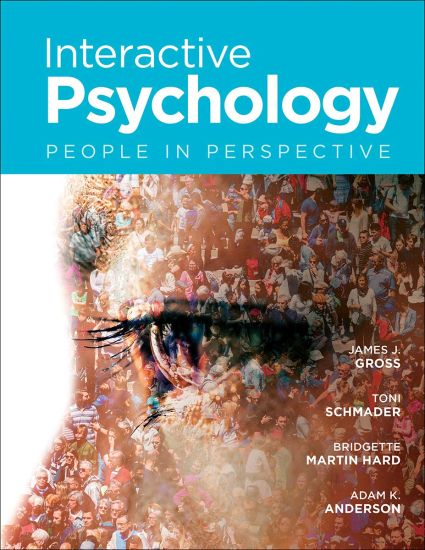
Interactive Psychology

Interactive Psychology

James J. Gross; Toni Schmader; Bridgette Martin Hard; Adam K. Anderson

WW Norton Co
2020
lisenssiavain
Interactive Psychology: People in Perspective is the first online textbook for introductory psychology that was conceived and built as an immersive, interactive online learning experience. Whether students read and work with this ebook on their phone, tablet or laptop, Interactive Psychology will help them succeed in their psychology course. Studies have shown that students who use interactive ebooks spend significantly more time on the text’s practice materials than students who use printed textbooks and students who test themselves frequently achieve better grades in their courses (Sommers, Shin, Greenebaum, Merker, & Sanders, 2019). Interactive Psychology embraces that research to improve student learning through interactive explorations, compelling videos, dynamic maps and graphs, and Check Your Understanding questions at the end of each study unit. With Interactive Psychology students learn psychology by doing psychology.
Interactive Psychology

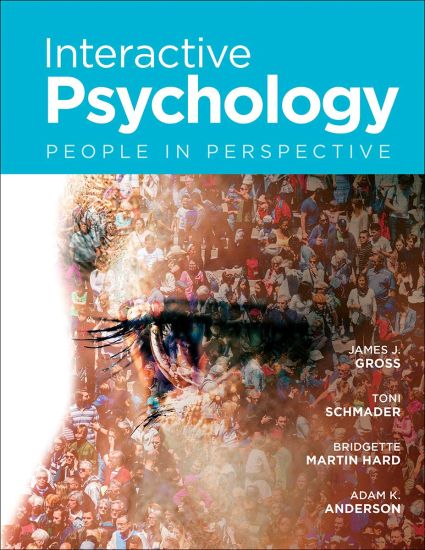
Interactive Psychology

James J. Gross; Toni Schmader; Bridgette Martin Hard; Adam K. Anderson

WW Norton Co
2020
lisenssiavain
Interactive Psychology: People in Perspective is the first online textbook for introductory psychology that was conceived and built as an immersive, interactive online learning experience. Whether students read and work with this ebook on their phone, tablet or laptop, Interactive Psychology will help them succeed in their psychology course. Studies have shown that students who use interactive ebooks spend significantly more time on the text’s practice materials than students who use printed textbooks and students who test themselves frequently achieve better grades in their courses (Sommers, Shin, Greenebaum, Merker, & Sanders, 2019). Interactive Psychology embraces that research to improve student learning through interactive explorations, compelling videos, dynamic maps and graphs, and Check Your Understanding questions at the end of each study unit. With Interactive Psychology students learn psychology by doing psychology.

Social Psychology

Social Psychology

Arndt Jamie; Greenberg Jeff; Landau Mark; Toni Schmader

Worth Publishers Inc.,U.S.
2015
sidottu
In this engaging new textbook, Greenberg, Schmader, Arndt, and Landau guide students through the rich diversity of the science of social psychology and its insights into everyday life. The book introduces students to five broad perspectives on human social behaviour: social cognition, cultural psychology, evolutionary theory, existential psychology, and social neuroscience. With the five perspectives serving as recurring themes, each chapter organically weaves together explanations of theory, research methods, empirical findings, and applications, showing how social psychologists accumulate and apply knowledge toward understanding and solving real-world problems. This is the ideal introduction to Social Psychology for undergraduate students. This textbook can also be purchased with the breakthrough online resource, LaunchPad, which offers innovative media content, curated and organised for easy assignability. LaunchPad's intuitive interface presents quizzing, flashcards, animations and much more to make learning actively engaging.
Stereotype Threat

Stereotype Threat

Michael Inzlicht; Toni Schmader

Oxford University Press Inc
2011
sidottu
The 21st century has brought with it unparalleled levels of diversity in the classroom and the workforce. It is now common to see in elementary school, high school, and university classrooms, not to mention boardrooms and factory floors, a mixture of ethnicities, races, genders, and religious affiliations. But these changes in academic and economic opportunities have not directly translated into an elimination of group disparities in academic performance, career opportunities, and levels of advancement. Standard explanations for these disparities, which are vehemently debated in the scientific community and popular press, range from the view that women and minorities are genetically endowed with inferior abilities to the view that members of these demographic groups are products of environments that frustrate the development of the skills needed for success. Although these explanations differ along a continuum of nature vs. nurture, they share in common a presumption that a large chunk of our population lacks the potential to achieve academic and career success. In contrast to intractable factors like biology or upbringing, the research summarized in this book suggests that factors in one's immediate situation play a critical yet underappreciated role in temporarily suppressing the intellectual performance of women and minorities, creating an illusion of group differences in ability. Research conducted over the course of the last fifteen years suggests the mere existence of cultural stereotypes that assert the intellectual inferiority of these groups creates a threatening intellectual environment for stigmatized individuals - a climate where anything they say or do is interpreted through the lens of low expectations. This stereotype threat can ultimately interfere with intellectual functioning and academic engagement, setting the stage for later differences in educational attainment, career choice, and job advancement.