Kirjojen hintavertailu – 12 859 819 kirjaa ja 27 kauppaa

Kirjailija

Tonio Hölscher

Kirjat ja teokset yhdessä paikassa: 16 kirjaa, julkaisuja vuosilta 1971–2025, suosituimpiin kuuluu Die Geschöpfe des Daidalos. Vertaile teosten hintoja ja tarkista saatavuus suomalaisista kirjakaupoista.

Nimi esiintyy myös muodoissa: Tonio Holscher

16 kirjaa

Kirjojen julkaisuvuodet: 1971–2025.

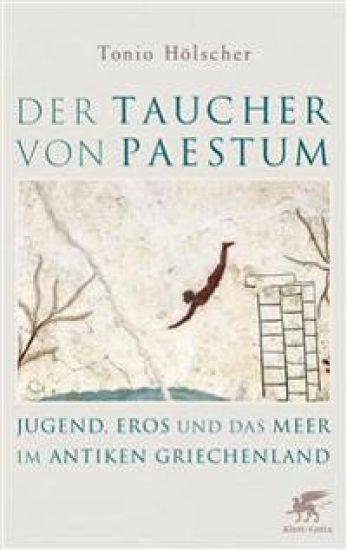
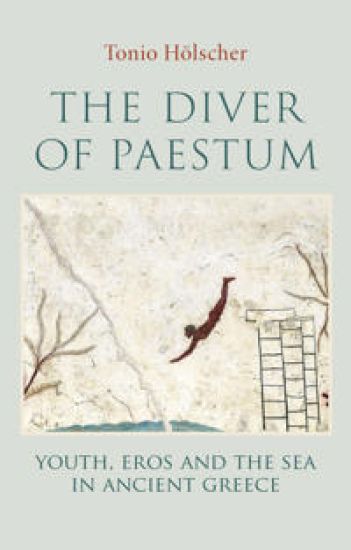
The Diver of Paestum

The Diver of Paestum

Tonio Holscher

JOHN WILEY AND SONS LTD
2025
sidottu

Halvin toimitettuna 28,50 €

Since its discovery in 1968, the painting of a diver on a tomb in Paestum, originally the Greek colony of Poseidonia in southern Italy, has left viewers spellbound. It depicts a beautiful and enigmatic scene: a young man dives headfirst into the water from a cliff or tower. The image is joined by others from the same tomb depicting a banquet of young people drinking wine, playing games and enjoying music. Understanding this painting is often seen as a key to unlocking some of the mysteries of ancient Greek culture – and therein lies the puzzle. What is the meaning of the diver? Is it, as many have argued, a metaphorical representation of the passage from life to a world beyond? The eminent art historian Tonio Hölscher rejects this view, arguing that there is nothing symbolic or metaphorical about the painting: the scenes celebrate the real lives of the Greek colonists of the early 5th century BC. The painting captures a young man’s spirited personality and pursuits during a life which may have been short, but was lived to the full. In a groundbreaking reversal of how the painting is typically interpreted, this book opens a window onto the world of Ancient Greece and its culture of athleticism, eroticism, love for nature and enjoyment of the sea. A joyful ode to youth, it is above all a unique portrait of the zest for life in Antiquity.
Mythenbilder Und Mentalitat in Athen Von Kleisthenes Zu Den Perserkriegen: Ein Versuch Zur Historischen Psychologie Der Griechen
Die Jahrzehnte um und nach 500 v. Chr. waren im antiken Griechenland mit der Einrichtung einer fruhen 'demokratischen' Staatsform in Athen und den Kriegen gegen die angreifenden Heere der Perser eine Zeit weitreichender weltgeschichtlicher Entscheidungen. Es existieren zahlreiche Bildwerke aus dieser Zeit, die unterschiedlichste Szenerien und Begebenheiten darstellen. Tonio Holscher geht in seiner Studie ausgehend von den Darstellungen auf den Bildwerken der Frage nach, in welcher psychologischen Verfassung die Zeitgenossen die Herausforderungen ihrer Epoche bewaltigt haben. Bilder von Mythen der Vorzeit machen deutlich, dass in Athen eine Atmosphare starker kollektiver Erregung herrschte. Schreckensvolle Schilderungen vom Untergang Troias und exzessive Szenen dionysischer Lebensfreude stellen ein weites Spektrum von Angst bis Uberschwang vor Augen und ein neuer Zyklus von Taten des athenischen Helden Theseus bezeugt ein patriotisches Selbstbewusstsein, in dem der Glanz und die Tatkraft der Jugend zur Verteidigung griechischer Lebenskultur im Vordergrund standen. In Bildern von Gottern und Gottinnen, die von Liebe zu schonen Madchen und Junglingen ergriffen sind, druckt sich das Hochgefuhl aus, in der Gunst der Gotter zu stehen. Darstellungen des Sangers Orpheus in Thrakien hingegen lassen ein ambivalentes Verhaltnis der Athener zu nicht-griechischen Fremden erkennen, das sich zwischen Phobie und Bruckenschlag bewegt.
Krieg und Kunst im antiken Griechenland und Rom
Bilder des Krieges sind ein dominantes Thema in der griechischen und römischen Kunst. Darstellungen von Kriegertum und Kampf sind visuelle Zeugnisse sozialer Ideale, öffentliche Siegesdenkmäler sind Faktoren der politischen Herrschaft. Nachdem die Forschung eine große Zahl einzelner Denkmäler und Gattungen von Bildwerken untersucht hat, wird in diesem Buch eine Synthese vorgelegt, in der die unterschiedlichen Konzepte und Wahrnehmungen des Krieges von der griechischen Frühzeit bis zur späten römischen Kaiserzeit kontrastiv gegeneinander gestellt werden. Dabei werden nicht nur die Funktionen der Bildwerke für die explizite Verherrlichung von Sieg und Ruhm dargestellt, sondern vor allem auch die ambivalenten impliziten Triebkräfte untersucht, die der kriegerischen Gewalt als Motivationen zugrunde liegen. In vier Kapiteln wird jeweils eine dieser Motivationen als prägende Kraft in einer Epoche des antiken Kriegswesens vor Augen geführt: Archaisches Griechenland: Glanz und Exzess des kriegerischen Heldentums; Klassisches Griechenland: Impulse und Risiken der politischen Identität; Alexander der Große bis Augustus: Ambition und Manifestation universaler Herrschaft; Römische Kaiserzeit: Imperiale Ideologie und militärische Realität.
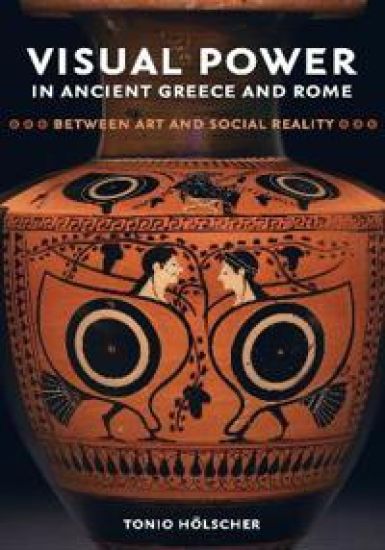
Visual Power in Ancient Greece and Rome

Visual Power in Ancient Greece and Rome

Tonio Hölscher

University of California Press
2018
sidottu
Visual culture was an essential part of ancient social, religious, and political life. Appearance and experience of beings and things was of paramount importance. In Visual Power in Ancient Greece and Rome, Tonio Hölscher explores the fundamental phenomena of Greek and Roman visual culture and their enormous impact on the ancient world, considering memory over time, personal appearance, conceptualization and representation of reality, and significant decoration as fundamental categories of art as well as of social practice. With an emphasis on public spaces such as sanctuaries, agora and forum, Hölscher investigates the ways in which these spaces were used, viewed, and experienced in religious rituals, political manifestations, and social interaction.
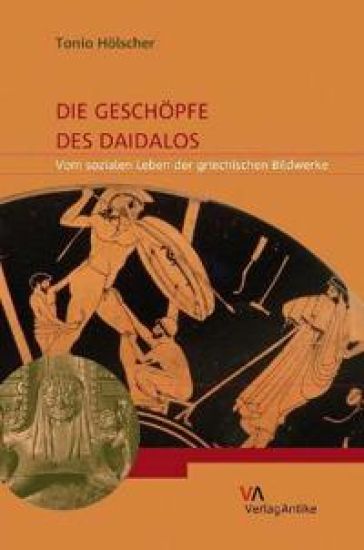
Die Geschöpfe des Daidalos

Die Geschöpfe des Daidalos

Tonio Holscher

Verlag Antike
2018
nidottu
The ancient Greeks have developed a culture of sight of extraordinary density and diversity. They lived surrounded by images that were present in all meaningful living spaces and responded to the essential needs of social life. In this book, which was created in connection with a cycle of lectures by the Chaire du Louvre, Tonio Hölscher poses a fundamental question: What role did these images play in the lives of the inhabitants of the Greek cities? All the images had a precise function, be it in public spaces - sanctuaries and temples, political buildings, sports facilities, theaters, necropolises - or in private homes. They represented a 'society' with its own vital life force. Tonio Hölscher's research focuses on the image culture and the social rules and norms that guided the interaction between members of the urban communities and the images. It is necessary to break away from the modern "museum habitus" of the art viewer and to develop an understanding of "living with pictures".
Aneignung Und Abgrenzung: Wechselnde Perspektiven Auf Die Antithese Von Ost Und West in Der Griechischen Antike
Der Band vereint die Beitrage einer Tagung des Exzellenzclusters Asien und Europa im globalen Kontext, die an der Universitat Heidelberg stattfand. Im Fokus steht die Antithese zwischen Ost und West, die in der griechischen Antike zwischen dem 6. und dem 2. Jahrhundert v. Chr. konstruiert wurde. Sie wird hier als ein vielschichtiges Spannungsfeld begriffen, auf dem politische, gesellschaftliche und kulturelle Strukturen und Impulse von beiden Seiten in eine dynamische Wechselwirkung eintraten. Verschiedene Aspekte von Kultur Religion, Wissenschaft, Weltsicht, Wirtschaft, Architektur und Lebensstil werden mit Blick auf diesen Gegensatz nebeneinander gestellt. Archaologen, Historiker und Philologen aus den Bereichen des Alten Orients und des antiken Griechenlands betrachten parallel jeweils einen dieser Sektoren, um Ubereinstimmungen und Unterschiede zwischen ihnen erkennbar zu machen. Durch diesen balancierten und flexiblen Dialog sollen die Dominanz der westlichen Perspektive und der monolithische Charakter des daraus abgeleiteten Konzeptes Orient versus Westliche Welt aufgebrochen und uberwunden werden, ohne dass die historische Wirkmacht dieser Konzepte negiert wurde.
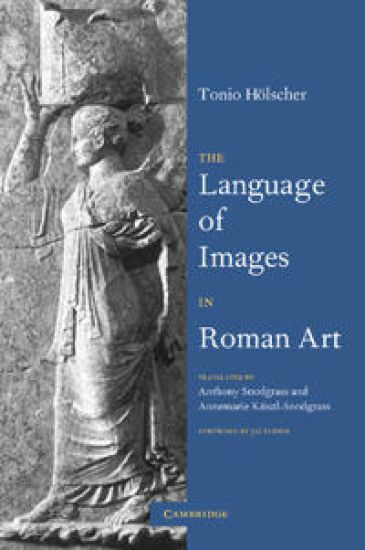
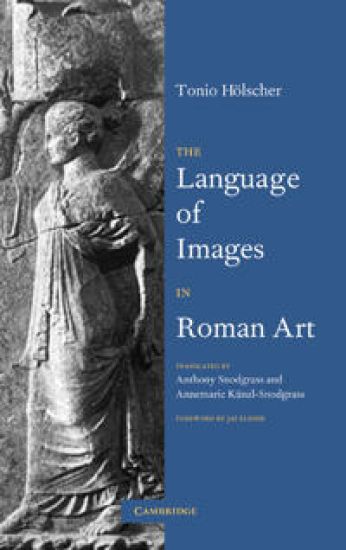
The Language of Images in Roman Art

The Language of Images in Roman Art

Tonio Hölscher; Jas Elsner

Cambridge University Press
2004
pokkari
This book, first published in 2004, develops a theory for the understanding of Roman pictorial art. By treating Roman art as a semantic system it establishes a connection between artistic forms and the ideological messages contained within. The history of Roman art traditionally followed the model of a sequence of stylistic phases affecting the works of their era in the manner of a uniform Zeitgeist. By contrast, the author shows different stylistic forms being used for different themes and messages. The reception of Greek models, a key phenomenon of Roman art, thus appear in a new light. The formulations of specific messages are established from Greek art types of different eras serving to express Roman ideological values: classical forms for the grandeur of the state, Hellenistic forms for the struggling effort of warfare. In this way a conceptual and comprehensible pictorial language arose, uniting the multicultural population of the Roman state.
The Language of Images in Roman Art

The Language of Images in Roman Art

Tonio Hölscher; Jas Elsner

Cambridge University Press
2004
sidottu
This book, first published in 2004, develops a theory for the understanding of Roman pictorial art. By treating Roman art as a semantic system it establishes a connection between artistic forms and the ideological messages contained within. The history of Roman art traditionally followed the model of a sequence of stylistic phases affecting the works of their era in the manner of a uniform Zeitgeist. By contrast, the author shows different stylistic forms being used for different themes and messages. The reception of Greek models, a key phenomenon of Roman art, thus appear in a new light. The formulations of specific messages are established from Greek art types of different eras serving to express Roman ideological values: classical forms for the grandeur of the state, Hellenistic forms for the struggling effort of warfare. In this way a conceptual and comprehensible pictorial language arose, uniting the multicultural population of the Roman state.