Kirjojen hintavertailu – 12 903 725 kirjaa ja 27 kauppaa

Kirjailija

Tony McCaffrey

Kirjat ja teokset yhdessä paikassa: 14 kirjaa, julkaisuja vuosilta 1997–2026, suosituimpiin kuuluu The Almost Last Christmas. Vertaile teosten hintoja ja tarkista saatavuus suomalaisista kirjakaupoista.

14 kirjaa

Kirjojen julkaisuvuodet: 1997–2026.

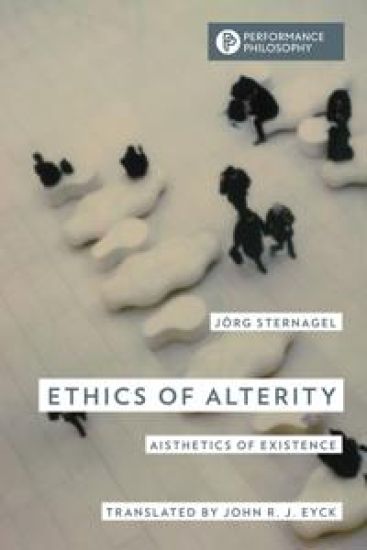
Ethics of Alterity

Ethics of Alterity

Jörg Sternagel; Tony McCaffrey

BLOOMSBURY PUBLISHING PLC
2026
nidottu
Providing a solid media-philosophical groundwork, the book contributes to the theory of alterity in Performance Philosophy, while stimulating and inspiring future inquiries where studies in media, art, and literature intersect with philosophy. It collects a selective as well as productive diversity of philosophical, literary, and artistic figures of thought, attaining an exacting framework as a result of a clearly elaborated ethics of alterity, innovatively opened up by way of an aisthetics of existence: Touching upon the Aristotelian concept of aisthesis, the material, perceptual and sensory dimensions of everyday bodily existence are highlighted to move beyond what aesthetics in Modern Philosophy just specializes in, namely art and the beautiful. The notion of existence is therefore borrowed from Maurice Merleau-Ponty, who understands it as something concrete and richly interrelated, so as to avoid the dualisms both of psychological processes of consciousness and of physiological mechanisms. It is thus made explicit such that the unity of body and soul is not any arbitrarily arranged connection between “subject” and “object” but, rather, that it is enacted at every instant in the movement of existence. Imaginatively then, the book puts into writing how alterity not only can be treated theoretically but can be also made accessible through writing as well as rendered relatable through reading. That is why it deals with exemplary interpersonal encounters in the lifeworld, in the arts, and in the media, which are initially thematized as intercorporeal experiences, so as to enable an approach for an ethics of alterity by way of, in particular, sites located within a phenomenology of perception oriented towards the lived body.

Giving and Taking Voice in Learning Disabled Theatre
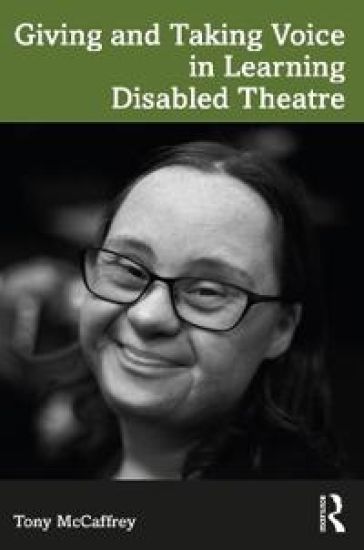
Giving and Taking Voice in Learning Disabled Theatre offers unique insight into the question of ‘voice’ in learning disabled theatre and what is gained and lost in making performance. It is grounded in the author's 18 years of making theatre with Different Light Theatre company in Christchurch, New Zealand, and includes contributions from the artists themselves. This book draws on an extensive archive of performer interviews, recordings of rehearsal processes, and informal logs of travelling together and sharing experience. These accounts engage with the practical aesthetics of theatre-making as well as their much wider ethical and political implications, relevant to any collaborative process seeking to represent the under- or un-represented. Giving and Taking Voice in Learning Disabled Theatre asks how care and support can be tempered with artistic challenge and rigour and presents a case for how listening learning disabled artists to speech encourages attunement to indigenous knowledge and the cries of the planet in the current socio-ecological crisis. This is a vital and valuable book for anyone interested in learning disabled theatre, either as a performer, director, dramaturg, critic, or spectator.
Giving and Taking Voice in Learning Disabled Theatre
Giving and Taking Voice in Learning Disabled Theatre offers unique insight into the question of ‘voice’ in learning disabled theatre and what is gained and lost in making performance. It is grounded in the author's 18 years of making theatre with Different Light Theatre company in Christchurch, New Zealand, and includes contributions from the artists themselves. This book draws on an extensive archive of performer interviews, recordings of rehearsal processes, and informal logs of travelling together and sharing experience. These accounts engage with the practical aesthetics of theatre-making as well as their much wider ethical and political implications, relevant to any collaborative process seeking to represent the under- or un-represented. Giving and Taking Voice in Learning Disabled Theatre asks how care and support can be tempered with artistic challenge and rigour and presents a case for how listening learning disabled artists to speech encourages attunement to indigenous knowledge and the cries of the planet in the current socio-ecological crisis. This is a vital and valuable book for anyone interested in learning disabled theatre, either as a performer, director, dramaturg, critic, or spectator.
Ethics of Alterity

Ethics of Alterity

Jörg Sternagel; Tony McCaffrey

BLOOMSBURY PUBLISHING PLC
2023
sidottu
Providing a solid media-philosophical groundwork, the book contributes to the theory of alterity in Performance Philosophy, while stimulating and inspiring future inquiries where studies in media, art, and literature intersect with philosophy. It collects a selective as well as productive diversity of philosophical, literary, and artistic figures of thought, attaining an exacting framework as a result of a clearly elaborated ethics of alterity, innovatively opened up by way of an aisthetics of existence: Touching upon the Aristotelian concept of aisthesis, the material, perceptual and sensory dimensions of everyday bodily existence are highlighted to move beyond what aesthetics in Modern Philosophy just specializes in, namely art and the beautiful. The notion of existence is therefore borrowed from Maurice Merleau-Ponty, who understands it as something concrete and richly interrelated, so as to avoid the dualisms both of psychological processes of consciousness and of physiological mechanisms. It is thus made explicit such that the unity of body and soul is not any arbitrarily arranged connection between “subject” and “object” but, rather, that it is enacted at every instant in the movement of existence. Imaginatively then, the book puts into writing how alterity not only can be treated theoretically but can be also made accessible through writing as well as rendered relatable through reading. That is why it deals with exemplary interpersonal encounters in the lifeworld, in the arts, and in the media, which are initially thematized as intercorporeal experiences, so as to enable an approach for an ethics of alterity by way of, in particular, sites located within a phenomenology of perception oriented towards the lived body.
Incapacity and Theatricality

Incapacity and Theatricality

Tony McCaffrey

Routledge
2020
nidottu
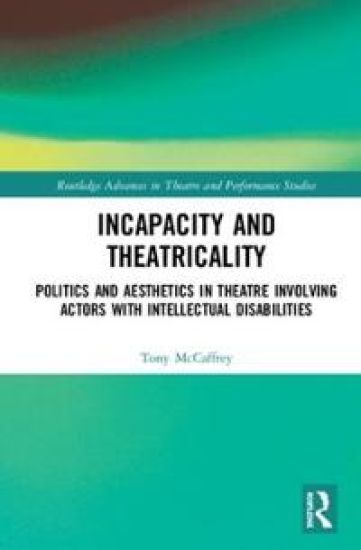
Incapacity and Theatricality acknowledges the distinctive contribution to contemporary theatrical performance made by actors with intellectual disabilities. It presents a close examination of certain key theatrical performances across a variety of different media, including John Cassavetes’ 1963 social issues film A Child Is Waiting; the performance art collaboration between Robert Wilson and Christopher Knowles; and the provocative pranksterism of Christoph Schlingensief’s talent show mockumentary FreakStars 3000. Tracing a global path of performances, Incapacity and Theatricality offers an analysis of how actors with intellectual disabilities have emerged onto the main stage, and how their inclusion calls into question long-held assumptions about both theatre and intellectual disability. For postgraduate students, or anyone interested in the shifting dynamics of twenty-first century theatre, McCaffrey’s work offers a vital consideration of the intersubjective relations between people with and without intellectual disabilities and ultimately addresses urgent questions about the situation and representation of the contemporary subject caught up somewhere between incapacity and theatricality.
Incapacity and Theatricality

Incapacity and Theatricality

Tony McCaffrey

CRC Press Inc
2018
sidottu
Incapacity and Theatricality acknowledges the distinctive contribution to contemporary theatrical performance made by actors with intellectual disabilities. It presents a close examination of certain key theatrical performances across a variety of different media, including John Cassavetes’ 1963 social issues film A Child Is Waiting; the performance art collaboration between Robert Wilson and Christopher Knowles; and the provocative pranksterism of Christoph Schlingensief’s talent show mockumentary FreakStars 3000. Tracing a global path of performances, Incapacity and Theatricality offers an analysis of how actors with intellectual disabilities have emerged onto the main stage, and how their inclusion calls into question long-held assumptions about both theatre and intellectual disability. For postgraduate students, or anyone interested in the shifting dynamics of twenty-first century theatre, McCaffrey’s work offers a vital consideration of the intersubjective relations between people with and without intellectual disabilities and ultimately addresses urgent questions about the situation and representation of the contemporary subject caught up somewhere between incapacity and theatricality.
Overcome Any Obstacle to Creativity

Overcome Any Obstacle to Creativity

Tony McCaffrey

Rowman Littlefield
2018
sidottu
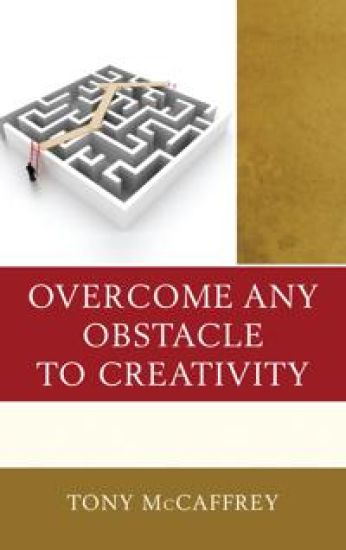
The overall purpose of the book is to present (1) the best science on creativity and innovation in the most practical way possible and (2) a new way of teaching called the Nonsense Method, which relies on humans’ incredible ability to create sense out of apparent nonsense and have fun while doing it. The central theory of the book, the Obscure Features Hypothesis for Innovation (OFH), is the first approach to innovation that yields effective counter techniques to all known cognitive obstacles to innovation. The OFH states that any creative solution is built upon at least one commonly overlooked (i.e., obscure) or new feature of the problem. Each chapter ends with puzzles that relate to the cognitive obstacle and counter technique discussed in the chapter. Two hints and a solution for each puzzle are given at the book’s end. The Nonsense Method of Teaching focuses upon universal puzzles that can be adapted to any subject. These universal puzzles situate vocabulary words and ideas from any subject matter in situations that need to be connected and thus made sense of.
Overcome Any Obstacle to Creativity

Overcome Any Obstacle to Creativity

Tony McCaffrey

Rowman Littlefield
2018
nidottu
The overall purpose of the book is to present (1) the best science on creativity and innovation in the most practical way possible and (2) a new way of teaching called the Nonsense Method, which relies on humans’ incredible ability to create sense out of apparent nonsense and have fun while doing it. The central theory of the book, the Obscure Features Hypothesis for Innovation (OFH), is the first approach to innovation that yields effective counter techniques to all known cognitive obstacles to innovation. The OFH states that any creative solution is built upon at least one commonly overlooked (i.e., obscure) or new feature of the problem. Each chapter ends with puzzles that relate to the cognitive obstacle and counter technique discussed in the chapter. Two hints and a solution for each puzzle are given at the book’s end. The Nonsense Method of Teaching focuses upon universal puzzles that can be adapted to any subject. These universal puzzles situate vocabulary words and ideas from any subject matter in situations that need to be connected and thus made sense of.