Kirjojen hintavertailu – 12 859 818 kirjaa ja 27 kauppaa

Kirjailija

Tor Hernes

Kirjat ja teokset yhdessä paikassa: 8 kirjaa, julkaisuja vuosilta 2007–2022, suosituimpiin kuuluu Organisering i en verden i bevegelse. Vertaile teosten hintoja ja tarkista saatavuus suomalaisista kirjakaupoista.

8 kirjaa

Kirjojen julkaisuvuodet: 2007–2022.

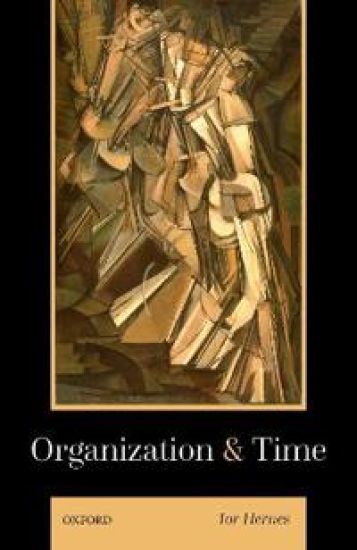
Organization and Time

Organization and Time

Tor Hernes

Oxford University Press
2022
sidottu
Observed through a temporal lens, organizational life fluctuates among moments of instantaneity, enduring continuity, and imagination of distant times. This movement stems from the fact that actors are continually faced with multiple intersecting temporalities, obliging them to make choices about what to do in the present, how to understand the past they emerge from, and how to stake out a possible future. Although scholars have widely recognized actors' multitemporal reality, it remains to be more fully theorized into an integrative framework. In this book, Tor Hernes takes up this challenge by combining foundational ideas from philosophy, sociology, and organization theory into an integrative theoretical framework of organizational time. Based on a review of the literature, his definition of time includes four dimensions: experience, events, resource, and practice. He provides examples of how these four dimensions evolve through mutual interplay and how they are underpinned by what he calls narrative trajectory. He then discusses implications for key topics in organizational research, including materiality, leadership and continuity and change. Organization and Time is for scholars and advanced students of organization studies, management studies, technology studies, and sociology.
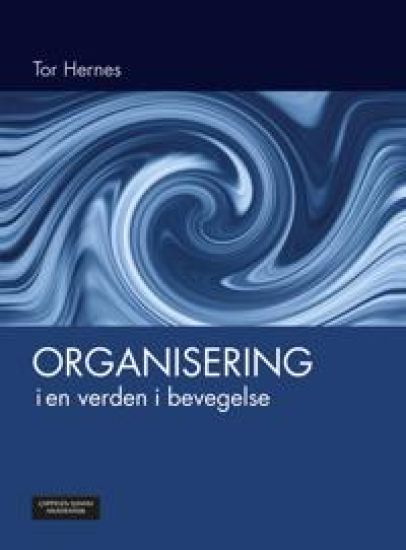
Organisering i en verden i bevegelse

Organisering i en verden i bevegelse

Tor Hernes

Cappelen Damm akademisk
2016
nidottu
Organisering i en verden i bevegelse tar leseren med inn i organiseringens verden, hvor organisatoriske hendelser, dramaer, suksesser og relasjoner reelt utspiller seg. Bokens ståsted er et prosess- og praksisperspektiv, noe som gir forståelse av den faktiske dynamikk og kompleksitet som preger organisasjoner. Den gir dermed et «bottom-up»-syn på organisering og organisasjoner. Første del omhandler bokens filosofiske og analytiske grunnlag, og prosessfilosofi og pragmatisme. Andre del presenterer et teoretisk rammeverk som gjør det mulig å forstå organiseringsprosesser. Tredje del knytter organisering opp mot utvalgte organisasjonsteoretiske begreper, som for eksempel læring, endring, strategi, makt, struktur og kultur og identitet. Fjerde del beskriver hvordan organiseringsprosesser studeres og analyseres, og hvordan oppgaver kan skrives. Hver del avsluttes med foreslåtte øvelser og spørsmål. Organisering i en verden i bevegelse er skrevet spesielt for studenter innen organisasjons- og ledelsesfag, men vil også være nyttig for ledere, konsulenter og andre som er opptatt av å bedre forstå strategi og endring fra et prosessperspektiv.
A Process Theory of Organization

A Process Theory of Organization

Tor Hernes

Oxford University Press
2014
nidottu
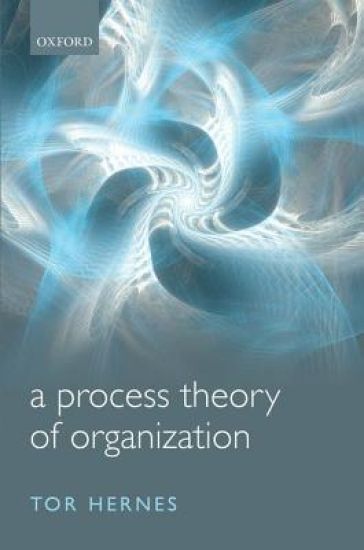
This book presents a novel and comprehensive process theory of organization applicable to 'a world on the move', where connectedness prevails over size, flow prevails over stability, and temporality prevails over spatiality. The framework developed in the book draws upon process thinking in a number of areas, including process philosophy, pragmatism, phenomenology, and science and technology studies. Salient ideas from these schools are carefully woven into a process theory of organization, which makes the book not only a thought provoking theoretical contribution, but also a much-needed glimpse into the challenges of organizing in a complex and moving world. Taking a distinctly temporal view of organizational life the author shows how actors continually carve out their temporal existence from being in the flow of time. This on-going work, in which technologies, concepts, and social actors take part, is crucial for the making of any type of organizational formation. A key construct of the book is that of events, which provide force, movement, and historicity to organizational life. The book is suitable for scholars and advanced level students in organization studies, management studies, technology studies, and sociology. It contains a number of practical examples to illustrate the theoretical framework.
A Process Theory of Organization

A Process Theory of Organization

Tor Hernes

Oxford University Press
2014
sidottu
This book presents a novel and comprehensive process theory of organization applicable to 'a world on the move', where connectedness prevails over size, flow prevails over stability, and temporality prevails over spatiality. The framework developed in the book draws upon process thinking in a number of areas, including process philosophy, pragmatism, phenomenology, and science and technology studies. Salient ideas from these schools are carefully woven into a process theory of organization, which makes the book not only a thought provoking theoretical contribution, but also a much-needed glimpse into the challenges of organizing in a complex and moving world. Taking a distinctly temporal view of organizational life the author shows how actors continually carve out their temporal existence from being in the flow of time. This on-going work, in which technologies, concepts, and social actors take part, is crucial for the making of any type of organizational formation. A key construct of the book is that of events, which provide force, movement, and historicity to organizational life. The book is suitable for scholars and advanced level students in organization studies, management studies, technology studies, and sociology. It contains a number of practical examples to illustrate the theoretical framework.
Understanding Organization as Process
Organization takes place in a tangled world, intermeshed by changing markets, products, standards, technologies, institutions and social groups. Coming to grips with the complexity and fluidity of organization and management is a persistent problem for scholars and practitioners alike, which is why process issues have received renewed interest in recent years. This book, aimed at scholars and higher level students, frames some of these issues in novel and instructive ways. Process views have existed since before the early Greek philosophers and have made decisive marks in all sciences. Alfred North Whitehead’s classic work is a landmark in process philosophy, and his thinking provides renewed impetus to social scientists in search of an expanded framework of process thinking. Theorists such as Niklas Luhmann, Bruno Latour, Karl Weick and James March have contributed significantly towards a process view of organization. In this book, central aspects of their thinking are interpreted and discussed with the help of a broader canvas of process thinking provided by Whitehead. The comparisons do not only allow for interesting connections to be made between the theorists, but they also enable understanding to be made of the thinking behind their respective works. From the analysis, ideas are suggested for a framework for process-based organizational analysis. Advanced students and academics in sociology, organization studies and management studies will find this book useful in its discussion of such subjects as organization theory, process philosophy and process studies.
Ethical Dilemmas in Management

Ethical Dilemmas in Management

Christina Garsten; Tor Hernes

Routledge
2008
nidottu
This exciting new text engages with the issue of ethical dilemmas encountered in different organizations. Rather than exploring the definition of ethical conduct, this book focuses on the way in which the process of organization produces dilemmas of ethical behaviour. Using illustrative accounts from corporate settings as a basis, the book explores the conditions that lead to ethical dilemmas and the strategies organizations adopt to deal with these dilemmas or steer away from them. The book suggests that ethical dilemmas are often dealt with by directing attention away from the core problem, rather than engaging with and solving it. This is a fascinating text, which raises important questions and provides a deeper understanding of the dynamics of ethical processes. A company’s ethical behaviour is a major criterion by which the company, its products and services are judged and is therefore crucial to sound management in today’s organizations. Ethical Dilemmas in Management is essential reading for all students of business and management and ethics.
Ethical Dilemmas in Management

Ethical Dilemmas in Management

Christina Garsten; Tor Hernes

Routledge
2008
sidottu
This exciting new text engages with the issue of ethical dilemmas encountered in different organizations. Rather than exploring the definition of ethical conduct, this book focuses on the way in which the process of organization produces dilemmas of ethical behaviour. Using illustrative accounts from corporate settings as a basis, the book explores the conditions that lead to ethical dilemmas and the strategies organizations adopt to deal with these dilemmas or steer away from them. The book suggests that ethical dilemmas are often dealt with by directing attention away from the core problem, rather than engaging with and solving it. This is a fascinating text, which raises important questions and provides a deeper understanding of the dynamics of ethical processes. A company’s ethical behaviour is a major criterion by which the company, its products and services are judged and is therefore crucial to sound management in today’s organizations. Ethical Dilemmas in Management is essential reading for all students of business and management and ethics.
Understanding Organization as Process
Organization takes place in a tangled world, intermeshed by changing markets, products, standards, technologies, institutions and social groups. Coming to grips with the complexity and fluidity of organization and management is a persistent problem for scholars and practitioners alike, which is why process issues have received renewed interest in recent years. This book, aimed at scholars and higher level students, frames some of these issues in novel and instructive ways. Process views have existed since before the early Greek philosophers and have made decisive marks in all sciences. Alfred North Whitehead’s classic work is a landmark in process philosophy, and his thinking provides renewed impetus to social scientists in search of an expanded framework of process thinking. Theorists such as Niklas Luhmann, Bruno Latour, Karl Weick and James March have contributed significantly towards a process view of organization. In this book, central aspects of their thinking are interpreted and discussed with the help of a broader canvas of process thinking provided by Whitehead. The comparisons do not only allow for interesting connections to be made between the theorists, but they also enable understanding to be made of the thinking behind their respective works. From the analysis, ideas are suggested for a framework for process-based organizational analysis. Advanced students and academics in sociology, organization studies and management studies will find this book useful in its discussion of such subjects as organization theory, process philosophy and process studies.