Kirjojen hintavertailu – 12 859 819 kirjaa ja 27 kauppaa

Kirjailija

Toral Patel-Weynand

Kirjat ja teokset yhdessä paikassa: 4 kirjaa, julkaisuja vuosilta 1996–2010, suosituimpiin kuuluu Ecosystems. Vertaile teosten hintoja ja tarkista saatavuus suomalaisista kirjakaupoista.

4 kirjaa

Kirjojen julkaisuvuodet: 1996–2010.

Ecosystems

Ecosystems

Kristiina Vogt; John Gordon; John Wargo; Daniel Vogt; Heidi Asbjornsen; Peter A. Palmiotto; Heidi J. Clark; Jennifer L. O'Hara; William S. Keeton; Toral Patel-Weynand; Evie Witten

Springer-Verlag New York Inc.
1996
nidottu
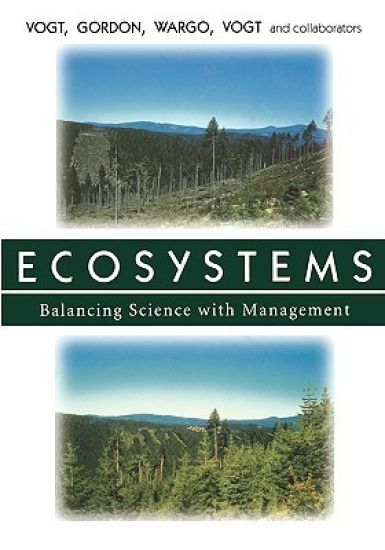
Ecosystem management has gained widespread visibility as an approach to the management of land to achieve sustainable natural resource use. Despite widespread interest in this emerging management paradigm, Ecosystems: Balancing Science with Management is the first book to directly propose approaches for implementing ecosystem management, give examples of viable tools, and discuss the potential implications of implementing an ecosystem approach. These ideas are framed in a historical context that examines the disjunction between ecological theory, environmental legislation and natural resources management.
Ecosystems

Ecosystems

Kristiina Vogt; John Gordon; John Wargo; Daniel Vogt; Heidi Asbjornsen; Peter A. Palmiotto; Heidi J. Clark; Jennifer L. O'Hara; William S. Keeton; Toral Patel-Weynand; Evie Witten

Springer-Verlag New York Inc.
1996
sidottu
Ecosystem management has gained widespread visibility as an approach to the management of land to achieve sustainable natural resource use. Despite widespread interest in this emerging management paradigm, Ecosystems: Balancing Science with Management is the first book to directly propose approaches for implementing ecosystem management, give examples of viable tools, and discuss the potential implications of implementing an ecosystem approach. These ideas are framed in a historical context that examines the disjunction between ecological theory, environmental legislation and natural resources management.
Sustainability Unpacked

Sustainability Unpacked

Kristiina Vogt; Toral Patel-Weynand; Maura Shelton; Daniel J Vogt; John Gordon; Cal Mukumoto; Asep. S. Suntana; Patricia A. Roads

Earthscan Ltd
2010
sidottu
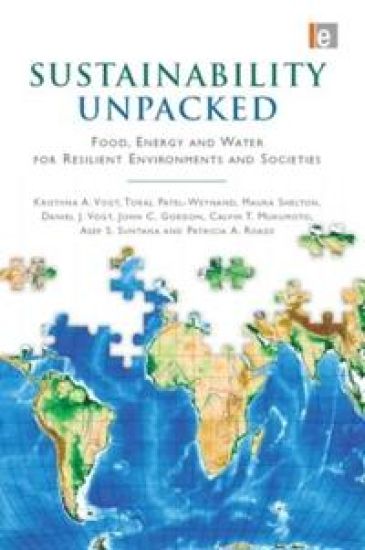
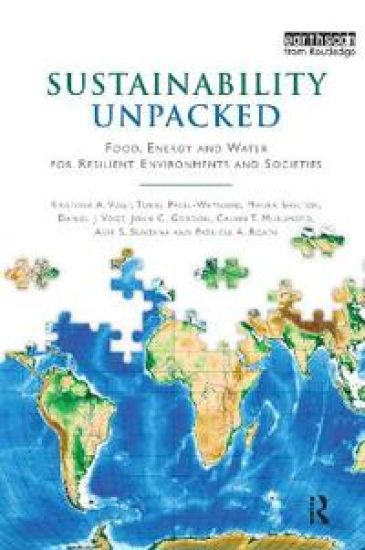
Food, water and energy form some of the basic elements of sustainability considerations. This ground-breaking book examines and decodes these elements, exploring how a range of countries make decisions regarding their energy and bio-resource consumption and procurement. The authors consider how these choices impact not only the societies and environments of those countries, but the world in general. To achieve this, the authors review the merits of various sustainability and environmental metrics, and then apply these to 34 countries that are ranked low, medium or high on the human development index. The book assesses their resource capacities and the environmental impacts, both within and outside their country boundaries, from consuming food, water, and energy. The final section uses the lessons derived from the earlier analyses of resource consumption to explore the importance of geography, climates and sustainable management of forests and other natural resources for building resilient societies in the future.
Sustainability Unpacked

Sustainability Unpacked

Kristiina Vogt; Toral Patel-Weynand; Maura Shelton; Daniel J Vogt; John Gordon; Cal Mukumoto; Asep. S. Suntana; Patricia A. Roads

Earthscan Ltd
2010
nidottu
Food, water and energy form some of the basic elements of sustainability considerations. This ground-breaking book examines and decodes these elements, exploring how a range of countries make decisions regarding their energy and bio-resource consumption and procurement. The authors consider how these choices impact not only the societies and environments of those countries, but the world in general. To achieve this, the authors review the merits of various sustainability and environmental metrics, and then apply these to 34 countries that are ranked low, medium or high on the human development index. The book assesses their resource capacities and the environmental impacts, both within and outside their country boundaries, from consuming food, water, and energy. The final section uses the lessons derived from the earlier analyses of resource consumption to explore the importance of geography, climates and sustainable management of forests and other natural resources for building resilient societies in the future.