Kirjailija
Torbjörn Tännsjö
Kirjat ja teokset yhdessä paikassa: 28 kirjaa, julkaisuja vuosilta 1991–2026, suosituimpiin kuuluu Vänsterdocenten. Vertaile teosten hintoja ja tarkista saatavuus suomalaisista kirjakaupoista.
Nimi esiintyy myös muodoissa: Torbjorn Tannsjo
28 kirjaa
Kirjojen julkaisuvuodet: 1991–2026.
I denna första del av Torbjörn Tännsjös intellektuella memoar beskriver han sin uppväxt och filosofiska utveckling som ung vänsterradikal student. Han lägger särskild tonvikt vid den politiska filosofin och den normativa etiken, områden där han har ett omfattande författarskap. Han beskriver både hur olika uppfattningar han blivit känd för växt fram och hur han tror att de bäst kan försvaras. Också hans rika politiska praktik med ibland dråpliga och ofta skrämmande tidstypiska episoder gestaltas i boken.
Uses thought-experiments like the trolley problem to test ethical theoriesMoral questions about what we ought to do and why appear in every part of life. Is it morally acceptable to eat meat? Take flights? Should you be doing something to combat racism, sexism and xenophobia? This textbook introduces you to the most important and influential normative ethical theories that help us navigate the moral maze of modern life: normative ethics, utilitarianism, egoism, deontological ethics, the ethics of rights, virtue ethics, particularism and ecological ethics. Torbjörn Tännsjö carefully describes each theory, putting them into their historical contexts and applying them to contemporary debates. He offers arguments for and against, with a special focus on the counterarguments and the best attempts to meet them.
This book is about how best to respond to existential global threats posed by war and global heating. In this book, the author bites the bullet and advocates a route to global democracy that passes through a phase where a global state is established in the form of global despotism.
Från despoti till demokrati : hur en världsregering kan rädda mänskligheten
Torbjörn Tännsjö
Fri Tanke
2024
sidottu
Om inget görs, kanske mänskligheten snart har utplånat sig själv. Vare sig det gäller den globala upphettningen, krig och konflikter eller de ständigt växande klyftorna mellan fattig och rik krävs en radikal förändring – så att vi hamnar på rätt kurs och får en värld där alla kan leva ett drägligt liv i frihet. Filosofen Torbjörn Tännsjö har ett skarpt förslag för att mänskligheten ska få bukt på alla sina problem: upprättandet av en världsregering. Det är endast med en global församling som vi kan bryta oss loss från det rådande dödläget och vända utvecklingen, menar Tännsjö. Med inspiration från upplysningens idéer om folkstyre och den upplysta despoten argumenterar Tännsjö för att vi inte har några bättre alternativ än att upprätta en demokratiskt orienterad världsregering som kan tillgodose alla invånare på jordens bästa.
From Despotism to Democracy
Torbjörn Tännsjö
SPRINGER VERLAG, SINGAPORE
2023
sidottu
Halvin toimitettuna 104,30 €
This book is about how best to respond to existential global threats posed by war and global heating. The stakes have become existential. A strong claim in the book is that we need a world state to save humanity. The book sheds new light on why this is so. The present author has long advocated global democracy. A strong argument against global democracy has been, however, that no state has ever been established without the resort to violence. In this book, the author bites the bullet and advocates a route to global democracy that passes through a phase where a global state is established in the form of global despotism. First despotism, then democracy! But, as the author insists and the reader will find, this is at most something we can hope for. We may fail. The moral importance of failure is thoroughly discussed. The book explored the following topics:· The tragedy of the commons is presented as the best explanation of why we do so little to obviate the causes behind climate change.· A world government presents a way out of the tragedy of the commons.· Standard arguments against a world state are examined.· The question of whether it matters if humanity goes extinct is taken seriously.· What if the attempt to establish a world state fails. The book is written by a philosopher, but the intended audience is broad. It has a place in courses in political philosophy, but it is possible for anyone who wants to do so to dig deeper into the questions should be able to read it. And regardless of whether you who read the book are a scholar or a layperson, there is no way for you to avoid its topic. Global existential issues concern all of us, regardless of profession or nationality.
Hur bör vi handla? Vad kräver moralen av oss? Grundbok i normativ etik introducerar och diskuterar, med många exempel, de viktigaste försöken att på ett systematisk sätt besvara dessa frågor. Utilitarism, pliktetik, rättighetsteorier, dygdetik och djupekologi blir analyserade och jämförda med varandra, både när det gäller styrkor och svagheter. Framställningen är direkt och tillgänglig även utan filosofiska förkunskaper, författaren klargör sina egna ståndpunkter samtidigt som läsaren dras in i diskussionen. I denna tredje upplaga är boken till stor del omskriven, utökad och uppdaterad med de senaste årens diskussion. Torbjörn Tännsjö är professor emeritus i Praktisk filosofi vid Stockholms universitet, och i Medicinsk etik vid Karolinska Institutet. Han har en stor vetenskaplig produktion men är också Sveriges kanske flitigaste debattör i etiska frågor. Särskilt när det gäller medicinsk etik har han med sina rättframma och ofta kontroversiella ställningstaganden spelat en huvudroll i det svenska offentliga samtalet.
Folk & vilja : ett försvar av demokratin i vår tid
Folke Tersman; Torbjörn Tännsjö
Fri Tanke
2020
sidottu
En av världshistoriens viktigaste men också sköraste skapelser – demokratin – är idag hotad, även i stater med lång tradition av folkstyre. Vissa tänkare hänvisar till filterbubblor och sociala medier medan andra pekar på migrationsströmmar och de konflikter och känslor de leder till – med påföljande succéer för politisk populism. Folke Tersman och Torbjörn Tännsjö, två av landets ledande politiska filosofer, pekar ut helt andra orsaker och lösningar. Under senare år har enorm makt överförts till globala, icke-politiska aktörer, över vilka medborgarnas inflytande i stort sett är obefintligt. Det gör det samtida demokratiföraktet rationellt, och endast om demokratin etableras både på arbetsplatser och på global nivå kommer demokratin på nationell nivå att kunna räddas. Folk & vilja är en ny historia om demokratins djup, räckvidd och yttersta mening – berättad via tydliga svar på avgörande frågor: Om demokrati har en inbyggd utjämnande effekt, varför är våra demokratier så ojämlika? Demokrati är folkstyre – men vilket är ”folket” som skall styra? Hur ska företag och offentlig verksamhet demokratiseras utan att den grundläggande ägandeformen rubbas? Och hur ska framtidens globala styre se ut för att demokratin inte ska bli en parentes i världshistorien?
With much of the world's population facing restricted access to adequate medical care, how to allocate scarce health-care resources is a pressing question for governments, hospitals, and individuals. How do we decide where funding for health-care programs should go? Tannsjo here approaches the subject from a philosophical perspective, balancing theoretical treatments of distributive ethics with real-world examples of how health-care is administered around the world today. Tannsjo begins by laying out several popular ethical theories-utilitarianism, which recommends maximizing the best overall outcome; egalitarianism, which recommends smoothing out the differences between people as much as possible; and the maximin/leximin theory, which urges people to give absolute priority to those who are worst off. Tannsjo shows how, in abstract thought experiments, these theories come into conflict with each other and reveal puzzling implications. He goes on to argue, however, that when we consider health-care in the real-world, these theories all agree on a central point: in a well-ordered welfare state, more resources should be directed to the care and cure of people suffering from mental illness, and less to the marginal life extension of elderly patients. Tannsjo's book thus recommends a shift in spending to increase fairness and overall utility-while also recognizing that this kind of dispassionate suggestion, with its purely economic foundation, is unlikely to take hold in policy. Tannsjo's analysis is a case study in how ethical theories can sometimes lead to rational conclusions and recommendations that we are not prepared to accept.
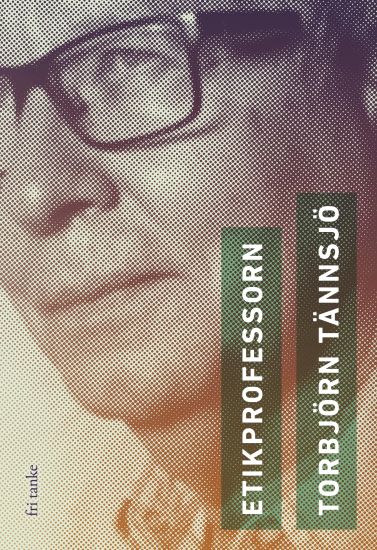
Torbjörn Tännsjös breda engagemang och orädda åsikter har gjort honom till en välkänd, men ofta omstridd, röst i den svenska debatten. Här fördjupar och nyanserar han sina resonemang i flera känsliga frågor och ger sin syn på kontroverserna och vänskaperna under sin tid som Sveriges Etikprofessor. Hans filosofiska resonemang i frågor som abort, dödshjälp och idrott har ibland lett fram till svåra slutsatser som kan vara obekväma även för honom själv. Motståndet har inte fått honom att backa trots partiledares krav på avgång och yrkesförbud. Etikprofessorn tar avstamp i Torbjörn Tännsjös arbete som professor i praktisk filosofi och är den andra delen av hans memoarer.
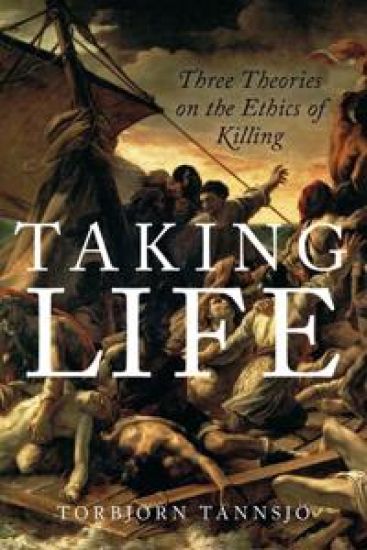
When and why is it right to kill? When and why is it wrong? Torbjörn Tännsjö examines three theories on the ethics of killing in this book: deontology, a libertarian moral rights theory, and utilitarianism. The implications of each theory are worked out for different kinds of killing: trolley-cases, murder, capital punishment, suicide, assisted death, abortion, killing in war, and the killing of animals. These implications are confronted with our intuitions in relation to them, and our moral intuitions are examined in turn. Only those intuitions that survive an understanding of how we have come to hold them are seen as 'considered' intuitions. The idea is that the theory that can best explain the content of our considered intuitions gains inductive support from them. We must transcend our narrow cultural horizons and avoid certain cognitive mistakes in order to hold considered intuitions. In this volume, suitable for courses in ethics and applied ethics, Tännsjö argues that in the final analysis utilitarianism can best account for, and explain, our considered intuitions about all these kinds of killing.
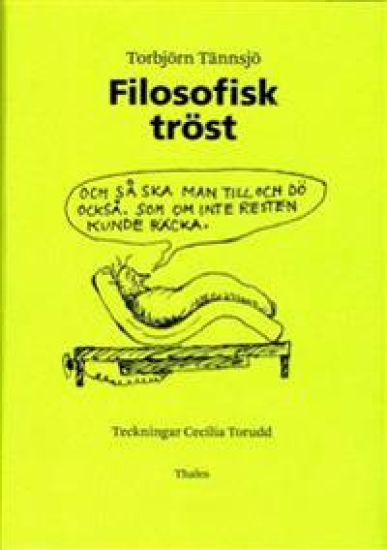
Kan filosofin trösta den som tänker med förtvivlan på att hon skall dö? Torbjörn Tännsjö diskuterar några förslag till tröst som filosofer velat erbjuda oss. Några av dem underkänner han såsom föreställningar om ett liv efter döden eller tanken att livet är så förfärligt att det är bra att slippa leva. Filosofiska reflektioner om tiden framstår som mera lovande, åtminstone för den som framförallt är rädd att man förintas genom döden: det är möjligt att dö utan att förintas. Men alla som ogillar döden bekymras inte av förintelse. De hungrar helt enkelt efter mer liv för egen del även om döden inte innebär att de utplånas. Den inställningen är egoistisk, menar Tännsjö, och om man tänker noga efter bör man kunna frigöra sig ifrån den. Till sist kvarstår emellertid en död som i sanning är förfärlig, om författaren har rätt (och berömda filosofer som Georg Henrik von Wright har fel), nämligen värmedöden, det definitiva slutet på allt kännande liv i universum. Författaren bekymrar sig verkligen över detta slutgiltiga utslocknande, men han konstaterar samtidigt att det nog inte är den människor i allmänhet fruktar när de vänder sig till filosofin för att få tröst inför döden. Boken är rikt illustrerad av Cecilia Torudd.
Coercive Care asks probing and challenging questions regarding the use of coercion in health care and the social services. The book combines philosophical analysis with comparative studies of social policy and law in a large number of industrialized countries.
Ofta utbrister vi då vi ser en svekfull eller våldsam handling, att vi inte kan förstå den. Men är det så? Tesen i denna bok är att vi kan förstå mer än vi vill och mer än vi tror. Att förstå vad någon gör är att uppfatta det som rationellt, åtminstone i ljuset av vad den handlande tror och önskar. Genom att förstå tycker vi att handlingen kommer obehagligt nära oss. Vi fruktar att vi själva skulle ha kunnat utföra den och slår tanken ifrån oss genom att kalla den obegriplig. I andra fall kan vi verkligen inte förstå, men behöver hjälp av psykologisk forskning, som kommit fram till att det ofta är slumpen eller situationen som bestämmer om vi handlar rätt eller fel. Tron på att det finns genuint goda eller dåliga människor är ogrundad en skrämmande tanke, men viktig om vi vill skapa ett gott samhälle, snarare än goda människor.
Metaethics is the inquiry into the nature of morality (or ethics, I use the words ‘morality’, ‘morals’, and ‘ethics’ as synonyms). When we pass moral judgements, what kind of claims are we then making? I speak of this as the semantic metaethical question. a re there moral facts, to be discovered by us and existing independently of our thoughts and conceptualisation? I speak of this as the ontological or me- physical metaethical question. a nd, if there are, can we know about them; and, if we can, how do we get this kind of knowledge? I speak of this as the epistemic metaethical question. a ll these metaethical questions, the semantic, the ontological, and the epistemic ones, are raised and discussed in this book, but they are not the core questions raised. I have been more concerned with another kind of questions, which deserve to be called metaethical as well: what are the problems of morality? a re there many different moral questions, or, do they all, in the final analysis, reduce to only a few, or perhaps just one? t his question is of special importance to a non-naturalist objectivist and realist like the present author, who believes that we do make truth-claims when we pass moral judgements and who believes that there is a truth in these matters so that we must face the possibility that even our most cherished moral judgements may be false.

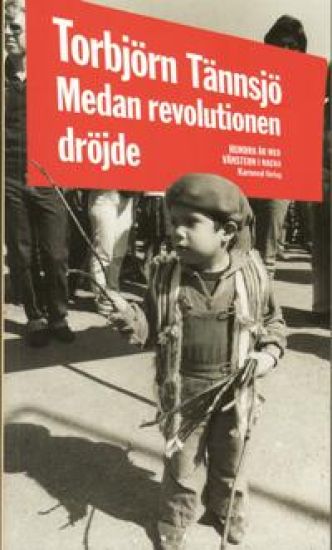
Medan revolutionen dröjde : hundra år med vänstern i Nacka
Torbjörn Tännsjö
Karneval förlag
2008
nidottu
Medan revolutionen dröjde skildrar vänstern i Nacka och dess politiska kamp under hundra år - genom storstrejk, världskrig, partisplittringar, kalla krigsår, 68-uppsving fram till dagens borgerliga dominans. Det storslagna visionerna om ett annat samhälle finns där från början, liksom det idoga lokala arbetet - för daghem, sjukhus och bättre kommunikationer, krav som vänstern ställde långt innan de blev populära också bland andra partier. Medan man var upptagen av att införa en socialism - som aldrig ville infinna sig - lyckades man i någon mån med något annat, mer begränsat, att hjälpa till att lindra de värsta plågorna som en ohämmad kapitalism gav upphov till. Men det är inte bara vänstern som haft en skev syn på vänstern. Det gäller också den politiska och polisiära ledningen i Sverige som under lång tid demoniserade, övervakade eller förföljde vänsteranhängare. I arbetet med denna bok har Torbjörn Tännsjö fått tillgång till Säpomaterial som visar att de vardagliga trakasserierna i Nacka var mycket omfattande. Den som hade fel politisk uppfattning kunde bli av med både bostad och jobb. Inget möte var för obetydligt för att undgå spaning från Säpo. Ett slags östtysk situation präglade i detta hänseende Nacka - och förmodligen hela Sverige. Torbjörn Tännsjö är författare, debattör och professor i praktisk filosofi vid Stockholms universitet. Hans senaste bok är Global Democracy: the Case for a World Government (Edinburgh University Press 2008). Torbjörn Tännsjö var med och bildade vänsterns blåsorkester i Nacka 1976.