Kirjojen hintavertailu – 12 903 724 kirjaa ja 27 kauppaa

Kirjailija

Torsten Persson

Kirjat ja teokset yhdessä paikassa: 8 kirjaa, julkaisuja vuosilta 2002–2020, suosituimpiin kuuluu Förtrampad vitsippa : fakta, reportage och reflektioner kring mordet på Helén Nilsson från Hörby 1989. Vertaile teosten hintoja ja tarkista saatavuus suomalaisista kirjakaupoista.

8 kirjaa

Kirjojen julkaisuvuodet: 2002–2020.

Hållbar utveckling : människa, miljö och samhälle

Hållbar utveckling : människa, miljö och samhälle

Christel Persson; Torsten Persson

Studentlitteratur AB
2020
nidottu
Antalet människor har under de senaste 50 åren ökat från tre till nästan åtta miljarder. Samtidigt har livsstilen i rikare delar av världen bidragit till att vi i dag överutnyttjar jordens resurser. Hur ska vi leva och fördela jordens resurser så att också framtida generationer kan få ett bra liv här på jorden? Under de kommande tio åren måste vi se till att uppnå de 17 globala hållbarhetsmålen i Agenda 2030. Det är den handlingsplanen som ska stimulera till åtgärder och handlingskraft lokalt, nationellt och globalt. Hållbarhetsmålen är integrerade och beroende av varandra och därför måste samtliga mål uppnås för att vår framtida samhällsutveckling ska bli hållbar. Det handlar om att vi människor och alla andra livsformer ska kunna frodas på planeten Jorden i samklang med naturen. Hållbar utveckling - människa, miljö och samhälle är en lärobok avsedd för - studier i gymnasieskolans kurser (Gy11) inom ämnena biologi, geografi, naturkunskap och hållbart samhälle. Den är även lämpad som grundläggande lärobok i hållbar utveckling inom lärarutbildningen och tillgodoser de övergripande ­perspektiven miljö respektive hållbar utveckling, som ingår i all utbildning i skolan och högskolan. I dag bygger hållbar utveckling inte bara på ekologisk välfärd. Miljö- och klimatfrågor vävs samman med frågor och utmaningar inom många olika områden såsom demokrati, mänskliga rättigheter och jämställdhet. Det är dock fortfarande kunskapen om sambanden i naturen som utgör grundbulten. Vi har alla ett ansvar att föra denna viktiga kunskap vidare till kommande generationer. Boken utgör ett värdefullt redskap för hur frågor om miljö och hållbar utveckling kan lyftas fram och få lösningar. Varje kapitel avslutas med ett antal fakta- och diskussionsfrågor.
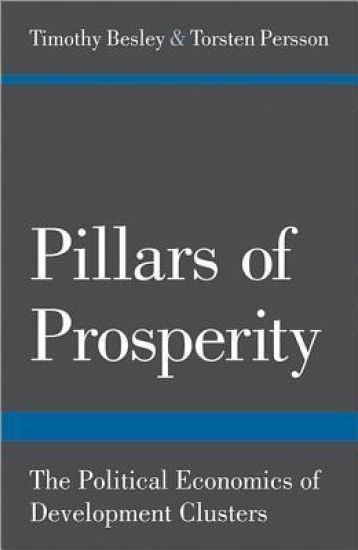
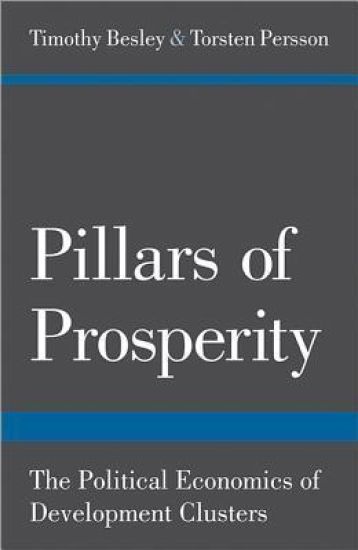
Pillars of Prosperity

Pillars of Prosperity

Timothy Besley; Torsten Persson

Princeton University Press
2013
pokkari
"Little else is required to carry a state to the highest degree of opulence from the lowest barbarism, but peace, easy taxes, and a tolerable administration of justice; all the rest being brought about by the natural course of things." So wrote Adam Smith a quarter of a millennium ago. Using the tools of modern political economics and combining economic theory with a bird's-eye view of the data, this book reinterprets Smith's pillars of prosperity to explain the existence of development clusters--places that tend to combine effective state institutions, the absence of political violence, and high per-capita incomes. To achieve peace, the authors stress the avoidance of repressive government and civil conflict. Easy taxes, they argue, refers not to low taxes, but a tax system with widespread compliance that collects taxes at a reasonable cost from a broad base, like income. And a tolerable administration of justice is about legal infrastructure that can support the enforcement of contracts and property rights in line with the rule of law. The authors show that countries tend to enjoy all three pillars of prosperity when they have evolved cohesive political institutions that promote common interests, guaranteeing the provision of public goods. In line with much historical research, international conflict has also been an important force behind effective states by fostering common interests. The absence of common interests and/or cohesive political institutions can explain the existence of very different development clusters in fragile states that are plagued by poverty, violence, and weak state capacity.
Pillars of Prosperity

Pillars of Prosperity

Timothy Besley; Torsten Persson

Princeton University Press
2011
sidottu
"Little else is required to carry a state to the highest degree of opulence from the lowest barbarism, but peace, easy taxes, and a tolerable administration of justice; all the rest being brought about by the natural course of things." So wrote Adam Smith a quarter of a millennium ago. Using the tools of modern political economics and combining economic theory with a bird's-eye view of the data, this book reinterprets Smith's pillars of prosperity to explain the existence of development clusters - places that tend to combine effective state institutions, the absence of political violence, and high per-capita incomes. To achieve peace, the authors stress the avoidance of repressive government and civil conflict. Easy taxes, they argue, refers not to low taxes, but a tax system with widespread compliance that collects taxes at a reasonable cost from a broad base, like income. And a tolerable administration of justice is about legal infrastructure that can support the enforcement of contracts and property rights in line with the rule of law. The authors show that countries tend to enjoy all three pillars of prosperity when they have evolved cohesive political institutions that promote common interests, guaranteeing the provision of public goods. In line with much historical research, international conflict has also been an important force behind effective states by fostering common interests. The absence of common interests and/or cohesive political institutions can explain the existence of very different development clusters in fragile states that are plagued by poverty, violence, and weak state capacity.
Förtrampad vitsippa : fakta, reportage och reflektioner kring mordet på Helén Nilsson från Hörby 1989
Mordet på 10-åriga Helén Nilsson från Hörby i mars 1989 har beskrivits som «mordet som saknar motstycke i modern svensk kriminalhistoria». Under de drygt 15 år som denna Sveriges näst efter Palmeutredningen mest omfattande mordutredning pågick hann flera män frihetsberövas och åtskilliga misstänkas innan Ulf Olsson kunde gripas, rannsakas, lagföras och dömas som skyldig av såväl tingsrätten som hovrätten för de brott för vilka han 2004 åtalades. I denna bok återger juristen och socionomen Torsten Persson med såväl juridisk och språklig stringens som personligt patos allt som hände i fallet alltifrån den dag Helén rövades bort till den dag lagakraftägande dom förelåg. Förutom en detaljerad skildring av vad som är känt om försvinnandet, mordet och utredningen samt av rättegången förmedlar han sina egna tankar och reflektioner häröver liksom om närliggande rättsfall och samhällsförhållanden. Därjämte berättar han om de märkliga konsekvenser hans engagemang i fallet resulterade i för hans personliga vidkommande och om vikten av att våga värna sina ideal i en vansklig verklighet. Torsten Persson är född 1951 i Göteborg, där han blev student 1970 och avlade socionomexamen 1974. Efter militärtjänstgöring i trängtrupperna och fortsatta studier vid Lunds universitet avlade han juris kandidatexamen där 1979. Därpå följde notarietjänstgöring vid Vänersborgs tingsrätt, varefter han har tjänstgjort vid Göteborgs universitet samt som kommunsekreterare i olika kommuner i västra och södra Sverige. I examensuppsatser och tidningsartiklar har han framhållit nödvändigheten av att återfallsbenägna våldsbrottslingar måste kunna interneras under lång och obestämd tid samt att brottsoffren ägnas större uppmärksamhet i straffprocessen liksom i samhällsdebatten. Han är bland mycket annat också verksam som brottsofferstödjare.
Hållbar utveckling : människa, miljö och samhälle

Hållbar utveckling : människa, miljö och samhälle

Torsten Persson; Christel Persson

Studentlitteratur AB
2007
nidottu
Hållbar utveckling är ett mycket brett och komplicerat ämne, som i denna bok presenteras på ett både lättläst och strukturerat sätt. Boken vilar på naturvetenskaplig grund samtidigt som den utifrån ett tvärvetenskapligt betraktelsesätt behandlar frågeställningar som berör sambanden mellan resurser i naturen och vår livsstils påverkan på miljö och samhälle. Boken utgör också ett värdefullt redskap för problematisering av frågor om miljö och hållbar utveckling genom att tydliggöra hur olika människor ser på naturen, människan och samhället ur etiska, ideologiska eller andra perspektiv. Boken är avsedd för studier i gymnasieskolans kurser med innehållet miljökunskap, miljöteknik och miljöpolitik. Den är också lämplig som grundläggande lärobok i hållbar utveckling inom lärarutbildningen och tillgodoser de övergripande perspektiven miljö respektive hållbar utveckling.
Nobel Lectures In Economic Sciences, Vol 4 (1996-2000)

Nobel Lectures In Economic Sciences, Vol 4 (1996-2000)

Torsten Persson

World Scientific Publishing Co Pte Ltd
2003
nidottu
Below is a list of the prizewinners during the period 1996 - 2000 with a description of the works which won them their prizes:(1996) J A MIRRLEES & W S VICKREY — for their fundamental contributions to the economic theory of incentives under asymmetric information; (1997) R C MERTON & M A SCHOLES — for a new method to determine the value of derivatives; (1998) A K SEN — for his contributions to welfare economics; (1999) R A MUNDELL — for his analysis of monetary and fiscal policy under different exchange rate regimes and his analysis of optimum currency areas; (2000) J J HECKMAN — for his development of theory and methods for analyzing selective samples & D L McFADDEN — for his development of theory and methods for analyzing discrete choice.
Nobel Lectures In Economic Sciences, Vol 4 (1996-2000)

Nobel Lectures In Economic Sciences, Vol 4 (1996-2000)

Torsten Persson

World Scientific Publishing Co Pte Ltd
2003
sidottu
Below is a list of the prizewinners during the period 1996 - 2000 with a description of the works which won them their prizes:(1996) J A MIRRLEES & W S VICKREY — for their fundamental contributions to the economic theory of incentives under asymmetric information; (1997) R C MERTON & M A SCHOLES — for a new method to determine the value of derivatives; (1998) A K SEN — for his contributions to welfare economics; (1999) R A MUNDELL — for his analysis of monetary and fiscal policy under different exchange rate regimes and his analysis of optimum currency areas; (2000) J J HECKMAN — for his development of theory and methods for analyzing selective samples & D L McFADDEN — for his development of theory and methods for analyzing discrete choice.
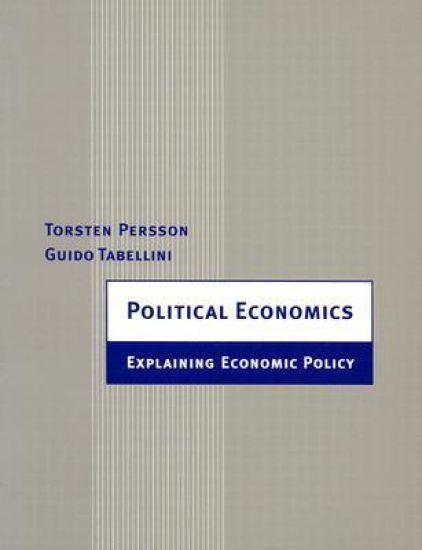
Political Economics

Political Economics

Torsten Persson; Guido Tabellini

MIT Press
2002
pokkari
What determines the size and form of redistributive programs, the extent and type of public goods provision, the burden of taxation across alternative tax bases, the size of government deficits, and the stance of monetary policy during the course of business and electoral cycles? A large and rapidly growing literature in political economics attempts to answer these questions. But so far there is little consensus on the answers and disagreement on the appropriate mode of analysis. Combining the best of three separate traditions-the theory of macroeconomic policy, public choice, and rational choice in political science-Torsten Persson and Guido Tabellini suggest a unified approach to the field. As in modern macroeconomics, individual citizens behave rationally, their preferences over economic outcomes inducing preferences over policy. As in public choice, the delegation of policy decisions to elected representatives may give rise to agency problems between voters and politicians. And, as in rational choice, political institutions shape the procedures for setting policy and electing politicians. The authors outline a common method of analysis, establish several new results, and identify the main outstanding problems.