Kirjojen hintavertailu – 12 903 725 kirjaa ja 27 kauppaa

Kirjailija

Toshiaki Komura

Kirjat ja teokset yhdessä paikassa: 3 kirjaa, julkaisuja vuosilta 2020–2026, suosituimpiin kuuluu Contemporary Japanese American and Mexican American Poets. Vertaile teosten hintoja ja tarkista saatavuus suomalaisista kirjakaupoista.

3 kirjaa

Kirjojen julkaisuvuodet: 2020–2026.

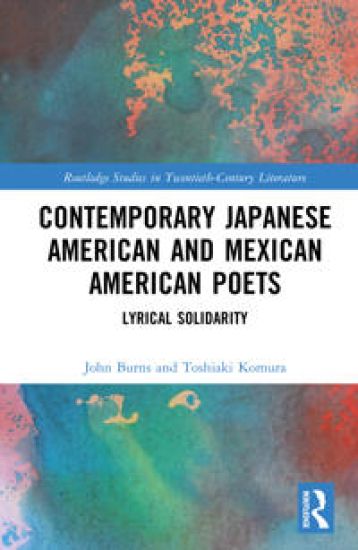
Contemporary Japanese American and Mexican American Poets

Contemporary Japanese American and Mexican American Poets

John Burns; Toshiaki Komura

TAYLOR FRANCIS LTD
2026
sidottu
Contemporary Japanese American and Mexican American Poets examines how contemporary Japanese American and Mexican American poets imagine their past, present and future through shared aesthetics. Their poems explore topics surrounding immigration, internment, and racialization, as part of understanding intertwining strategies of exclusion both communities have faced. Their poetry forms new counternarratives that simultaneously critique the injustices of the past and leave room for imagining radically new futures free from those injustices. The authors argue that the similarity between Japanese American poetry and Mexican American poetry is evidence of an implied lyrical solidarity: poetic manifestations of an interminority awareness of unexpectedly shared histories and of the imaginative possibilities of thinking through and past them. This lyrical solidarity is traced from origins of Asian American and Latinx movements in the 1960s and 1970s and move up to the present moment to pinpoint some commonalities of poetic expression in the work of major poets, ranging from foundational luminaries such as Rodolfo “Corky” Gonzales, Toyo Suyemoto, Juan Felipe Herrera, and Lawson Fusao Inada to more contemporary figures such as Ariana Brown, Kimiko Hahn, Ana Castillo, and David Mura. This book is for scholars, researchers, and postgraduates in lyric poetry, comparative literature as well as ethnic studies and diasporic studies.

Lost Loss in American Elegiac Poetry

Lost Loss in American Elegiac Poetry

Toshiaki Komura

BLOOMSBURY PUBLISHING PLC
2022
nidottu
Lost Loss in American Elegiac Poetry: Tracing Inaccessible Grief from Stevens to Post-9/11 examines contemporary literary expressions of losses that are “lost” on us, inquiring what it means to “lose” loss and what happens when dispossessory experiences go unacknowledged or become inaccessible. Toshiaki Komura analyzes a range of elegiac poetry that does not neatly align with conventional assumptions about the genre, including Wallace Stevens’s “The Owl in the Sarcophagus,” Sylvia Plath’s last poems, Elizabeth Bishop’s Geography III, Sharon Olds’s The Dead and the Living, Louise Glück’s Averno, and poems written after 9/11. What these poems reveal at the intersection of personal and communal mourning are the mechanism of cognitive myth-making involved in denied grief and its social and ethical implications. Engaging with an assortment of philosophical, psychoanalytic, and psychological theories, Lost Loss in American Elegiac Poetry elucidates how poetry gives shape to the vague despondency of unrecognized loss and what kind of phantomic effects these equivocal grieving experiences may create.
Lost Loss in American Elegiac Poetry

Lost Loss in American Elegiac Poetry

Toshiaki Komura

Rowman Littlefield
2020
sidottu
Lost Loss in American Elegiac Poetry: Tracing Inaccessible Grief from Stevens to Post-9/11 examines unconventional elegies of losses that are “lost” on us, discussing what it means to “lose” loss and what happens when dispossessory experiences go unacknowledged or become inaccessible. Toshiaki Komura analyzes a range of “oddball” elegiac poetry that does not neatly align with conventional assumptions about the genre, including Wallace Stevens’ “The Owl in the Sarcophagus,” Sylvia Plath’s last poems, Elizabeth Bishop’s “Geography III,” Sharon Olds’ “The Dead and the Living,” Louise Glück’s “Averno,” and poems written after 9/11. Komura studies the intersection of the personal and the communal, beginning with the mechanism of cognitive myth-making involved in denied grief and ending with its social and ethical implications. Engaging with a range of philosophical and psychological theories, Komura elucidates how poetry gives shape to the vague despondency of unrecognized loss and what kind of phantomic effects these equivocal grieving experiences may create.