Kirjojen hintavertailu – 12 876 181 kirjaa ja 26 kauppaa

Kirjailija

Toshimitsu Asakura

Kirjat ja teokset yhdessä paikassa: 6 kirjaa, julkaisuja vuosilta 1998–2010, suosituimpiin kuuluu UV-Visible Reflection Spectroscopy of Liquids. Vertaile teosten hintoja ja tarkista saatavuus suomalaisista kirjakaupoista.

6 kirjaa

Kirjojen julkaisuvuodet: 1998–2010.

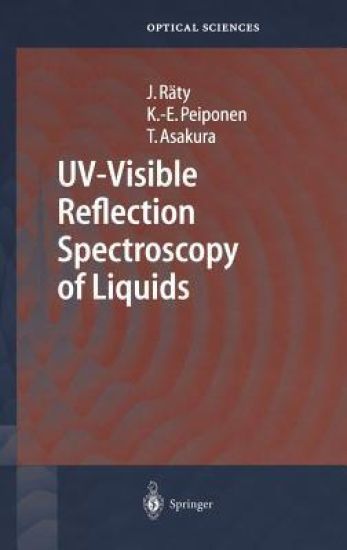
UV-Visible Reflection Spectroscopy of Liquids

UV-Visible Reflection Spectroscopy of Liquids

Jukka A. Räty; Kai-Erik Peiponen; Toshimitsu Asakura

Springer-Verlag Berlin and Heidelberg GmbH Co. K
2004
sidottu
Water is the most important element for a life. Scientists have been doing thorough investigations on the properties of water while engineers have - ploited water in various industrial processes that aim at better optimization of the quality of industrial products. The knowledge of the physico-chemical properties of various liquids is extremely important in the ?eld of life s- ences. Recently, the study of liquids containing nanoparticles has been gr- ing,sincee. g. themoderndevelopmentofnewdrugsbybioa?nityassays,and drug delivery is based more and more on the exploitation of nanoparticles in liquid phase. Optical metrology in context of drugs development is becoming an important tool in high-throuhgput screening of potential molecules. - fortunately, process liquids in life sciences and in industrial environments are usually ”ill-behaving” and it is usually di?cult to monitor their condition. Fortunately,opticalsensingbasedonre?ectometrycanbeexploitedininsp- tion of the quality of transparent and turbid liquids. This book is exceptional in the sense that it introduces the theory and practical re?ectometry between same covers. We recommend this book for beginners and professionals who are doing research or working with a variety of liquids either in academic or engineering societies. The book is helpful for physicists, chemists and en- neers since it covers topics related to basic physics and optics, optical spectra analysis, optical metrology and practical building of re?ectometers. The authors wish to express their cordial thanks to Professor Rauno Aulaskari for helping in the formulation of Appendix B and to Dr. Chun Ye for his critical comments. We will also remember with warmth Mrs.
UV-Visible Reflection Spectroscopy of Liquids

UV-Visible Reflection Spectroscopy of Liquids

Jukka A. Räty; Kai-Erik Peiponen; Toshimitsu Asakura

Springer-Verlag Berlin and Heidelberg GmbH Co. K
2010
nidottu
Water is the most important element for a life. Scientists have been doing thorough investigations on the properties of water while engineers have - ploited water in various industrial processes that aim at better optimization of the quality of industrial products. The knowledge of the physico-chemical properties of various liquids is extremely important in the ?eld of life s- ences. Recently, the study of liquids containing nanoparticles has been gr- ing,sincee. g. themoderndevelopmentofnewdrugsbybioa?nityassays,and drug delivery is based more and more on the exploitation of nanoparticles in liquid phase. Optical metrology in context of drugs development is becoming an important tool in high-throuhgput screening of potential molecules. - fortunately, process liquids in life sciences and in industrial environments are usually ”ill-behaving” and it is usually di?cult to monitor their condition. Fortunately,opticalsensingbasedonre?ectometrycanbeexploitedininsp- tion of the quality of transparent and turbid liquids. This book is exceptional in the sense that it introduces the theory and practical re?ectometry between same covers. We recommend this book for beginners and professionals who are doing research or working with a variety of liquids either in academic or engineering societies. The book is helpful for physicists, chemists and en- neers since it covers topics related to basic physics and optics, optical spectra analysis, optical metrology and practical building of re?ectometers. The authors wish to express their cordial thanks to Professor Rauno Aulaskari for helping in the formulation of Appendix B and to Dr. Chun Ye for his critical comments. We will also remember with warmth Mrs.
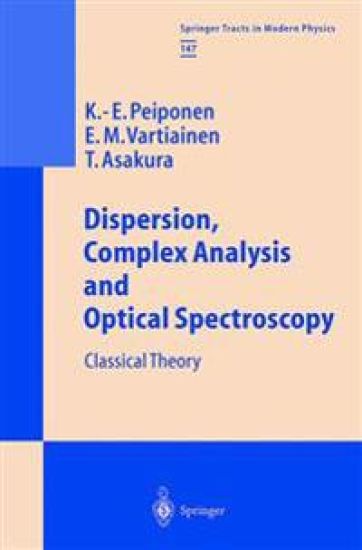
Dispersion, Complex Analysis and Optical Spectroscopy

Dispersion, Complex Analysis and Optical Spectroscopy

Kai-Erik Peiponen; Erik M. Vartiainen; Toshimitsu Asakura

Springer-Verlag Berlin and Heidelberg GmbH Co. K
2010
nidottu
This book is devoted to dispersion theory in linear and nonlinear optics. Dispersion relations and methods of analysis in optical spectroscopy are derived with the aid of complex analysis. The book introduces the mathematical basis and derivations of various dispersion relations that are used in optical spectroscopy. In addition, it presents the dispersion theory of the nonlinear optical processes which are essential in modern optical spectroscopy. The book includes new methods such as the maximum entropy model for wavelength-dependent spectra analysis.
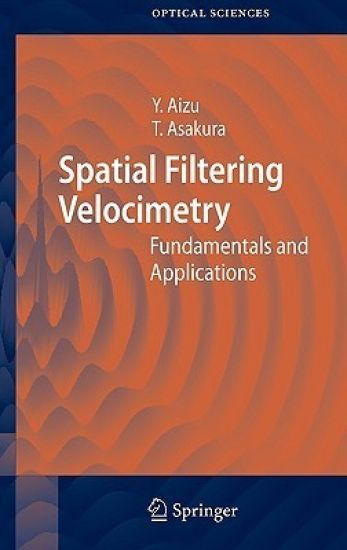
Spatial Filtering Velocimetry

Spatial Filtering Velocimetry

Yoshihisa Aizu; Toshimitsu Asakura

Springer-Verlag Berlin and Heidelberg GmbH Co. K
2010
nidottu
The invention of lasers in the early 1960s enhanced the rapid development of optoelectronics which had introduced various optical measurement methods. A typical example of the methods is found in measurements of velocity. It is well recognized that optical velocity measuring methods have important advantages, such as noncontacting and nondisturbing operations, over c- ventional methods employed previously. These fundamental advantages are indicated by the enormous research e?ort which has gone into their devel- ment for many years. One of the optical methods proposed and studied to measure the velocity is laser Doppler velocimetry which was proposed in the early 1960s and extensively studied by many investigators and is at present applied to practical uses. Another is spatial ?ltering velocimetry which was also proposed in the early 1960s and studied by a number of investigators. In comparison with laser Doppler velocimetry, spatial ?ltering velocimetry had not received much attention from investigators but was studied steadily by several research groups mainly in Japan and is now practically used in various ?elds of engineering. Several important books on laser Doppler velocimetry have already been published, but there has been no book on spatial ?ltering velocimetry. This book is the ?rst contribution to spatial ?ltering velocimetry. Therefore, the Introduction of Chapter 1 provides in detail a historical review of spatial ?ltering velocimetry, relating it to other optical methods and discussing its practical relevance. In the book following Chap.
Spatial Filtering Velocimetry

Spatial Filtering Velocimetry

Yoshihisa Aizu; Toshimitsu Asakura

Springer-Verlag Berlin and Heidelberg GmbH Co. K
2005
sidottu
The invention of lasers in the early 1960s enhanced the rapid development of optoelectronics which had introduced various optical measurement methods. A typical example of the methods is found in measurements of velocity. It is well recognized that optical velocity measuring methods have important advantages, such as noncontacting and nondisturbing operations, over c- ventional methods employed previously. These fundamental advantages are indicated by the enormous research e?ort which has gone into their devel- ment for many years. One of the optical methods proposed and studied to measure the velocity is laser Doppler velocimetry which was proposed in the early 1960s and extensively studied by many investigators and is at present applied to practical uses. Another is spatial ?ltering velocimetry which was also proposed in the early 1960s and studied by a number of investigators. In comparison with laser Doppler velocimetry, spatial ?ltering velocimetry had not received much attention from investigators but was studied steadily by several research groups mainly in Japan and is now practically used in various ?elds of engineering. Several important books on laser Doppler velocimetry have already been published, but there has been no book on spatial ?ltering velocimetry. This book is the ?rst contribution to spatial ?ltering velocimetry. Therefore, the Introduction of Chapter 1 provides in detail a historical review of spatial ?ltering velocimetry, relating it to other optical methods and discussing its practical relevance. In the book following Chap.
Dispersion, Complex Analysis and Optical Spectroscopy

Dispersion, Complex Analysis and Optical Spectroscopy

Kai-Erik Peiponen; Erik M. Vartiainen; Toshimitsu Asakura

Springer-Verlag Berlin and Heidelberg GmbH Co. K
1998
sidottu
This book is devoted to dispersion theory in linear and nonlinear optics. Dispersion relations and methods of analysis in optical spectroscopy are derived with the aid of complex analysis. The book introduces the mathematical basis and derivations of various dispersion relations that are used in optical spectroscopy. In addition, it presents the dispersion theory of the nonlinear optical processes which are essential in modern optical spectroscopy. The book includes new methods such as the maximum entropy model for wavelength-dependent spectra analysis.