Kirjojen hintavertailu – 12 859 819 kirjaa ja 27 kauppaa

Kirjailija

Tracey Tokuhama-Espinosa

Kirjat ja teokset yhdessä paikassa: 16 kirjaa, julkaisuja vuosilta 2000–2024, suosituimpiin kuuluu Living Languages. Vertaile teosten hintoja ja tarkista saatavuus suomalaisista kirjakaupoista.

16 kirjaa

Kirjojen julkaisuvuodet: 2000–2024.

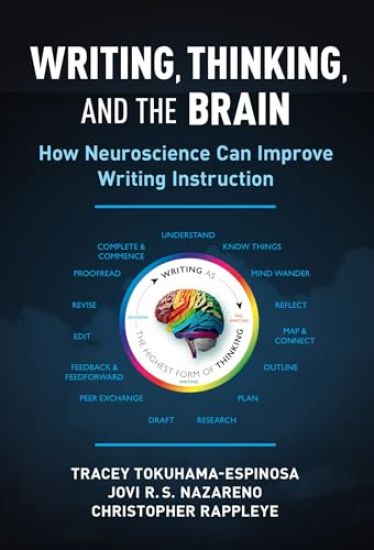
Writing, Thinking, and the Brain

Writing, Thinking, and the Brain

Tracey Tokuhama-Espinosa; Jovi R. S. Nazareno; Christopher Rappleye

TEACHERS' COLLEGE PRESS
2024
sidottu
Writing is the highest form of thinking, as evidenced by neuroimaging which shows that more neural networks are activated simultaneously during writing than during any other cognitive activity. This book will help teachers understand how the brain learns to write by unveiling 15 stages of thinking that underpin the writing process, along with targeted ways to stimulate them to maximize each individual's writing potential. This one-of-kind resource is constructed on the premise that everyone has the potential to be a great writer. Many people learn to write in school settings according to a product-based structure in which they get feedback or a grade on an outline, draft, or final version of their work; few are coached on the many hours of thinking that go into that writing process. This book celebrates the invisible thinking behind the products, explains the brain's way of making sense of writing assignments even in light of generative AI, and offers new tools to become a better writer and to assess the writing process. By exposing the invisible thinking behind the writing, Writing, Thinking, and the Brain helps both the teacher and the learner identify personal learning trajectories for better outcomes. Book Features:Spans all literary genres and all age groups and is complementary to any curriculum. Builds on the firm foundation of writing practices of the past with insight from the learning sciences. Practical and accessible examples and illustrations throughout. Written in the voice of a supportive, knowledgeable colleague. Linked directly to Mind, Brain, and Education goals. Leverages Universal Design for Learning (UDL) principles. Offers teacher activities at all 15 stages of thinking with guidelines to support student learning.
Writing, Thinking, and the Brain

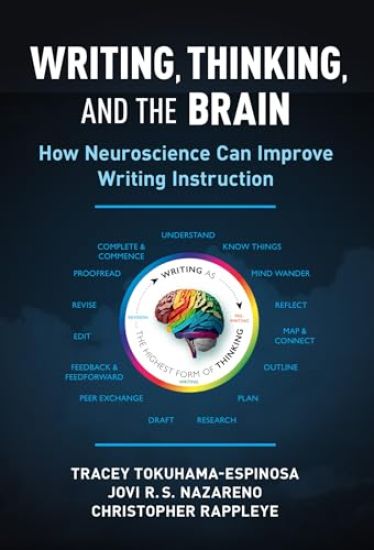
Writing, Thinking, and the Brain

Tracey Tokuhama-Espinosa; Jovi R. S. Nazareno; Christopher Rappleye

TEACHERS' COLLEGE PRESS
2024
nidottu
Writing is the highest form of thinking, as evidenced by neuroimaging which shows that more neural networks are activated simultaneously during writing than during any other cognitive activity. This book will help teachers understand how the brain learns to write by unveiling 15 stages of thinking that underpin the writing process, along with targeted ways to stimulate them to maximize each individual's writing potential. This one-of-kind resource is constructed on the premise that everyone has the potential to be a great writer. Many people learn to write in school settings according to a product-based structure in which they get feedback or a grade on an outline, draft, or final version of their work; few are coached on the many hours of thinking that go into that writing process. This book celebrates the invisible thinking behind the products, explains the brain's way of making sense of writing assignments even in light of generative AI, and offers new tools to become a better writer and to assess the writing process. By exposing the invisible thinking behind the writing, Writing, Thinking, and the Brain helps both the teacher and the learner identify personal learning trajectories for better outcomes. Book Features:Spans all literary genres and all age groups and is complementary to any curriculum. Builds on the firm foundation of writing practices of the past with insight from the learning sciences. Practical and accessible examples and illustrations throughout. Written in the voice of a supportive, knowledgeable colleague. Linked directly to Mind, Brain, and Education goals. Leverages Universal Design for Learning (UDL) principles. Offers teacher activities at all 15 stages of thinking with guidelines to support student learning.
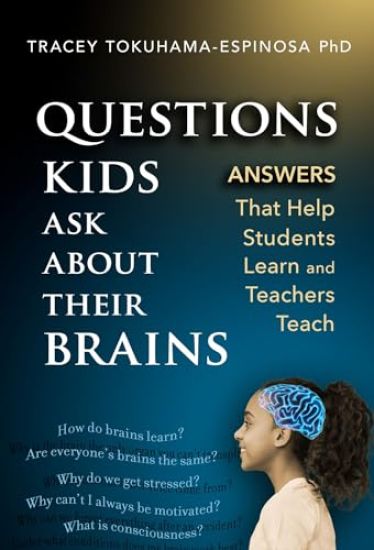
Questions Kids Ask About Their Brains

Questions Kids Ask About Their Brains

Tracey Tokuhama-Espinosa

TEACHERS' COLLEGE PRESS
2024
sidottu
Great teachers will tell you that you can learn a lot about students from the questions they ask. This book shares 400 of the most important questions kids ask about their brains, along with answers that can be shared with students from ages 3 to 18. What hidden talents do I have? Where does our inner voice come from? How many things can we think of at the same time? Where does the brain keep memories? Why are some people more creative than others? Each of these questions tells teachers a little story about how their students think which can be used to inform classroom practice and improve learning outcomes. The book is grouped into two parts. Part I addresses how your brain makes you who you are (identity, structure, growth, function, emotions and feelings). Part II is about how to optimize its function (memory, attention, and executive functions; learning, excelling and roadblocks). Questions are followed by Big Ideas, which are key understandings of how the brain functions. Integrated throughout the book are more than 60 Implications For Teaching that spell out the usable knowledge from each section. Each chapter ends with a list of resources to reinforce the Big Ideas with students, and the closing chapter suggests specific activities to help students embrace this information for themselves. Whether you are a teacher, counselor, college student, parent, or kid, the information in this book will help you love and admire your own brain and feel empowered to improve it every day. Book Features:A window into students' thoughts and concerns about themselves as learners and beings in today's complex world. A special chapter for classroom teachers with activities and guidance for integrating the information into P–12 lessons. Big Ideas for readers looking for solutions they can quickly implement in their classroom. Detailed answers, along with QR codes to the research articles behind them, for readers looking for more in-depth knowledge about learning and the brain. Insights from a year-long international study in 21 countries that asked kids what they wanted to know about their own brains.
Questions Kids Ask About Their Brains

Questions Kids Ask About Their Brains

Tracey Tokuhama-Espinosa

TEACHERS' COLLEGE PRESS
2024
nidottu
Great teachers will tell you that you can learn a lot about students from the questions they ask. This book shares 400 of the most important questions kids ask about their brains, along with answers that can be shared with students from ages 3 to 18. What hidden talents do I have? Where does our inner voice come from? How many things can we think of at the same time? Where does the brain keep memories? Why are some people more creative than others? Each of these questions tells teachers a little story about how their students think which can be used to inform classroom practice and improve learning outcomes. The book is grouped into two parts. Part I addresses how your brain makes you who you are (identity, structure, growth, function, emotions and feelings). Part II is about how to optimize its function (memory, attention, and executive functions; learning, excelling and roadblocks). Questions are followed by Big Ideas, which are key understandings of how the brain functions. Integrated throughout the book are more than 60 Implications For Teaching that spell out the usable knowledge from each section. Each chapter ends with a list of resources to reinforce the Big Ideas with students, and the closing chapter suggests specific activities to help students embrace this information for themselves. Whether you are a teacher, counselor, college student, parent, or kid, the information in this book will help you love and admire your own brain and feel empowered to improve it every day. Book Features:A window into students' thoughts and concerns about themselves as learners and beings in today's complex world. A special chapter for classroom teachers with activities and guidance for integrating the information into P–12 lessons. Big Ideas for readers looking for solutions they can quickly implement in their classroom. Detailed answers, along with QR codes to the research articles behind them, for readers looking for more in-depth knowledge about learning and the brain. Insights from a year-long international study in 21 countries that asked kids what they wanted to know about their own brains.
Bringing the Neuroscience of Learning to Online Teaching

Bringing the Neuroscience of Learning to Online Teaching

Tracey Tokuhama-Espinosa

Teachers' College Press
2021
sidottu
This practical resource draws on the best of neuroscience to inform decision-making about digital learning. We live in unprecedented times that have pushed schools to make many decisions that have been postponed for years. For the first time since the inception of public education, teachers have been invited to redesign the learning landscape by integrating an intelligent selection of digital educational resources and changing pedagogical approaches based on information from the learning sciences. This handbook will help teachers make the most of this opportunity by showing them how to use digital tools to differentiate learning, employ alternative options to standardized testing, personalize learning, prioritize social-emotional skills, and inspire students to think more critically. The author identifies some gems in quality teaching that are amplified in online contexts, including 40 evidence-informed pedagogies from the learning sciences. This book will help all educators move online teaching and learning to new levels of confidence and success. Book Features:Provides quick references to key planning tools like decision-trees, graphics, app recommendations, and step-by-step directions to help teachers create their own online learning courses. Guides teachers through a 12-step model for instructional design that meets both national and international standards. Shows educators how to use an all-new Digital Resource Taxonomy to select resources, and how to research and keep them up to date. Explains why good instructional design and educational technology are complementary with best practices in learning sciences like Mind, Brain, and Education Science. Shares ways teachers can leverage technology to create more time for the personalized aspects of learning. Shows educators how to design online courses with tools that let all students begin at their own starting points and how to differentiate homework. Offers evidence-informed pedagogies to make online intimate and authentic for students.
Bringing the Neuroscience of Learning to Online Teaching

Bringing the Neuroscience of Learning to Online Teaching

Tracey Tokuhama-Espinosa

Teachers' College Press
2021
nidottu
This practical resource draws on the best of neuroscience to inform decision-making about digital learning. We live in unprecedented times that have pushed schools to make many decisions that have been postponed for years. For the first time since the inception of public education, teachers have been invited to redesign the learning landscape by integrating an intelligent selection of digital educational resources and changing pedagogical approaches based on information from the learning sciences. This handbook will help teachers make the most of this opportunity by showing them how to use digital tools to differentiate learning, employ alternative options to standardized testing, personalize learning, prioritize social-emotional skills, and inspire students to think more critically. The author identifies some gems in quality teaching that are amplified in online contexts, including 40 evidence-informed pedagogies from the learning sciences. This book will help all educators move online teaching and learning to new levels of confidence and success. Book Features:Provides quick references to key planning tools like decision-trees, graphics, app recommendations, and step-by-step directions to help teachers create their own online learning courses. Guides teachers through a 12-step model for instructional design that meets both national and international standards. Shows educators how to use an all-new Digital Resource Taxonomy to select resources, and how to research and keep them up to date. Explains why good instructional design and educational technology are complementary with best practices in learning sciences like Mind, Brain, and Education Science. Shares ways teachers can leverage technology to create more time for the personalized aspects of learning. Shows educators how to design online courses with tools that let all students begin at their own starting points and how to differentiate homework. Offers evidence-informed pedagogies to make online intimate and authentic for students.
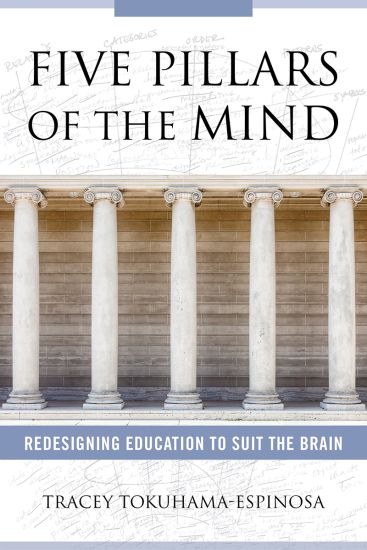
Five Pillars of the Mind

Five Pillars of the Mind

Tracey Tokuhama-Espinosa

WW Norton Co
2019
nidottu
Brain research reveals that learning happens within five core domains or pillars: symbols, patterns, order, categories and relations. Tracey Tokuhama-Espinosa proposes that redesigning school curriculum around these five pillars rather than by traditional subject divisions could enable students to develop the transdisciplinary problem-solving skills that are often touted as the ultimate goal of 21st-century education.
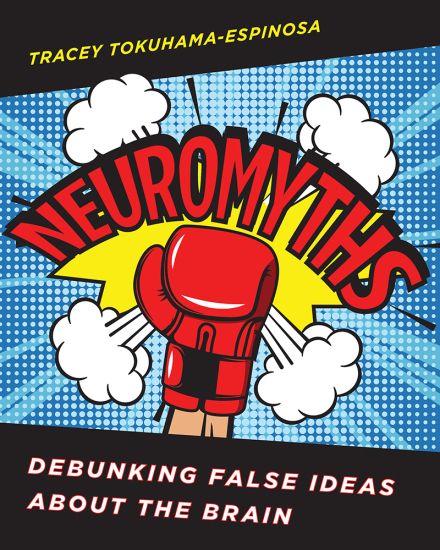
Neuromyths

Neuromyths

Tracey Tokuhama-Espinosa

WW Norton Co
2018
nidottu
Neuromyths—flawed beliefs about learning and teaching—have the capacity to adversely affect classroom practice. In this eye-opening examination of more than seventy such beliefs, Tracey Tokuhama-Espinosa debunks widely circulated myths and untangles scientific fact from pedagogical fiction. Here, teachers have an invaluable guide on how to avoid misconceptions and instead apply evidence-based practices from mind, brain and education science.
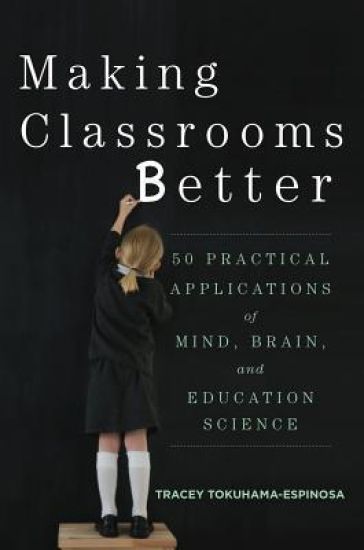
Making Classrooms Better

Making Classrooms Better

Tracey Tokuhama-Espinosa

WW Norton Co
2015
nidottu
Learning specialist Leslie Hart once wrote that designing educational experiences without knowledge of the brain is like designing a glove without knowledge of the hand. Making Classrooms Better takes this concept a step further, building from general knowledge of brain-based education science and current educational research to offer specific suggestions for how teachers can improve student learning outcomes. Covering a range of subjects, from creating an optimal classroom climate to maximizing metacognitive skill development, this well-researched, state-of-the-art guide is an essential resource for highly effective practices that teachers, administrators, and curriculum planners can easily use. The first half of the book provides a practical overview of teaching from a Mind, Brain, and Education perspective through an understanding of the intersection of the fields of neuroscience, psychology, and pedagogy. The second half shares 50 evidence-based classroom “best practices” that have a proven positive impact on student learning outcomes and explains why they work.
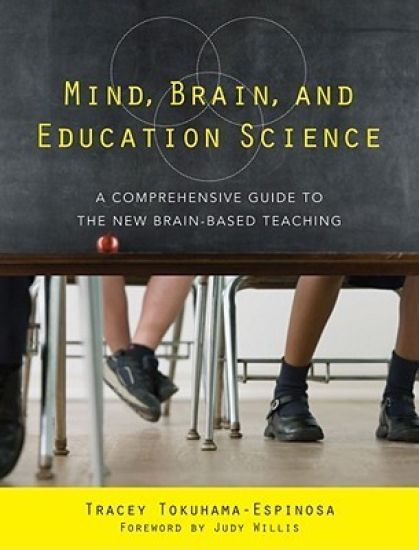
Mind, Brain, and Education Science

Mind, Brain, and Education Science

Tracey Tokuhama-Espinosa

WW Norton Co
2011
nidottu
A groundbreaking work, Mind, Brain, and Education Science explains the new transdisciplinary academic field that has grown out of the intersection of neuroscience, education, and psychology. The trend in “brain-based teaching” has been growing for the past twenty years and has exploded in the past five to become the most authoritative pedagogy for best learning results. Aimed at teachers, teacher trainers and policy makers, and anyone interested in the future of education in America and beyond, Mind, Brain, and Education Science responds to the clamor for help in identifying what information could and should apply in classrooms with confidence, and what information is simply commercial hype. Combining an exhaustive review of the literature, as well as interviews with over twenty thought leaders in the field from six different countries, this book describes the birth and future of this new and groundbreaking discipline. Mind, Brain, and Education Science looks at the foundations, standards, and history of the field, outlining the ways that new information should be judged. Well-established information is elegantly separated from “neuromyths” to help teachers split the wheat from the chaff in classroom planning, instruction and teaching methodology.
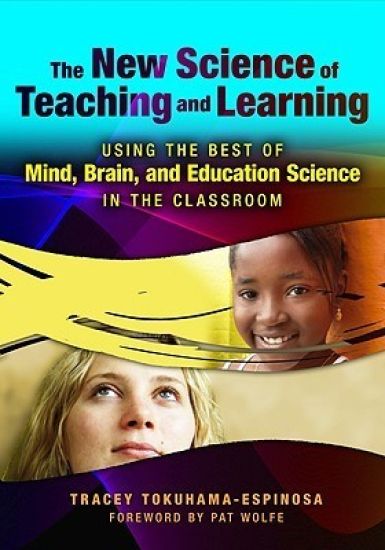
The New Science of Teaching and Learning

The New Science of Teaching and Learning

Tracey Tokuhama-Espinosa

Teachers' College Press
2010
nidottu
This book offers a definitive, scientifically grounded guide for better teaching and learning practices. Drawing from thousands of documents and the opinions of recognized experts worldwide, it explains in straight talk the new Mind, Brain, and Education Science--a field that has grown out of the intersection of neuroscience, education, and psychology. While parents and teachers are often bombarded with promises of ""a better brain,"" this book distinguishes true, applicable neuroscience from the popular neuromyths that have gained currency in education. Each instructional guideline presented in the book is accompanied by real-life classroom examples to help teachers envision the direct application of the information in their own schools. The authors offer essential tools for evaluating new information as it flows from research and adds to what we know. Written by a teacher for teachers, this easy-to-use resource: Documents the findings of the top experts in the field of neuroscience, psychology, and education; Addresses the confusion around the misuse of concepts in brain-based education; Applies well-substantiated findings about the brain to classroom practice and teaching.
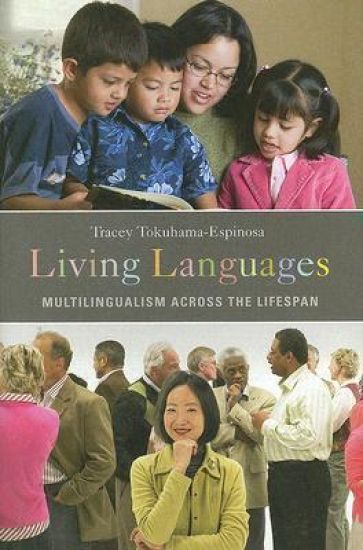
Living Languages

Living Languages

Tracey Tokuhama-Espinosa

Praeger Publishers Inc
2007
sidottu
Globalization is on everyone's tongue, and the discussion is not only limited to economic exchange, but expands to the intermingling of cultural values. To be truly successful in the international arena, whether as an immigrant, student, businessperson, or tourist, openness toward other cultures is vital and the most obvious door to those cultures is through language. Learning a second language is no longer an option for many, it is both a survival tool and an opportunity. This book is an aid to parents, educators, researchers, and individuals who want facts about foreign language learning in order to apply concrete tools to maximize their potential in this area, independent of their age. This book examines the various factors in successful multilingualism across the lifespan, discussing groups such as those lucky enough to enjoy bilingualism from birth to those who become foreign language learners in adulthood. Special attention is paid to a critique of the academic critical years concept and the question, how long does it take a non-native speaker to become fluent? While many are concerned with bilingualism, millions around the world live with three or more languages. For those considering adding a third language, this book looks at the benefits of bilingualism that transfer to trilingualism. Finally, the book establishes methods for teaching foreign languages and hints for home support that maximize each person's potential for languages.
The Multilingual Mind

The Multilingual Mind

Tracey Tokuhama-Espinosa

Praeger Publishers Inc
2003
sidottu
The bulk of the world's population is multilingual, and one in seven Americans speak a language other than English at home. Multilinguals crave answers to question both basic and profound, questions relating to linguistic identity, schools, multiliteracy, how languages are actually learned, and why there are so many variations on individual success. Tokuhama-Espinosa combines solid research, humor, and real-life examples into 21 informative and entertaining essays about people who experience the world with multiple languages. This book tackles common misconceptions about polyglots (too many languages can cause brain overload, some languages are easier to learn than others, an adult cannot learn a foreign language as fast as a child, etc.)Other topics include:• Curriculum choice• Teaching languages using the multiple intelligences• How different education systems can influence multilingual skills• Language's relationship to mental tasks such as music and math• Languages from the womb and bilingualism from birth• The growth of the trilingual family• The societal situation of third culture kids (those growing outside of their parents' native country)• A special case for foreign language development• The emerging cross-area study of multilingualism and cosmopolitanism• Questions of linguistic identity• Challenges to normal foreign language learning, such as dyslexia, Downs Syndrome, and deafness
The Multilingual Mind

The Multilingual Mind

Tracey Tokuhama-Espinosa

Praeger Publishers Inc
2003
nidottu
The bulk of the world's population is multilingual, and one in seven Americans speak a language other than English at home. Multilinguals crave answers to question both basic and profound, questions relating to linguistic identity, schools, multiliteracy, how languages are actually learned, and why there are so many variations on individual success. Tokuhama-Espinosa combines solid research, humor, and real-life examples into 21 informative and entertaining essays about people who experience the world with multiple languages. This book tackles common misconceptions about polyglots (too many languages can cause brain overload, some languages are easier to learn than others, an adult cannot learn a foreign language as fast as a child, etc.) Other topics include: • Curriculum choice • Teaching languages using the multiple intelligences • How different education systems can influence multilingual skills • Language's relationship to mental tasks such as music and math • Languages from the womb and bilingualism from birth • The growth of the trilingual family • The societal situation of third culture kids (those growing outside of their parents' native country) • A special case for foreign language development • The emerging cross-area study of multilingualism and cosmopolitanism • Questions of linguistic identity • Challenges to normal foreign language learning, such as dyslexia, Downs Syndrome, and deafness
Raising Multilingual Children

Raising Multilingual Children

Tracey Tokuhama-Espinosa

Praeger Publishers Inc
2000
sidottu
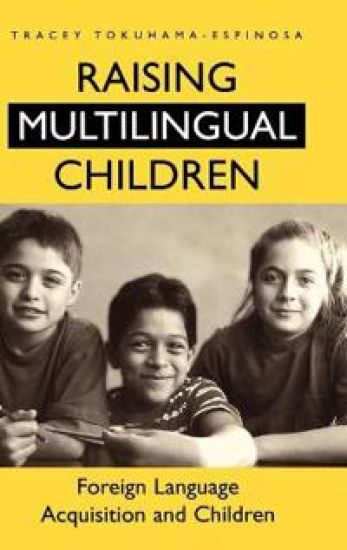
Raising Multilingual Children: Foreign Language Acquisition and Children elucidates how children learn foreign languages and when they can do so with the best results. The most recent studies in linguistics, neurology, education, and psychology are evaluated and the findings are presented in a recipe format. Parents and teachers are encouraged to bake their own and evaluate the multilingual children in their lives with the use of tools which include a family language profile and family language goals worksheet. Beginning with the Ingredients of Timing, (or the Windows of Opportunity,) and Aptitude, the book goes on to include the Baking Instructions of Motivation, Strategy, and Consistency. This is followed by Kitchen Design, or the role of the language learning environment which includes the child's Opportunity to use the languages being learned, the Linguistic Relationship between the child's languages, and the possible influence of Siblings. Plumbing and Electricity round out the ten key factors in raising multilingual children by discussing the possible role of Gender and Hand-Use, and our understanding of the multilingual brain at present. Chef and Chef's Assistants addresses the vital roles of teachers and schools in a child's foreign language development. A Mess in the Kitchen discusses problem situations related to foreign language learning, and offers a variety of resources to address such issues.