
Kirjailija
Traleg Kyabgon
Kirjat ja teokset yhdessä paikassa: 18 kirjaa, julkaisuja vuosilta 2004–2023, suosituimpiin kuuluu Desire. Vertaile teosten hintoja ja tarkista saatavuus suomalaisista kirjakaupoista.
18 kirjaa
Kirjojen julkaisuvuodet: 2004–2023.


In Vajrayana: An Essential Guide to Practice Traleg Kyabgon Rinpoche explains the profound meaning of Vajrayana, inclusive of the Six Yogas of Naropa, demystifying the practices and providing the necessary elucidations. One of the six Yogas, Dream Yoga, is explored in depth, providing remarkable insight into the human condition, mind, and spirituality. The clarifications illuminate the tantric path, dispelling confusion and uncertainty about how to approach Vajrayana practices. Some key explanations for practicing the Vajrayana path are elucidated including the role of clear light, and the role of the tantric teacher. This work includes generous, rarely discussed aspects of this profound path by one of the world's foremost masters of Tibetan Buddhism.

While on the one hand, it is said that Mahamudra is a very advanced form of meditation, on the other, if one were already advanced one would not need any instructions. Mahamudra manuals often tend to explain everything step by step as if the reader does not know anything. Obviously then, they are meant for people like us. In the King Doha, Saraha gives a step by step account of the pitfalls a meditation practitioner can fall into and how to avoid them. With a background of practicing extensively in the tantric tradition, he gives his reasons for considering the Mahamudra approach an appropriate path. Based on a commentary by Karma Trinleypa, Traleg Rinpoche gives a straightforward and clear explanation of Saraha's message to us as practitioners of Mahamudra.

Traleg Kyabgon Rinpoche's oral translation of the ancient text "Song of Karmapa" explains the path of resting within and transforming the mind. This song was originally written by Rangjung Dorje, one of the most important teachers within the Tibetan tradition. In this book Traleg unwraps each cryptic verse revealing its hidden meaning. An enlightening journey into ways of developing insight, compassion, and wisdom, and reducing suffering, key components within the Buddhist tradition.

Sometimes a negative emotion is present, a strong intention to do harm is present, and we might even have prepared to undertake the action, but if we do not carry out that act, it will not be a fully karmic act, and will not produce complete negative karmic fruition. In other words, we create negative karma through coordinating body, speech and mind. We need 1) the object of an action to be present, 2) a negative state of mind, 3) the motivation, preparedness or strong intention to do harm, and 4) we have to perform the harmful action. When all four things come together, we create negative karma through body, speech, and mind. Letter to a Friend explores coordinating body, speech, and mind in such a way that produces positive karma and good outcomes. The Buddhist approach to ethical values is not so much moralistic. Our moral and ethical values are part of a moral psychology, what is happening in the mind and what type of attitudes and actions does this activity produce. Our personal psychology is seen as part of our aspirations and orientation. It is not just about conduct.
Traleg Kyabgon Rinpoche IX skillfully illustrates how to incorporate the whole human experience onto the Buddhist path. With mastery of Western concepts, the author explains how to integrate traditional Buddhist philosophies, psychology, and Tibetan medicine in the service of reducing suffering and developing all aspects of one's personhood to overcome the confinement of a limited sense of self.
The Mahamudra path of direct perception is the pre-eminent method of the Dakpo Kagyu tradition. This definitive manual systematically explains its approach to meditation, complete with definitions, pointing-out instructions, and advice for the many pitfalls and errors that beset practitioners. Central to these errors is our failure to acknowledge the difference between understanding and experience, and our tendency to fixate on meditative experiences and mistake them for realisation. This translation conveys the freshness and immediacy of these instructions. Belonging to the generation of teachers to first bring Tibetan Buddhism across cultures, Traleg Kyabgon (1955-2012) presents these Mahamudra instructions in a direct, relaxed, and intimate style. His own sense of certainty and his confidence that Westerners are unspoilt enough to benefit from these direct teachings resonates on every page. Traleg Kyabgon's mastery of the English language and his insight into Western culture make for a very approachable translation of this magnum opus of the Kagyu tradition.

A jargon-free explanation of two central teachings of the Buddha: karma and rebirth. The Buddha's teaching on karma (literally, "action") is nothing other than his compassionate explanation of the way things are: our thoughts and actions determine our future, and therefore we ourselves are largely responsible for the way our lives unfold. Yet this supremely useful teaching is often ignored due to the misconceptions about it that abound in popular culture, especially oversimplifications that make it seem like something not to be taken seriously. Karma is not simple, as Traleg Kyabgon shows, and it's to be taken very seriously indeed. He cuts through the persistent illusions we cling to about karma to show what it really is--the mechanics of why we suffer and how we can make the suffering end. He explains how a realistic understanding of karma is indispensable to Buddhist practice, how it provides a foundation for a moral life, and how understanding it can have a transformative effect on the way we relate to our thoughts and feelings and to those around us.

This title offers a unique and interesting look at how Yogacara philosophy Influenced tantra and Mahamudra. Developed by Asanga and Vasubandhu as a reaction to over-theorization Yogacara emphasises that everything comes back to one's own practice, one's own experience.
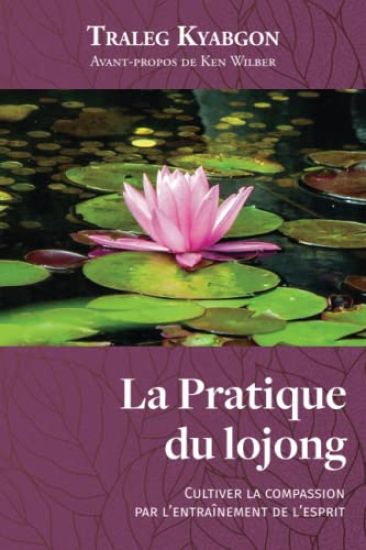
For many centuries Indian and Tibetan Buddhists have employed this collection of pithy, penetrating Dharma slogans to develop compassion, equanimity, lovingkindness, and joy for others. Known as the lojong--or mind-training--teachings, these slogans have been the subject of deep study, contemplation, and commentary by many great masters. In this volume, Traleg Kyabgon offers a fresh translation of the slogans as well as in-depth new commentary of each. After living among and teaching Westerners for over twenty years, his approach is uniquely insightful into the ways that the slogans could be misunderstood or misinterpreted within our culture. Here, he presents a refreshing and clarifying view, which seeks to correct points of confusion.
Authoritative and clear introduction to an increasingly popular aspect of Tibetan Buddhism, including step-by-step guided meditations and contemplation exercises.