Kirjojen hintavertailu – 12 903 724 kirjaa ja 27 kauppaa

Kirjailija

Travis Thompson

Kirjat ja teokset yhdessä paikassa: 5 kirjaa, julkaisuja vuosilta 2008–2023, suosituimpiin kuuluu Individualized Autism Intervention for Young Children. Vertaile teosten hintoja ja tarkista saatavuus suomalaisista kirjakaupoista.

Nimi esiintyy myös muodoissa: Travis. Thompson

5 kirjaa

Kirjojen julkaisuvuodet: 2008–2023.

To Those Left Behind

To Those Left Behind

Travis Thompson

IngramSpark
2023
sidottu
Those that love addicts can often find themselves wishing to make sense of the chaos that has come about. Whether they are a spouse, partner, family member, or friend, addiction can cause havoc in their lives too. To Those Left Behind gives loved ones everything they need to know to understand how addiction has impacted them, as well as what they can do to heal themselves and the addict in their lives. Through a therapeutic and practical lens, each chapter is crafted to give insight into everything from family upbringing, couple interactions, legal concerns, mental health and trauma, and what to do next. Each word is written through the lens of future healing that recognizes present pain. Each chapter provides awareness of the human condition, even if we never encounter addiction in our own lives.
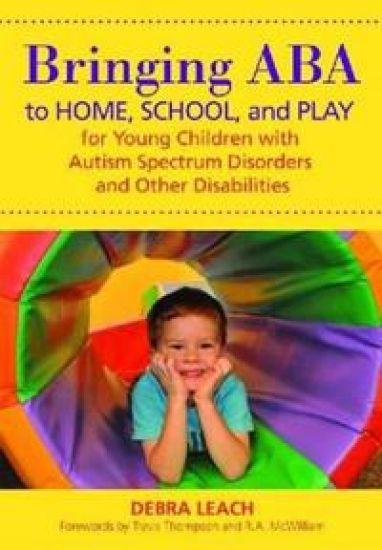
Bringing ABA to Home, School and Play for Young Children with Autism Spectrum Disorders and Other Disabilities
Applied behaviour analysis (ABA) is one of the most effective interventions for children with autism spectrum disorders and other disabilities. Now you can bring ABA best practices into any early childhood setting with this book—your complete guide to using ABA within everyday routines to support children’s learning, participation, and development. Ideal for use with children birth to five, this practical, reader-friendly guidebook is the first to combine ABA with natural environment intervention, the widely used, research-supported approach to meeting the needs of children with disabilities. You’ll learn the fundamental principles and research behind ABA and natural environment intervention, and you’ll get one clear and practical framework for conducting effective assessment of behaviour, skills, routines, and caregiver prioritiessetting meaningful goals that increase the child’s active participation in routinesaddressing the goals with tailored ABA teaching procedurescreating powerful intervention plans that support children in specific developmental domains and routinesselecting an appropriate data collection methodmonitoring progress toward goals and making adjustments as neededensuring consistent implementation of ABA interventionscoaching other professionals and caregivers in the ABA approach. To get you started with ABA, the book gives you 25 sample teaching plans that strengthen communication, social interaction, positive behaviour, independent play and daily living skills, cognitive skills, and participation in everyday routines. Vivid, realistic case studies of diverse children walk you through the ABA process from start to finish. And with the blank forms and data sheets, you’ll easily assess children’s skills and participation and monitor their progress toward goals. With this comprehensive guide to a proven intervention approach, you’ll help young children with ASD and other disabilities make lasting improvements and participate fully at home, at school, and in their community.
Stimulus Properties of Drugs

Stimulus Properties of Drugs

Travis. Thompson

Springer-Verlag New York Inc.
2012
nidottu
Behavioral pharmacology represents a relatively recent scientific enterprise, the development of which can be followed by plotting the publication of major conceptual papers, review articles, and books. Dews (1955), Sidman (1955), and Brady (1956) published some of the first methodologically significant papers, changing the way both psychologists and pharmacologists viewed the analysis of the behavioral actions of drugs. Dews and Morse (1961), Cook and Kelleher (1963), Gollub and Brady (1965), and Weiss and Laties (1969) kept the field abreast of major developments in the study of behavioral mechanisms of drug action. In 1968, the first textbook in the field was published (Thompson and Schuster), followed by a book of readings covering the preceding 15 years of the field (Thompson, Pickens, and Meisch, 1970). The first attempt to outline a set of generalizations concerning behavioral mechanisms of drug actions was puhlished in 1968 by Kelleher and Morse. As behavioral pharmacology developed, it became clear that demonstrations that drugs affect hehavior were relatively uninteresting. It was the mechanisms by which these effects are hrought about that was of concern. While other aspects of pharmacology have been concerned with biochemical, physiological, and in some cases biophysical accounts of drug actions, behavioral pharmacology has dealt with behavioral mechanisms . . . that is, "any verifiable description of a drug's effects which can he shown to uniquely covary with a specific measured 'response'. Generally, this relation can be subsumed under some more general set of relations or principles" (Thompson, Pickens, and Meisch, 1970, p. I).

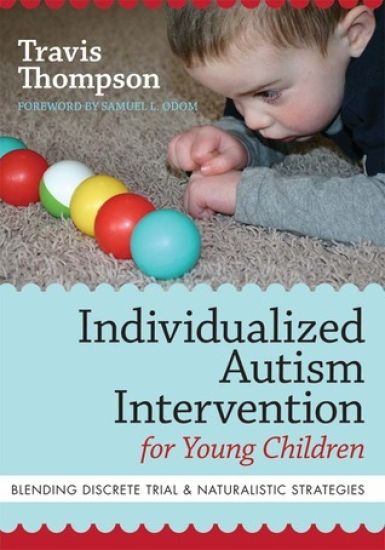
Individualized Autism Intervention for Young Children

Individualized Autism Intervention for Young Children

Travis Thompson; Samuel L. Odom

Brookes Publishing Co
2011
nidottu
Discrete trial instruction or naturalistic, incidental teaching: How do you choose which approach to use with young children with autism? Now there's no need to "pick a side"—this groundbreaking book helps professionals skillfully blend the best of both behavioral approaches to respond to each child's individual needs. Developed by one of the nation's leading experts on autism, this innovative, evidence-based guidebook cuts through the chaos of conflicting information and gives readers a logical, child-centered way to plan and implement intervention. Professionals will begin with an in-depth guide to creating an autism intervention profile. for each child, based on the type and severity of the child's autism characteristics and common predictors of how the child will respond to intervention (such as anxiety level, language, and social interest). Once the profile is complete, readers will learn how to match the child's individual characteristics and needs with a specially tailored blend of DTI and naturalistic teaching. To help them select and implement the right interventions for each child, professionals will get more than a dozen practical tools, including the Autism Intervention Responsiveness Scale, sample data collection forms, schedules, intervention plans, and progress reports. Readers will also learn from detailed before-and-after case studies of five children with very different characteristics and intervention needs. Through vivid accounts of their diverse intervention plans and first-person stories from their parents, readers will see exactly what individualized, child-centered interventions look like and how they help children make improvements in key areas (see below). A must for early childhood educators and interventionists, this book will demystify competing autism treatments and help readers create custom-tailored interventions that really improve child outcomes. Develop child-centered individualized interventions that help children:join in playread nonverbal cuescommunicate more effectivelyovercome social anxietyincrease empathy
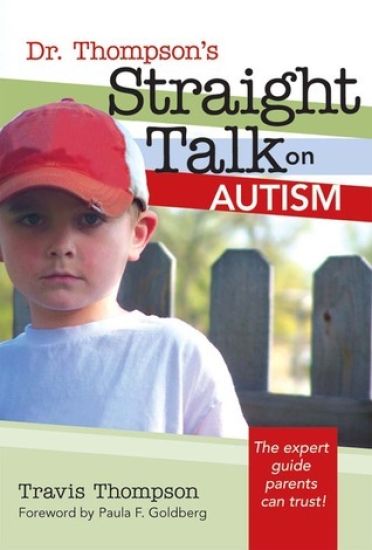
Dr. Thompson's Straight Talk on Autism

Dr. Thompson's Straight Talk on Autism

Travis Thompson

Brookes Publishing Co
2008
nidottu
This new autism book for parents provides a unique voice and presents information in a smart and accessible manner. Unlike most autism books, Dr. Thompson's ""Straight Talk on Autism"" is authored by a professional who has extensive experience in the field. Jargon-free explanations are given for stereotypical behaviors in children with autism and helpful suggestions are made to help curb them, or at least make life more livable. The author provides activities, practical interventions, and techniques that parents can do at home with their child. This book is unique among many autism books on the market, as Thompson does not advocate a particular approach, such as pivotal response treatment or applied behavior analysis. Illustrations, case studies, and numerous examples help make this book easy to read for any - one.