Kirjojen hintavertailu – 12 903 725 kirjaa ja 27 kauppaa

Kirjailija

Trent Hone

Kirjat ja teokset yhdessä paikassa: 10 kirjaa, julkaisuja vuosilta 2006–2026, suosituimpiin kuuluu Mastering the Art of Command. Vertaile teosten hintoja ja tarkista saatavuus suomalaisista kirjakaupoista.

10 kirjaa

Kirjojen julkaisuvuodet: 2006–2026.

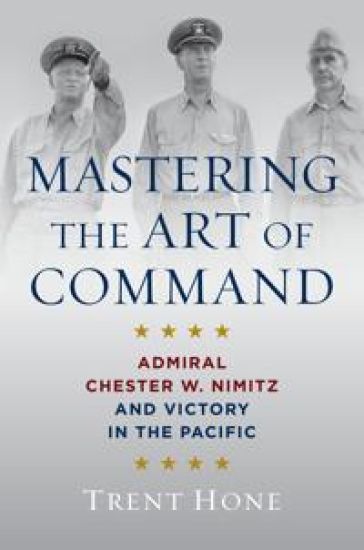
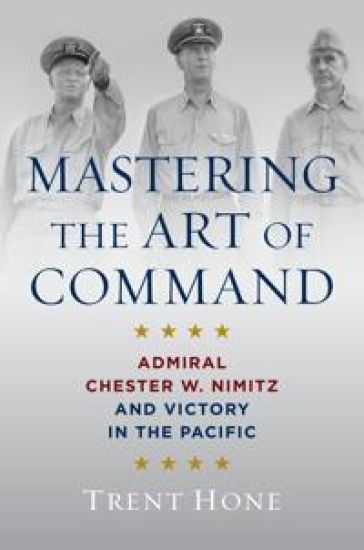
Mastering the Art of Command

Mastering the Art of Command

Trent Hone

Naval Institute Press
2026
pokkari
Honorable Mention for the John Lyman Book Award in the category of “U. S. Naval History.” Mastering the Art of Command is a detailed examination of Admiral Chester W. Nimitz‘s leadership during World War II. It describes how he used his talents to guide the Pacific Fleet following the attacks on Pearl Harbor, win crucial victories against the forces of Imperial Japan, and then seize the initiative in the Pacific. Once Nimitz‘s forces held the initiative, they maintained it through an offensive campaign of unparalleled speed that overcame Japanese defenses and created the conditions for victory. As a command and operational history, Mastering the Art of Command explores how Nimitz used his leadership skills, command talents, and strategic acumen to achieve these decisive results. Hone recounts how Nimitz, as both Commander-in-Chief of the Pacific Fleet (CINCPAC) and Commander-in-Chief of the Pacific Ocean Areas (CINCPOA), revised and adapted his organizational structure to capitalize on lessons and newly emerging information. Hone argues that Nimitz—because he served simultaneously as CINCPAC and CINCPOA—was able to couple tactical successes to strategic outcomes and more effectively plan and execute operations that brought victory at Midway, Guadalcanal, the Marshall Islands, the Philippines, Iwo Jima, and Okinawa. As a study of leadership, Mastering the Art of Command uses modern management theories, and builds upon the approach in his award-winning Learning War. Trent Hone explores the challenge of leadership in complex adaptive systems through Nimitz‘s behavior and causes us to reassess the inevitability of Allied victory and the reasons for its ultimate accomplishment. A new narrative history of the Pacific war, this book demonstrates effective patterns for complexity-informed leadership by highlighting how Nimitz maintained coherence within his organization, established the conditions for his subordinates to succeed, and fostered collaborative sensemaking to identify and pursue options more rapidly. Nimitz‘s “strategic artistry” is a pattern worthy of study and emulation, for today‘s military officers, civilian leaders, and managers in large organizations.
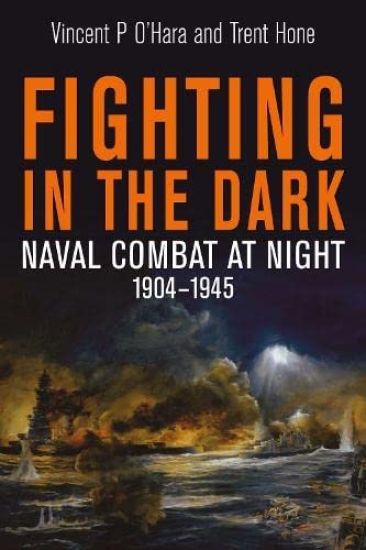
Fighting in the Dark

Fighting in the Dark

Vincent P O'Hara; Trent Hone

PenSword Books Ltd
2023
sidottu
The first book to describe the infamously difficult task of fighting in the dark at sea. Written by a team of internationally renowned naval historians. A fine blend of technical developments and battle histories.
Mastering the Art of Command

Mastering the Art of Command

Trent Hone

Naval Institute Press
2022
sidottu
Mastering the Art of Command is a detailed examination of Admiral Chester W. Nimitz's leadership during World War II. It describes how he used his talents to guide the Pacific Fleet following the attacks on Pearl Harbor, win crucial victories against the forces of Imperial Japan, and then seize the initiative in the Pacific. Once Nimitz's forces held the initiative, they maintained it through an offensive campaign of unparalleled speed that overcame Japanese defenses and created the conditions for victory. As a command and operational history, Mastering the Art of Command explores how Nimitz used his leadership skills, command talents, and strategic acumen to achieve these decisive results. Hone recounts how Nimitz, as both Commander-in-Chief of the Pacific Fleet (CINCPAC) and Commander-in-Chief of the Pacific Ocean Areas (CINCPOA), revised and adapted his organizational structure to capitalize on lessons and newly emerging information. Hone argues that Nimitz--because he served simultaneously as CINCPAC and CINCPOA--was able to couple tactical successes to strategic outcomes and more effectively plan and execute operations that brought victory at Midway, Guadalcanal, the Marshall Islands, the Philippines, Iwo Jima, and Okinawa. As a study of leadership, Mastering the Art of Command uses modern management theories, and builds upon the approach in his award-winning Learning War. Trent Hone explores the challenge of leadership in complex adaptive systems through Nimitz's behavior and causes us to reassess the inevitability of Allied victory and the reasons for its ultimate accomplishment. A new narrative history of the Pacific war, this book demonstrates effective patterns for complexity-informed leadership by highlighting how Nimitz maintained coherence within his organization, established the conditions for his subordinates to succeed, and fostered collaborative sense-making to identify and pursue options more rapidly. Nimitz's "strategic artistry" is a pattern worthy of study and emulation, for today's military officers, civilian leaders, and managers in large organizations. ?
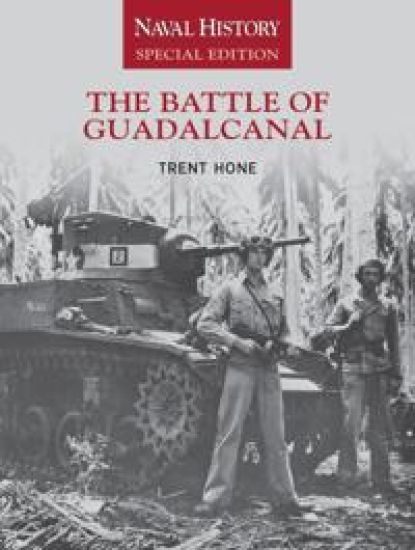
The Battle of Guadalcanal

The Battle of Guadalcanal

Trent Hone

Naval Institute Press
2022
nidottu
Building upon the expertise of the authors and historians of the Naval Institute Press, the Naval History Special Editions are designed to offer studies of the key vessels, battles, and events of armed conflict. Using an image-heavy, magazine-style format, these Special Editions should appeal to scholars, enthusiasts, and general readers alike. The Guadalcanal Campaign began in August 1942 with Operation Watchtower. This first Allied offensive in the Pacific, undertaken before U. S. forces were fully prepared, thwarted an impending Japanese operation and initiated a six-month struggle to control the island and its surroundings. Desperate fighting occurred in the jungles of Guadalcanal, in the skies above it, and on--as well as below--the seas around it. Possession of the island's airfield allowed the U. S. garrison to dominate the skies during the day. At night, the Imperial Japanese Navy bombarded the airfield and brought supplies and reinforcements to the island. The U. S. Navy's attempts to stop these nocturnal incursions triggered a series of battles that were some of the most furious, confused, and chaotic in naval history. As melees erupted in bewildering darkness, concerted action proved impossible. Formations disintegrated, and ships fought individually. So many were sunk that sailors nicknamed the narrow waters off Guadalcanal "Iron Bottom Sound." Within those waters, the men of the U. S. Navy fought tenaciously. In nights filled with flares, flames, the reek of gunpowder, and blinding explosions, their "heroic actions without number" blunted Japanese reinforcement efforts. Victories at the Battle of Cape Esperance in October and the First and Second Naval Battles of Guadalcanal in November were especially crucial. Unable to keep pace with the increasing number of U. S. supplies and reinforcements, the Japanese abandoned the island. This volume recounts those battles, the heroic actions that led to victory, and the Allied triumph at Guadalcanal.
Learning War

Learning War

Trent Hone

Naval Institute Press
2022
pokkari
Learning War examines the U. S. Navy's doctrinal development from 1898-1945 and explains why the Navy in that era was so successful as an organization at fostering innovation. A revolutionary study of one of history's greatest success stories, this book draws profoundly important conclusions that give new insight, not only into how the Navy succeeded in becoming the best naval force in the world, but also into how modern organizations can exploit today's rapid technological and social changes in their pursuit of success. Trent Hone argues that the Navy created a sophisticated learning system in the early years of the twentieth century that led to repeated innovations in the development of surface warfare tactics and doctrine. The conditions that allowed these innovations to emerge are analyzed through a consideration of the Navy as a complex adaptive system. Learning War is the first major work to apply this complex learning approach to military history. This approach permits a richer understanding of the mechanisms that enable human organizations to evolve, innovate, and learn, and it offers new insights into the history of the United States Navy.
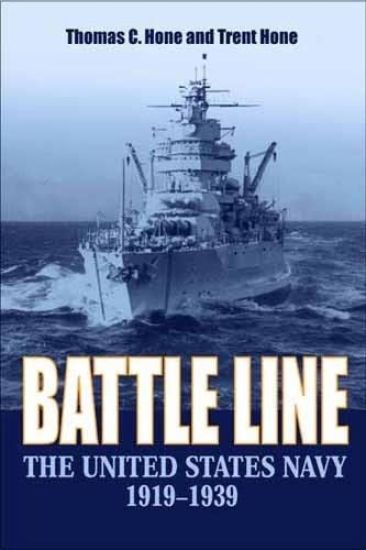
Battle Line

Battle Line

Thomas C. Hone; Trent Hone

Naval Institute Press
2021
pokkari
Battle Line examines the twenty-year period that saw the U. S. fleet shrink under the pressure of arms limitation treaties and government economy and then grow again to a world-class force. The authors trace the Navy's evolution from a fleet centered around slow battleships to one that deployed most of the warship types that proved so essential in World War II. Based on years of study of official Navy department records, this book presents a comprehensive view of the foundations of a navy that would become the world's largest and most formidable. At the same time, the heart of the work draws on memoirs, novels, and oral histories to reveal the efforts and the skills of the sailors and officers who contributed to successes in World War II. This combination of popular history and archival history will appeal to a general audience of naval enthusiasts.
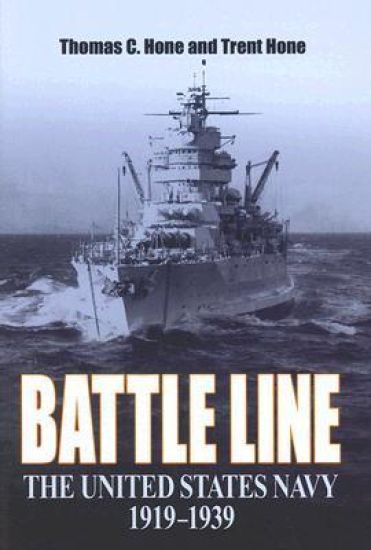
Battle Line

Battle Line

Thomas C. Hone; Trent Hone

Naval Institute Press
2006
sidottu
This book examines the twenty-year period that saw the US fleet shrink under the pressures of arms-limitation treaties, and then grow again to a world-class force. The authors trace the Navy’s evolution from a fleet centred around slow battleships to one that deployed most of the warship types that proved so essential in World War II. Both the older battleships and the newer ships are captured in stunning period photographs that have never before been published. An authoritative yet lively text explains how and why the newer ships and aircraft came into being. Desperately short of men and funding, the Navy nevertheless pioneered carrier aviation, shipboard electronics, codebreaking and, with the Marines, amphibious warfare– elements that made America’s later victory in the Pacific possible. Based on years of study of official records, this book presents a comprehensive view of the foundation of a navy that would become the world’s largest and most formidable. From their adventures on Yangtze River gunboats to carrier landings on the converted battle cruisers Saratoga and Lexington, the men are profiled along with their ships. This combination of popular history with archival history will appeal to a general audience of naval enthusiasts. Thomas C. Hone, an executive in the Office of the Secretary of Defense, is the author of American and British Aircraft Carrier Development, 1919–1941. He has taught at the Naval War College and the National Defense University among other institutions. Trent Hone has published several articles on the US Navy’s tactical development before World War II. Both father and son are residents of Arlington, Virginia.