Kirjojen hintavertailu – 12 859 824 kirjaa ja 27 kauppaa

Kirjailija

Trevor Leggett

Kirjat ja teokset yhdessä paikassa: 22 kirjaa, julkaisuja vuosilta 1988–2024, suosituimpiin kuuluu Japanese Chess. Vertaile teosten hintoja ja tarkista saatavuus suomalaisista kirjakaupoista.

22 kirjaa

Kirjojen julkaisuvuodet: 1988–2024.

The Demonstration of Throws; Nage-no-Kata
Written by T. P. Leggett in 1963, The Demonstration of Throws; Nage-no-Kata, is a classic in Martial Arts writings. T. P. Leggett unveils a comprehensive exploration of one of Judo's most intricate and essential kata. This book is a meticulous guide, inviting both novices and seasoned practitioners to delve into the profound art of grappling. Along with a detailed technical description of the kata movements are photographs and illustrations depicting the individual movements in great detail. With a blend of scholarly insight and practical wisdom, Leggett meticulously dissects each throw, offering profound insights into the subtle nuances of technique, strategy, and philosophy behind Nage-no-Kata. From the foundational foot positions to the intricate throwing movements, every aspect is meticulously detailed, providing a roadmap for mastering this fundamental aspect of Judo. However, "The Demonstration of Throws" is more than just a technical manual. Leggett delves into the historical and philosophical underpinnings of Nage-no-Kata, tracing its evolution from its ancient roots to its modern-day significance. Through captivating anecdotes and historical context, Leggett brings to life the rich tapestry of tradition and innovation that defines this venerable kata. Whether you're a Judo enthusiast seeking to deepen your understanding of Nage-no-Kata or a martial artist eager to explore the intricacies of throwing, "The Demonstration of Throws" is an indispensable companion. With Leggett's expert guidance, readers embark on a transformative journey, honing their skills, enriching their understanding, and ultimately embodying the essence of Katame-no-Kata.

The Demonstration of Holds; Katame-no-Kata
Written by T. P. Leggett in 1963, The Demonstration of Holds; Katame-no-Kata, is a classic in Martial Arts writings. T. P. Leggett unveils a comprehensive exploration of one of Judo's most intricate and essential kata. This book is a meticulous guide, inviting both novices and seasoned practitioners to delve into the profound art of grappling. Along with a detailed technical description of the kata movements are photographs and illustrations depicting the individual movements in great detail. With a blend of scholarly insight and practical wisdom, Leggett meticulously dissects each hold, offering profound insights into the subtle nuances of technique, strategy, and philosophy behind Katame-no-Kata. From the foundational pins to the intricate submissions, every aspect is meticulously detailed, providing a roadmap for mastering this fundamental aspect of Judo. However, "The Demonstration of Holds" is more than just a technical manual. Leggett delves into the historical and philosophical underpinnings of Katame-no-Kata, tracing its evolution from its ancient roots to its modern-day significance. Through captivating anecdotes and historical context, Leggett brings to life the rich tapestry of tradition and innovation that defines this venerable kata. Whether you're a Judo enthusiast seeking to deepen your understanding of Katame-no-Kata or a martial artist eager to explore the intricacies of grappling, "The Demonstration of Holds" is an indispensable companion. With Leggett's expert guidance, readers embark on a transformative journey, honing their skills, enriching their understanding, and ultimately embodying the essence of Katame-no-Kata.
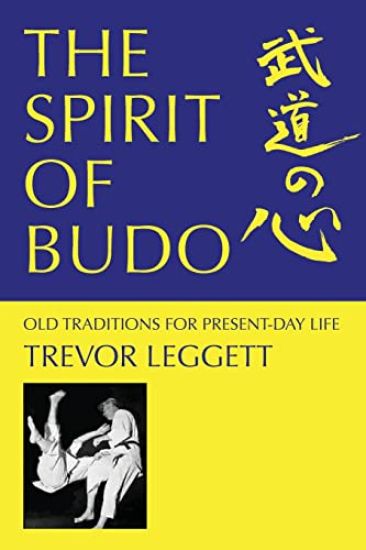
The Spirit of Budo - Old Traditions for Present-day Life

The Spirit of Budo - Old Traditions for Present-day Life

Trevor Leggett

Trevor Leggett Adhyatma Yoga Trust
2022
pokkari
This book comprises eighteen essays written with simplicity and humour, but with an underlying discipline and authority derived from a lifetime of spiritualand martial arts training both in Adhyatma Yoga and Judo. Trevor Leggett addresses matters including sportsmanship, achieving freedom of mind, training the inner self, developing an inner calm, and the four keys to learning - instruction, observation, inference and personal experience. He looks at the cultivation of these Budo qualities and suggests ways in which the lessons learned can be applied to daily life as well as to the practiceof the martial arts. Trevor Leggett lived for a number of years in Japan where he learnt the Japanese language and studied Judo and Zen. He was the first foreigner to hold the 6th Dan in Judo from the Kodokan. A senior instructor at the Budokwai and founder of the Renshuden in London, he was one of the leading teachers of Judo in the United Kingdom. He is the author of Championship Judo (with Kisaburo Watanabe) and Kata Judo (with Dr Jigoro Kano).
The Realisation of the Supreme Self

The Realisation of the Supreme Self

Trevor Leggett

Trevor Leggett Adhyatma Yoga Trust
2021
pokkari
A practical training method, and not merely a text of revelation and worship such is the true status of the ancient Sanskrit text Bhagavad Gita . The special contribution of the Gita is yoga, practical methods for expanding individual consciousness to realise the Supreme Self. This book presents the Gita yoga in the light of explanations by Sankara, the great seventh-century Indian philosopher and yogin. The Gita is directed in the first instance at the vigorously active, with responsibilities in the world. The actual practices of yoga are given for meetingthe shock of the world-energies in the form of illusions, fear, greed, and anger. The whole basis of Gita yoga is confirmation through experiment, not mereexhortation. is highly significant book presents the Gita as a training manual for spiritual practice.
The Chapter Of The Self

The Chapter Of The Self

Trevor Leggett

The Buddhist Society
2019
nidottu
Trevor Leggett examines and discusses the issues raised in this Hindu book of law as it pertains to the notion of yogic practice leading to the realisation of the Universal Self ( tman-br hman), closely referencing the great Indian sage Shankara.
First Zen Reader

First Zen Reader

Trevor Leggett

The Buddhist Society
2018
nidottu
When Zen Buddhism crossed from China to Japan in the twelfth century, it entered a phase of development that was not only to inspire a magnificent range of artistic achievement but also to exert a tremendous influence upon Japanese life itself and, eventually, to bring to the attention of the West a religious philosophy both unique and challenging in its power. First published in 1960, the purpose of this anthology is to suggest an approach to answering the perennial question 'What is Zen?'.
Second Zen Reader

Second Zen Reader

Trevor Leggett

The Buddhist Society
2018
nidottu
Every page of this profoundly erudite book is written with compelling insight. There are five sections, each reflecting in depth a different emphasis by a particular Master or School of Zen. The most important section is the first, an inspired and inspiring commentary on a sutra considered by some to be the very kernel of Mahayana Buddhism: the Heart Sutra.
Three Ages Of Zen

Three Ages Of Zen

Trevor Leggett

The Buddhist Society
2017
nidottu
In this volume, Trevor Leggett presents three texts translated from Japanese and compiled to illuminate the three ages of Zen in Japan: the warrior Zen of crisis and war in the thirteenth century; the feudal Zen of eighteenth-century samurai officials and finally the modern Zen found in 20th-century Japan.
Zen And The Ways

Zen And The Ways

Trevor Leggett

The Buddhist Society
2017
nidottu
Originally published in 1978, Zen and the Ways is the first publication in a series of books published by the Buddhist Society in association with the Trevor Leggett Trust. In Japanese Zen, every activity in life, including the martial arts, flower arrangement and serving tea, are considered a field for practicing inner control, mediation and inspiration, and can be termed the 'Way' when practised in this manner. In this book, Leggett collects together translation of texts relating to this phenomenon and offers his own thoughts and observations on the subject.
A First Zen Reader

A First Zen Reader

Trevor Leggett

Routledge
2016
sidottu
When Zen Buddhism crossed from China to Japan in the twelfth century, it entered a phase of development that was not only to inspire a magnificent range of artistic achievement but also to exert a tremendous influence upon Japanese life itself and, eventually, to bring to the attention of the West a religious philosophy both unique and challenging in its power. ‘Yet’, as one of the contributors to this book (first published in 1960) expresses it, ‘if asked what Zen is, to reply is very difficult.’ It is the purpose of this anthology to suggest an approach to such a reply. The texts here translated will give a general idea of Zen theory and practice, and are outstanding selections from the treasury of Zen literature. To these, the anthologist has added a valuable ‘Note on the Ways’, in which he points out how ‘the student keeps his Zen practice in touch with his daily life’. The exceptional interest of the text is further enhanced by twenty illustrative plates.
The Tiger's Cave

The Tiger's Cave

Trevor Leggett

Routledge
2016
sidottu
The Japanese texts translated here give a fascinating picture of actual Zen life – the life of the traditional temple training, with many stories and a number of historical incidents connected with Zen masters. The main text is the important commentary by a contemporary Soto Zen abbot on the Heart Sutra – the shortest and most difficult sutra in Mahayana Buddhism. Then comes a translation of the Yasen Kanna, a short autobiographical piece by Hakuin, the Japanese Zen teacher, monk and poet who revitalized Rinzai Zen in the eighteenth century. The remaining texts show what Zen means in Japan today.
Zen and the Ways

Zen and the Ways

Trevor Leggett

Routledge
2016
sidottu
Expression of Zen inspiration in everyday activities such as writing or serving tea, and in knightly arts such as fencing, came to be highly regarded in the Japanese tradition. In the end some of them were practised as spiritual training as themselves; they were the n called ‘Ways’. This book, first published in 1978, includes translations of some rare texts on Zen and the Ways. One is a sixteenth-century Zen text complied from Kamakura temple records of the previous three centuries; others are translated from the ‘secret scrolls’ of fencing, archery, Judo and so on.
Lotus Lake Dragon Pool

Lotus Lake Dragon Pool

Trevor Leggett

Routledge
2016
sidottu
This book, first published in 1994, brings together the rich and complementary traditions of yoga and Zen. The lessons they contain serve always to guide and inform, never to lecture or preach. From accounts of long-ago kings and sages to stories of contemporary businessmen and students come timeless, universal precepts that speak directly to the modern reader.
Encounters in Yoga and Zen

Encounters in Yoga and Zen

Trevor Leggett

Routledge
2016
sidottu
This book, first published in 1982, collects a fascinating selection from the many traditional Japanese and Indian stories used by teachers in the Eastern spiritual schools to assist students in their training. The author, who spent many years training in both yoga and Zen, has collected the stories from a variety of sources: conversations with teachers, reminiscences in temple magazines of teachers of the past, folk tales used to make a training point, and personal experiences of training. The stories often relate to incidents from ordinary life: a monk in a Buddhist temple attacking another and how the abbot reacts; what an Indian judge, a yogin, says to a thief who pleads that what he did was the will of god; a magnificent new altar-cloth is donated, but never used; or an enthusiast for service sweeps the garden in the early morning while others stay in bed. These are incidents round which a student’s doubts are likely to crystalize, and knowledge of them forms an important part of the background of a tradition. The aim of the stories is to find realization and inspiration in daily life. They are ordinary, but the traditional presentation given by Trevor Leggett catches at the heart of an attentive reader and reveals something of the inner lines of the currents of life. The book includes pictures specially brushed by Jacques Allais in what is called the Suiboku style. His work has been praised by the doyen of Japanese Suiboku painters, Nanpu Katayama. Suiboku is eighty percent suggestion: a Suiboku artist would not show both ends of a bridge, only one. The style gives a hint for the focusing of meditation practice, and thus provides a perfect complement to Trevor Leggett’s text.
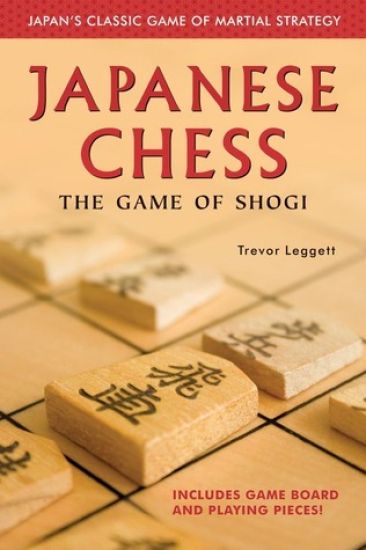
Japanese Chess

Japanese Chess

Trevor Leggett; Alan Baker

Tuttle Publishing
2009
nidottu

Halvin toimitettuna 21,70 €

Learn and master the fascinating game of Japanese Chess or "Shogi" with this expert guide and chess set. Japanese Chess: The Game of Shogi is the ultimate strategy guidebook for players of any skill level to improve their game and winning strategies. Played by millions around the world, Shogi is the uniquely Japanese variant of chess. It is the only version in which an opponent's captured piece can be dropped back onto the board as one's own. This makes for extremely exciting, dynamic gameplay in which momentum can quickly shift back and forth between players. Trevor Legett, expert player and longtime resident of Japan, gives you all the information you need to play the game, form its basic rules to winning tactics. Also included in this book are: Sample game and commentary Discussion of various opening strategies and game positions Explanation of how to read a Japanese score Fold-out Shogi board Sturdy paper playing piecesJapanese Chess features everything you need to get started playing this challenging and fun game!
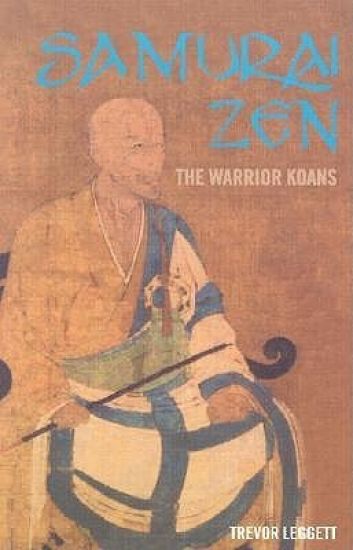
Samurai Zen

Samurai Zen

Trevor Leggett

Routledge
2003
nidottu
Samurai Zen brings together 100 of the rare riddles which represent the core spiritual discipline of Japan's ancient Samurai tradition. Dating from thirteenth-century records of Japan's Kamakura temples, and traditionally guarded with a reverent secrecy, they reflect the earliest manifestation of pure Zen in Japan. Created by Zen Masters for their warrior pupils, the Japanese Koans use incidents from everyday life - a broken tea-cup, a water-jar, a cloth - to bring the warrior pupils of the Samurai to the Zen realization. Their aim is to enable a widening of consciouness beyond the illusions of the limited self, and a joyful inspiration in life - a state that has been compared to being free under a blue sky after imprisonment.
Samurai Zen

Samurai Zen

Trevor Leggett

Routledge
2003
sidottu
Samurai Zen brings together 100 of the rare riddles which represent the core spiritual discipline of Japan's ancient Samurai tradition. Dating from thirteenth-century records of Japan's Kamakura temples, and traditionally guarded with a reverent secrecy, they reflect the earliest manifestation of pure Zen in Japan. Created by Zen Masters for their warrior pupils, the Japanese Koans use incidents from everyday life - a broken tea-cup, a water-jar, a cloth - to bring the warrior pupils of the Samurai to the Zen realization. Their aim is to enable a widening of consciouness beyond the illusions of the limited self, and a joyful inspiration in life - a state that has been compared to being free under a blue sky after imprisonment.