Kirjojen hintavertailu – 12 903 725 kirjaa ja 27 kauppaa
Kirjailija
Tyler Cowen
Kirjat ja teokset yhdessä paikassa: 26 kirjaa, julkaisuja vuosilta 1991–2024, suosituimpiin kuuluu Loose-Leaf Version for Modern Principles of Macroeconomics 3e & Launchpad for Cowen's Modern Principles of Macroeconomics (6 Month Online) [With Acces. Vertaile teosten hintoja ja tarkista saatavuus suomalaisista kirjakaupoista.
This intriguing work explores the world of three amate artists. A native tradition, all of their painting is done in Mexico, yet, the finished product is sold almost exclusively to wealthy American art buyers. Cowen examines this cultural interaction between Mexico and the United States to see how globalization shapes the lives and the work of the artists and their families. The story of these three artists reveals that this exchange simultaneously creates economic opportunities for the artists, but has detrimental effects on the village. A view of the daily village life of three artists connected to the larger art world, this book should be of particular interest to those in the fields of cultural economics, Latino studies, economic anthropology and globalization.
A Frenchman rents a Hollywood movie. A Thai schoolgirl mimics Madonna. Saddam Hussein chooses Frank Sinatra's "My Way" as the theme song for his fifty-fourth birthday. It is a commonplace that globalization is subverting local culture. But is it helping as much as it hurts? In this strikingly original treatment of a fiercely debated issue, Tyler Cowen makes a bold new case for a more sympathetic understanding of cross-cultural trade. Creative Destruction brings not stale suppositions but an economist's eye to bear on an age-old question: Are market exchange and aesthetic quality friends or foes? On the whole, argues Cowen in clear and vigorous prose, they are friends. Cultural "destruction" breeds not artistic demise but diversity. Through an array of colorful examples from the areas where globalization's critics have been most vocal, Cowen asks what happens when cultures collide through trade, whether technology destroys native arts, why (and whether) Hollywood movies rule the world, whether "globalized" culture is dumbing down societies everywhere, and if national cultures matter at all. Scrutinizing such manifestations of "indigenous" culture as the steel band ensembles of Trinidad, Indian handweaving, and music from Zaire, Cowen finds that they are more vibrant than ever--thanks largely to cross-cultural trade. For all the pressures that market forces exert on individual cultures, diversity typically increases within society, even when cultures become more like each other. Trade enhances the range of individual choice, yielding forms of expression within cultures that flower as never before. While some see cultural decline as a half-empty glass, Cowen sees it as a glass half-full with the stirrings of cultural brilliance. Not all readers will agree, but all will want a say in the debate this exceptional book will stir.
In a world where more people know who Princess Di was than who their own senators are, where Graceland draws more visitors per year than the White House, and where Michael Jordan is an industry unto himself, fame and celebrity are central currencies. In this intriguing book, Tyler Cowen explores and elucidates the economics of fame. Fame motivates the talented and draws like-minded fans together. But it also may put profitability ahead of quality, visibility above subtlety, and privacy out of reach. The separation of fame and merit is one of the central dilemmas Cowen considers in his account of the modern market economy. He shows how fame is produced, outlines the principles that govern who becomes famous and why, and discusses whether fame-seeking behavior harmonizes individual and social interests or corrupts social discourse and degrades culture. Most pertinently, Cowen considers the implications of modern fame for creativity, privacy, and morality. Where critics from Plato to Allan Bloom have decried the quest for fame, Cowen takes a more pragmatic, optimistic view. He identifies the benefits of a fame-intensive society and makes a persuasive case that however bad fame may turn out to be for the famous, it is generally good for society and culture.
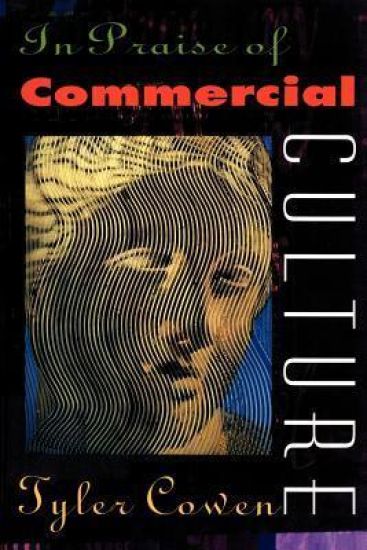
Does a market economy encourage or discourage music, literature, and the visual arts? Do economic forces of supply and demand help or harm the pursuit of creativity? This book seeks to redress the current intellectual and popular balance and to encourage a more favorable attitude toward the commercialization of culture that we associate with modernity. Economist Tyler Cowen argues that the capitalist market economy is a vital but underappreciated institutional framework for supporting a plurality of coexisting artistic visions, providing a steady stream of new and satisfying creations, supporting both high and low culture, helping consumers and artists refine their tastes, and paying homage to the past by capturing, reproducing, and disseminating it. Contemporary culture, Cowen argues, is flourishing in its various manifestations, including the visual arts, literature, music, architecture, and the cinema. Successful high culture usually comes out of a healthy and prosperous popular culture. Shakespeare and Mozart were highly popular in their own time. Beethoven’s later, less accessible music was made possible in part by his early popularity. Today, consumer demand ensures that archival blues recordings, a wide array of past and current symphonies, and this week’s Top 40 hit sit side by side in the music megastore. High and low culture indeed complement each other. Cowen’s philosophy of cultural optimism stands in opposition to the many varieties of cultural pessimism found among conservatives, neoconservatives, the Frankfurt School, and some versions of the political correctness and multiculturalist movements, as well as historical figures, including Rousseau and Plato. He shows that even when contemporary culture is thriving, it appears degenerate, as evidenced by the widespread acceptance of pessimism. He ends by considering the reasons why cultural pessimism has such a powerful hold on intellectuals and opinion-makers.
Risk and Business Cycles examines the causes of business cycles, a perennial topic of interest within economics. The author argues the case for the revival of an important role for monetary causes in business cycle theory, which challenges the current trend towards favouring purely real theories. The work also presents a critique of the traditional Austrian theory of the trade cycle. This controversial approach will ensure that the book is of interest to all those involved with business cycles, as well as Austrian economics.
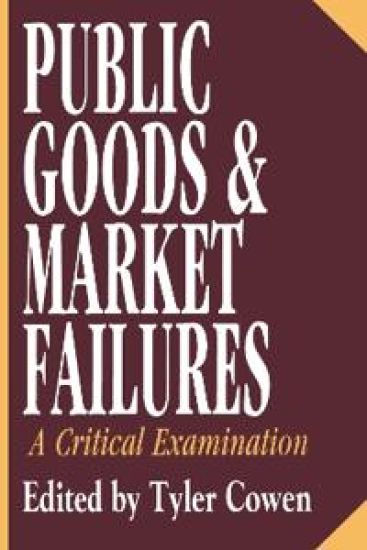
Assertions of market failure are usually based on Paul Samuelson's theory of public goods and externalities. This book both develops that theory and challenges the conclusion of many economists and policy-makers that market failures cannot be corrected by market forces. The volume includes major case studies of private provision of public goods. Among the goods considered are lighthouse services, education, municipal services, and environmental conservation.