Kirjojen hintavertailu – 12 903 725 kirjaa ja 27 kauppaa

Kirjailija

Tyrone C. Howard

Kirjat ja teokset yhdessä paikassa: 11 kirjaa, julkaisuja vuosilta 2013–2026, suosituimpiin kuuluu Designing Qualitative Research to Do No Harm. Vertaile teosten hintoja ja tarkista saatavuus suomalaisista kirjakaupoista.

11 kirjaa

Kirjojen julkaisuvuodet: 2013–2026.

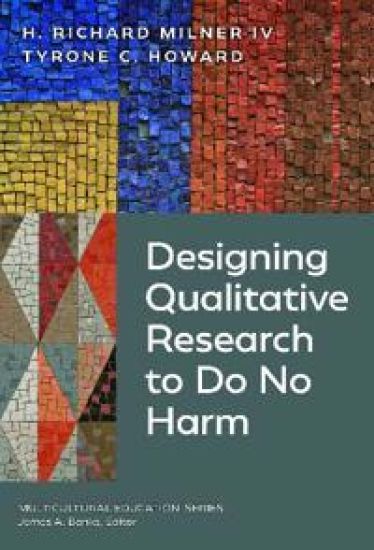
Designing Qualitative Research to Do No Harm

Designing Qualitative Research to Do No Harm

H. Richard Milner IV; Tyrone C. Howard

TEACHERS' COLLEGE PRESS
2026
sidottu
This book is for everyone who cares about how people, communities, and institutions are treated through research processes, and what we learn from research that impacts them. This accessible book helps researchers avoid unintentional harm to research participants, communities, institutions, and organizations. The book assists researchers in building knowledge, attitudes, dispositions, skills, and practices to co-construct knowledge with people and communities to inform policies and practices. Grounded in research and theory, the book focuses on three essential qualitative research methods: interviewing, observation, and document analyses. Readers are invited to employ ethical, compassionate, and rigorous practices committed to harm prevention, particularly important in today’s declining democracy. The authors explore how to collect evidence, build and substantiate knowledge, and disseminate it in ways that honor, protect, and work in partnership with research participants and communities to improve human conditions. While early career and veteran researchers will find the book useful, so should parents, activists, policymakers, and anyone who cares about the health and wellbeing of people who participate in research and what we learn from it. Book Features: Introduces a set of four commitments to “Do No Harm in Research” for readers to adopt and adapt to their own context and content. Written in an accessible tone and structure that is suitable for readers across different disciplines such as education, sociology, psychology, human development, health sciences, political science, ethnic studies, history, and social work. Offers real-life scenarios to help readers think about how they would approach aspects of their work differently by applying Do No Harm commitments in their own research planning and practices. Moves beyond philosophical debates and paradigm wars about the importance of qualitative research over other research traditions to focus on cultivating research practices and outcomes for equity and inclusion.
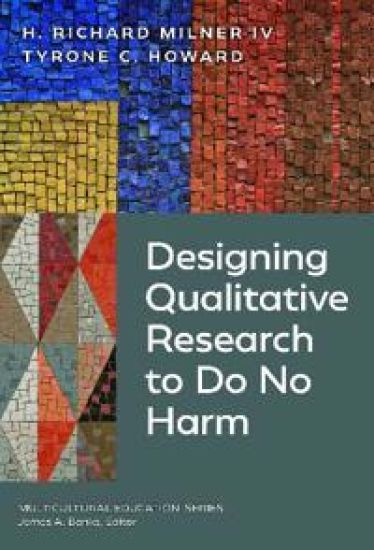
Designing Qualitative Research to Do No Harm

Designing Qualitative Research to Do No Harm

H. Richard Milner IV; Tyrone C. Howard

TEACHERS' COLLEGE PRESS
2026
nidottu
This book is for everyone who cares about how people, communities, and institutions are treated through research processes, and what we learn from research that impacts them. This accessible book helps researchers avoid unintentional harm to research participants, communities, institutions, and organizations. The book assists researchers in building knowledge, attitudes, dispositions, skills, and practices to co-construct knowledge with people and communities to inform policies and practices. Grounded in research and theory, the book focuses on three essential qualitative research methods: interviewing, observation, and document analyses. Readers are invited to employ ethical, compassionate, and rigorous practices committed to harm prevention, particularly important in today’s declining democracy. The authors explore how to collect evidence, build and substantiate knowledge, and disseminate it in ways that honor, protect, and work in partnership with research participants and communities to improve human conditions. While early career and veteran researchers will find the book useful, so should parents, activists, policymakers, and anyone who cares about the health and wellbeing of people who participate in research and what we learn from it. Book Features: Introduces a set of four commitments to “Do No Harm in Research” for readers to adopt and adapt to their own context and content. Written in an accessible tone and structure that is suitable for readers across different disciplines such as education, sociology, psychology, human development, health sciences, political science, ethnic studies, history, and social work. Offers real-life scenarios to help readers think about how they would approach aspects of their work differently by applying Do No Harm commitments in their own research planning and practices. Moves beyond philosophical debates and paradigm wars about the importance of qualitative research over other research traditions to focus on cultivating research practices and outcomes for equity and inclusion.
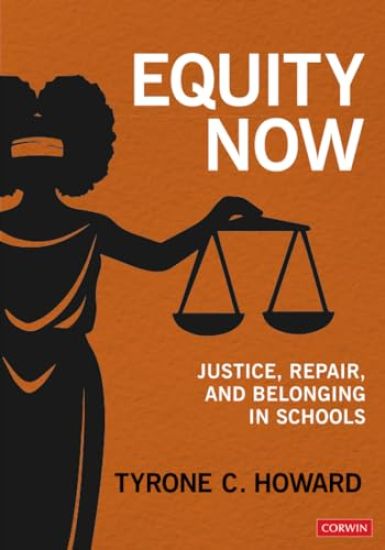
Equity Now

Equity Now

Tyrone C. Howard

SAGE PUBLICATIONS INC
2024
nidottu
If not now, when? Anchored in the tenets of justice, repair, and belonging, Equity Now is a comprehensive guide for educators that emphasizes the urgent need for immediate action to dismantle systemic barriers in education. Aimed at K-12 professionals at all levels of the education system, the book urges us to move beyond individual efforts by applying an equity lens to our policies and practices. Through honest, sustained, and critical dialogues in "brave spaces," educators can address disparities and create equity-centered school communities. Equity Now proposes a solutions-oriented approach to fostering welcoming, affirming, responsive, and rigorous learning environments. Author Tyrone C. Howard, one of the leading authorities on issues related to racial inequality in our schools, provides An equity framework grounded in justice, repair, and belongingA clear vision of equity-focused leadershipEssential practices, strategies, and resources for classroom teachersSuggestion for engaging parents, families and caregivers in schoolsRecommendations for engaging data in an equity based wayReflection questions and additional resources at the close of each chapter This book is a must-read for educators, administrators, and policymakers who are committed to creating conditions in which our children can reach their highest potential.
Post-Pandemic Social Studies

Post-Pandemic Social Studies

Joel Westheimer; Tyrone C. Howard

TEACHERS' COLLEGE PRESS
2021
sidottu
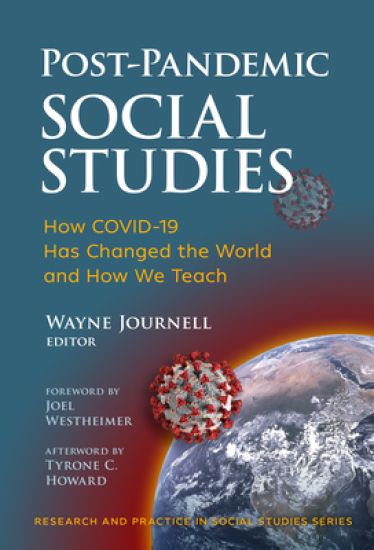
COVID-19 offers a unique opportunity to transform the K–12 social studies curriculum, but history suggests that changes to the formal curriculum will not come easily or automatically. This book was conceived in the space between the dismantling of our old way of life and the anticipation of what comes next. The authors in this volume—leading voices in social studies education—make the case that COVID-19 has exposed deficiencies in much of the traditional narrative found in textbooks and state curriculum standards, and they offer guidance for how educators can use the pandemic to pursue a more justice-oriented, critical examination of contemporary society. Divided into two sections, this volume first focuses on how elementary and secondary educators might teach about the pandemic, both as a contentious public issue and as a recent historical event. The second section asks teachers to reconsider many long-standing aspects of social studies teaching and learning, from content and instructional approaches to testing. Book Features:Guidance on how to teach about the COVID-19 crisis as a recent, controversial historical event. Examples of teaching approaches and classroom projects that align with the C3 Framework. Lessons about COVID-19 for use in K–12 classrooms, as well as chapters on the history of pandemics and on how teachers can help students cope with death and grief. A critical examination of the idea of American exceptionalism, the role of race and class in U. S. society, and fundamental practices within social studies education.
Post-Pandemic Social Studies

Post-Pandemic Social Studies

Joel Westheimer; Tyrone C. Howard

TEACHERS' COLLEGE PRESS
2021
nidottu
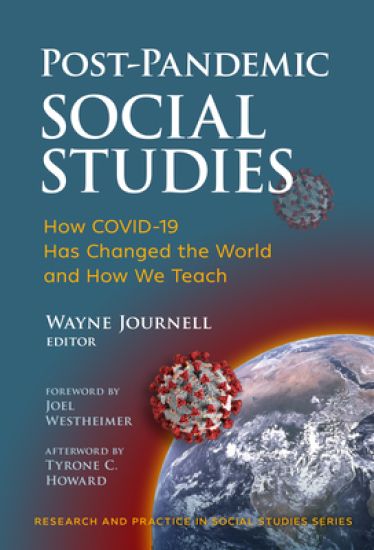
COVID-19 offers a unique opportunity to transform the K–12 social studies curriculum, but history suggests that changes to the formal curriculum will not come easily or automatically. This book was conceived in the space between the dismantling of our old way of life and the anticipation of what comes next. The authors in this volume—leading voices in social studies education—make the case that COVID-19 has exposed deficiencies in much of the traditional narrative found in textbooks and state curriculum standards, and they offer guidance for how educators can use the pandemic to pursue a more justice-oriented, critical examination of contemporary society. Divided into two sections, this volume first focuses on how elementary and secondary educators might teach about the pandemic, both as a contentious public issue and as a recent historical event. The second section asks teachers to reconsider many long-standing aspects of social studies teaching and learning, from content and instructional approaches to testing. Book Features:Guidance on how to teach about the COVID-19 crisis as a recent, controversial historical event. Examples of teaching approaches and classroom projects that align with the C3 Framework. Lessons about COVID-19 for use in K–12 classrooms, as well as chapters on the history of pandemics and on how teachers can help students cope with death and grief. A critical examination of the idea of American exceptionalism, the role of race and class in U. S. society, and fundamental practices within social studies education.
The Power of Community-Engaged Teacher Preparation

The Power of Community-Engaged Teacher Preparation

Tyrone C. Howard

Teachers' College Press
2021
nidottu
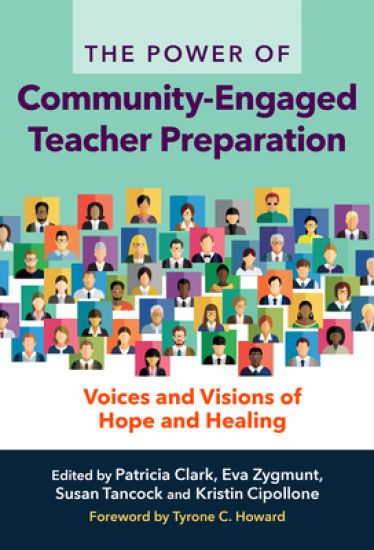
Discover how and why community-engaged teacher preparation is a powerful and vital approach to address an educational system that is historically deficient, discriminatory, and decidedly inequitable. In this edited volume, the authors argue that past practice is inadequate and issue a mandate for a new approach to educator preparation. Articulating a clear definition of community-engaged teacher preparation, they focus on national and international initiatives that have been sustained over time and are having a direct impact on student learning. Chapters are written by school, university, and community partners who speak to the innovation, creativity, commitment, and persistence required to reinvent teacher preparation. They also underscore the complexity of this work, the humility necessary to reflect and reconsider, and the true spirit of authentic solidarity among university, school, and community partners required to seek and secure equity for children in schools. Book Features:Provides a critical examination of structural inequity in education and ways to address it through community-engaged teacher preparation. Describes a teacher preparation model that is enacted in solidarity with members of historically marginalized populations. Offers clear guidance on what is meant by culturally relevant and culturally sustaining pedagogies with examples of how these frameworks are being operationalized. Explores the obstacles and opportunities involved in the implementation process.
The Power of Community-Engaged Teacher Preparation

The Power of Community-Engaged Teacher Preparation

Tyrone C. Howard

Teachers' College Press
2021
sidottu
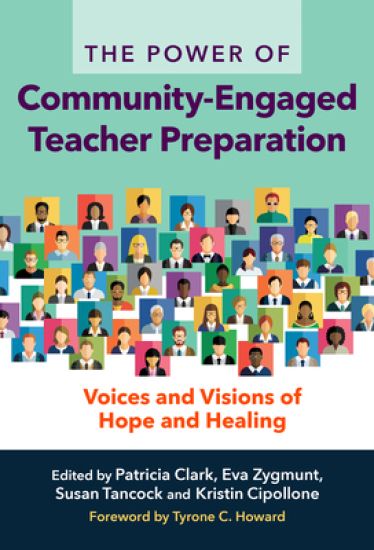
Discover how and why community-engaged teacher preparation is a powerful and vital approach to address an educational system that is historically deficient, discriminatory, and decidedly inequitable. In this edited volume, the authors argue that past practice is inadequate and issue a mandate for a new approach to educator preparation. Articulating a clear definition of community-engaged teacher preparation, they focus on national and international initiatives that have been sustained over time and are having a direct impact on student learning. Chapters are written by school, university, and community partners who speak to the innovation, creativity, commitment, and persistence required to reinvent teacher preparation. They also underscore the complexity of this work, the humility necessary to reflect and reconsider, and the true spirit of authentic solidarity among university, school, and community partners required to seek and secure equity for children in schools. Book Features:Provides a critical examination of structural inequity in education and ways to address it through community-engaged teacher preparation. Describes a teacher preparation model that is enacted in solidarity with members of historically marginalized populations. Offers clear guidance on what is meant by culturally relevant and culturally sustaining pedagogies with examples of how these frameworks are being operationalized. Explores the obstacles and opportunities involved in the implementation process.
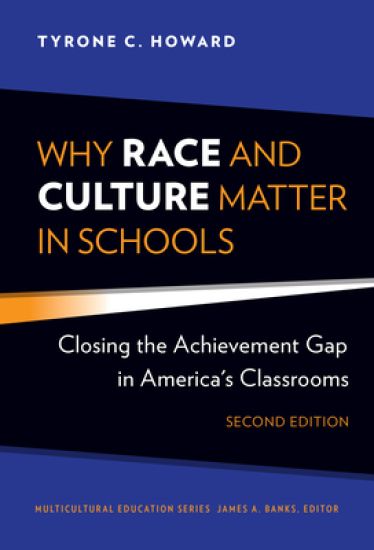
Why Race and Culture Matter in Schools

Why Race and Culture Matter in Schools

Tyrone C. Howard; James A. Banks

Teachers' College Press
2020
sidottu
Issues tied to race and culture continue to be a part of the landscape of America's schools and classrooms. Given the rapid demographic transformation in the nation's states, cities, counties, and schools, it is essential that all school personnel acquire the necessary knowledge, skills, and dispositions to talk, teach, and think across racial and cultural differences. The second edition of Howard's bestseller has been updated to take a deeper look at how schools must be prepared to respond to disparate outcomes among students of color. Tyrone Howard draws on theoretical constructs tied to race and racism, culture and opportunity gaps to address pressing issues stemming from the chronic inequalities that remain prevalent in many schools across the country. This time-honored text will help educators at all levels respond with greater conviction and clarity on how to create more equitable, inclusive, and democratic schools as sites for teaching and learning. The New Edition: Addresses changing ethnic and racial demographics in U. S. schools and communities. Identifies core gaps in academic outcomes across racial and ethnic lines. Addresses potential root causes of academic disparities. Offers recommendations for addressing disparities in outcomes. Provides in-depth analysis on the salience of race and racism in U. S. schools. Includes strategies to help school leaders create more equitable schools. Identifies innovative programs with evidence-based results on eliminating disparities.
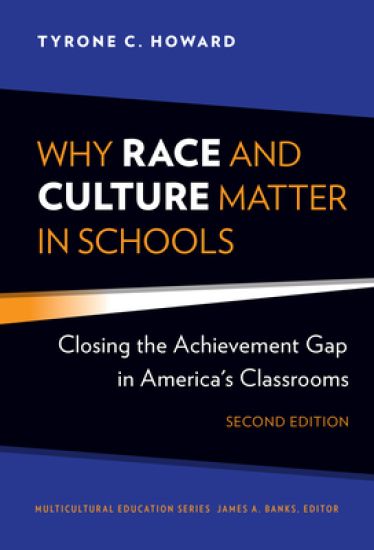
Why Race and Culture Matter in Schools

Why Race and Culture Matter in Schools

Tyrone C. Howard; James A. Banks

Teachers' College Press
2020
nidottu
Issues tied to race and culture continue to be a part of the landscape of America's schools and classrooms. Given the rapid demographic transformation in the nation's states, cities, counties, and schools, it is essential that all school personnel acquire the necessary knowledge, skills, and dispositions to talk, teach, and think across racial and cultural differences. The second edition of Howard's bestseller has been updated to take a deeper look at how schools must be prepared to respond to disparate outcomes among students of color. Tyrone Howard draws on theoretical constructs tied to race and racism, culture and opportunity gaps to address pressing issues stemming from the chronic inequalities that remain prevalent in many schools across the country. This time-honored text will help educators at all levels respond with greater conviction and clarity on how to create more equitable, inclusive, and democratic schools as sites for teaching and learning. The New Edition: Addresses changing ethnic and racial demographics in U. S. schools and communities. Identifies core gaps in academic outcomes across racial and ethnic lines. Addresses potential root causes of academic disparities. Offers recommendations for addressing disparities in outcomes. Provides in-depth analysis on the salience of race and racism in U. S. schools. Includes strategies to help school leaders create more equitable schools. Identifies innovative programs with evidence-based results on eliminating disparities.
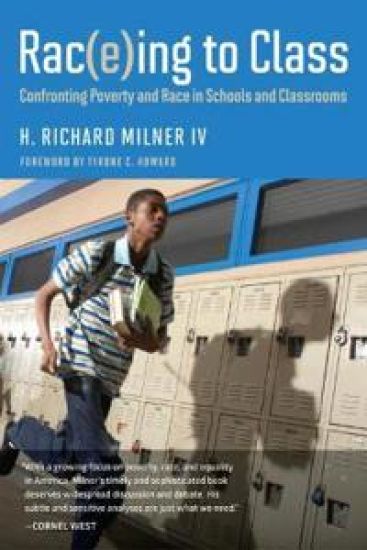
Rac(e)ing to Class

Rac(e)ing to Class

H. Richard Milner IV; Tyrone C. Howard

Harvard Educational Publishing Group
2015
nidottu
In this incisive and practical book, H. Richard Milner IV provides educators with a crucial understanding of how to teach students of color who live in poverty. Milner looks carefully at the circumstances of these students’ lives and describes how those circumstances profoundly affect their experiences within schools and classrooms. In a series of detailed chapters, Milner proposes effective practices—at the district and school levels, and in individual classrooms—for school leaders and teachers who are committed to creating the best educational opportunities for these students. Building on established literature, new research, and a number of revelatory case studies, Milner casts essential light on the experiences of students and their families living in poverty, while pointing to educational strategies that are shaped with these students’ unique circumstances in mind. Milner’s astute and nuanced account will fundamentally change how school leaders and teachers think about race and poverty—and how they can best serve these students in their schools and classrooms.
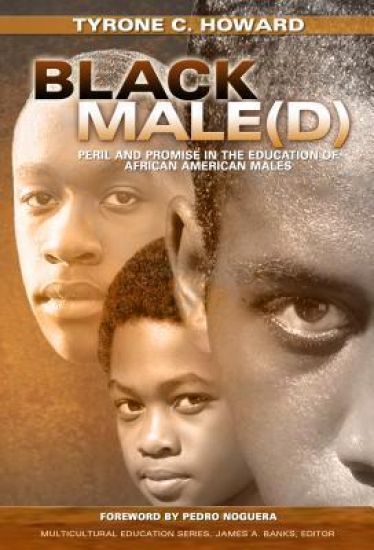
Black Male(d)

Black Male(d)

Tyrone C. Howard; Pedro Noguera

Teachers' College Press
2013
nidottu
In his new book, the author of the bestseller Why Race and Culture Matter in Schools examines the chronic under-performance of African American males in U. S. schools. Citing a plethora of disturbing academic outcomes for Black males, this book focuses on the historical, structural, educational, psychological, emotional, and cultural factors that influence the teaching and learning process for this student population. Howard discusses the potential and promise of Black males by highlighting their voices to generate new insights, create new knowledge, and identify useful practices that can significantly improve the schooling experiences and life chances of Black males. Howard calls for a paradigm shift in how we think about, teach, and study Black males. Book Features:Examines current structures, ideologies, and practices that both help and hinder the educational and social prospects of Black males. Translates frequently cited theoretical principles into research-based classroom practice. Documents teacher-student interactions, student viewpoints, and discusses the troubling role that sports plays in the lives of many Black males. Highlights voices and perspectives from Black male students about ways to improve their schooling experiences and outcomes. Identifies community-based programs that are helping Black males succeed.