Kirjailija
Tzu Sun
Kirjat ja teokset yhdessä paikassa: 11 kirjaa, julkaisuja vuosilta 1971–2023, suosituimpiin kuuluu The Art of War. Vertaile teosten hintoja ja tarkista saatavuus suomalaisista kirjakaupoista.
Nimi esiintyy myös muodoissa: Tzú Sun
11 kirjaa
Kirjojen julkaisuvuodet: 1971–2023.
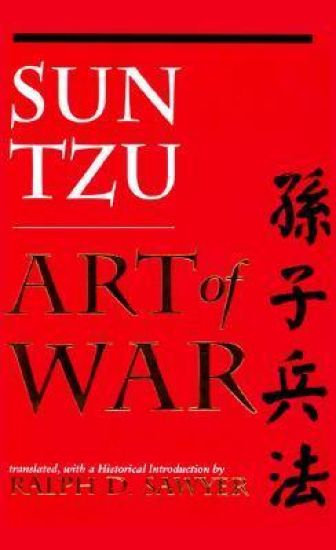
The Art of War is almost certainly the most famous study of strategy ever written and has had an extraordinary influence on the history of warfare. The principles Sun-tzu expounded were utilized brilliantly by such great Asian war leaders as Mao Tse-tung, Giap, and Yamamoto. First translated two hundred years ago by a French missionary, Sun-tzu's Art of War has been credited with influencing Napoleon, the German General Staff, and even the planning for Desert Storm. Many Japanese companies make this book required reading for their key executives. And increasingly, Western businesspeople and others are turning to the Art of War for inspiration and advice on how to succeed in competitive situations of all kinds. Unlike most editions of Sun-tzu currently available (many simply retreads of older, flawed translations), this superb new translation makes use of the best available classical Chinese manuscripts, including the ancient"tomb text” version discovered by archaeologists at Linyi, China. Ralph Sawyer, an outstanding Western scholar of ancient Chinese warfare and a successful businessman in his own right, places this classic work of strategy in its proper historical context. Sawyer supplies a portrait of Sun-tzu's era and outlines several battles of the period that may have either influenced Sun-tzu or been conducted by him. While appreciative of the philosophical richness of the Art of War , this edition stresses Sun-tzu's practical origins and presents a translation that is both accurate and accessible.
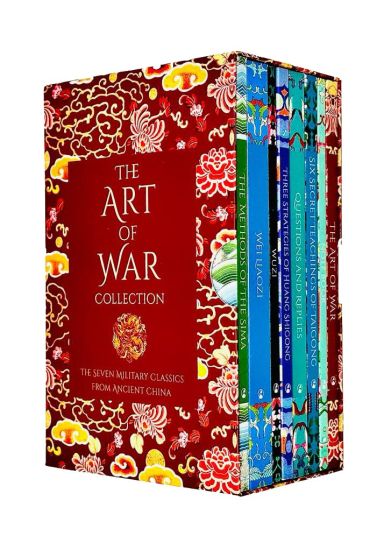
The Art of War The Methods of The Sima Wei Liaozi Wuzi Questions and Replies Three Strategies of Huang Shigong Six Secret Teachings of Taigong Note Book Description: Taken from the experiences of Ancient China's most brilliant warriors more than 2000 years ago, Sun Tzu's famed The Art of War contains valuable lessons on strategic warfare that continue to be relevant today. Six Secret Teachings concerns itself with the topics of tactics, morality and effective communication, and contains valuable lessons on strategic warfare that continue to be relevant today. One of the oldest of the Seven Military Classics from Ancient China, Wuzi focusses on human nature and behaviour, and contains valuable lessons on strategic warfare that continue to be relevant today. A personal notebook for readers to write their own notes.
Muito se fala deste tratado sobre guerra, foi febre nos anos 80 com v rias tradu es sendo feitas. Frases de efeito foram usadas tanto para a auto aju
For two and a half thousand years The Art of War has been the core text of military strategy and planning, providing leaders with enduring insights into tactics, psychology, discipline and the nature of power. Favoured by countless great generals and military tacticians throughout history, over the last century the book has found a new lease of life, inspiring business leaders, politicians and sporting figures, and offering a profound understanding of such diverse topics as managing others and outwitting competitors.
For more than 2,000 years, Sun Tzu's The Art of War has provided leaders with essential advice on battlefield tactics, managing troops and terrain, and employing cunning and deception. An elemental part of Chinese culture, it has also become a touchstone for the Western struggle for survival and success, whether in battle, in business or in relationships. Now, in this crisp, accessible new translation, John Minford brings this seminal work to life for today's readers. A lively, learned introduction, chronologies and suggested further reading are among the valuable apparatus included in this authoritative volume. Even those readers familiar with The Art of War will experience it anew, finding it more fascinating - and more chilling - than ever. Little is known about Sun Tzu (544-496 B. C.) and his life during the Warring States period after the decline of the Zhou dysnasty, but his classic, The Art of War, has been one of the central works of Chinese literature for 2500 years. John Minford studied Chinese at Oxford and at the Australian National University and has taught in China, Hong Kong, and New Zealand. He edited (with Geremie Barme) Seeds of Fire: Chinese Voices of Conscience and (with Joseph S. M. Lau) Chinese Classical Literature: An Anthology of Translations. He has translated numerous works from the Chinese, including the last two volumes of the Penguin Classics edition of Cao Xueqin's eighteenth-century novel The Story of the Stone and the martial-arts fiction of the contemporary Hong Kong novelist Louis Cha.
For more than two thousand years, Sun-tzu's The Art of War has provided leaders with essential advice on battlefield tactics, managing troops and terrain, and employing cunning and deception. An elemental part of Chinese culture, it has also become a touchstone for the Western struggle for survival and success, whether in battle, in business or in relationships. Now, in this crisp, accessible new translation, John Minford brings this seminal work to life for today's readers. Capturing the literary quality of The Art of War - its lucid, epigrammatic, almost poetic style - as well as its philosophical and strategic content, Minford present the core text in two different formats. First, the unadorned thirteen chapters allow readers to form their own first impressions of the ancient words of wisdom ascribed to Sun-tzu. Then the same text appears with extensive running commentary from the canon of traditional Chinese commentators and others, providing context and subtext to the work. A lively, learned introduction, chronologies, suggested readings, and other valuable apparatus round this authoritative volume. Even those readers familiar with The Art of War will experience it anew, finding it more fascinating - and more chilling - than ever.
Sun Tzu was one of the greatest army generals who ever lived. He wrote "The Art of War" in the fifth century BC and yet his words are still resoundingly relevant to our modern lives. His writings on aspects of warfare from the laying of plans to the tactics and psychology of manoeuvering an army, to the proper use of spies, resonate for us in today's world of cut-throat, ruthless business. With James Clavell's insightful foreword and notes, this classic is widely seen as a necessity on the bookshelf of military leaders and boardroom executives alike.
An accessible new translation considers the author's lifetime and the context of his work in light of the Warring States period, providing two copies of the original text, one verbatim and the other complemented by running commentary by the translator and by classical Chinese scholars. Reprint.
The Art of War
Tzu Sun; B. H. Liddell Hart
Oxford University Press Inc
1971
nidottu
Halvin toimitettuna 20,90 €
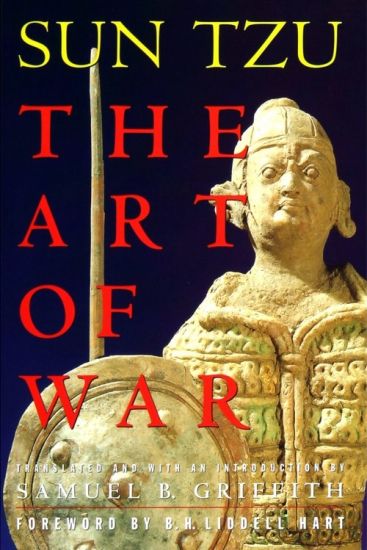
Like Machiavelli's The Prince and the Japanese Book of Five Rings, Sun Tzu's The Art of War is as timely for business people today as it was for military strategists in ancient China. Written in China more than 2,000 years ago, Sun Tzu's classic The Art of War is the first known study of the planning and conduct of military operations. These terse, aphoristic essays are unsurpassed in comprehensiveness and depth of understanding, examining not only battlefield maneuvers, but also relevant economic, political, and psychological factors. Indeed, the precepts outlined by Sun Tzu regularly applied outside the realm of military theory. It is read avidly by Japanese businessmen and was touted in the movie Wall Street as the corporate raider's bible. Providing a much-needed translation of this classic, Samuel Griffith has made this powerful and unique work even more relevant to the modern world. Including an explanatory introduction and selected commentaries on the work, this edition makes Sun Tzu's timeless classic perfectly accessible to modern readers.