Kirjojen hintavertailu – 12 903 725 kirjaa ja 27 kauppaa
Kirjailija
U S Army Center of Military History
Kirjat ja teokset yhdessä paikassa: 51 kirjaa, julkaisuja vuosilta 2010–2024, suosituimpiin kuuluu The U.S. Army Campaigns: Normandy. Vertaile teosten hintoja ja tarkista saatavuus suomalaisista kirjakaupoista.
Nimi esiintyy myös muodoissa: U.S. Army Center of Military History, U. S. Army Center of Military History
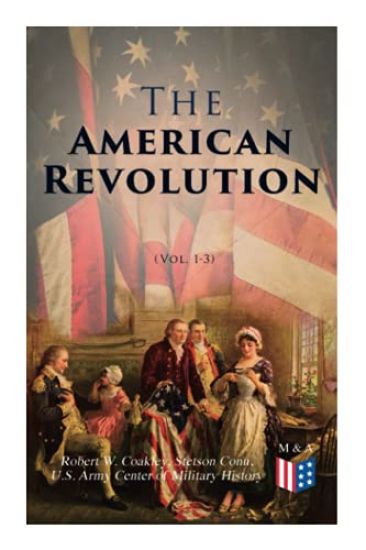
This book on the American Revolution consists of three parts-a brief narrative history of the war, a chronology of military events, and a bibliography. Each part requires a word of explanation. The narrative consists of one chapter on the colonial background of American military history and two on the Revolution itself. Part Two is a chronology, oriented toward military events, covering the period between the signing of the Treaty of Paris ending the Seven Years War in 1763 and the ratification by the Continental Congress some twenty years later of a second Treaty of Paris confirming American independence. Part Three, the bibliography, contains listings of over a thousand titles of books, articles, and published source material on the American Revolution. The emphasis is again on the land war, but proportionately the bibliography gives more attention to the political, social and economic aspects of the Revolution and to its naval phase than do either the narrative or the chronology.
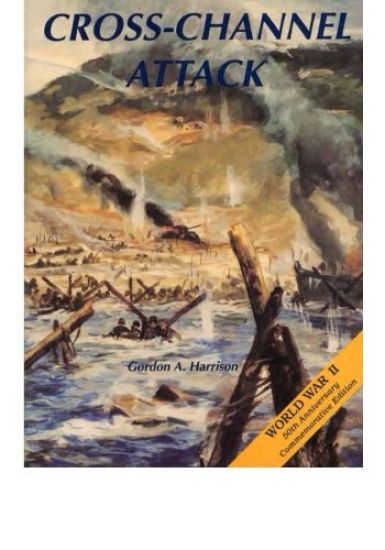
Cross-Channel Attack is one of approximately a hundred volumes which the Department of the Army intends to publish regarding its part in World War II. This particular volume deals with the planning and the difficulties en¬countered incident to the mounting of the largest amphibious assault ever undertaken in military history. Much of the information it contains has not heretofore been a matter of public knowledge. For example, light is for the first time thrown upon the enemy's conflicting theories of defense against Allied air superiority and upon his paucity of first-class troops. This information is derived from the official records of the Wehrmacht and from signed statements of German participants. Many of the difficulties encountered in the planning, as well as in the execution stage of the operation, are here described to the public for the first time. Where this history deals with the struggle ashore, it clearly illustrates the necessity for commanders to adjust their thinking to the means at hand, the terrain, and the influence of new weapons. It reiterates the indispensability of constant training in how to get order out of the confusion which is forever present upon the battlefield. It brings to mind in this connection the means used by a football team for meeting the problems of overcoming opposition on the playing field. The plays devised and the techniques used to attain its ends must be practiced again and again. Frequently it is the loss of effective direction of small units, incident to the battle's toll, which makes for failure rather than success.
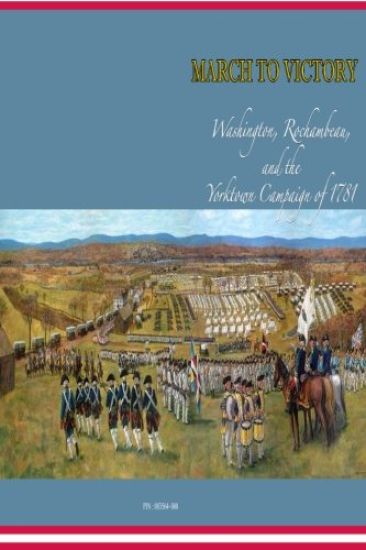
This pamphlet provides an in-depth account of the most decisive operation of the American Revolution, examining how the Americans and French moved land and naval forces from Rhode Island to Virginia, where they gained the tactical advantage over their opponents at Yorktown. Although the allied forces quickly surrounded the British army on their arrival at Yorktown, the ensuing siege would not have been as successful if the march from Rhode Island to Virginia had not gone as planned. The movement to Yorktown was complex because it had a combined (French and American) as well as joint (land and naval) aspect. French and American military commanders had to overcome formidable barriers of culture, language, tactical doctrine (American and French forces operated under different sets of war-fighting rules), and national political agendas. No one forgot that a mere fifteen years before Yorktown, the American colonists had seen the French and their American Indian allies as implacable enemies. This work conveys not only how allied commanders overcame these formidable obstacles, but also shows how the march itself solidified American communities along the route and paved the way for a decisive victory at Yorktown and, ultimately, the creation of an independent American republic.