Kirjojen hintavertailu – 12 859 828 kirjaa ja 27 kauppaa
Kirjailija
U. S. Department of Education
Kirjat ja teokset yhdessä paikassa: 83 kirjaa, julkaisuja vuosilta 2004–2019, suosituimpiin kuuluu Digest of Education Statistics 2011. Vertaile teosten hintoja ja tarkista saatavuus suomalaisista kirjakaupoista.
Nimi esiintyy myös muodoissa: U S Department of Education, U.S. Department of Education
Single-sex education refers most generally to education at the elementary, secondary, or postsecondary level in which males or females attend school exclusively with members of their own sex. This report deals primarily with single-sex education at the elementary and secondary levels. Research in the United States on the question of whether public single-sex education might be beneficial to males, females or a subset of either group (particularly disadvantaged youths) has been limited. However, because there has been a resurgence of single-sex schools in the public sector, it was deemed appropriate to conduct a systematic review of single-sex education research. A number of theoretical advantages to both coeducational (CE) and single-sex (SS) schools have been advanced by their advocates, a subset of whom have focused specifically on the potential benefits of SS schooling for disadvantaged males who have poor success rates in the educational system.
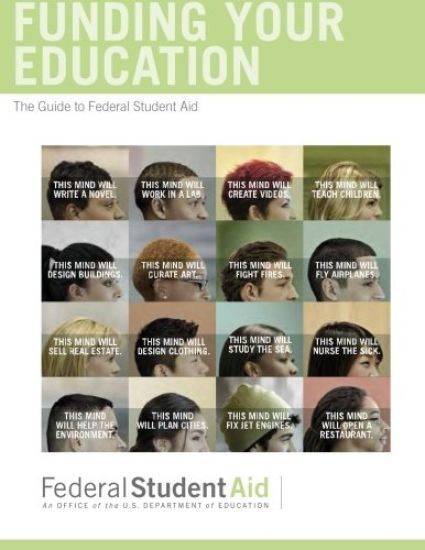
This section is a quick reference to federal student aid programs from the office of Federal Student Aid at the U. S. Department of Education. The rest of the publication provides more details on what you need to know as you go through the federal student aid process. Who gets federal student aid? Every student, who meets certain eligibility requirements, can get some type of financial aid regardless of age or family income. What is federal student aid? It's financial aid from the federal government to help you pay for education expenses at an eligible college, technical school, vocational school, or graduate school. There are three categories of federal student aid: grants, work-study, and loans. What is the FAFSA? It's the Free Application for Federal Student Aid (FAFSASM), which you need to complete to receive federal student aid. How do I apply for aid? Complete the FAFSA, online or in print. The simplified online application is available at www.fafsa.gov. When do I complete the FAFSA? Apply as soon as possible after Jan. 1 of the year you plan on attending college. How much aid is available? More than $150 billion of aid is available every year to students to help cover tuition and fees, room and board, books and supplies, transportation, and other education-related expenses.
Al considerar el paso a la universidad -o cualquier otra variante de educaci n superior- siempre surge el tema de la ayuda econ mica. Si bien usted tiene la responsabilidad fundamental de pagar la universidad, a veces dichos fondos simplemente no alcanzan y es necesario buscar otros recursos. Cada a o, el Departamento de Educaci n de los EE. UU. proporciona m s de $150 mil millones en ayuda federal para estudiantes (en forma de subsidios, pr stamos y programas deestudio y trabajo) a estudiantes que buscan continuar su educaci n postsecundaria (unt tulo de nivel terciario). Cerca de 14 millones de estudiantes reciben actualmente alg n tipo de asistencia fi nanciera federal y en su mayor a se trata de pr stamos federales para estudiantes. Adem s de la ayuda federal para estudiantes, las universidades, compa as, fondos de becas privadas o el estado en el que vive tambi n ofrecen alternativas de asistencia fi nanciera. Por lo tanto, existen distintos recursos para facilitar el pago de la universidad, pero debe saber buscarlos A medida que explore las alternativas de asistencia fi nanciera disponibles, aseg rese deconsiderar los pr stamos federales para estudiantes. Estos pr stamos representan unaposibilidad para todos, porque no todos los pr stamos de este tipo se basan nicamenteen necesidades econ micas. Si tiene dudas o inquietudes acerca de c mo obtener unpr stamo federal para estudiantes, lea detenidamente el contenido de esta publicaci n. Por qu debo leer esta publicaci n? Si est pensando en solicitar un pr stamo federal para estudiantes, si ya se encuentra en el proceso de obtener un pr stamo de este tipo, o si ya hubiera recibido uno, debe leer el contenido de esta publicaci n. Este folleto le ayudar a comprender el proceso de solicitud de estos pr stamos y a tomar decisiones fi nancieras informadas.
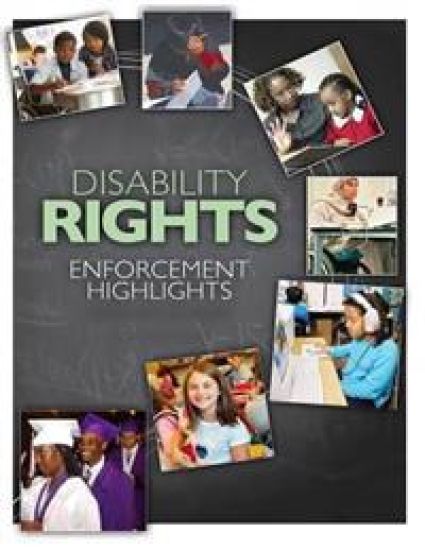
The goal of these disability civil rights laws is to provide equal opportunity and fundamental fairness for students with disabilities, including access to special education and related aids and services at public elementary and secondary schools; academic adjustments at colleges and universities; accessible technology; accessible programs, services and facilities; and the right to equal treatment and benefits. A hallmark of these laws is that, in order to ensure that equal opportunity is provided to students with disabilities and to avoid discriminating on the basis of disability, the laws require schools, colleges and universities to sometimes treat students with disabilities differently from students without disabilities. Another hallmark is the imperative to address the particular needs of each student with a disability. Thus, these laws recognize that not only are there many different disabilities, but students with the same disability may not have the same needs. As we observe the 39th anniversary of Section 504 on September 26, 2012, we celebrate our nation's progress in the area of disability rights in education. We also recognize that equal opportunity for people with disabilities has not yet been achieved. Section 504 and Title II, along with the Individuals with Disabilities Education Act (IDEA), administered by the Department's Office of Special Education Programs, demonstrate our nation's commitment to providing quality education to all students with disabilities. To honor that commitment, OCR will continue to vigorously enforce Section 504 and Title II to ensure that students with disabilities receive the education that all students deserve.
Germany's tradition of formal education dates back to the 1800's, when the three-tiered school system originated. Historically, the highest levels of education were reserved for a small percentage of the population, while the majority received a basic education followed by training in particular trades or vocations. As the economic strength of the country has grown, the number and variety of jobs requiring higher levels of education have increased, and a growing percentage of the school-age population has pursued study at the Realschule and the Gymnasium in order to achieve higher levels of certification. While the lowest level secondary school form (the Hauptschule) has become less popular, it continues to educate nearly 30 percent of German students, leading them to vocational training programs in their adolescent years and into the work force as they approach their late teens. The responsibility for primary and secondary education in Germany rests with state and local authorities. School funding derives primarily from the state level, and a redistribution of tax revenues among states gives them comparable budgets for funding their education systems. In addition, state funding formulas guarantee that schools within each state receive approximately equal funding. The Conference of Ministers of Education (KMK) coordinates education efforts on a national level through representation from each of the state ministries. The KMK has developed a set of voluntary standards and guidelines for school forms, a common curriculum, and mutual recognition of school completion qualifications, all of which are implemented by the individual states. As a result, each school form has clearly stated goals and expectations for students, and the teachers' instructional activities, lesson plans, and interactions with students reflect and support these goals and expectations. Although variations are found between states with centralized versus decentralized education systems, the KMK resolutions ensure a high degree of comparability in the academic process and in implementation of standards throughout Germany. The KMK standards for all Abitur examinations are perhaps the most obvious example of these state-adopted national standards. Another mechanism by which education has been standardized in Germany is through the regulation of textbooks. The state ministries of education publish lists of approved textbooks accompanied by regulations for their approval, introduction, and use. Schools within each state must choose their textbooks from these lists. At the Grundschulen we visited, grade level teachers indicated that they reviewed and selected textbooks together. In addition, many Grundschule and lower secondary-level teachers said that they base their course curriculum on the textbooks, since they know they conform to the state's curriculum guidelines.
Parents have a growing array of options in choosing a school, though the extent of the options varies from state to state. The enactment of the landmark No Child Left Behind Act of 2001; the rapid growth of the charter school movement; the increasing number of states enacting scholarship and tax credit programs for students to attend private schools; the expansion of privately funded scholarship programs for low-income children; and the growing acceptance of homeschooling have all increased the choices available to families. Parents can exercise choice in many ways. The most common way may be in choosing where to live based on the public school district or neighborhood schools. In many areas, parents can choose from neighborhood schools, charter schools or other public schools of choice, or transfer their child to another public school (in or out of district). They can also select a private school (religious or secular) or teach their child at home. Choosing a School for Your Child offers step-by-step advice on how to choose among the schools available to your child. It identifies important factors you may want to consider before making a decision. As you and your child visit different schools, you may want to consider the questions in each section of this book.
A primary goal of international comparative studies of achievement in mathematics and science is to evaluate the level of performance of students in different countries. An equally important goal is to attempt to understand the bases of differences that emerge. In prior international comparative studies conducted by the International Association for the Evaluation of Educational Achievement (IEA), knowledge of mathematics and science was measured by paper-and-pencil tests, and efforts to understand cross-national differences in achievement were made through questionnaires given to teachers. These methods also constituted the primary means for gathering data for IEA's Third International Mathematics and Science Study (TIMSS). Again, questionnaires were given to teachers and additional data were gathered through questionnaires given to students, parents, and experts in mathematics and science education. As is the case with all methods used for the collection of behavioral and attitudinal data, questionnaires have both strengths and weaknesses. They are the obvious choice when it is necessary to collect large amounts of data on an array of topics at the least expense. But interpretation of data from questionnaires is often more difficult than when there is an opportunity to interact with the respondents and to probe for details or elaboration of answers, as is possible with case studies.
This report from the Study of School-Level Expenditures presents findings on how state and local education expenditures at the school level vary within school districts. This study is not examining compliance with the current Title I comparability requirement, nor does it examine the comparability of resources between districts. Rather, it focuses on the question of whether Title I schools and higher-poverty schools have comparable levels of per-pupil expenditures as non-Title I schools and lower-poverty schools within the same district. More specifically, this report examines three questions: -To what extent do Title I schools have lower per-pupil expenditures from state and local funds, compared with non-Title I schools in their district?-To what extent do higher-poverty schools in Title I districts have lower per-pupil expenditures from state and local funds, compared with lower-poverty schools in their district?-Does the extent to which Title I schools and higher-poverty schools receive lower levels of state and local funding vary for different types of expenditures
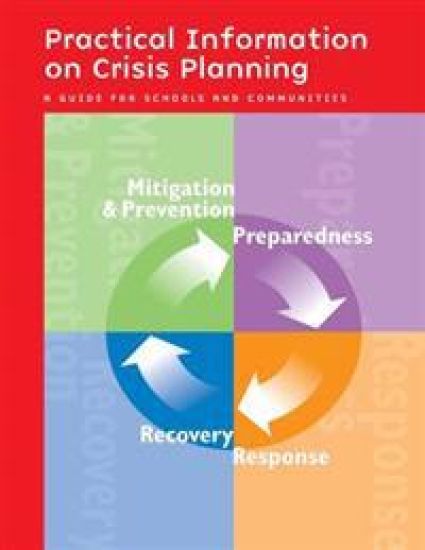
Each school day, our nation's schools are entrusted to provide a safe and healthy learning environment for approximately 55 million elementary and secondary school students in public and nonpublic schools. Families and communities expect schools to keep their children and youths safe from threats (human-caused emergencies such as crime and violence) and hazards (natural disasters, disease outbreaks, and accidents). In collaboration with their local government and community partners, schools can take steps to plan for these potential emergencies through the creation of a school Emergency Operations Plan (school EOP). Lessons learned from school emergencies highlight the importance of preparing school officials and first responders to implement emergency operations plans. By having plans in place to keep students and staff safe, schools play a key role in taking preventative and protective measures to stop an emergency from occurring or reduce the impact of an incident. Although schools are not traditional response organizations, when a school-based emergency occurs, school personnel respond immediately. They provide first aid, notify response partners, and provide instructions before first responders arrive. They also work with their community partners, i.e., governmental organizations that have a responsibility in the school emergency operations plan to provide a cohesive, coordinated response. Community partners include first responders (law enforcement officers, fire officials, and emergency medical services personnel) as well as public and mental health entities. We recommend that planning teams responsible for developing and revising school EOPs use this document to guide their efforts. It is recommended that districts and individual schools compare existing plans and processes against the content and processes outlined in this guide. To gain the most from it, users should read through the entire document prior to initiating their planning efforts and then refer back to it throughout the planning process.
Families trust schools to keep their children safe during the day. Thanks to the efforts of millions of teachers, principals, and staff across America, the majority of schools remain safe havens for our nation's youth. The unfortunate reality is, however, that school districts in this country may be touched either directly or indirectly by a crisis of some kind at any time. Natural disasters such as floods, earthquakes, fires, and tornadoes can strike a community with little or no warning. An influenza pandemic, or other infectious disease, can spread from person-to-person causing serious illness across the country, or around the globe, in a very short time. School shootings, threatened or actual are extremely rare but are horrific and chilling when they occur. The harrowing events of September 11 and subsequent anthrax scares have ushered in a new age of terrorism. Communities across the country are struggling to understand and avert acts of terror. Children and youth rely on and find great comfort in the adults who protect them. Teachers and staff must know how to help their students through a crisis and return them home safely. Knowing what to do when faced with a crisis can be the difference between calm and chaos, between courage and fear, between life and death. There are thousands of fires in schools every year, yet there is minimal damage to life and property because staff and students are prepared. This preparedness needs to be extended to all risks schools face. Schools and districts need to be ready to handle crises, large and small, to keep our children and staff out of harm's way and ready to learn and teach.
The Common Core of Data (CCD) is an annual collection of public elementary and secondary education data by the National Center for Education Statistics (NCES) in the Institute of Education Sciences of the U. S. Department of Education. The U. S. Census Bureau conducts the data collection for the finance surveys on behalf of NCES. State education agencies (SEAs) report the finance data through an online data collection site. SEAs report student membership data through the U. S. Department of Education's EDFacts data collection system. The purpose of this report is to introduce new data through the presentation of tables containing descriptive information; therefore, the selected findings chosen for this report demonstrate the range of information available when using the National Public Education Financial Survey (NPEFS) component of CCD. The selected findings do not represent a complete review of all observed differences in the data and are not meant to emphasize any particular issue. This report presents findings on public education revenues and expenditures using fiscal year 2011 (FY 11) data from the preliminary (version 1a) NPEFS file of the CCD survey system. Programs covered in NPEFS include regular, special, and vocational education; charter schools; and state-run education programs (such as special education centers or education programs for incarcerated youth). While the tables in this report include data for all NPEFS respondents, the discussion in the text is limited to the 50 states and the District of Columbia. CCD NPEFS is a state-level universe collection of public elementary and secondary education finance data reported annually by SEAs in each of the 50 states, the District of Columbia, and the five U. S. Island Areas of American Samoa, Guam, the Commonwealth of the Northern Mariana Islands, Puerto Rico, and the U. S. Virgin Islands. NPEFS provides SEA-level data for all revenues and expenditures associated with each reporting state or jurisdiction, including revenues by source and expenditures by function and object. SEAs participate in CCD voluntarily, following standard definitions for the data items they report. The SEAs submit data in conformance with Financial Accounting for Local and State School Systems: 2009 Edition (Allison, Honegger, and Johnson 2009), the NCES handbook that provides guidance to SEAs and LEAs in establishing and maintaining their school financial accounting systems. In some cases, SEAs may be unable to report a key data item at all or may be unable to report a key data item in exact accordance with a CCD definition. When this happens, NCES imputes or edits values for these items. Please see Appendix A: Methodology and Technical Notes in this report for a detailed discussion of imputations and edits. This First Look report provides users with an opportunity to access preliminary NPEFS data that were subject to one round of data review and editing. The release of preliminary data will be followed by a release of provisional data that will update the previously released preliminary data based on revised submissions and more extensive data review and editing. Revisions submitted after the provisional data file has been finalized will be incorporated in the final file for each fiscal year. Final data files will be released at the time of the release of preliminary data for the following year.
This edition of Projections of Education Statistics provides projections for key education statistics, including enrollment, graduates, teachers, and expenditures in elementary and secondary public and private schools, as well as enrollment and degrees conferred at postsecondary degree-granting institutions. Included are national data on enrollment and graduates for the past 15 years and projections to the year 2021. Also included are state-level data on enrollment in public elementary and secondary schools and public high schools from 2003, with projections to 2021. This report is organized by the level of schooling with sections 1, 2, 3, and 4 covering aspects of elementary and secondary education and sections 5 and 6 covering aspects of postsecondary education. There are a number of limitations in projecting some statistics. First, state-level data on enrollment and graduates in private elementary and secondary schools and on enrollment and degrees conferred in postsecondary degree-granting institutions are not included. Neither the actual numbers nor the projections of public and private elementary and secondary school enrollment include homeschooled students because more data are required to develop reliable projections. Similar methodologies were used to obtain a uniform set of projections for each of the 50 states and the District of Columbia. These projections are further adjusted to agree with the national projections of public elementary and secondary school enrollment and public high school graduates contained in this report. The summary of projections provides highlights of the national and state data, while the reference tables and figures present more detail. All calculations within Projections of Education Statistics are based on unrounded estimates. Therefore, the reader may find that a calculation, such as a difference or percentage change, cited in the text or figure may not be identical to the calculation obtained by using the rounded values shown in the accompanying tables.
Homework has been part of students' lives since the beginning of formal schooling in theUnited States. It is important because it can improve children's thinking and memory. Itcan help them to develop positive study skills and habits that will serve them wellthroughout their lives. It can encourage them to use time well, to learn independently andto take responsibility for their work. But helping children with their homework benefits families as well. It can, for example, be a way for families to learn more about what their children are learning in school andan opportunity for them to communicate both with their children and with teachers andprincipals. Your interest in your children's education can spark their enthusiasm and lead them tounderstand that learning can be rewarding and is well worth the effort. We hope that youand your child find this booklet helpfu