Kirjojen hintavertailu – 12 903 724 kirjaa ja 27 kauppaa
Kirjailija
U. S. Department of Energy
Kirjat ja teokset yhdessä paikassa: 119 kirjaa, julkaisuja vuosilta 2001–2017, suosituimpiin kuuluu Doe Fundamentals Handbook - Electrical Science (Volume 4 of 4). Vertaile teosten hintoja ja tarkista saatavuus suomalaisista kirjakaupoista.
Nimi esiintyy myös muodoissa: U.S. Department of Energy, U S Department of Energy
High schools struggle to get and keep students engaged in the study of science, while industry struggles to attract employees with advanced technical skills. As construction trades and science teachers, we see a great opportunity to combine the growing national interest in renewable energy with lab science and hands-on skills to provide a truly integrated, contextual curriculum to engage students. Renewable energy provides a political, economic and technical framework for the study of scientific concepts and methodology. Renewable energy utilization rests on the development of advanced technical skills: engineering research and design; electrical power production, transmission and utilization; manufacturing; transportation modeling; urban planning and design among others. The translating of scientific concepts into working physical models offersunparalleled opportunities for students to practice creative and critical thinking, and to problem-solve in a tangible context.
The U. S. Energy Information Administration (EIA) estimates that total sales of fossil fuels from production1 on federal and Indian lands decreased by 7% during fiscal year (FY) 2013. The decrease in production on federal lands alone was also 7% (Table 1). Sales from production on Indian lands, which account for less than 7% of total federal and Indian lands production, increased by 9% (Table 2). Crude oil production on federal lands increased slightly in FY 2013, but that increase was more than offset by decreases in coal, natural gas, and natural gas plant liquids (NGPL) production. Other notable developments in FY 2013 included the following:
Many state policymakers and utility regulators have established aggressive energy efficiency (EE) savings targets which will necessitate investing billions of dollars in existing buildings - and tax payer and utility bill payer funding is a small fraction of the total investment needed. Given this challenge, some EE program administrators are exploring ways to increase their reliance on financing with the aim of amplifying the impact of limited program monies. While financing is potentially an attractive tool for increasing program leverage and mitigating the rate impacts of utility customer-funded efficiency programs, administrators can face difficult choices between allocating funds to financing or to other approaches designed to overcome a broader set of barriers to consumer investment in EE. Robust assessments of financing's role in reducing energy use in buildings are necessary to help policymakers and program administrators make better choices about how to allocate limited resources to achieve cost effective energy savings at scale. In order to better understand what EE financing can be reasonably expected to achieve, and for whom, this book is organized around three levels of inquiry (Figure 1), from the most fundamental (level 1) to the most detailed (level 3).
Three factors are now shaping the evolution of the U. S. nuclear force: (1) the pursuit of nuclear-weapon reductions below current levels for all weapon types - strategic and non-strategic, deployed and non-deployed; (2) modernization of a nuclear force developed during the Cold War and shaped by Cold-War politics and post-Cold-War expectations; and (3) diversification of nuclear deterrence from the bilateral Cold War standoff to a bi-level global-regional model. This third factor was implicitly acknowledged in the 2010 Nuclear Posture Review Report, which numbers among its objectives- Maintaining strategic deterrence and stability, and- Strengthening regional deterrence and the assurance of our allies and partners.
This book was funded by the U. S. Department of Energy's (DOE's) National Energy Technology Laboratory (NETL) Existing Plants Research Program, which has an energy-water research effort that focuses on water use at power plants. This study complements the overall research effort of the Existing Plants Research Program by evaluating water issues that could impact power plants. A growing challenge to the economic production of electricity from coal-fired power plants is the demand for freshwater, particularly in light of the projected trends for increasing demands and decreasing supplies of freshwater. Nanotechnology uses the unique chemical, physical, and biological properties that are associated with materials at the nanoscale to create and use materials, devices, and systems with new functions and properties. It is possible that nanotechnology may open the door to a variety of potentially interesting ways to reduce freshwater consumption at power plants. This book provides an overview of how applications of nanotechnology could potentially help reduce freshwater use at coal-fired power plants. It was developed by (1) identifying areas within a coal-fired power plant's operations where freshwater use occurs and could possibly be reduced, (2) conducting a literature review to identify potential applications of nanotechnology for facilitating such reductions, and (3) collecting additional information on potential applications from researchers and companies to clarify or expand on information obtained from the literature. Opportunities, areas, and processes for reducing freshwater use in coal-fired power plants considered in this report include the use of nontraditional waters in process and cooling water systems, carbon capture alternatives, more efficient processes for removing sulfur dioxide and nitrogen oxides, coolants that have higher thermal conductivities than water alone, energy storage options, and a variety of plant inefficiencies, which, if improved, would reduce energy use and concomitant water consumption. These inefficiencies include air heater inefficiencies, boiler corrosion, low operating temperatures, fuel inefficiencies, and older components that are subject to strain and failure. A variety of nanotechnology applications that could potentially be used to reduce the amount of freshwater consumed - either directly or indirectly - by these areas and activities was identified. These applications include membranes that use nanotechnology or contain nanomaterials for improved water purification and carbon capture; nano-based coatings and lubricants to insulate and reduce heat loss, inhibit corrosion, and improve fuel efficiency; nano-based catalysts and enzymes that improve fuel efficiency and improve sulfur removal efficiency; nanomaterials that can withstand high temperatures; nanofluids that have better heat transfer characteristics than water; nanosensors that can help identify strain and impact damage, detect and monitor water quality parameters, and measure mercury in flue gas; and batteries and capacitors that use nanotechnology to enable utility-scale storage. Most of these potential applications are in the research stage, and few have been deployed at coal-fired power plants. Moving from research to deployment in today's economic environment will be facilitated with federal support. Additional support for research development and deployment (RD&D) for some subset of these applications could lead to reductions in water consumption and could provide lessons learned that could be applied to future efforts. To take advantage of this situation, it is recommended that NETL pursue funding for further research, development, or deployment for one or more of the potential applications identified in this book.
- Using the Fuel Economy Guide - Understanding the Guide Listings - Why Some Vehicles Are Not Listed - Vehicle Classes Used in This Guide - Tax Incentives and Disincentives - Why Consider Fuel Economy - Fueling Options - Fuel-Saving Technology Highlight: Start-Stop Systems - Fuel Economy and Annual Fuel Cost Ranges for Vehicle Classes - Improve Your Fuel Economy - Model Year 2014 Fuel Economy Leaders - Model Year 2014 Vehicles - Diesel Vehicles - Compressed Natural Gas Vehicles - Fuel Cell Vehicles - Electric Vehicles - Plug-in Hybrid Electric Vehicles - Hybrid Electric Vehicles - Ethanol Flexible Fuel Vehicles
The installed capacity of global and U. S. photovoltaic (PV) systems has soared in recent years, driven by declining PV prices and government incentives. The U. S. Department of Energy's (DOE) SunShot Initiative aims to make PV cost competitive without incentives by reducing the cost of PV-generated electricity by about 75% between 2010 and 2020. This summary report-based on research at Lawrence Berkeley National Laboratory (LBNL) and the National Renewable Energy Laboratory (NREL)-examines progress in PV price reductions to help DOE and other PV stakeholders manage the transition to a market-driven PV industry, and to provide clarity surrounding the wide variety of potentially conflicting data available about PV system prices. It provides a high-level overview of historical, recent, and projected near-term PV pricing trends in the United States, focusing on the installed price of PV systems. More detailed analyses will be published in other reports.
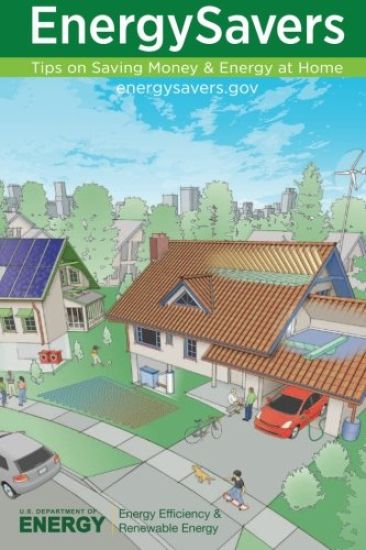
Right in your own home, you have the power to save money and energy. Saving energy reduces our nation's overall demand for resources needed to make energy, and increasing your energy efficiency is like adding another clean energy source to our electric power grid. This study shows you how easy it is to cut your energy use at home and also on the road. The easy, practical solutions for saving energy include tips you can use today-from the roof and landscaping to appliances and lights. They are good for your wallet and for the environment-and actions that you take help reduce our national needs to produce or import more energy, thereby improving our energy security.
The book focused on science and technology challenges associated with our nation's need to detect, prevent, protect against, and respond to terrorist attacks involving Radiological and Nuclear, Chemical, and Biological threats. While the organizers and participants of this workshop recognize that the threat of terrorism is extremely broad, including food and water safety as well as protection of our public infrastructure, we necessarily limited the scope of our discussions to the principal weapons of mass destruction. In order to set the stage for the discussions of critical science and technology challenges, the workshop began with keynote and plenary lectures that provided a realistic context for understanding the broad challenges of countering terrorism. The plenary speakers emphasized the sociopolitical complexity of terrorism problems, reinforced the need for basic research in addressing these problems, and provided critical advice on how basic research can best contribute to our nation's needs. Their advice highlighted the need to: - Invest Strategically - Focus on Cross-Cutting Research that has the potential to have an impact on a broad set of technology needs, thereby providing the greatest return on the research investment.- Build Team Efforts - Countering terrorism will require broad, collaborativeteams. The research community should focus on: (1) Research Environmentsand Infrastructures that encourage and enable cross-disciplinary science andtechnology teams to explore and integrate new scientific discoveries and (2)Exploring Relationships with Other Programs that will strengthen connections between new scientific advances and those groups responsible for technologydevelopment and implementation.- Consider Dual Use - Identify areas of research that present significant Dual-Use Opportunities for application to countering terrorism and other complementary technology needs.