Kirjojen hintavertailu – 12 903 724 kirjaa ja 27 kauppaa
Kirjailija
U. S. Department of the Interior
Kirjat ja teokset yhdessä paikassa: 1 391 kirjaa, julkaisuja vuosilta 2005–2025, suosituimpiin kuuluu Sabine National Wildlife Refuge Southwest Louisiana National Wildlife Refuge Complex. Vertaile teosten hintoja ja tarkista saatavuus suomalaisista kirjakaupoista.
Nimi esiintyy myös muodoissa: U.S. Department of the Interior, U S Department of the Interior
On March 11, 2011, President Obama directed the Department of the Interior (Department) to determine the acreage of public lands that had been leased to oil and gas companies but remain undeveloped, noting that companies should be encouraged to produce energy from leases that they are holding. The Report reached several important conclusions: First, the Department has offered substantial acreage for leasing and resource development, but much of this acreage has not been leased by industry. Second, tens of millions of acres that are currently under lease remain idle. Because these areas are not undergoing exploration, development, or production, taxpayers are not getting the full advantage of America's resource potential. Soon after the release of the Report, the President released a Blueprint for a Secure Energy Future, a comprehensive energy strategy to secure America's energy future by producing more conventional energy at home while working to reduce our dependence on oil by leveraging cleaner, alternative fuels and greater efficiency. Included in the Blueprint were a number of steps to encourage safe and responsible domestic energy production both onshore and offshore - including steps to encourage diligent development. This Report updates the Department's 2011 Report, outlines some of the policies that are being implemented, consistent with last year's findings and the Blueprint, and describes some of the geographic areas that best reflect the promise of this Nation's onshore and offshore energy resources.
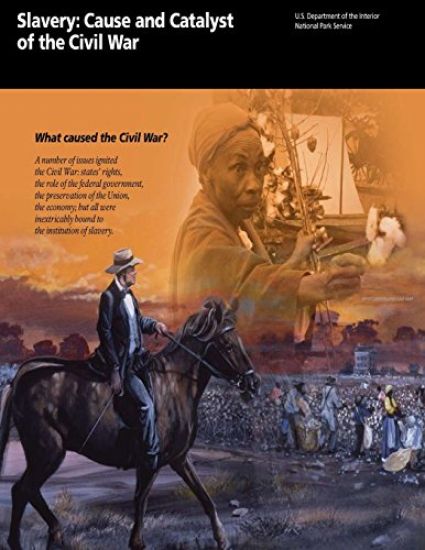
The role of slavery in bringing on the Civil War has been hotly debated for decades. One important way of approaching the issue is to look at what contemporary observers had to say. In March 1861, Alexander H. Stephens, Vice President of the Confederates States of America, was quoted in the Savannah Republican: "The new constitution has put at rest, forever, all the agitating questions relating to our peculiar institution African slavery as it exists amongst us, the proper status of the negro in our form of civilization. This was the immediate cause of the late rupture and present revolution. Jefferson in his forecast, had anticipated this, as the 'rock upon which the old Union would split.' He was right. What was conjecture with him, is now a realized fact." Our] foundations are laid, its cornerstone rests, upon the great truth that the negro is not equal to the white man; that slavery, subordination to the superior race is his natural and normal condition." Today, most professional historians agree with Stephens that slavery and the status of African Americans were at the heart of the crisis that plunged the U. S. into a civil war from 1861 to 1865. That is not to say the average Confederate soldier fought to preserve slavery or the average Union soldier went to war to end slavery. Some fought on moral grounds. Some fought because they felt their way of life and prosperity were threatened. Others fought to preserve the Union. Soldiers fight for many reasons-notably to stay alive and support their comrades in arms. The North's goal in the beginning was the preservation of the Union, not emancipation. For the 180,000 African Americans who ultimately served the U. S. in the war, however, emancipation was the primary aim. The roots of the crisis over slavery that gripped the nation in 1860-1861 go back well before the nation's founding. In 1619, slavery was introduced to Virginia, when a Dutch ship traded African slaves for food. Unable to find cheap labor from other sources, white settlers increasingly turned to slaves imported from Africa. By the early 1700s, in British North America, slavery generally meant African slavery. Southern plantations using slave labor pro-duced the great export crops-tobacco, rice, forest products, and indigo-that made the American colonies prosperous. Many Northern merchants made their fortunes either in the slave trade or by exporting the products of slave labor. African slavery was central to the development of British North America.