Kirjojen hintavertailu – 12 859 826 kirjaa ja 27 kauppaa

Kirjailija

U. S. Department of Transportation

Kirjat ja teokset yhdessä paikassa: 592 kirjaa, julkaisuja vuosilta 1999–2026, suosituimpiin kuuluu Human Factors Considerations in the Design and Evaluation of Electronic Flight Bags(EFBs)- Version 1: Basic Functions. Vertaile teosten hintoja ja tarkista saatavuus suomalaisista kirjakaupoista.

Nimi esiintyy myös muodoissa: U S Department of Transportation, U.S. Department of Transportation

592 kirjaa

Kirjojen julkaisuvuodet: 1999–2026.

Status of the Dedicated Short-Range Communications Technology and Applications: Report to Congress

Status of the Dedicated Short-Range Communications Technology and Applications: Report to Congress

U. S. Department of Transportation

Createspace Independent Publishing Platform
2016
nidottu
This report responds to a Congressional request for an assessment of the 5.9 Gigahertz (GHz) Dedicated Short Range Communications (DSRC) in accordance with the requirements provided by Congress in the Moving Ahead for Progress in the 21st Century Act ("MAP-21"; P. L. 112-141), Section 53006, codified at 23 U. S. C. 518. The report: provides an assessment of the status of DSRC technology and applications, including known and potential gaps; describes a recommended implementation path; and discusses opportunities to use commercially available communications for Connected Vehicle applications under specific circumstances. The assessment is predominantly derived from U. S Department of Transportation research, analysis, and deployment planning that has been performed in partnership with stakeholders and industry experts over the last decade. The assessment is validated by an independent evaluation provided by the National Research Council (NRC) of the National Academies of Sciences, Engineering, and Medicine, who engaged with third party experts in reaching their conclusions. The NRC Letter Report was delivered to Congress in April 2015 and is included in this report as Appendix J. This report has been revised as needed to respond to each comment in the NRC Letter Report.
National Emergency Medical Services Education Standards: Advanced Emergency Medical Technician Instructional Guidelines
The AEMT Instructional Guidelines in this section include all the topics and material at the EMTlevel PLUS the following material: I. Quality ImprovementA. System for Continually Evaluating and Improving CareB. Continuous Quality Improvement (CQI)C. Dynamic ProcessII. Patient SafetyA. Significant - One of The Most Urgent Health Care ChallengesB. Incidence-IOM Report "To Err Is Human" Up to 98,000 Patients Die Due to Medical ErrorsC. High-Risk Activities1. Hand off2. Communication issues3. Medication issues4. Airway issues5. Dropping patients6. Ambulance crashes7. Spinal immobilizationD. How Errors Happen1. Skills based failure2. Rules based failure3. Knowledge based failureE. Preventing Errors1. Environmentala. Clear protocolsb. Lightc. Minimal interruptionsd. Organization and packaging of drugs2. Individuala. Reflection in actionb. Constantly question assumptionsc. Reflection biasd. Use decision aidse. Ask for helpIII. EducationA. Levels of EMS licensureB. National EMS Education Agenda for the Future: A Systems ApproachIV. Authorization to PracticeA. Legislative Decisions on Scope of PracticeB. State EMS Office OversightC. Medical Oversight1. Clinicala. Offline Protocolsb. Online Protocolsc. Standing orders2. Quality improvement3. AdministrativeD. Local CredentialingE. Employer Policies and ProceduresV. Integration With Other Professionals and Continuity of CareA. Medical PersonnelB. Law EnforcementC. Emergency ManagementD. Home Healthcare ProvidersE. Other RespondersVI. Maintenance of Certification and LicensureA. Personal ResponsibilityB. Continuing EducationC. Skill Competency VerificationD. Criminal ImplicationsE. Fee
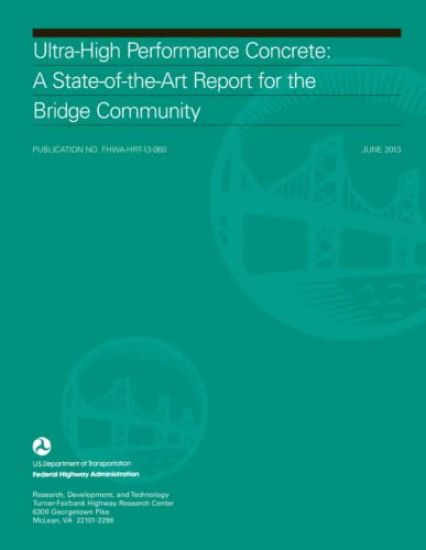
Ultra-High Performance Concrete: A State-of-the-Art Report for the Bridge Community
Ultra-high performance concrete (UHPC) is an advanced construction material that affords new opportunities for the future of the highway infrastructure. The Federal Highway Administration has been engaged in research on the optimal uses of UHPC in the highway bridge infrastructure since 2001 through its Bridge of the Future initiative. This report presents the state of the art in UHPC with regard to uses in the highway transportation infrastructure. Compiled from hundreds of references representing research, development, and deployment efforts around the world, this report provides a framework for gaining a deeper understanding of UHPC as well as a platform from which to increase the use of this class of advanced cementitious composite materials. This report will assist stakeholders, including State transportation departments, researchers, and design consultants, to grasp the capabilities of UHPC and thus use the material to address pressing needs in the highway transportation infrastructure.
Evaluation of Utah Transit Authority's Connection Protection System - Final Project Report
The Utah Transit Authority (UTA) implemented a Connection Protection (CP) system to improve the reliability of transfers from the higher frequency light rail TRAX trains to the lower frequency bus services. The CP system examines the status of TRAX trains and issues a "hold at {station name} until {time}" message to buses waiting at the connecting rail stations via the bus' onboard Mobile Data Terminal (MDT), if the lateness of train is within a pre-determined threshold (e.g., three minutes). The system was completed and tested in January 2002 prior to the Winter Olympic Games in Salt Lake City. The successful implementation and operation of the CP system has received attention from the Federal Transit Administration (FTA) and the U. S. Department of Transportation (USDOT) Intelligent Transportation System (ITS) Joint Program Office (JPO) to warrant a national evaluation study.
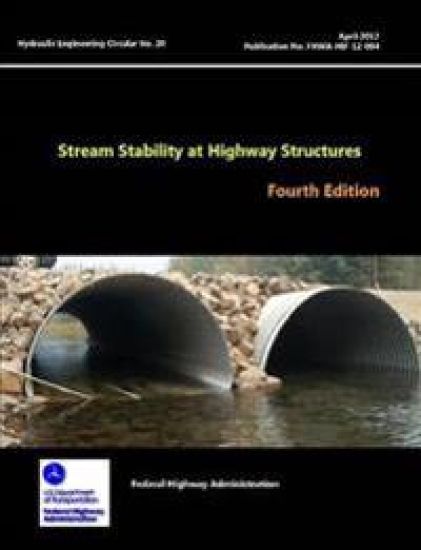
Stream Stability at Highway Structures - Fourth Edition (Hydraulic Engineering Circular No. 20)
This document provides guidelines for identifying stream instability problems at highway stream crossings. It is an update of the third edition published in 2001. The HEC-20 manual covers geomorphic and hydraulic factors that affect stream stability and provides a step-by-step analysis procedure for evaluation of stream stability problems. Stream channel classification, stream reconnaissance techniques, and rapid assessment methods for channel stability are covered in detail. Quantitative techniques for channel stability analysis, including degradation analysis, are provided, and channel restoration concepts are introduced. Significant new material in this edition includes chapters on sediment transport concepts and channel stability in gravel bed streams, as well as expanded coverage of channel restoration concepts.
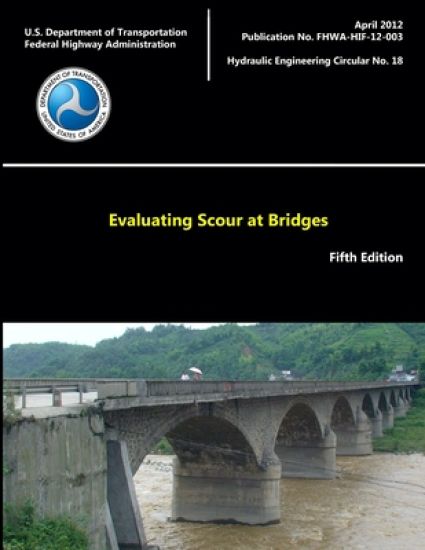
Evaluating Scour at Bridges - Fifth Edition (Hydraulic Engineering Circular No. 18)
This document is the fifth edition of HEC-18. It presents the state of knowledge and practice for the design, evaluation and inspection of bridges for scour. There are two companion documents, HEC-20 entitled "Stream Stability at Highway Structures," and HEC-23 entitled "Bridge Scour and Stream Instability Countermeasures." These three documents contain updated material from previous editions and continued research by NCHRP, FHWA, State DOTs, and universities. This fifth edition of HEC-18 also contains revisions obtained from further scour-related developments and the use of the 2001 edition by the highway community. The major changes in the fifth edition of HEC-18 are: expanded discussion on the policy and regulatory basis for the FHWA Scour Program, including risk-based approaches for evaluations, developing Plans of Action (POAs) for scour critical bridges, and expanded discussion on countermeasure design...
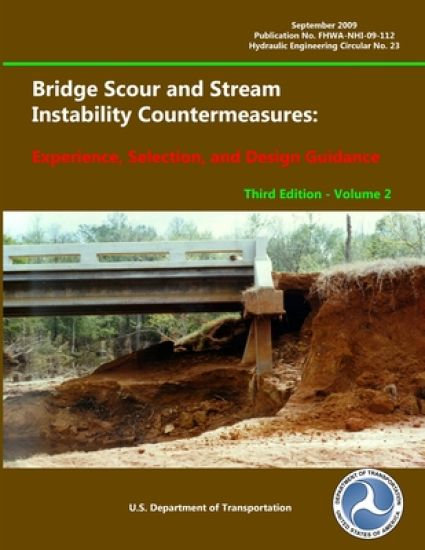
Bridge Scour and Stream Instability Countermeasures: Experience, Selection, and Design Guidance - Third Edition (Volume 2)
This document identifies and provides design guidelines for bridge scour and stream instability countermeasures that havebeen implemented by various State departments of transportation (DOTs) in the United States. Countermeasure experience,selection, and design guidance are consolidated from other FHWA publications in this document to support a comprehensiveanalysis of scour and stream instability problems and provide a range of solutions to those problems. Selected innovativecountermeasure concepts and guidance derived from practice outside the United States are introduced. Managementstrategies and guidance for developing a Plan of Action for scour critical bridges are outlined, and guidance is provided forscour monitoring using portable and fixed instrumentation.
Bridge Scour and Stream Instability Countermeasures: Experience, Selection, and Design Guidance - Third Edition (Volume 1)
The purpose of this document is to identify and provide design guidelines for bridge scour and stream instability countermeasures that have been implemented by various State departments of transportation (DOTs) in the United States. Countermeasure experience, selection, and design guidance are consolidated from other FHWA publications in this document to support a comprehensive analysis of scour and stream instability problems and provide a range of solutions to those problems. The results of recently completed National Cooperative Highway Research Program (NCHRP) projects are incorporated in the design guidance, including: countermeasures to protect bridge piers and abutments from scour; riprap design criteria, specifications, and quality control, and environmentally sensitive channel and bank protection measures. Selected innovative countermeasure concepts and guidance derived from practice outside the United States are introduced.