Kirjojen hintavertailu – 12 859 829 kirjaa ja 27 kauppaa
Kirjailija
U. S. Department of Veterans Affairs
Kirjat ja teokset yhdessä paikassa: 52 kirjaa, julkaisuja vuosilta 2013–2020, suosituimpiin kuuluu Evidence Synthesis for Determining The Efficacy of Psychotherapy for Treatment Resistant Depression. Vertaile teosten hintoja ja tarkista saatavuus suomalaisista kirjakaupoista.
Nimi esiintyy myös muodoissa: U S Department of Veterans Affairs, U.S. Department of Veterans Affairs
This Handbook is written for VA Certifying Officials and anyone at a school involved with certification of beneficiaries of VA education benefits. This Handbook is a collaboration of the three Regional Processing Offices and Education Service and is intended to be the official source of information for VA Certifying Officials. Certification instructions in this handbook are based on the use of VA-ONCE and include general information about the program. VA-ONCE is a VA Internet based application for certifying students. VA-ONCE electronic certification is required for all programs of education except on-the-job training, apprenticeship training, and correspondence training. There are a number of additional resources that are also available on the School Certifying Officials webpage, including Online Training For New Certifying Officials. The web-based training course is required for new VA Certifying Officials and is also useful as refresher training for existing VA Certifying Officials.
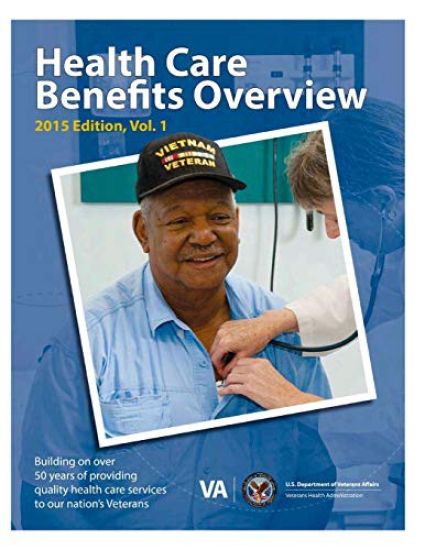
A low-cost edition of a guide designed to provide Veterans and their families with the information they need to understand VA's health care system - eligibility requirements, the health benefits and services available to help Veterans and copays that certain Veterans may be charged.
This guide is designed to provide Veterans and their families with the information they need to understand VA's health care system - eligibility requirements, the health benefits and services available to help Veterans and copays that certain Veterans may be charged.
Age-related macular degeneration (AMD) is the leading cause of irreversible vision loss in the developed world. In 2004, AMD affected 1.75 million persons in the United States, a number which is expected to rise to nearly 3 million by 2020 due to the aging of the population. AMD is characterized by the appearance of involutional changes (e.g. drusen) in the structure of the central retinal pigment epithelium (RPE) leading to the loss of normal central (macular) vision. AMD can be categorized as dry (non-exudative) or wet (exudative). Dry AMD represents the great majority of AMD patients (90%) and may lead to slow visual loss over many decades, with the most severe cases developing geographic atrophy and profound loss of central vision. Dry AMD can progress to wet AMD with the development of neovascularization beneath the diseased RPE leading to hemorrhage, scarring, and the devastating loss of macular vision over a period of months. By convention, there are four categories which describe the severity of macular degeneration. Category 1 are those patients essentially free of age-related macular abnormalities, with a total drusen area less than five small drusen (63 μm), and visual acuity of 20/32 or better in both eyes. Category 2 patients have mild or borderline, age-related macular features (multiple small drusen, single or nonextensive intermediate drusen (63-124 μm), pigment abnormalities, or any combination of these) in one or both eyes, and visual acuity of 20/32 or better in both eyes. Category 3 patients require the absence of advanced AMD in both eyes and at least one eye with visual acuity of 20/32 or better with at least one large drusen (125 μm), extensive (as measured by drusen area) intermediate drusen, or geographic atrophy (GA) that does not involve the center of the macula, or any combination of these. Category 4 patients have visual acuity of 20/32 or better and no advanced AMD in one eye, with the fellow eye having either lesions of advanced AMD, or visual acuity less than 20/32 with AMD abnormalities sufficient to explain reduced visual acuity as determined by examination of photographs. "Advanced AMD" is defined as having GA involving the center of the macula or features of choroidal neovascularization. Observational studies suggest that people with dietary intakes higher in various carotenoids, antioxidants and omega-3 fatty acids have a lower risk of developing AMD. This has led to several supplementation trials designed to examine the ability of nutritional supplement with carotenoids, antioxidants, or omega-3 fatty acids to prevent the progression of AMD. Our report focuses on the evidence documenting the potential benefits and harms of certain dietary supplements in patients with AMD. Recommendations to the Department of Veterans Affairs with regard to these supplements will have important implications to that patient population as well as to older U. S. adults. We conducted a systematic review of published literature to address the following key questions:1) In patients with age-related macular degeneration, do nutritional supplements containing carotenoids, antioxidants, or omega-3 fatty acids alone or in combination prevent functional visual loss? 2) In adult populations, what are the harms of carotenoid, antioxidant, and omega-3 fatty acid supplementation?