Kirjojen hintavertailu – 12 903 724 kirjaa ja 27 kauppaa
Kirjailija
U. S. Environmental Protection Agency
Kirjat ja teokset yhdessä paikassa: 363 kirjaa, julkaisuja vuosilta 2003–2017, suosituimpiin kuuluu Costs Claimed by the Alaska Native Tribal Health Consortium Under EPA Interagency Agreement DW 75-95754001. Vertaile teosten hintoja ja tarkista saatavuus suomalaisista kirjakaupoista.
Nimi esiintyy myös muodoissa: U S Environmental Protection Agency
This guide is divided into the following four sections: Section 1. Urban Stormwater Runoff defines urban stormwater runoff and explains why it is a problem. Section 2. The Role of Trees in Stormwater Management discusses what trees need to grow in urban environments and how they help manage stormwater. Section 3. Stormwater Management Systems with Trees provides an introduction to engineered systems available that utilize trees to manage a volume of stormwater. Section 4. Case Studies presents projects from throughout the country that have successfully used trees in the engineered systems discussed. This guide is intended to help engineers, planners, developers, architects, arborists, and public officials understand how trees perform and interact in a stormwater management system, and the new technologies that are being used to increase the stormwater utility function of the urban forest, even in the densest urban environments.
Plumbing cross-connections, which are defined as actual or potential connections between a potable and nonpotable water supply, constitute a serious public health hazard. There are numerous, well documented cases where cross-connections have been responsible for contamination of drinking water, and have resulted in the spread of disease. The problem is a dynamic one, because piping systems are continually being installed, altered, or extended. Control of cross-connections is possible, but only through thorough knowledge and vigilance. Education is essential, for even those who are experienced in piping installations fail to recognize cross-connection possibilities and dangers. All municipalities with public water supply systems should have cross-connection control programs. Those responsible for institutional or private water supplies should also be familiar with the dangers of cross-connections and should exercise careful surveillance of their systems.
You cannot see, smell, or taste radon. But it still may be a problem in your home. When you breathe air containing radon, you increase your risk of getting lung cancer. In fact, the Surgeon General of the United States has warned that radon is the second leading cause of lung cancer in the United States today. If you smoke and your home has high radon levels, your risk of lung cancer is especially high. The "Home Buyer's and Seller's Guide to Radon" answers important questions about radon and lung cancer risk. It also answers questions about testing and fixing for anyone buying or selling a home.
Understanding the ways in which ecosystems provide flows of "services" to humans is critical for decision making in many contexts; however, the linkages between natural and human systems are complex and multifaceted. A well-defined framework for classifying ecosystem services is essential for systematically identifying and tracing these linkages. The purpose of this report is to describe the National Ecosystem Services Classification System (NESCS), which is designed to address these needs. The main objective of NESCS is to provide a framework that will aid in analyzing the human welfare impacts of policy-induced changes to ecosystems. In particular, it is intended to support different types of policy impact analyses, such as cost-benefit analysis of environmental regulations. Measuring the welfare impacts of alternative environmental policy or natural resource management scenarios typically entails three main steps: identifying, quantifying, and (as feasible) valuing changes in ecosystems and their contributions to human well-being. NESCS is primarily designed to support the first step--identifying ecosystem service changes-and thus provides a foundation for the subsequent steps of quantification and valuation. It is not an accounting system, but it is designed to support comprehensive and systematic accounting of changes in ecosystem services. NESCS could also potentially be used to support analysis of other policies that could result in changes to ecosystems such as housing, transportation, and tax policies.
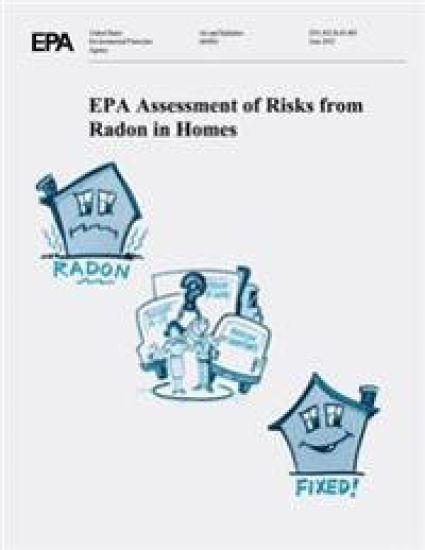
Radon has been classified as a known human carcinogen and has been recognized as a significant health problem by groups such as the Centers for Disease Control, the American Lung Association, the American Medical Association, and the American Public Health Association. As such, risks from in-home radon exposure have been a major concern for the EPA. In 1992, EPA published its "Technical Support Document for the 1992 Citizen's Guide to Radon," which included a description of its methodology for estimating lung cancer risks in the U. S. associated with exposure to radon in homes. That methodology was primarily based on reports published by the National Academy of Sciences (NAS). In one of those reports, known as "BEIR IV" (NAS 1988), a model was derived for estimating the risks from inhaled radon progeny, based on an analysis of epidemiologic results on 4 cohorts of occupationally exposed underground miners. In 1994, the EPA sponsored another study, "BEIR VI", to incorporate additional information that had become available from miner cohort and residential studies. In early 1999, the NAS published its "BEIR VI" report (NAS 1999), which presented new risk models based on information from 11 miner cohorts. A major conclusion of the BEIR VI report was that radon is the second leading cause of lung cancer after smoking. In light of findings and recommendations in BEIR VI, this report presents a revised risk assessment by EPA's Office of Radiation and Indoor Air (ORIA) for exposure to radon in homes.
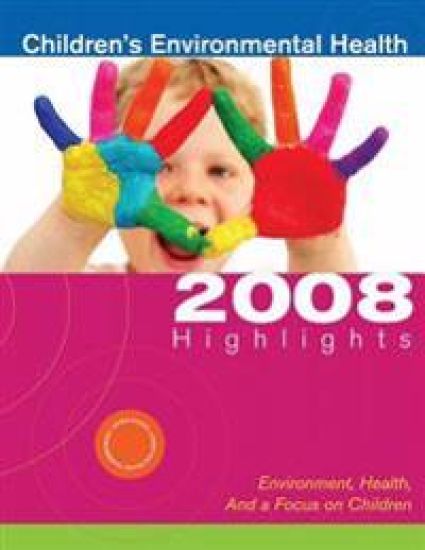
Children are often more vulnerable to pollutants than adults due to differences in behavior and biology, that can lead to greater exposure and/or unique windows of susceptibility during development. Learn more about children's health, the environment, and what you can do. Since its founding in 1970, EPA's mission has been to protect human health and the environment. This report, "Children's Environmental Health: 2008 Highlights", eighth in an annual series from the Office of Children's Health Protection and Environmental Education, highlights the Agency's recent work on protecting the health of children by addressing the environments where they live, learn and play.