Kirjojen hintavertailu – 12 903 725 kirjaa ja 27 kauppaa
Kirjailija
U. S. State Department
Kirjat ja teokset yhdessä paikassa: 117 kirjaa, julkaisuja vuosilta 2010–2017, suosituimpiin kuuluu BANGLADESH 2016 HUMAN RIGHTS Report. Vertaile teosten hintoja ja tarkista saatavuus suomalaisista kirjakaupoista.
Armenia's constitution provides for a republic with an elected head of state and a unicameral legislature, the National Assembly. According to a constitutional referendum conducted in December 2015, the country is expected to transition gradually to a parliamentary republic by the end of the existing presidential term in 2018. The Republican Party of Armenia (RPA) held a majority of seats in the National Assembly and, with President Serzh Sargsyan as leader, continued to dominate the country's political scene. The country had a presidential election in 2013 and legislative elections in 2012. The Organization for Security and Cooperation in Europe (OSCE) described the presidential election as well administered but with shortcomings, including an uneven playing field, serious election-day violations, and concerns regarding the integrity of the electoral process. Similar flaws marred the 2012 National Assembly elections and the 2015 constitutional referendum. Civilian authorities maintained effective control over the security forces.
The Republic of Albania is a parliamentary democracy. The constitution vests legislative authority in the unicameral parliament (the Assembly), which elects both the prime minister and the president. The prime minister heads the government, while the president has limited executive power. In June 2015 the country held local elections for mayors and municipal councils. The Organization for Security and Cooperation in Europe (OSCE) assessed the elections positively overall but observed important procedural irregularities. In 2013 the country held parliamentary elections that the OSCE reported were competitive and respected fundamental freedoms but were conducted in an atmosphere of distrust that tainted the electoral environment. Civilian authorities maintained effective control over the security forces. The most significant human rights problems were pervasive corruption in all branches of government, particularly in the judicial and health-care systems, and domestic violence and discrimination against women.
Societal discrimination against the Romani population in education, housing, and employment remained a serious problem. With the continuing influx of refugees and migrants to Europe from mostly Muslim countries, including Syria, Iraq, Afghanistan, and Eritrea, and domestic political opposition to resettlement of those refugees in the country, anti-immigrant and anti-Muslim sentiment continued during the year. There were no reports of egregious human rights abuses. Other human rights problems included prison overcrowding; police corruption; inflammatory speech by politicians and public figures; long detention of migrants and asylum seekers; violence against women; sexual and other abuse of children; anti-Semitism; trafficking in persons; discrimination against persons with HIV/AIDS; and exploitation of migrant workers.
Benin is a stable constitutional parliamentary democracy (republic). On March 20, voters elected Patrice Talon to a five-year term in a multiparty election, replacing former president Thomas Boni Yayi, who served two consecutive five-year terms. In April 2015 authorities held legislative elections in which former president Yayi's supporting coalition, Cowry Force for an Emerging Benin, won 33 of 83 seats in the National Assembly, and the coalition allied with four independent candidates held 37 seats (a decrease from 41 in the prior legislature). International observers viewed both the March presidential and 2015 legislative elections as generally free, fair, and transparent. Civilian authorities generally maintained effective control over the security forces. The major human rights problems included police use of excessive force, harsh prison conditions, and vigilante violence. Other human rights problems included: arbitrary arrest and detention; prolonged pretrial detention; abuse of women and children, including sexual harassment, child sexual exploitation, early and forced marriage, and infanticide; trafficking in persons; discrimination against persons with disabilities; violence and discrimination against women and girls, including female genital mutilation/cutting (FGM/C); and child labor.
Namibia is a constitutional multiparty democracy. In local and regional elections held in November 2015, the ruling Swapo party won 112 of 121 regional council seats and gained control of 54 of 57 local authorities. Elections held in November 2014 resulted in the election of Prime Minister Hage Geingob to the presidency and retention by Swapo of its large parliamentary majority. International observers characterized the elections in 2014 and 2015 as generally free and fair. Civilian authorities generally maintained effective control over the security forces. The most significant human rights problems in the country included the slow pace of judicial proceedings and resulting lengthy pretrial detention, sometimes under poor conditions; violence and discrimination against women and children, including rape; and child labor.
Cote d'Ivoire is a democratic republic ruled by a freely elected government. In legislative elections held on December 18, the ruling government coalition won 66 percent of National Assembly seats. The main opposition party, which boycotted the 2011 legislative elections, participated and won seats. The elections were peaceful and considered inclusive and transparent. The country held a presidential election in October 2015, in which President Alassane Ouattara was re-elected by a significant majority. International and domestic observers judged the election to be free and fair. Civilian authorities failed at times to maintain effective control over the security forces. In April the United Nations lifted all sanctions on the country and renewed the mandate of the UN Operation in Cote d'Ivoire (UNOCI) for a final year, until June 2017. Despite continued but slow improvements in security and political reconciliation, the government's efforts to restore the rule of law and address impunity after the 2010-11 postelectoral crisis remained incomplete.
Uganda is a constitutional republic led since 1986 by President Yoweri Museveni of the National Resistance Movement (NRM) party. On February 18, voters re-elected Museveni to a fifth five-year term and returned an NRM majority to the unicameral National Assembly. The elections fell short of international standards and were marred by allegations of disenfranchisement and voter intimidation, harassment of the opposition, closure of social media websites, and lack of transparency and independence in the Electoral Commission. Civilian authorities generally maintained effective control over the security forces. The three most serious human rights problems in the country included lack of respect for individual integrity (unlawful killings, torture, arbitrary detention, and other abuse of suspects and detainees); restrictions on civil liberties (freedoms of press, expression, assembly, association, and political participation); and violence and discrimination against marginalized groups, such as women, children, persons with disabilities, and the lesbian, gay, bisexual, transgender, and intersex (LGBTI) community.
Madagascar is a constitutional democracy with a popularly elected president, a bicameral legislature (Senate and National Assembly), prime minister, and cabinet. The current president and National Assembly were elected in 2013, the first national elections after the 2009 coup against former president Ravalomanana. Nationwide municipal elections in July 2015 allowed for the indirect election of the Senate in December 2015. All elections were peaceful and deemed generally free and fair by international observers, despite low turnout and the denial of 31 of 31 opposition appeals by the High Constitutional Court. Civilian authorities at times did not maintain effective control over the security forces. The most important human rights abuses included the inability of the government to provide rule of law, which resulted in official corruption and impunity, as well as security force abuse; increased restrictions on freedoms of speech, press, and assembly; and child labor, including forced child labor.
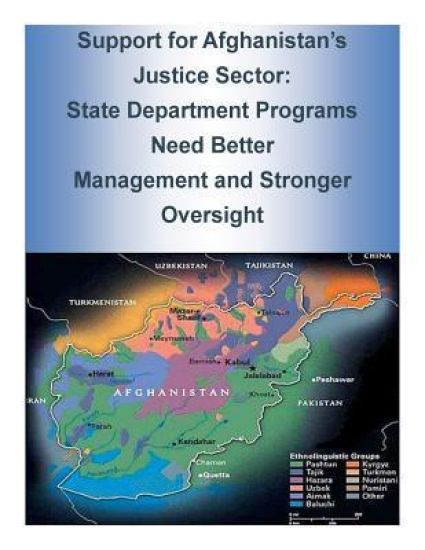
Since reconstruction efforts in Afghanistan began in 2001, the U. S. government, the international community, and the Afghan government have made improving Afghanistan's justice system a priority. Key documents havenoted the importance of the justice sector, including the U. S. government's Integrated Civilian-MilitaryCampaign Plan for Support to Afghanistan and the Afghan Government's National Priority Programs focus onstrengthening Afghan rule of law and Afghan citizens' access to justice. The Department of State (State) has invested in a variety of rule of law programs since 2005, includingprograms managed by its Bureau of International Narcotics and Law Enforcement Affairs (INL) to train Afghanjustice sector personnel. State also serves as the lead coordinator for U. S. justice sector development effortsin Afghanistan, responsible for coordinating the activities of several U. S. agencies, including the U. S. Agency forInternational Development (USAID) and the Department of Justice. INL has spent approximately $205.5 million on its Justice Sector Support Program (JSSP) to provide training toAfghan justice sector officials, to develop a case management system to track cases throughout Afghanistan'sjustice system, and to build the capacity and administrative skills of officials within Afghan ministrie