

Kirjojen hintavertailu – 12 903 735 kirjaa ja 27 kauppaa

Kirjailija

Ulrike Felt

Kirjat ja teokset yhdessä paikassa: 3 kirjaa, julkaisuja vuosilta 2002–2025, suosituimpiin kuuluu Academic Times. Vertaile teosten hintoja ja tarkista saatavuus suomalaisista kirjakaupoista.

3 kirjaa

Kirjojen julkaisuvuodet: 2002–2025.

Academic Times

Academic Times

Ulrike Felt

SPRINGER VERLAG, SINGAPORE
2025
nidottu

Halvin toimitettuna 55,40 €

This open access book explores the hidden politics of time—the chronopolitics—that profoundly shapes the contours of academic life and knowledge production in contemporary universities. Moving beyond familiar critiques of academic acceleration, Ulrike Felt explores the diversity of time generators and the resultant complex, multilayered timescapes that govern scholarly work and life. The book examines the tensions inherent in models of linear careers and in simultaneous experiences of speed and waiting, and asks questions about the ownership of time. In doing so, it scrutinizes relations between time and quality, and points to the impact of time on how and what we can know, revealing how these temporal regimes create deep asynchronicities and fragmentations and perpetuate injustices and exclusions. Arguing for a more mindful approach to research, Felt advocates for rethinking academia through the lens of time, emphasizing the need for temporal care work in order to achieve sustainable and responsible change. Aimed at researchers, academic leaders, and policymakers, the book offers a compelling vision for a more responsive, long-term, and equitable academic future—one that challenges neoliberal models that prioritise speed, competitiveness, and efficiency.

Academic Times

Academic Times

Ulrike Felt

SPRINGER VERLAG, SINGAPORE
2025
sidottu
This open access book explores the hidden politics of time—the chronopolitics—that profoundly shapes the contours of academic life and knowledge production in contemporary universities. Moving beyond familiar critiques of academic acceleration, Ulrike Felt explores the diversity of time generators and the resultant complex, multilayered timescapes that govern scholarly work and life. The book examines the tensions inherent in models of linear careers and in simultaneous experiences of speed and waiting, and asks questions about the ownership of time. In doing so, it scrutinizes relations between time and quality, and points to the impact of time on how and what we can know, revealing how these temporal regimes create deep asynchronicities and fragmentations and perpetuate injustices and exclusions. Arguing for a more mindful approach to research, Felt advocates for rethinking academia through the lens of time, emphasizing the need for temporal care work in order to achieve sustainable and responsible change. Aimed at researchers, academic leaders, and policymakers, the book offers a compelling vision for a more responsive, long-term, and equitable academic future—one that challenges neoliberal models that prioritise speed, competitiveness, and efficiency.
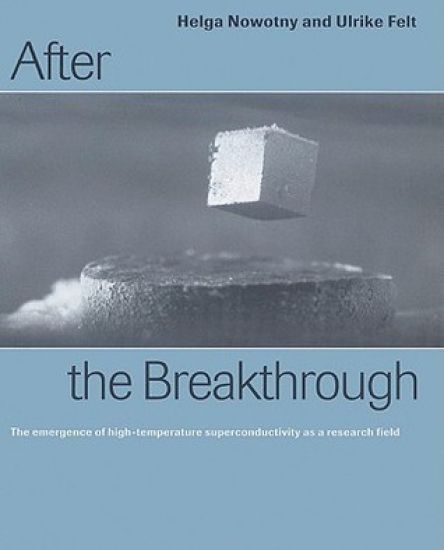
After the Breakthrough

After the Breakthrough

Helga Nowotny; Ulrike Felt

Cambridge University Press
2002
pokkari
The discovery of high-temperature superconductivity was hailed as a major scientific breakthrough, inducing an unprecedented excitement and expectation among the scientific community and in the international press. This book sets this research breakthrough in context, and reconstructs the history of the discovery. The authors analyse the emergence of this new research field and the way its development was shaped by scientists and science policy-makers. They also examine the various settings in which the research was undertaken, as well as considering the scientific backgrounds and motivations of researchers who entered the field following the original discovery. The industrial connection and the general belief in promises of future applications were important elements in strategies devised to obtain funding. A remarkable factor in this process was the media’s role. The sustained attention that followed the discovery of high-temperature superconductivity resulted in it being seen as the symbol of a new technological frontier.