
Kirjojen hintavertailu – 12 859 829 kirjaa ja 27 kauppaa

Kirjailija

Umar Ibn Al-Farid

Kirjat ja teokset yhdessä paikassa: 3 kirjaa, julkaisuja vuosilta 2016–2018, suosituimpiin kuuluu Two Great Arabic Sufi Poets - Ibn al-Farid & 'Aishah al-Ba'uniyah. Vertaile teosten hintoja ja tarkista saatavuus suomalaisista kirjakaupoista.

3 kirjaa

Kirjojen julkaisuvuodet: 2016–2018.

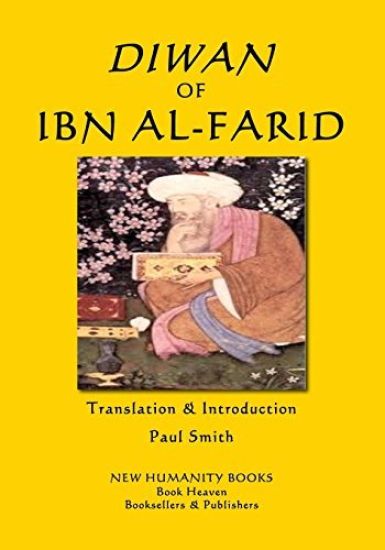
Diwan of Ibn al-Farid

Diwan of Ibn al-Farid

Umar Ibn Al-Farid

Createspace Independent Publishing Platform
2018
nidottu
DIWAN OF IBN AL-FARID Translation & Introduction Paul Smith Umar Ibn al-Farid, an Egyptian poet (1181-1235), is considered to be the undisputed master of Islamic mystical (Sufi) poetry into Arabic. He is considered not only to be a poet but a Perfect Master (Qutub) a God-realised soul... and it is his journey to unity with God that he reveals in probably the longest qasida (ode) in Arabic (761 couplets), his famous The Mystic's Progress. The other poem for which he is most known is his Wine Poem that is often seen as a prologue to the The Mystic's Progress. Although these long poems have been translated into English before this is the first time in the correct rhyme of the qasida and in clear, concise, modern English, many of his other long and shorter poems are also translated. Included in the Introduction are chapters on his Life & Work, The Qasida in Arabic, Previous Qasidas by Master Arab Poets that would have influenced him and one who he influenced, The Perfect Master (Qutub), and the Wine Poem and The Mystic's Way. Selected Bibliography. The correct rhyme-structure has been kept and also the beauty and meaning of these immortal, spiritual poems. This is the largest translation into English. Appendix on other translations. Large Format Paperback 7" x 10" 277 pages. COMMENTS ON PAUL SMITH'S TRANSLATION OF HAFIZ'S 'DIVAN'." It is not a joke... the English version of ALL the ghazals of Hafiz is a great feat and of paramount importance. I am astonished." Dr. Mir Mohammad Taghavi (Dr. of Literature) Tehran." Superb translations. 99% Hafiz 1% Paul Smith." Ali Akbar Shapurzman, translator and knower of Hafiz's Divan off by heart." Smith has probably put together the greatest collection of literary facts and history concerning Hafiz." Daniel Ladinsky (Penguin Books author). Paul Smith (b.1945) is a poet, author and translator of many books of Sufi poets of the Persian, Arabic, Urdu, Turkish, Pashtu and other languages including Hafiz, Sadi, Nizami, Rumi, 'Attar, Sana'i, Jahan Khatun, Obeyd Zakani, Mu'in, Amir Khusrau, Nesimi, Kabir, Anvari, Ansari, Jami, Omar Khayyam, Rudaki, Yunus Emre, Bulleh Shah, Shah Latif, Mahsati, Lalla Ded, Iqbal and many others and his own poetry, fiction, plays, biographies, children's books and 12 screenplays. amazon.com/author/smithpa
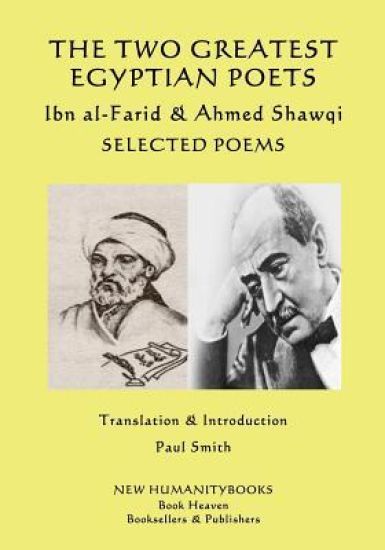
The Two Greatest Egyptian Poets - Ibn al-Farid & Ahmed Shawqi: Selected poems

The Two Greatest Egyptian Poets - Ibn al-Farid & Ahmed Shawqi: Selected poems

Ahmed Shawqi; Umar Ibn Al-Farid

Createspace Independent Publishing Platform
2017
nidottu
THE TWO GREATEST EGYPTIAN POETS Ibn al-Farid & Ahmed Shawqi SELECTED POEMS Translation & Introduction Paul Smith IBN AL-FARID, an Egyptian poet (1181-1235), is the undisputed master of Islamic mystical (Sufi) poetry in Arabic. He is not only ta poet but a Perfect Master (Qutub) a God-realized soul, and it is his journey to unity with God he reveals in probably the longest qasida (ode) in Arabic (761 couplets), his famous The Mystic's Progress. The other poem for which he is most known is his Wine Poem. Although these poems have been translated into English before, this is the first time in the correct rhyme of the qasida and in clear, concise, modern English. Included in the Introduction are chapters on his Life & Work, The Qasida in Arabic, Previous Qasidas by Master Arab Poets that would have influenced him and one who he influenced, The Perfect Master (Qutub), and the Wine Poem and The Mystic's Way. Selected Bibliography. AHMED SHAWQI (1869 - 1932) was the great Arabic Poet-Laureate; an Egyptian poet and dramatist who pioneered the modern Egyptian literary movement, most notably introducing the genre of poetic epics to the Arabic literary tradition. In 1927 he was crowned by his peers the 'Prince of Poets' in recognition of his considerable contributions to the literary field. Shawqi's work can be categorized into three main periods during his career: The first coincides with the period during which he occupied a position at the court of the Khedive (Viceroy), consisting of eulogies to the Khedive: praising him or supporting his policy. The second comprised the period of his exile in Spain. During this period his feeling of nostalgia and sense of alienation directed his poetic talent to patriotic poems on Egypt as well as the Arab world. The third stage occurred after his return from exile: during that period he became preoccupied with the history of Ancient Egypt and Islam. He wrote his famous Sufi poem, in praise of the Prophet Muhammad (here fully translated in qasida form). The maturation of his poetic style was reflected in his plays (including his Majnun-Layla). Includeed are remarkable poems for children and others in the correct forms. Introduction on his Life & Times & poems & his Museum. Large Format Paperback 7" x 10" 369 pages. Paul Smith (b. 1945) is a poet, author and translator of many books of Sufi & other poets of the Persian, Arabic, Urdu, Turkish, Pashtu and other languages including Hafiz, Sadi, Nizami, Rumi, 'Attar, Sana'i, Jahan Khatun, Obeyd Zakani, Mu'in, Amir Khusrau, Nesimi, Kabir, Anvari, Ansari, Jami, Omar Khayyam, Rudaki, Yunus Emre, Bulleh Shah, Shah Latif, Mahsati, Lalla Ded, Iqbal and many others, and his own poetry, fiction, plays, biographies, children's books and 12 screenplays. amazon.com/author/smithpa
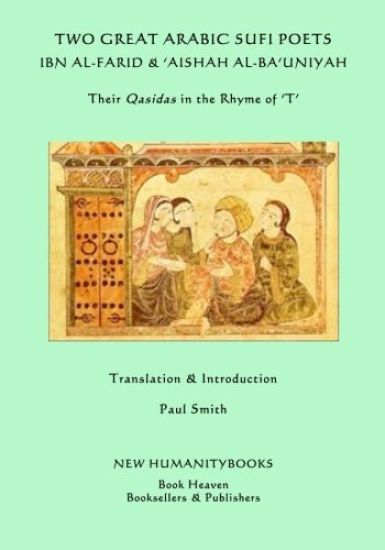
Two Great Arabic Sufi Poets - Ibn al-Farid & 'Aishah al-Ba'uniyah

Two Great Arabic Sufi Poets - Ibn al-Farid & 'Aishah al-Ba'uniyah

'Aishah Al-Ba'uniyah; Paul Smith; Umar Ibn Al-Farid

Createspace Independent Publishing Platform
2016
pokkari
TWO GREAT ARABIC SUFI POETS IBN AL-FARID & 'AISHAH AL-BA'UNIYAH Their Qasidas in the Rhyme of 'T' Translation & Introduction Paul Smith Umar Ibn al-Farid, an Egyptian poet (1181-1235), is considered to be the undisputed master of Islamic mystical or Sufi poetry into Arabic. He is considered not only to be a poet but a Perfect Master (Qutub) a God-realised soul... and it is his journey to unity with God that he reveals in probably the longest qasida (ode) in Arabic (761 couplets), his famous The Mystic's Way or Qasida in the Rhyme of 'T'. 'Aishah al-Ba'uniyah (1457 - 1517) came from the village of Ba'un in the south of Syria. Her family were well-known and respected religious scholars and poets. She surpassed her father and brothers in her poetry, scholarship and renown. As a young woman she went to Mecca where she had a vision of Prophet Mohammed. All her family were Sufis connected to the Qadir'iyah order. She wrote in many forms of poetry in a number of Divans and composed works on Sufism that are still highly regarded. Her great Qasida in the Rhyme of 'T' (252 couplets) was composed in praise of and much influenced by Ibn al-Farid's famous 'Mystic's Way' qasida composed 300 years earlier. Introductions on both their lives and poetry and on The Qasida, The 'Pole' or Perfect Master (Qutub) and On the Mystic's Way. Selected Bibliographies. The two long poems are beautifully, completely translated into the correct rhyme-structure and meaning with notes. Large Format Paperback 7" x 10" 173 pages. COMMENTS ON PAUL SMITH'S TRANSLATION OF HAFIZ'S 'DIVAN'." It is not a joke... the English version of ALL the ghazals of Hafiz is a great feat and of paramount importance.." Dr. Mir Mohammad Taghavi (Dr. of Literature) Tehran." Superb translations. 99% Hafiz 1% Paul Smith." Ali Akbar Shapurzman, translator in English into Persian and knower of Hafiz's Divan off by heart. Paul Smith is a poet, author and translator of many books of Sufi poets of the Persian, Arabic, Urdu, Turkish and other languages... including Hafiz, Sadi, Nizami, Rumi, 'Attar, Rab'ia, Mahsati, Sana'i, Obeyd Zakani, Nesimi, Kabir, Anvari, Ansari, Jami, Khayyam, Rudaki, Yunus Emre, Baba Farid, Mu'in, Lalla Ded, Mahsati, Iqbal, Rahman Baba and many others and his own poetry, fiction, plays, biographies, children's books and 12 screenplays. amazon.com/author/smithpa