Kirjojen hintavertailu – 12 903 725 kirjaa ja 27 kauppaa

Kirjailija

Umberto Ansaldo

Kirjat ja teokset yhdessä paikassa: 6 kirjaa, julkaisuja vuosilta 2009–2021, suosituimpiin kuuluu Revivals, Nationalism, and Linguistic Discrimination. Vertaile teosten hintoja ja tarkista saatavuus suomalaisista kirjakaupoista.

6 kirjaa

Kirjojen julkaisuvuodet: 2009–2021.

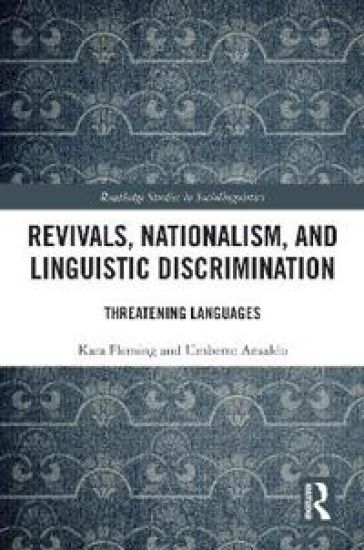
Revivals, Nationalism, and Linguistic Discrimination

Revivals, Nationalism, and Linguistic Discrimination

Kara Fleming; Umberto Ansaldo

Taylor Francis Ltd
2021
nidottu
Is linguistic revival beneficiary to the plight of newly emerging, peripheral or even ‘threatened’ cultures? Or is it a smokescreen that hides the vestiges of ethnocentric ideologies, which ultimately create a hegemonic relationship? This book takes a critical look at revival exercises of special historical and geopolitical significance, and argues that a critical and cautious approach to revival movements is necessary. The cases of Sinhala, Kazakh, Mongolian, Catalan, and even Hong Kong Cantonese show that it is not through linguistic revival, but rather through political representation and economic development, that the peoples in question achieve competitiveness and equality amongst their neighbors. On the other hand, linguistic revival in these and other contexts can, and has been, used to support nationalist or ethnocentric agendas, to the detriment of other groups, recreating the same dynamics that generated the argument for revival in the first place. This book argues that respect for linguistic and other diversity, multilingualism and multiculturalism, is not compatible with linguistic revival that mirrors nation-building and essentializing identity construction.
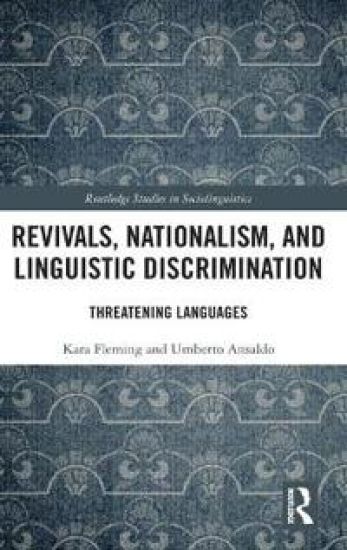
Revivals, Nationalism, and Linguistic Discrimination

Revivals, Nationalism, and Linguistic Discrimination

Kara Fleming; Umberto Ansaldo

Routledge
2019
sidottu
Is linguistic revival beneficiary to the plight of newly emerging, peripheral or even ‘threatened’ cultures? Or is it a smokescreen that hides the vestiges of ethnocentric ideologies, which ultimately create a hegemonic relationship? This book takes a critical look at revival exercises of special historical and geopolitical significance, and argues that a critical and cautious approach to revival movements is necessary. The cases of Sinhala, Kazakh, Mongolian, Catalan, and even Hong Kong Cantonese show that it is not through linguistic revival, but rather through political representation and economic development, that the peoples in question achieve competitiveness and equality amongst their neighbors. On the other hand, linguistic revival in these and other contexts can, and has been, used to support nationalist or ethnocentric agendas, to the detriment of other groups, recreating the same dynamics that generated the argument for revival in the first place. This book argues that respect for linguistic and other diversity, multilingualism and multiculturalism, is not compatible with linguistic revival that mirrors nation-building and essentializing identity construction.
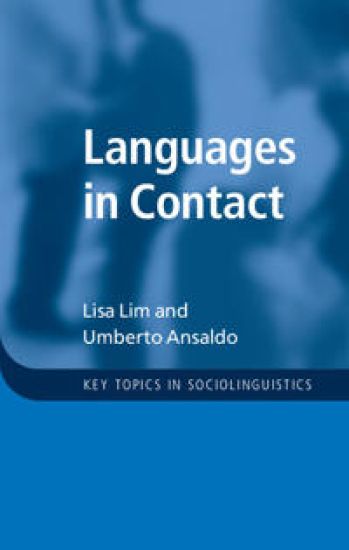
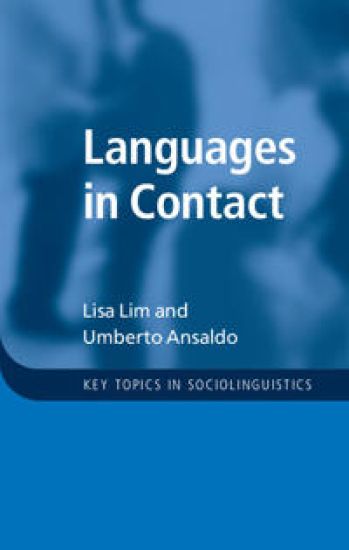
Languages in Contact

Languages in Contact

Lisa Lim; Umberto Ansaldo

Cambridge University Press
2015
sidottu
Introducing new findings from popular culture, the globalised new economy and computer-mediated communication, this is a fascinating study of contact between languages in modern societies. Ansaldo and Lim bring together research on multilingualism, code-switching, language endangerment, and globalisation, into a comprehensive overview of world Englishes and creoles. Illustrated with a wide range of original examples from typologically diverse languages, including Sinitic, Autronesian, Dravidian and other non-Indo-European varieties, the book focuses on structural analyses of Asian ecologies and their relevance for current theories of contact phenomena. Full of new insights, it is essential reading for students and researchers across linguistics, culture and communication.
Languages in Contact

Languages in Contact

Lisa Lim; Umberto Ansaldo

Cambridge University Press
2015
pokkari
Introducing new findings from popular culture, the globalised new economy and computer-mediated communication, this is a fascinating study of contact between languages in modern societies. Ansaldo and Lim bring together research on multilingualism, code-switching, language endangerment, and globalisation, into a comprehensive overview of world Englishes and creoles. Illustrated with a wide range of original examples from typologically diverse languages, including Sinitic, Autronesian, Dravidian and other non-Indo-European varieties, the book focuses on structural analyses of Asian ecologies and their relevance for current theories of contact phenomena. Full of new insights, it is essential reading for students and researchers across linguistics, culture and communication.
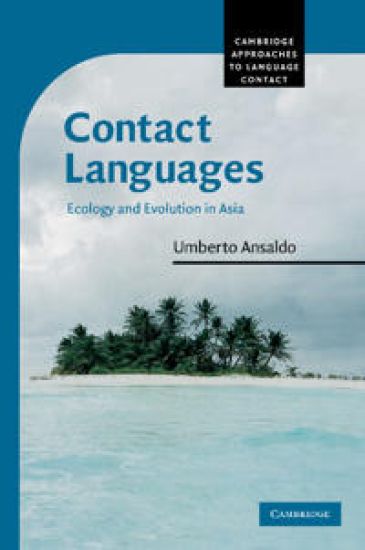
Contact Languages

Contact Languages

Umberto Ansaldo

Cambridge University Press
2013
pokkari
Why do groups of speakers in certain times and places come up with new varieties of languages? What are the social settings that determine whether a mixed language, a pidgin or a Creole will develop, and how can we understand the ways in which different languages contribute to the new grammar? Through the study of Malay contact varieties such as Baba Malay, Cocos Malay and Sri Lanka Malay, as well as the Asian Portuguese vernacular of Macau, and China Coast Pidgin, this book explores the social and structural dynamics that underlie the fascinating phenomenon of the creation of new, or restructured, grammars. It emphasizes the importance and interplay of historical documentation, socio-cultural observation and linguistic analysis in the study of contact languages, offering an evolutionary framework for the study of contact language formation - including pidgins and Creoles - in which historical, socio-cultural and typological observations come together.
Contact Languages

Contact Languages

Umberto Ansaldo

Cambridge University Press
2009
sidottu
Why do groups of speakers in certain times and places come up with new varieties of languages? What are the social settings that determine whether a mixed language, a pidgin or a Creole will develop, and how can we understand the ways in which different languages contribute to the new grammar? Through the study of Malay contact varieties such as Baba Malay, Cocos Malay and Sri Lanka Malay, as well as the Asian Portuguese vernacular of Macau, and China Coast Pidgin, this book explores the social and structural dynamics that underlie the fascinating phenomenon of the creation of new, or restructured, grammars. It emphasizes the importance and interplay of historical documentation, socio-cultural observation and linguistic analysis in the study of contact languages, offering an evolutionary framework for the study of contact language formation - including pidgins and Creoles - in which historical, socio-cultural and typological observations come together.