Kirjojen hintavertailu – 12 903 725 kirjaa ja 27 kauppaa

Kirjailija

United States Department of State

Kirjat ja teokset yhdessä paikassa: 504 kirjaa, julkaisuja vuosilta 2007–2025, suosituimpiin kuuluu Foreign Consulars Offices in the United States Spring/Summer 2011. Vertaile teosten hintoja ja tarkista saatavuus suomalaisista kirjakaupoista.

504 kirjaa

Kirjojen julkaisuvuodet: 2007–2025.

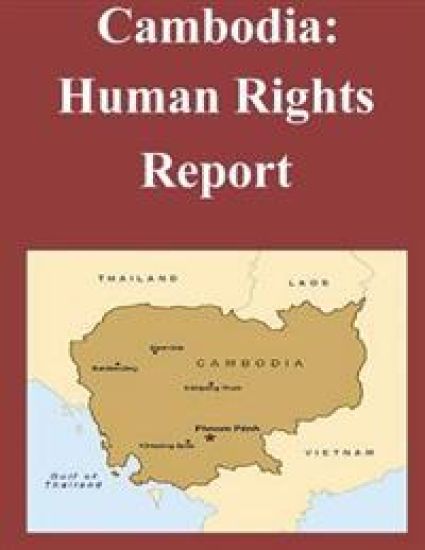
Cambodia: Human Rights Report

Cambodia: Human Rights Report

United States Department of State

Createspace Independent Publishing Platform
2014
nidottu
Cambodia is a constitutional monarchy with an elected parliamentary form of government. In the most recent national elections, held in 2008, the Cambodian People's Party (CPP) won 90 of 123 National Assembly seats. Most observers assessed that the election process improved over previous elections but did not fully meet international standards. The CPP consolidated control of the three branches of government and other national institutions, with most power concentrated in the hands of Prime Minister Hun Sen. Security forces reported to civilian authorities. A weak judiciary that sometimes failed to provide due process or a fair trial procedure continued to be a leading human rights problem. The courts lacked human and financial resources and were subject to corruption and political influence. Their ineffectiveness in adjudicating land disputes that arose from the government's granting of economic land concessions, including to ruling party officials, fueled sometimes-violent disputes in every province. The continued criminalization of defamation and disinformation and a broad interpretation of criminal incitement constrained freedom of expression. Members of the security forces reportedly committed arbitrary killings. Prison guards and police abused detainees, often to extract confessions, and prison conditions were harsh. Human rights monitors reported arbitrary arrests and prolonged pretrial detention. The government at times interfered with freedom of assembly. Corruption remained pervasive, governmental human rights bodies reportedly were ineffective, and discrimination and trafficking in men, women, and children persisted. Domestic violence and child abuse occurred, and education of children was inadequate.
Kazakhstan: Human Rights

Kazakhstan: Human Rights

United States Department of State

Createspace Independent Publishing Platform
2014
nidottu
The Republic of Kazakhstan has a government system dominated by President Nursultan Nazarbayev and the ruling Nur Otan Party. The constitution concentrates power in the presidency. The president controls the legislature and the judiciary as well as regional and local governments. Changes or amendments to the constitution require presidential consent. The 2012 national elections for the Mazhilis (lower house of parliament) fell short of international standards, as did the 2011 presidential election, in which President Nazarbayev received 95 percent of the vote. Civilian authorities maintained effective control over the security forces. Some security forces committed human rights abuses. The most significant human rights problems were severe limits on citizens' rights to change their government; restrictions on freedom of speech, press, assembly, religion, and association; and lack of an independent judiciary and due process, especially in dealing with pervasive corruption and abuses by law enforcement and judicial officials. Other reported abuses included: arbitrary or unlawful killings; military hazing that led to deaths; detainee and prisoner torture and other abuse; harsh and sometimes life threatening prison conditions; arbitrary arrest and detention; infringements on citizens' privacy rights; prohibitive political party registration requirements; restrictions on the activities of nongovernmental organizations (NGOs); violence and discrimination against women; abuse of children; sex and labor trafficking; discrimination against persons with disabilities and ethnic minorities; societal discrimination against lesbian, gay, bisexual, and transgender (LGBT) persons, and persons with HIV/AIDS; and child labor. The government took modest steps to prosecute officials who committed abuses, especially in high-profile corruption cases; however, corruption was widespread and impunity existed, for those in positions of authority as well as for those with connections to government or law enforcement officials.
Doing Business in Afghanistan: 2013 Country Commercial Guide for U.S. Companies

Doing Business in Afghanistan: 2013 Country Commercial Guide for U.S. Companies

United States Department of State

Createspace Independent Publishing Platform
2014
nidottu
Afghanistan is transitioning from a state-based model to a free market economy as it continues to rebuild from nearly 30 years of conflict. According to the International Monetary Fund (IMF), Afghanistan's real GDP growth during 2012 accelerated from 6 percent in 2011 to around 12 percent, reflecting a good harvest. After accelerating to double digits during 2011, inflation moderated during 2012, reaching 6 percent year on year. Net international reserves stand at US$6.35 billion (approximately 7 months of imports). The exchange rate has depreciated by 6 percent during 2012 and has depreciated by another 6 percent since the beginning of 2013, though this depreciation is in line with other regional currencies. Deposits in the banking sector have stagnated at about 20 percent of GDP since 2010, and remain highly dollarized (65 percent), reflecting a continued lack of confidence. Credit to the private sector has remained steady since 2012, despite GDP growth, mostly for lack of sound lending opportunities and the general economic and political uncertainty.
Doing Business in Iraq: 2013 Country Commercial Guide for U.S. Companies

Doing Business in Iraq: 2013 Country Commercial Guide for U.S. Companies

United States Department of State

Createspace Independent Publishing Platform
2014
nidottu
The Iraqi economy grew by an estimated 10% in 2012 and is expected to grow at a similar rate in 2013, driven primarily by rising oil production and higher oil prices over the forecast period. Economic growth will be buttressed by robust increases in government expenditures. Iraq's 2012 capital budget was up nearly 35% over the previous year, and with mounting pressure to provide basic services the government is expected to expend a larger proportion than this allocation. Iraq's transition from a centrally-run economy to a more market-oriented one has been slow and uneven. The World Bank's 2013 Ease of Doing Business survey ranks Iraq 165th of 185 economies evaluated, although companies appear to find that doing business in the Iraqi Kurdistan Region, a federated region within Iraq, is significantly easier than in the rest of Iraq. Under the 2013-2017 National Development Plan adopted by the Council of Ministers in May 2013, Iraq hopes to mobilize approximately $400 billion in investment over the next five years. Priority sectors include oil, electricity, agriculture, transportation, telecom, education, health care, construction, and the industrial sector. Non-oil sector growth will be dependent on the reconstruction and development of decrepit infrastructure throughout the country. Improving electricity generation capacity, which currently stands at around two-thirds of estimated demand, is critical to non-oil sector growth. Iraq was the United States' 68th largest export market in 2012 (down from 58th in 2011). In 2012 total two-way U. S.-Iraqi trade reached $21.3 billion, an increase from $19.4 billion in the previous year. Total U. S. exports to Iraq in 2012 decreased by approximately $370 million, to $2.0 billion, from $2.4 billion in the previous year, while total Iraqi exports to U. S. reached $19.3 billion, up from $17.0 billion in 2011, due to increased U. S. purchases of Iraqi oil. The Kurdistan Regional Government (KRG)'s investment and trade regime is considered significantly more favorable to the conduct of business than that managed under the laws of the Government of Iraq.
International Narcotics Control Strategy Report - Volume I: Drug and Chemical Control

International Narcotics Control Strategy Report - Volume I: Drug and Chemical Control

International Narcotics and Law Enforcem; United States Department of State

Createspace Independent Publishing Platform
2013
nidottu
The Department of State's International Narcotics Control Strategy Report (INCSR) has been prepared in accordance with section 489 of the Foreign Assistance Act of 1961, as amended (the "FAA," 22 U. S. C. 2291). The 2012 INCSR, published in March 2012, covers the year January 1 to December 31, 2011 and is published in two volumes, the second of which covers money laundering and financial crimes. In addition to addressing the reporting requirements of section 489 of the FAA (as well as sections 481(d)(2) and 484(c) of the FAA and section 804 of the Narcotics Control Trade Act of 1974, as amended), the INCSR provides the factual basis for the designations contained in the President's report to Congress on the major drug-transit or major illicit drug producing countries initially set forth in section 591 of the Kenneth M. Ludden Foreign Operations, Export Financing, and Related Programs Appropriations Act, 2002 (P. L. 107-115) (the "FOAA"), and now made permanent pursuant to section 706 of the Foreign Relations Authorization Act, Fiscal Year 2003 (P. L. 107-228) (the "FRAA").