Kirjojen hintavertailu – 12 903 725 kirjaa ja 27 kauppaa

Kirjailija

Urmil Chaudhari

Kirjat ja teokset yhdessä paikassa: 8 kirjaa, julkaisuja vuosilta 2024–2025, suosituimpiin kuuluu Teelt van Aziatische lelie onder agroklimatologische omstandigheden in Gujarat. Vertaile teosten hintoja ja tarkista saatavuus suomalaisista kirjakaupoista.

8 kirjaa

Kirjojen julkaisuvuodet: 2024–2025.

Growing of Asiatic Lilium under Agro-Climatic Condition of Gujarat

Growing of Asiatic Lilium under Agro-Climatic Condition of Gujarat

Urmil Chaudhari

Lap Lambert Academic Publishing
2025
pokkari
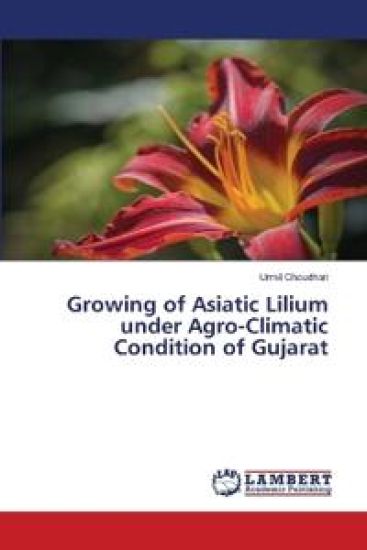
From the two years of field study, it can be concluded that growing Asiatic lilium under different growing conditions the vegetative parameter i.e. plant height at 30 DAS, plant height at harvest and number of leaves were found better under 75 % green shade net condition, while the flowering parameter like days to first bud initiation, opening of flower, diameter of flower and shelf life were found better under 75 % black shade net condition. Whereas, the all the yield parameters were found better under open condition. In case of different growing media all vegetative and flowering parameters the media combination Cocopeat: Vermiculite: Perlite (7:2:1) found superior. Whereas, the yield parameters i.e. number of bulb, weight of bulb, number of daughter bulb were found better with Soil: Cocopeat: Vermiculite (5:3:2) combination.

Coltivazione di Lilium asiatico nelle condizioni agroclimatiche del Gujarat

Coltivazione di Lilium asiatico nelle condizioni agroclimatiche del Gujarat

Urmil Chaudhari; Nitin Shah; Pankaj Maheriya

Edizioni Sapienza
2025
pokkari
Il Lilium asiatico una delle piante ornamentali pi affascinanti per l'aspetto, la bellezza, le diverse forme e le sfumature di colore, ed una coltura a basso volume e alto valore. stato raffigurato come simbolo di purezza e regalit . I bulbi di lilium hanno una solida piastra basale che produce radici dalla base e una serie concentrica di squame carnose e sovrapposte di larghezza variabile dalla cima. Le piante sono a fioritura tardo-primaverile o estiva. I fiori sono portati in racemi o ombrelle all'estremit del fusto, con sei tepali divaricati o deflessi, per dare fiori che variano dalla forma a imbuto alla calotta turcica. I tepali sono liberi l'uno dall'altro e portano il nettare alla base di ogni fiore. Il lilium asiatico cresce bene in ombra parziale durante il periodo di crescita e dovrebbe essere coltivato in ambienti protetti. La coltivazione del lilium in serra pu svolgere un ruolo migliore nel migliorare la qualit e aumentare la durata della fioritura, oltre a ridurre l'incidenza degli insetti nocivi rispetto al campo aperto. Il lilium asiatico pu essere coltivato in diversi tipi di terreno, ma il substrato di coltivazione deve essere ben areato, possedere una buona capacit di trattenere l'acqua, un drenaggio efficace e una solida struttura fisica.
Anbau der Asiatischen Lilie unter den agroklimatischen Bedingungen von Gujarat

Anbau der Asiatischen Lilie unter den agroklimatischen Bedingungen von Gujarat

Urmil Chaudhari; Nitin Shah; Pankaj Maheriya

Verlag Unser Wissen
2025
pokkari
Die Asiatische Lilie ist eine der faszinierendsten Zierpflanzen, die sich durch ihr Aussehen, ihre Sch nheit, ihre verschiedenen Formen und Farbnuancen auszeichnet und die in geringen Mengen und mit hohem Wert angebaut wird. Sie wird als Symbol der Reinheit und des K nigtums dargestellt. Liliumzwiebeln haben eine feste Grundplatte, die von unten Wurzeln bildet, und konzentrische Reihen von festen bis lockeren, fleischigen, sich berlappenden Schuppen unterschiedlicher Breite an der Spitze. Die Pflanzen bl hen im sp ten Fr hjahr oder Sommer. Die Bl ten stehen in Trauben oder Dolden an der Spitze des St ngels, wobei die sechs Tepalen ausgebreitet oder gebogen sind, so dass die Bl ten von trichterf rmig bis t rkisfarben variieren. Die Tepalen sind frei voneinander und tragen an der Basis jeder Bl te Nektar. Die Asiatische Lilie gedeiht gut im Halbschatten w hrend der Wachstumsperiode und sollte in gesch tzter Umgebung kultiviert werden, wobei der Anbau im Netzhaus eine bessere Rolle bei der Verbesserung der Qualit t und der Verl ngerung der Bl tezeit spielt und auch das Auftreten von Sch dlingen im Vergleich zum Freiland reduziert. Asiatische Lilien k nnen in verschiedenen Bodentypen gez chtet werden, aber das Kultursubstrat muss gut durchl ftet sein, eine gute Wasserspeicherkapazit t, eine wirksame Drainage und eine solide physikalische Struktur haben.
Culture du lilium asiatique dans les conditions agro-climatiques du Gujarat

Culture du lilium asiatique dans les conditions agro-climatiques du Gujarat

Urmil Chaudhari; Nitin Shah; Pankaj Maheriya

Editions Notre Savoir
2025
pokkari
Le lilium asiatique est l'une des plantes ornementales les plus fascinantes par son apparence, sa beaut , ses diff rentes formes et ses nuances de couleurs, et il s'agit d'une culture faible volume et forte valeur ajout e. Il a t d peint comme un symbole de puret et de royaut . Les bulbes de lilium ont une plaque basale solide qui produit des racines partir de sa base et des s ries concentriques d' cailles charnues, serr es l ches, se chevauchant et de largeur variable partir du sommet. Les plantes fleurissent la fin du printemps ou en t . Les fleurs sont port es en rac mes ou en ombelles l'extr mit de la tige, avec six t pales tal s ou d fl chis, pour donner des fleurs variant de la forme d'entonnoir la calotte turque. Les t pales sont libres les uns des autres et portent le nectar la base de chaque fleur. Le lilium asiatique se d veloppe bien l'ombre partielle pendant la p riode de croissance et doit tre cultiv dans des environnements prot g s. La culture du lilium en serre peut jouer un r le plus important dans l'am lioration de la qualit , l'augmentation de la dur e de floraison et la r duction de l'incidence des insectes nuisibles par rapport la culture en plein champ. Le lilium asiatique peut tre cultiv dans diff rents types de sol, mais le milieu de culture doit tre bien a r , poss der une bonne capacit de r tention d'eau, un drainage efficace et une structure physique solide.
Cultivo de Lilium asiático em condições agro-climáticas de Gujarat

Cultivo de Lilium asiático em condições agro-climáticas de Gujarat

Urmil Chaudhari; Nitin Shah; Pankaj Maheriya

Edicoes Nosso Conhecimento
2025
pokkari
O Lilium asi tico uma das plantas ornamentais mais fascinantes em termos de apar ncia, beleza, diferentes formas e tonalidades de cores, e uma cultura de baixo volume e alto valor. Tem sido descrito como um s mbolo de pureza e realeza. Os bolbos de Lilium t m uma placa basal s lida que produz ra zes a partir da sua base e s ries conc ntricas de escamas apertadas a soltas, carnudas e sobrepostas de largura vari vel a partir do topo. As plantas florescem no final da primavera ou no ver o. As flores nascem em racemos ou umbelas na extremidade do caule, com seis t palas espalhadas ou deflexionadas; para dar flores que variam da forma de funil ao chap u de turco. As t palas est o separadas umas das outras e cont m n ctar na base de cada flor. O lilium asi tico desenvolve-se bem em sombra parcial durante o per odo de crescimento e deve ser cultivado em ambientes protegidos. O cultivo de lilium em estufa pode desempenhar um papel melhor na melhoria da qualidade, bem como no aumento do per odo de flora o e tamb m reduz a incid ncia de pragas de insectos em compara o com o campo aberto. O Lilium asi tico pode ser for ado em v rios tipos de solo, mas o meio de cultivo deve ser bem arejado, possuir boa capacidade de reten o de gua, drenagem eficaz e uma estrutura f sica s lida.
Growing of Asiatic Lilium under Agro-Climatic Condition of Gujarat

Growing of Asiatic Lilium under Agro-Climatic Condition of Gujarat

Urmil Chaudhari; Nitin Shah; Pankaj Maheriya

Lap Lambert Academic Publishing
2024
pokkari
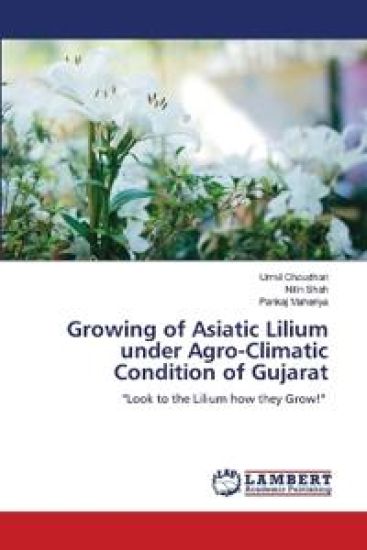
Asiatic Lilium is one of the most fascinating ornamentals in appearance, beauty, different forms, and hues of colors, and it is a low-volume, high-value crop. It has been depicted as a symbol of purity and regality. Lilium bulbs have a solid basal plate that produces roots from its bottom and a concentric series of tight-to-loose, fleshy, overlapping scales of varying width from the top. The plants are late spring or summer flowering. Flowers are borne in racemes or umbels at the tip of the stem, with six tepals spreading or deflexed; to give flowers varying from funnel shape to Turks cap. The tepals are free from each other and bear nectar at the base of each flower. Asiatic Lilium thrives well in partial shade during the growth period and it should be cultivated under protected environments. The cultivation of Lilium in net houses can play a better role in improving quality, as well as increasing flowering span and it also reduces the incidence of insect pests as compared to open fields. Asiatic Lilium can be forced in various soil types, but the growing medium must be well-aerated, and possess good water-holding capacity, effective drainage, and a sound physical structure.