Kirjojen hintavertailu – 12 903 725 kirjaa ja 27 kauppaa
Kirjailija
Ursula Eicker
Kirjat ja teokset yhdessä paikassa: 7 kirjaa, julkaisuja vuosilta 2003–2025, suosituimpiin kuuluu Planning, Urban Design, and Architecture for Climate Action. Vertaile teosten hintoja ja tarkista saatavuus suomalaisista kirjakaupoista.
Jeffrey Raven; Mattia Federico Leone; Sanjukkta Bhaduri; Christian Braneon; David Corbett; David Driskell; Ursula Eicker; John E. Fernandez; Jing Gan; Anna Hürlimann; Ilana Judah; Michael Neuman; Barbara Norman; Dennis Pamlin; Chao Ren; Rob Roggema; Pourya Salehi; Anne Shellum; Joel Towers; Cristina Visconti
Embedding climate resilient development principles in planning, urban design, and architecture means ensuring that transformation of the built environment helps achieve carbon neutrality, effective adaptation, and well-being for people and nature. Planners, urban designers, and architects are called to bridge the domains of research and practice and evolve their agency and capacity, developing methods and tools consistent across spatial scales to ensure the convergence of outcomes towards targets. Shaping change necessitates an innovative action-driven framework with multi-scale analysis of urban climate factors and co-mapping, co-design, and co-evaluation with city stakeholders and communities. This Element provides analysis on how urban climate factors, system efficiency, form and layout, building envelope and surface materials, and green/blue infrastructure affect key metrics and indicators related to complementary aspects like greenhouse gas emissions, impacts of extreme weather events, spatial and environmental justice, and human comfort. This title is also available as open access on Cambridge Core.
Jeffrey Raven; Mattia Federico Leone; Sanjukkta Bhaduri; Christian Braneon; David Corbett; David Driskell; Ursula Eicker; John E. Fernandez; Gan Jing; Anna Hürlimann; Ilana Judah; Michael Neuman; Barbara Norman; Dennis Pamlin; Ren Chao; Rob Roggema; Pourya Salehi; Anne Shellum; Joel Towers; Cristina Visconti
Embedding climate resilient development principles in planning, urban design, and architecture means ensuring that transformation of the built environment helps achieve carbon neutrality, effective adaptation, and well-being for people and nature. Planners, urban designers, and architects are called to bridge the domains of research and practice and evolve their agency and capacity, developing methods and tools consistent across spatial scales to ensure the convergence of outcomes towards targets. Shaping change necessitates an innovative action-driven framework with multi-scale analysis of urban climate factors and co-mapping, co-design, and co-evaluation with city stakeholders and communities. This Element provides analysis on how urban climate factors, system efficiency, form and layout, building envelope and surface materials, and green/blue infrastructure affect key metrics and indicators related to complementary aspects like greenhouse gas emissions, impacts of extreme weather events, spatial and environmental justice, and human comfort. This title is also available as open access on Cambridge Core.
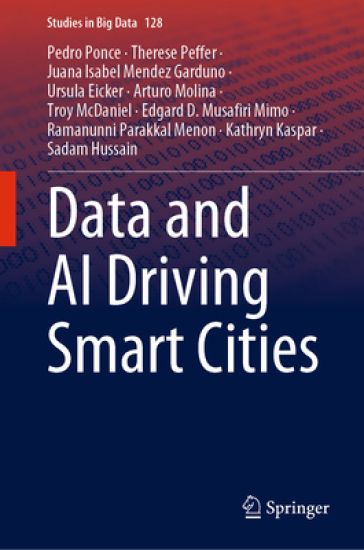
This book illustrates how the advanced technology developed for smart cities requires increasing interaction with citizens to motivate and incentive them. Gamification, serious games, machine learning, dynamic interfaces, and social networks are some elements integrated holistically to provide novel solutions to design and develop smart cities.
This book illustrates how the advanced technology developed for smart cities requires increasing interaction with citizens to motivate and incentive them. Megacities' needs have been encouraging for the creation of smart cities in which the needs of inhabitants are collected using virtualization and digitalization systems. On the other hand, machine learning algorithms have been implemented to provide better solutions for diverse areas in smart cities, such as transportation and health. Besides, conventional electric grids have transformed into smart grids, improving energy quality. Gamification, serious games, machine learning, dynamic interfaces, and social networks are some elements integrated holistically to provide novel solutions to design and develop smart cities. Also, this book presents in a friendly way the concept of social devices that are incorporated into smart homes and buildings. This book is used to understand and design smart cities where citizens are strongly interconnected so the demand response time can be reduced.
Die 2. Auflage wurde vollständig überarbeitet, aktualisiert und um zahlreiche Praxisbeispiele ergänzt." Ursula Eicker ist ... ein äußerst fundierter und interessanter theoretischer Rundumschlag quer durch alle Solarfachrichtungen gelungen... Das Buch gehört in jede Hochschulbibliothek, ist aber auch für entsprechende Ingenieur- und Planungsbüros zu empfehlen." Sonnenenergie, Dt. Ges. Sonnenenergie e. V., München
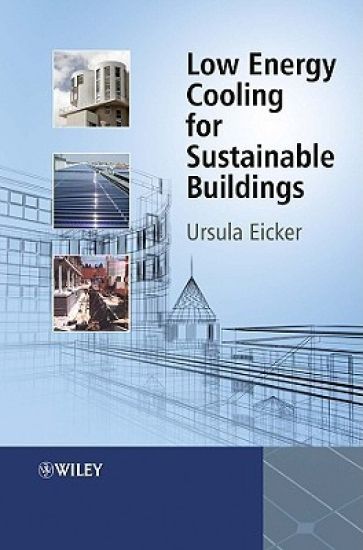
This long-awaited reference guide provides a complete overview of low energy cooling systems for buildings, covering a wide range of existing and emerging sustainable energy technologies in one comprehensive volume. An excellent data source on cooling performance, such as building loads or solar thermal chiller efficiencies, it is essential reading for building services and renewable energy engineers and researchers covering sustainable design. The book is unique in including a large set of experimental results from years of monitoring actual building and energy plants, as well as detailed laboratory and simulation analyses. These demonstrate which systems really work in buildings, what the real costs are and how operation can be optimized – crucial information for planners, builders and architects to gain confidence in applying new technologies in the building sector. Inside you will find valuable insights into: the energy demand of residential and office buildings;facades and summer performance of buildings;passive cooling strategies;geothermal cooling;active thermal cooling technologies, including absorption cooling, desiccant cooling and new developments in low power chillers;sustainable building operation using simulation. Supporting case study material makes this a useful text for senior undergraduate students on renewable and sustainable energy courses. Practical and informative, it is the best up-to-date volume on the important and rapidly growing area of cooling.
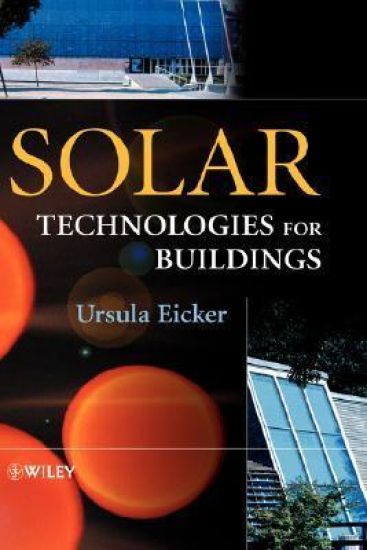
Solar technologies are emerging as the sustainable technology of choice for those commissioning new buildings. Integrated photovoltaics offer huge potential for delivering renewable energy without generating harmful pollutants. Discussing current market conditions and the economics of this technology, the author balances the physics and engineering background of solar heating, cooling and building integrated photovoltaics with practical applications. A complete overview of solar technologies relevant to the built environment, this book *Explains how to integrate solar technology into building design concepts. *Outlines the use of passive solar energy for daylighting and heating supply. *Discusses solar thermal energy for heating and cooling as well as photovolatics for electricity production. *Presents the meteorological background to irradiance calculations. *Provides engineering planning aids for innovative energy supply systems. *Contains practical examples and calculation methods to enable component and system simulation. Solar Technologies for Buildings is an excellent reference for scientists, engineers, planners, researchers and students, involved in developing solar energy systems. Architects integrating solar technologies in building design will find this application-orientated approach useful.