Kirjojen hintavertailu – 12 859 829 kirjaa ja 27 kauppaa

Kirjailija

Usha Raman

Kirjat ja teokset yhdessä paikassa: 5 kirjaa, julkaisuja vuosilta 2015–2025, suosituimpiin kuuluu Ripples Roping Memories. Vertaile teosten hintoja ja tarkista saatavuus suomalaisista kirjakaupoista.

5 kirjaa

Kirjojen julkaisuvuodet: 2015–2025.

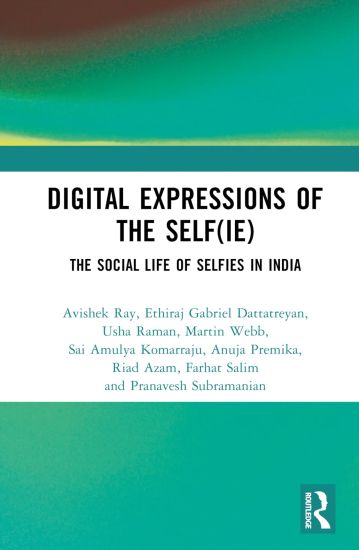
Digital Expressions of the Self(ie)

Digital Expressions of the Self(ie)

Avishek Ray; Ethiraj Gabriel Dattatreyan; Usha Raman; Martin Web; Neha Gupta; Sai Amulya Komarraju; Anuja Premika; Riad Azam; Farhat Salim; Pranavesh Subramanian

TAYLOR FRANCIS LTD
2025
nidottu
The book examines the social and cultural role of selfies in India. It looks at how the selfie, unlike the photograph, which was a gesture towards an external reality, remains intimately self-referential, yet reconfigures social ordering, identity formation, agency, and spaces in curious ways. This volume approaches questions about the construction and performance of the self through the digital selfie and uses this situated, contextualized, and culturally specific phenomenon as a site to explore the themes of self-making, place-making, gender, subjectivity, and power. Highlighting the specific contexts of production, the authors examine the array of self-expressive capabilities realized in a multitude of uses of the selfie that simultaneously reconfigure the self, the space, and the world. An important study of visual social media culture, the volume will be useful for interpreting everyday media experiences and will be of interest to students and researchers of image studies, visual studies, photography studies, visual culture, media studies, culture studies, cultural anthropology, digital humanities, popular culture, sociology of technology, and South Asian studies.
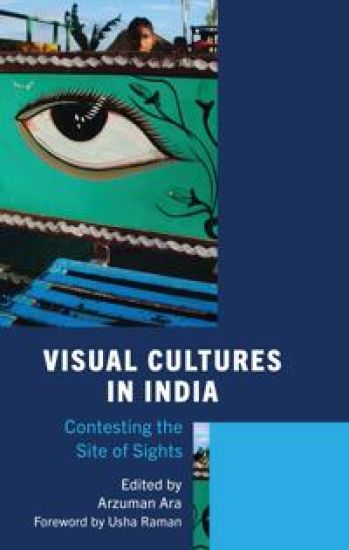
Visual Cultures in India

Visual Cultures in India

Usha Raman

BLOOMSBURY PUBLISHING PLC
2025
sidottu
Visual Cultures in India: Contesting the Sites of Sights delves into our visual experiences through diverse media, while unpacking how we encounter and interpret the visual, moving beyond simple “seeing” to deeper levels of meaning. This book explores our experience of visual media that reveals the complex interplay between sight, meaning, and contestation. The authors delve into the very “sites” where visuals are born, displayed, and interpreted. This nuanced approach sheds light on how visual media shapes our understanding of the world and ourselves. From the captivating world of film and photography to the enduring artistry of sculpture and dance, and even the visual tapestry of everyday life, this book weaves a compelling narrative of the complex relationship between media and visual culture in India. It is a timely and significant contribution in an age saturated with imagery. This book equips scholars, researchers, students, and media professionals with a framework to navigate the power of sight and gain a deeper understanding of visual cultures in India.
Digital Expressions of the Self(ie)

Digital Expressions of the Self(ie)

Avishek Ray; Ethiraj Gabriel Dattatreyan; Usha Raman; Martin Web; Neha Gupta; Sai Amulya Komarraju; Anuja Premika; Riad Azam; Farhat Salim; Pranavesh Subramanian

TAYLOR FRANCIS LTD
2024
sidottu
The book examines the social and cultural role of selfies in India. It looks at how the selfie, unlike the photograph, which was a gesture towards an external reality, remains intimately self-referential, yet reconfigures social ordering, identity formation, agency, and spaces in curious ways. This volume approaches questions about the construction and performance of the self through the digital selfie and uses this situated, contextualized, and culturally specific phenomenon as a site to explore the themes of self-making, place-making, gender, subjectivity, and power. Highlighting the specific contexts of production, the authors examine the array of self-expressive capabilities realized in a multitude of uses of the selfie that simultaneously reconfigure the self, the space, and the world. An important study of visual social media culture, the volume will be useful for interpreting everyday media experiences and will be of interest to students and researchers of image studies, visual studies, photography studies, visual culture, media studies, culture studies, cultural anthropology, digital humanities, popular culture, sociology of technology, and South Asian studies.