Kirjojen hintavertailu – 12 859 819 kirjaa ja 27 kauppaa
Kirjailija
Uwe Küchler
Kirjat ja teokset yhdessä paikassa: 4 kirjaa, julkaisuja vuosilta 1997–2020, suosituimpiin kuuluu Maßtheorie für Statistiker. Vertaile teosten hintoja ja tarkista saatavuus suomalaisista kirjakaupoista.
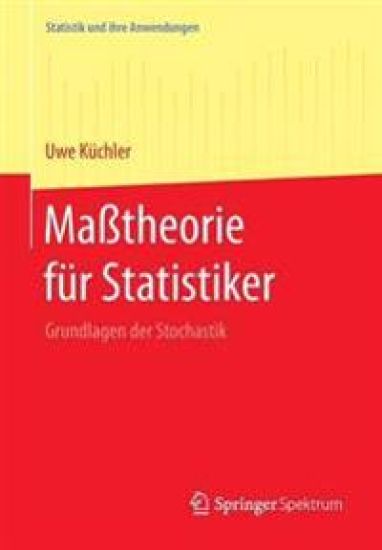
Dieses Buch vermittelt ein solides Grundwissen über Maßtheorie, indem es die wichtigsten Teile derselben in detaillierten, gut nachvollziehbaren Schritten darlegt sowie mit zahlreichen Beispielen verbindet. Viele Übungsaufgaben unterschiedlicher Schwierigkeitsgrade unterstützen dabei das Verständnis des Stoffes. Zur Selbstkontrolle werden im Anhang Lösungen zu sämtlichen Übungsaufgaben angegeben. Anwendungen der Maßtheorie in der Stochastik werden in Kapiteln über bedingte Erwartungen und Likelihood-Funktionen aufgezeigt. Die benötigten Vorkenntnisse sind auf ein Minimum beschränkt, da zu Beginn in übersichtlicher Form notwendige Grundlagen aus Mengenlehre und Theorie der reellen Zahlen wiederholt und vertieft werden.
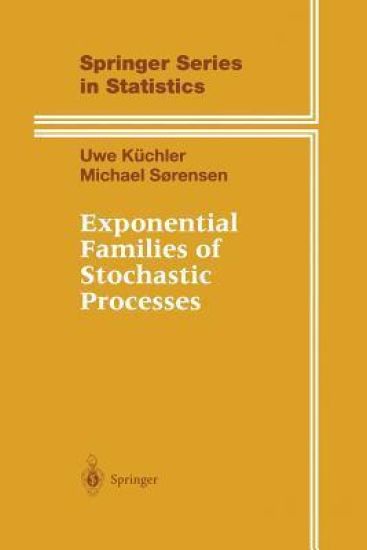
Exponential families of stochastic processes are parametric stochastic p- cess models for which the likelihood function exists at all ?nite times and has an exponential representation where the dimension of the canonical statistic is ?nite and independent of time. This de?nition not only covers manypracticallyimportantstochasticprocessmodels,italsogivesrisetoa rather rich theory. This book aims at showing both aspects of exponential families of stochastic processes. Exponential families of stochastic processes are tractable from an a- lytical as well as a probabilistic point of view. Therefore, and because the theory covers many important models, they form a good starting point for an investigation of the statistics of stochastic processes and cast interesting light on basic inference problems for stochastic processes. Exponential models play a central role in classical statistical theory for independent observations, where it has often turned out to be informative and advantageous to view statistical problems from the general perspective of exponential families rather than studying individually speci?c expon- tial families of probability distributions. The same is true of stochastic process models. Thus several published results on the statistics of parti- lar process models can be presented in a uni?ed way within the framework of exponential families of stochastic processes.
Exponential families of stochastic processes are parametric stochastic p- cess models for which the likelihood function exists at all ?nite times and has an exponential representation where the dimension of the canonical statistic is ?nite and independent of time. This de?nition not only covers manypracticallyimportantstochasticprocessmodels,italsogivesrisetoa rather rich theory. This book aims at showing both aspects of exponential families of stochastic processes. Exponential families of stochastic processes are tractable from an a- lytical as well as a probabilistic point of view. Therefore, and because the theory covers many important models, they form a good starting point for an investigation of the statistics of stochastic processes and cast interesting light on basic inference problems for stochastic processes. Exponential models play a central role in classical statistical theory for independent observations, where it has often turned out to be informative and advantageous to view statistical problems from the general perspective of exponential families rather than studying individually speci?c expon- tial families of probability distributions. The same is true of stochastic process models. Thus several published results on the statistics of parti- lar process models can be presented in a uni?ed way within the framework of exponential families of stochastic processes.