Kirjailija
V. S. Naipaul
Kirjat ja teokset yhdessä paikassa: 90 kirjaa, julkaisuja vuosilta 1988–2026, suosituimpiin kuuluu A Bend in the River. Vertaile teosten hintoja ja tarkista saatavuus suomalaisista kirjakaupoista.
Nimi esiintyy myös muodoissa: V.S. Naipaul, V S Naipaul
90 kirjaa
Kirjojen julkaisuvuodet: 1988–2026.
In V. S. Naipaul's Magic Seeds we follow Willie Chandran, a man who has allowed one identity after another to be thrust upon him. In his early forties, after a peripatetic life, he succumbs to the encouragement of his sister – and his own listlessness – and joins an underground movement in India. But years of revolutionary campaigns and then prison convince him that the revolution ‘had nothing to do with what we were fighting for’, and he feels himself further than ever ‘from his own history’. When he returns to Britain where, thirty years before, his wanderings began, Willie encounters a country that has turned its back on its past and, like him, has become detached from its own history. He endures the indignities of a culture dissipated by reform and compromise until, in a moment of grotesque revelation – a tour de force of parodic savagery from our most visionary of writers – Willie comes to an understanding that might finally allow him to release his true self.‘A radical further step in one of the great imaginative careers of our time . . . Magic Seeds demands our attention, and nothing more authoritative will be published this year’ – Philip Hensher, Daily TelegraphNow part of the Picador Collection, a series showcasing the very best of modern literature.

In Half a Life we are introduced to the compelling figure of Willie Chandran. Springing from the unhappy union of a low-caste mother and a father constantly at odds with life, Willie is naively eager to find something that will place him both in and apart from the world. Drawn to England, and to the immigrant and bohemian communities of post-war London, it is only in his first experience of love that he finally senses the possibility of fulfilment. In its humorous and sensitive vision of the half-lives quietly lived out at the centre of our world, V. S. Naipaul’s graceful novel brings its own unique illumination to essential aspects of our shared history. Now part of the Picador Collection, a series showcasing the very best of modern literature.‘Parts are as sly and funny as anything Naipaul has written. Nobody who enjoys seeing English beautifully controlled should miss this novel’ – John Carey, Sunday Times
In Half a Life we are introduced to the compelling figure of Willie Chandran. Springing from the unhappy union of a low-caste mother and a father constantly at odds with life, Willie is naively eager to find something that will place him both in and apart from the world. Drawn to England, and to the immigrant and bohemian communities of post-war London, it is only in his first experience of love that he finally senses the possibility of fulfilment. In its humorous and sensitive vision of the half-lives quietly lived out at the centre of our world, V. S. Naipaul’s graceful novel brings its own unique illumination to essential aspects of our shared history. ‘Parts are as sly and funny as anything Naipaul has written. Nobody who enjoys seeing English beautifully controlled should miss this novel’ – John Carey, Sunday Times
Moving beyond travelogue, V. S. Naipaul's The Masque of Africa considers the effects of belief (in indigenous animisms, the foreign religions of Christianity and Islam, the cults of leaders and mythical history) upon the progress of African civilization. Beginning in Uganda, at the centre of the continent, Naipaul’s journey takes in Ghana and Nigeria, the Ivory Coast and Gabon, and ends, as the country does, in South Africa. Focusing upon the theme of belief – though sometimes the political or economical realities are so overwhelming that they have to be taken into account – Naipaul examines the fragile but enduring quality of the old world of magic. To witness the ubiquity of such ancient ritual, to be given some idea of its power, was to be taken far back to the beginning of things. To reach that beginning was the purpose of this book.‘The quality of Naipaul’s writing – simple, concise, engaging – rarely varies . . . Above all, Naipaul’s latest African journey is eyewitness reporting at its best’ – TimePart of the Picador Collection, a series celebrating fifty years of Picador books and showcasing the best of modern literature.
‘A devastating work, but proof that a novelist of Naipaul’s stature can often define problems quicker and more effectively than a team of economists and other experts’ – The TimesIn 1964 V. S. Naipaul published An Area of Darkness, his semi-autobiographical account of a year in India. Two visits later, prompted by the Emergency of 1975, he came to write India: A Wounded Civilization. In this work, he casts a more analytical eye than before over Indian attitudes, while recapitulating and further probing the feelings aroused in him by this vast, mysterious, and agonized country. What he saw and heard – evoked so superbly and vividly in these pages – reinforced in him a conviction that India, wounded by a thousand years of foreign rule, had not yet found an ideology of regeneration. A work of fierce candour and precision, it is also a generous description of one man’s complicated relationship with the country of his ancestors. The second book in V. S. Naipaul's acclaimed Indian trilogy, India: A Wounded Civilization follows An Area of Darkness. The series concludes with India: A Million Mutinies Now. Part of the Picador Collection, a series celebrating fifty years of Picador books and showcasing the best of modern literature.
‘This book investigates the Islamic revolution and tries to understand the fundamentalist zeal that has gripped the young in Iran and other Muslim countries . . . He is a modern master.’ – Sunday TimesReissued in the Picador Collection, Among the Believers is V. S. Naipaul’s classic account of his journeys through Iran, Pakistan, Malaysia, and Indonesia. ‘The believers’ are the Muslims he met on those journeys, young men and women battling to regain the original purity of their faith in the hope of restoring order to a chaotic world. It is a uniquely valuable insight into modern Islam and the comforting simplifications of religious fanaticism. Part of the Picador Collection, a series celebrating fifty years of Picador books and showcasing the best of modern literature.‘His travel writing is perhaps the most important body of work of its kind in the second half of the century.’ - Martin Amis, author of Time's Arrow and The Zone of Interest
‘His narrative skill is spectacular. One returns with pleasure to the slow hand-in-hand revelations of both India and himself’ – The TimesAn Area of Darkness is V. S. Naipaul’s semi-autobiographical account of his first visit to India, the land of his forebears. At once painful and hilarious, but always thoughtful and considered. He was twenty-nine years old; he stayed for a year. From the moment of his inauspicious arrival in Prohibition-dry Bombay, bearing whisky and cheap brandy, he experienced a cultural estrangement from the subcontinent. It became for him a land of myths, an area of darkness closing up behind him as he travelled . . . The experience was not a pleasant one, but the pain the author suffered was creative rather than numbing, and engendered a masterful work of literature that is revelatory both of India and of himself: a displaced person who paradoxically possesses a stronger sense of place than almost anyone. Now part of the Picador Collection, a series showcasing the very best of modern literature.
Winner of the Booker Prize 1971 and nominated for the Golden Man Booker Prize in 2018. A young Indian servant in Washington. An Asian West Indian in London. Both are far from home and both are desperately trying to build a new life in a deeply unfamiliar world. In between them lies the landscape of an unnamed country, a brutal place reminiscent of Idi Amin’s Uganda. This central story is about those who once thought of Africa as liberating, but now find themselves in an increasingly harsher reality. Winner of the Booker Prize in 1971, In a Free State is one of Nobel Laureate V. S. Naipaul’s many towering literary achievements. It is a story of the desperation and heartbreak we find in those who are displaced and who try, often in vain, to make a home in their new surroundings. Frightening, disquieting and merciless, this is one of Naipaul’s greatest novels: fraught but full of pity. Part of the Picador Collection, a series showcasing the very best of modern literature.

V. S. Naipaul’s Booker Prize winning novel about displacement, the yearning for the good place in someone else’s land and the attendant heartache. Part of the Macmillan Collector’s Library, a series of stunning, clothbound, pocket-sized classics with gold-foiled edges and ribbon markers. These beautiful books make perfect gifts or a treat for any book lover. This edition is introduced by acclaimed author, Robert McCrum. In a Free State tells the story first of an Indian servant in Washington, who becomes an American citizen but feels displaced. Then of a disturbed Asian West Indian in London who, in jail for murder, has never really known where he is. Then the central novel moves to a fictional African country. There, the central characters have to make the long drive to the safety of their compound. By the end of this drive we know everything about the English characters, the African country and the Idi Amin-like future awaiting it.
An Area of Darkness
V.S. Naipaul
Macmillan Collector's Library
2020
sidottu
Halvin toimitettuna 17,00 €
A classic of modern travel writing, An Area of Darkness is Nobel laureate V. S. Naipaul’s profound reckoning with his ancestral homeland. Part of the Macmillan Collector’s Library; a series of stunning, clothbound, pocket sized classics with gold foiled edges and ribbon markers. These beautiful books make perfect gifts or a treat for any book lover. This edition is introduced by internationally acclaimed author Paul Theroux. Traveling from the bureaucratic morass of Bombay to the ethereal beauty of Kashmir, from a sacred ice cave in the Himalayas to an abandoned temple near Madras, Naipaul encounters a dizzying cross-section of humanity: browbeaten government workers and imperious servants, a suavely self-serving holy man and a deluded American religious seeker. An Area of Darkness also abounds with Naipaul’s strikingly original responses to India’s paralyzing caste system, its acceptance of poverty and squalor, and the conflict between its desire for self-determination and its nostalgia for the British raj. This may be the most elegant and passionate book ever written about the subcontinent.
The Enigma of Arrival
V.S. Naipaul
Macmillan Collector's Library
2020
sidottu
Halvin toimitettuna 18,70 €
Taking its title from the strangely frozen picture by the surrealist painter Giorgio de Chirico, The Enigma of Arrival tells the story of a young Indian from the Caribbean arriving in post-imperial England and consciously, over many years, finding himself as a writer. Part of the Macmillan Collector’s Library, a series of stunning, clothbound, pocket-sized classics with gold-foiled edges and ribbon markers. These beautiful books make perfect gifts or a treat for any book lover. This edition is introduced by Harvard Professor, Maya Jasanoff. The Enigma of Arrival is the story of a journey, from one place to another, from the British colony of Trinidad to the ancient countryside of England, and from one state of mind to another. Finding depth in the smallest moments – the death of a cottager, the firing of an estate’s gardener – V. S. Naipaul also comprehends the bigger picture, as the old world is lost and the English landscape is changed by the march of ‘progress’. This is a moving and beautiful novel told with great dignity, compassion and candour.
'Compelling, insightful, often sombrely beautiful’ Sunday Telegraph Moving beyond travelogue, V. S. Naipaul’s The Masque of Africa considers the effects of belief (in indigenous animisms, the foreign religions of Christianity and Islam, the cults of leaders and mythical history) upon the progress of African civilization. Beginning in Uganda, at the centre of the continent, Naipaul’s journey takes in Ghana and Nigeria, the Ivory Coast and Gabon, and ends, as the country does, in South Africa. Focusing upon the theme of belief – though sometimes the political or economical realities are so overwhelming that they have to be taken into account – Naipaul examines the fragile but enduring quality of the old world of magic. To witness the ubiquity of such ancient ritual, to be given some idea of its power, was to be taken far back to the beginning of things. To reach that beginning was the purpose of this book.
With a preface by the author. V. S. Naipaul's The Mimic Men is a profound, moving and often humorous novel that evokes a colonial man’s experience in the post-colonial world. Born of Indian heritage, raised in the British-dependent Caribbean island of Isabella, and educated in England, forty-year-old Ralph Singh has spent a lifetime struggling against the torment of cultural displacement. Now in exile from his native country, he has taken up residence at a quaint hotel in a London suburb, where he is writing his memoirs in an attempt to impose order on a chaotic existence. His memories lead him to recognize the cultural paradoxes and tainted fantasies of his colonial childhood and later life: his attempts to fit in at school, his short-lived marriage to an ostentatious white woman. But it is the return to Isabella and his subsequent immersion in the roiling political atmosphere of a newly self-governing nation – every kind of racial fantasy taking wing – that ultimately provide Singh with the necessary insight to discover the crux of his disillusionment.‘A Tolstoyan spirit . . . The so-called Third World has produced no more brilliant literary artist’ John Updike, New Yorker
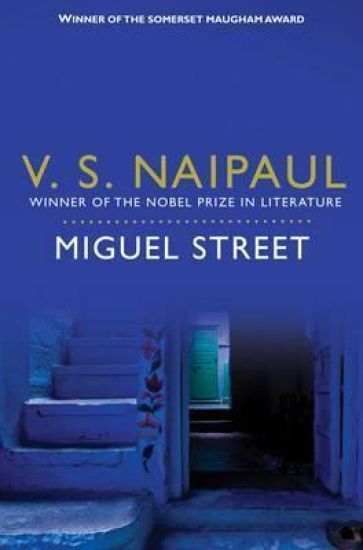
Miguel Street, V. S. Naipaul’s first written work of fiction, is set in a derelict corner of Port of Spain, Trinidad, during World War Two and is narrated by an unnamed, precociously observant neighbourhood boy. We are introduced to a galaxy of characters, from Popo the carpenter, who neglects his livelihood to build ‘the wild thing without a name’, to Man-man, who goes from running for public office to staging his own crucifixion, and the dreaded Big-Foot, the bully with glass tear ducts. As well as the lovely Mrs Hereira, in thrall to her monstrous husband. V. S. Naipaul writes with prescient wisdom and crackling wit about the lives and legends that make up Miguel Street: a living theatre, a world in microcosm, a cacophony of sights, sounds and smells – all seen through the eyes of a fatherless boy. The language, the idioms and the observations are priceless and timeless and Miguel Street overflows with life on every page. This is an astonishing novel about hope, despair, poverty and laughter; and an enchanting and exuberant tribute to V. S. Naipaul’s childhood home.
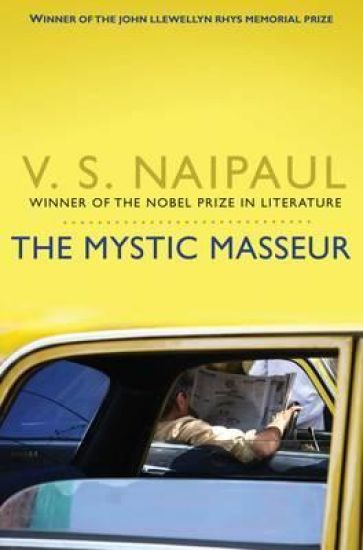
The Mystic Masseur, V. S. Naipaul’s first published novel, is the story of the rise and rise of Ganesh, from failed primary school teacher and struggling masseur to author, revered mystic and MBE – a journey equally memorable for its hilarity as its bewildering success. An unforgettable cast of characters witness this meteoric ascent: Ganesh’s father-in-law, Ramlogan, whose shop gave the impression that ‘every morning someone went over everything in it – scales, Ramlogan, and all – with a greased rag’; his aunt, the Great Belcher, with her troubling wind; his wife Leela, and her fondness for putting a punctuation mark after every word. Soon, Ganesh’s small hut is filled with books (1,500, as his wife will attest), and his trousers and shirt disappear to be replaced by more suitable attire for a proper mystic. As ‘The Woman Who Couldn’t Eat’ and ‘Lover Boy’, the man who fell in love with his bicycle, line up to be cured, it looks like the mystic masseur is surely destined for greatness. In one of the author’s finest comic creations we see the immense sensitivity, humour and endlessly inventive imagination that have become the hallmarks of V. S. Naipaul’s genius.
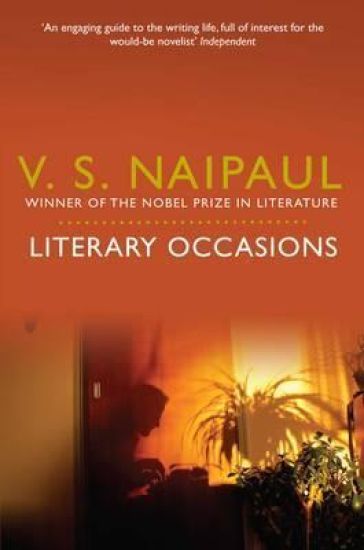
A remarkable companion piece to The Writer and the World, Naipaul’s previous volume of highly acclaimed essays, Literary Occasions is a stirring contribution to the fading art of the critic, and a revelation of a life in letters. In these eleven extended pieces V. S. Naipaul charts more than half a century of personal enquiry into the mysteries of the written word and of fiction in particular. Here are his boyhood experiences of reading books and his first youthful efforts at writing them; the evolution of his ideas about the extent to which individual cultures shape identities and influence literary forms; observations on Conrad, his literary forebear; the moving preface he wrote to the only book his father ever published; and his reflections on his career, ending with his celebrated Nobel lecture, ‘Two Worlds’. ‘He is an exceptionally good and perceptive critic – a few passages on Dickens are worth whole books by others – and when he addresses the art of fiction he not only writes beautifully (as always) but with complete humility’ New Statesman
A Turn in the South is a reflective journey by V. S. Naipaul in the late 1980s through the American South. Naipaul writes of his encounters with politicians, rednecks, farmers, writers and ordinary men and women, both black and white, with the insight and originality we expect from one of our best travel writers. Fascinating and poetic, this is a remarkable book on race, culture and country. ‘Naipaul’s writing is supple and fluid, meticulously crafted, adventurous and quick to surprise. And, as usual, there’s the freshness and originality of his way of looking at things’ Sunday Times ‘Naipaul writes as if a modern oracle has chosen to speak through him. It is a tissue of brilliantly recorded hearsay, of intense listening by a man with a remarkable ear’ New York Times Review of Books ‘This is a journey below the Mason–Dixon line into a society riven by too many defeats; the broken cause of the old Confederacy, and the frustrated anger of Southern blacks whose power is circumscribed . . . It is the best thing outside fiction that I have read on the Old South pregnant with the new since W. J. Cash’s The Mind of the South published over fifty years ago’ Sunday Telegraph
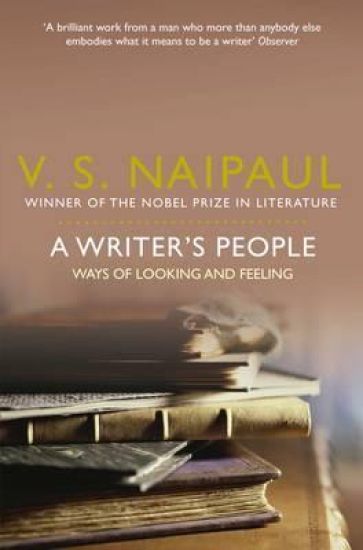
Part meditation, part remembrance, A Writer’s People by V. S. Naipaul is a privileged insight, full of gentleness, humour and feeling, into the mind of one of our greatest writers. For the ‘serious traveller’, one who is fully engaged with the world, there can be no single view. Our author’s purpose, then, ‘is not literary criticism or biography’, but only to set out the writing and ways of seeing to which he was exposed. So here is colonial Trinidad (the early Derek Walcott and Naipaul’s own father); the culture of school (Flaubert and the classical world); England, where with the help of friends the writer seeks to make his way; and, inevitably for a colonial Indian, there is India, to be approached through the residue of Indian culture and the scattered memories of nineteenth-century immigrants, leading to a special understanding of Mahatma Gandhi.