Kirjojen hintavertailu – 12 875 054 kirjaa ja 26 kauppaa

Kirjailija

Vaclav Smil

Kirjat ja teokset yhdessä paikassa: 71 kirjaa, julkaisuja vuosilta 1988–2026, suosituimpiin kuuluu Maakaasu. Vertaile teosten hintoja ja tarkista saatavuus suomalaisista kirjakaupoista.

71 kirjaa

Kirjojen julkaisuvuodet: 1988–2026.

Enriching the Earth

Enriching the Earth

Vaclav Smil

MIT Press
2004
pokkari

Halvin toimitettuna 47,90 €

Dr. Smil is the world's authority on nitrogenous fertilizer. The industrial synthesis of ammonia from nitrogen and hydrogen has been of greater fundamental importance to the modern world than the invention of the airplane, nuclear energy, space flight, or television. The expansion of the world's population from 1.6 billion people in 1900 to today's six billion would not have been possible without the synthesis of ammonia. In Enriching the Earth, Vaclav Smil begins with a discussion of nitrogen's unique status in the biosphere, its role in crop production, and traditional means of supplying the nutrient. He then looks at various attempts to expand natural nitrogen flows through mineral and synthetic fertilizers. The core of the book is a detailed narrative of the discovery of ammonia synthesis by Fritz Haber-a discovery scientists had sought for over one hundred years-and its commercialization by Carl Bosch and the chemical company BASF. Smil also examines the emergence of the large-scale nitrogen fertilizer industry and analyzes the extent of global dependence on the Haber-Bosch process and its biospheric consequences. Finally, it looks at the role of nitrogen in civilization and, in a sad coda, describes the lives of Fritz Haber and Carl Bosch after the discovery of ammonia synthesis.
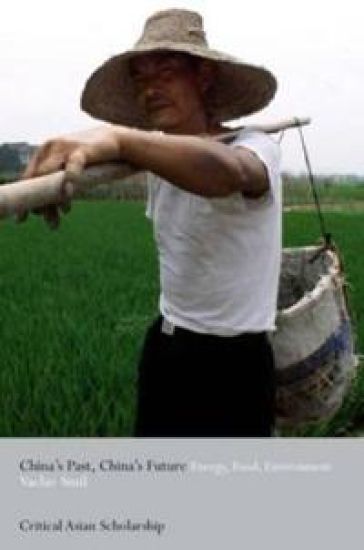
China's Past, China's Future

China's Past, China's Future

Vaclav Smil

Routledge
2003
nidottu
China has a population of 1.3 billion people which puts strain on her natural resources. This volume, by one of the leading scholars on the earth's biosphere, is the result of a lifetime of study, and provides the fullest account yet of the environmental challenges that China faces. The author examines China's energy resources, their uses, impacts and prospects, from the 1970s oil crisis to the present day, before analysing the key question of how China can best produce enough food to feed its enormous population.
China's Past, China's Future

China's Past, China's Future

Vaclav Smil

Routledge
2003
sidottu
China has a population of 1.3 billion people which puts strain on her natural resources. This volume, by one of the leading scholars on the earth's biosphere, is the result of a lifetime of study, and provides the fullest account yet of the environmental challenges that China faces. The author examines China's energy resources, their uses, impacts and prospects, from the 1970s oil crisis to the present day, before analysing the key question of how China can best produce enough food to feed its enormous population.
The Earth's Biosphere

The Earth's Biosphere

Vaclav Smil

MIT Press
2003
pokkari
A comprehensive overview of Earth's biosphere, written with scientific rigor and essay-like flair. In his latest book, Vaclav Smil tells the story of the Earth's biosphere from its origins to its near and long-term future. He explains the workings of its parts and what is known about their interactions. With essay-like flair, he examines the biosphere's physics, chemistry, biology, geology, oceanography, energy, climatology, and ecology, as well as the changes caused by human activity. He provides both the basics of the story and surprising asides illustrating critical but often neglected aspects of biospheric complexity. Smil begins with a history of the modern idea of the biosphere, focusing on the development of the concept by Russian scientist Vladimir Vernadsky. He explores the probability of life elsewhere in the universe, life's evolution and metabolism, and the biosphere's extent, mass, productivity, and grand-scale organization. Smil offers fresh approaches to such well-known phenomena as solar radiation and plate tectonics and introduces lesser-known topics such as the quarter-power scaling of animal and plant metabolism across body sizes and metabolic pathways. He also examines two sets of fundamental relationships that have profoundly influenced the evolution of life and the persistence of the biosphere: symbiosis and the role of life's complexity as a determinant of biomass productivity and resilience. And he voices concern about the future course of human-caused global environmental change, which could compromise the biosphere's integrity and threaten the survival of modern civilization.
Feeding the World

Feeding the World

Vaclav Smil

MIT Press
2001
pokkari
A realistic yet encouraging look at how society can change in ways that will allow us to feed an expanding global population. This book addresses the question of how we can best feed the ten billion or so people who will likely inhabit the Earth by the middle of the twenty-first century. He asks whether human ingenuity can produce enough food to support healthy and vigorous lives for all these people without irreparably damaging the integrity of the biosphere. What makes this book different from other books on the world food situation is its consideration of the complete food cycle, from agriculture to post-harvest losses and processing to eating and discarding. Taking a scientific approach, Smil espouses neither the catastrophic view that widespread starvation is imminent nor the cornucopian view that welcomes large population increases as the source of endless human inventiveness. He shows how we can make more effective use of current resources and suggests that if we increase farming efficiency, reduce waste, and transform our diets, future needs may not be as great as we anticipate. Smil's message is that the prospects may not be as bright as we would like, but the outlook is hardly disheartening. Although inaction, late action, or misplaced emphasis may bring future troubles, we have the tools to steer a more efficient course. There are no insurmountable biophysical reasons we cannot feed humanity in the decades to come while easing the burden that modern agriculture puts on the biosphere.
Energies

Energies

Vaclav Smil

MIT Press
2000
pokkari
Energy is the only universal currency. One of its many forms must be transformed into another in order for stars to shine, planets to rotate, living things to grow, and civilizations to evolve. Recognition of this universality was one of the great achievements of nineteenth-century science, yet even today there is little literature that tries to view the world broadly through the prism of energy. In this highly original book, ecologist Vaclav Smil takes the principle of universality seriously, presenting a comprehensive and integrated survey of all the forms of energy that shape our world, from the sun to the human body, from bread to microchips. Written in a scientifically sophisticated yet accessible style, Energies consists of eighty-two short essays organized under six headings: Sun and Earth, Plants and Animals, People and Food, Preindustrial Societies, Fossil-Fueled Civilization, and Motion and Information. Each essay explains the science of the energy form as well as its implications for the functioning of the universe, life, or human society. Cross-links and summary diagrams allow easy comparisons among the various levels and flows of energy.
Global Ecology

Global Ecology

Vaclav Smil

Routledge
1993
sidottu
The magnitude and rapidity of global environmental change threatens the perpetuation of life on Earth. Many aspects of this crisis are familiar to us - the destruction of tropical rainforests, the hole in the Antarctic ozone, desertification, soil erosion - yet we avoid the underlying challenge of a rapidly deteriorating ecological system and the breadth and complexity of responses demanded. Integrating an analysis of both social and environmental needs, the book explores the premises and problems of different paths towards global management. With its emphasis on flexible response, Global Ecology furthers our understanding of biospheric change and of our abilities and weaknesses in managing the transition to a sustainable society.
Global Ecology

Global Ecology

Vaclav Smil

Routledge
1993
nidottu
The magnitude and rapidity of global environmental change threatens the perpetuation of life on Earth. Many aspects of this crisis are familiar to us - the destruction of tropical rainforests, the hole in the Antarctic ozone, desertification, soil erosion - yet we avoid the underlying challenge of a rapidly deteriorating ecological system and the breadth and complexity of responses demanded. Integrating an analysis of both social and environmental needs, the book explores the premises and problems of different paths towards global management. With its emphasis on flexible response, Global Ecology furthers our understanding of biospheric change and of our abilities and weaknesses in managing the transition to a sustainable society.
China's Environmental Crisis: An Enquiry into the Limits of National Development
In 1982, Vaclav Smil turned upside down traditional perceptions of China as a green paradise in "The Bad Earth", a disturbing book. This new volume, drawn on a much broader canvas, updates and expands on the basic arguments and perceptions of "The Bad Earth". This book is not a systematic litany of what went wrong and how much - but rather an inquiry into the fundamental factors, needs, prospects, and limits of modern Chinese society, all seen through the critical environmental constraints and impacts.
Energy in China's Modernization

Energy in China's Modernization

Vaclav Smil

M.E. Sharpe
1988
sidottu
A selection of 50 Slovak folk tales assembled from the collections of folklorist Pavol Dobsinsky. The translator seeks to preserve the poetic qualities of the originals, and the book includes an introduction to the genres of the folktale and the specifics of Slovak tales.