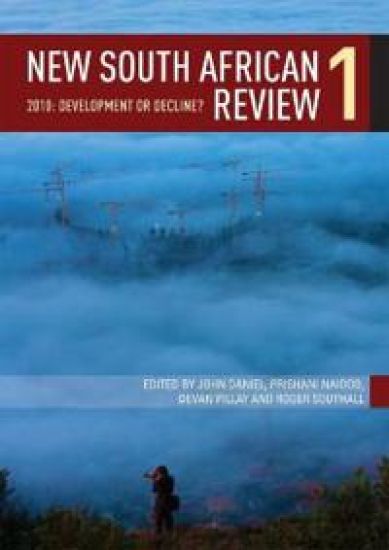
New South African Review 1
Atkinson Doreen; David Bruce; Butler Anthony; Scarlett Cornelisson; John Daniel; Graham Gibbon; Gordin Jeremy; Colin Hoag; Kariuki Samuel; Zosa de Sas Kropiwnicki; Loren Landau; Lizle Loots; Kezia Lewins; Makgetla Neva; Marais Hein; Seeraj Mohamed; Mike Muller; Kammila Naidoo; Naidoo Prishani; Pillay Devan; Tara Polzer; Schoeman Maxi; Aurelia Wa Kabwe-Segatti; Selikow Terry-Ann; Louis Reynolds; Southall Roger; Swilling Mark; Vale Peter
Wits University Press
2010
nidottu
Reviving the tradition of critical, analytical scholarship developed by the 1970s and 1980s editions of the South African review, this first volume of the New South African review offers a collection of original surveys of key issues and problems confronting post-apartheid South Africa. Written by a team of engaged social scientists and based often on new research, the volume ranges widely across the implications of the international crisis for the economy, the threats to our fragile ecology of present economic strategies, through to the state of the ANC and the public service, issues around service delivery, migration, HIV/AIDS, land reform, crime, the sexual behavior of our youth, and much more. Posing the provocative question of whether South Africa is embarking upon a long-term decline, the volume simultaneously argues the potential for a society premised upon social equality, social coherence and sustainability. This collection will appeal to a wide audience, national and international, interested in engaging with the multiple dilemmas and challenges facing contemporary South Africa.