Kirjojen hintavertailu – 12 903 725 kirjaa ja 27 kauppaa

Kirjailija

Valentin Tomberg

Kirjat ja teokset yhdessä paikassa: 30 kirjaa, julkaisuja vuosilta 1992–2026, suosituimpiin kuuluu Kristus och Sofia : Del lll Apokalypsen Esoteriska Meditationer. Vertaile teosten hintoja ja tarkista saatavuus suomalaisista kirjakaupoista.

30 kirjaa

Kirjojen julkaisuvuodet: 1992–2026.

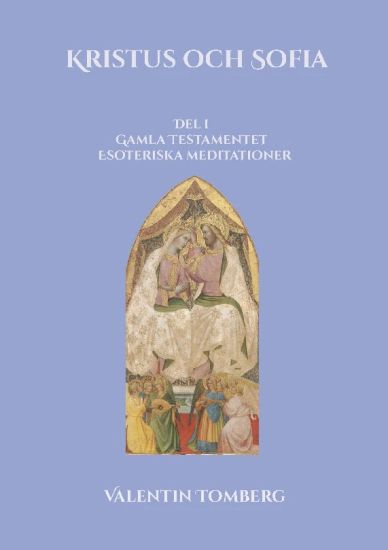
Kristus och Sofia : Del l  Gamla Testamentet  Esoteriska meditationer
Den esoteriske estniske författaren till "Tarotmeditationer", Valentin Tomberg, skrev Kristus och Sofia på 30-talet. Han var starkt påverkad av den ryske ekumeniske sofiologen Vladimir Soloviev och hans "Ecclesia Universalis". Tomberg kallade sig "supra konfessionell". Han döptes i den lutherska kyrkan i St. Petersburg, gick in i den grekisk-ortodoxa kyrkan på 30-talet, var medlem i antroposofiska sällskapet, och hamnade slutligen i katolska kyrkan, där han skrev "Tarotmeditationer", prisad av den tyske katolske filosofen Robert Spaemann och påverkad av den katolske prästen Pierre Teilhard de Chardin. Valentin Tomberg talar om två treenigheter: Faderns, Sonen och den Helige Ande samt Modern, Dottern och den Heliga Själen. I samband med Kristi återkomst i det eteriska, skrev han ModerVår-bönen, liksom FaderVår-bönen också i sju steg, I sitt första stora verk, som han skrev under sin antroposofiska period, här utgiven som en trilogi med namnet "Kristus och Sofia" behandlar han mänsklighetens historiska utveckling och förberedelse i "Del l Gamla Testamentet" inför själva Golgata mysteriet i "Del ll Nya Testamentet" och därefter dess fortsatta öde långt in i framtiden i "Del lll Apokalypsen". När man tränat in sig i Tombergs meditations form, begrepp och tankespår i Gamla Testamentet blir det allt lättare att ta till sig både Nya Testamentet och Apokalypsen dvs vår framtid, den som redan har börjat. Han beskriver utförligt, via bibliska arketyper, hur människans individuella utveckling följer denna väg steg för steg. Den Gudomligt Feminina aspekten betonas i alla tre delar fram emot en sakta framväxande framtida ny mänskligare kultur i balans med teknologi och naturens väsen. En biografi över Valentin Tomberg (1900-1973) har skrivits av den holländske kulturfilosofen Harry Salman, "Valentin Tomberg and the Ecclesia Universalis".
Kristus och Sofia : Del ll  Nya Testamentet Esoteriska meditationer
Den esoteriske estniske författaren till "Tarotmeditationer", Valentin Tomberg, skrev Kristus och Sofia på 30-talet. Han var starkt påverkad av den ryske ekumeniske sofiologen Vladimir Soloviev och hans "Ecclesia Universalis". Tomberg kallade sig "supra konfessionell". Han döptes i den lutherska kyrkan i St. Petersburg, gick in i den grekisk-ortodoxa kyrkan på 30-talet, var medlem i antroposofiska sällskapet, och hamnade slutligen i katolska kyrkan, där han skrev "Tarotmeditationer", prisad av den tyske katolske filosofen Robert Spaemann och påverkad av den katolske prästen Pierre Teilhard de Chardin. Valentin Tomberg talar om två treenigheter: Faderns, Sonen och den Helige Ande samt Modern, Dottern och den Heliga Själen. I samband med Kristi återkomst i det eteriska, skrev han ModerVår-bönen, liksom FaderVår-bönen också i sju steg, I sitt första stora verk, som han skrev under sin antroposofiska period, här utgiven som en trilogi med namnet "Kristus och Sofia" behandlar han mänsklighetens historiska utveckling och förberedelse i "Del l Gamla Testamentet" inför själva Golgata mysteriet i "Del ll Nya Testamentet" och därefter dess fortsatta öde långt in i framtiden i "Del lll Apokalypsen". När man tränat in sig i Tombergs meditations form, begrepp och tankespår i Gamla Testamentet blir det allt lättare att ta till sig både Nya Testamentet och Apokalypsen dvs vår framtid, den som redan har börjat. Han beskriver utförligt, via bibliska arketyper, hur människans individuella utveckling följer denna väg steg för steg. Den Gudomligt Feminina aspekten betonas i alla tre delar fram emot en sakta framväxande framtida ny mänskligare kultur i balans med teknologi och naturens väsen. En biografi över Valentin Tomberg (1900-1973) har skrivits av den holländske kulturfilosofen Harry Salman, "Valentin Tomberg and the Ecclesia Universalis".
Kristus och Sofia : Del lll Apokalypsen Esoteriska Meditationer
Den esoteriske estniske författaren till "Tarotmeditationer", Valentin Tomberg, skrev Kristus och Sofia på 30-talet. Han var starkt påverkad av den ryske ekumeniske sofiologen Vladimir Soloviev och hans "Ecclesia Universalis". Tomberg kallade sig "supra konfessionell". Han döptes i den lutherska kyrkan i St. Petersburg, gick in i den grekisk-ortodoxa kyrkan på 30-talet, var medlem i antroposofiska sällskapet, och hamnade slutligen i katolska kyrkan, där han skrev "Tarotmeditationer", prisad av den tyske katolske filosofen Robert Spaemann och påverkad av den katolske prästen Pierre Teilhard de Chardin. Valentin Tomberg talar om två treenigheter: Faderns, Sonen och den Helige Ande samt Modern, Dottern och den Heliga Själen. I samband med Kristi återkomst i det eteriska, skrev han ModerVår-bönen, liksom FaderVår-bönen också i sju steg, I sitt första stora verk, som han skrev under sin antroposofiska period, här utgiven som en trilogi med namnet "Kristus och Sofia" behandlar han mänsklighetens historiska utveckling och förberedelse i "Del l Gamla Testamentet" inför själva Golgata mysteriet i "Del ll Nya Testamentet" och därefter dess fortsatta öde långt in i framtiden i "Del lll Apokalypsen". När man tränat in sig i Tombergs meditations form, begrepp och tankespår i Gamla Testamentet blir det allt lättare att ta till sig både Nya Testamentet och Apokalypsen dvs vår framtid, den som redan har börjat. Han beskriver utförligt, via bibliska arketyper, hur människans individuella utveckling följer denna väg steg för steg. Den Gudomligt Feminina aspekten betonas i alla tre delar fram emot en sakta framväxande framtida ny mänskligare kultur i balans med teknologi och naturens väsen. En biografi över Valentin Tomberg (1900-1973) har skrivits av den holländske kulturfilosofen Harry Salman, "Valentin Tomberg and the Ecclesia Universalis".
Studier av Grundstensmeditationen
Under jordens och mänsklighetens andliga utveckling samarbetar mänsklighetens lärare för att förverkliga andliga uppgifter till gagn för mänskligheten. Ett exempel på ett sådant samarbete presenteras för oss i denna bok. Här handlar det om ett samarbete mellan två stora andliga mänsklighetslärare under nittonhundratalet: Rudolf Steiner (1861-1925) och Valentin Tomberg (1900-1973). Varje mening i Tombergs studier av den Grundstensmeditation som gavs av Rudolf Steiner Juldagen år 1923 leder läsaren in i det storslagna mysteriet av mänsklighetens andliga uppvaknande genom Kristus närvaro i det eteriska i vår tid. Detta verk är en av de stora skatterna i mänsklighetens andliga litteratur, och bör förstås som en handbok till upplysning, att meditativt arbeta med, om och om igen.
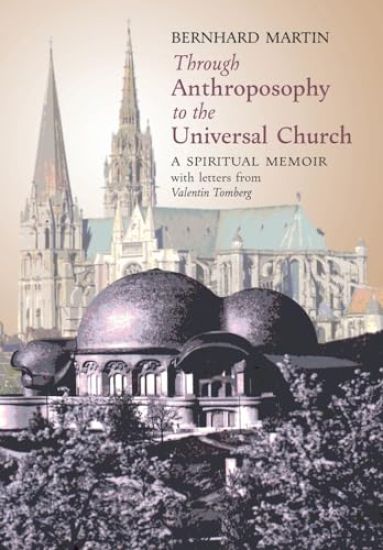
Through Anthroposophy to the Universal Church

Through Anthroposophy to the Universal Church

Bernhard Martin; Valentin Tomberg

Angelico Press
2023
sidottu
Bernhard Martin (1900-1985) grew up Germany in what he calls the "ungodly" age of the First World War and the post-war crisis. Raised a lukewarm Protestant, in secondary school he came to feel disconnected from spiritual life. He made forays into the academic world, but in the end felt himself a "poor fool" with no notion what to do in life. This crisis led to several years at a sanitarium. After returning to university, a friend introduced him to the Anthroposophy of Rudolf Steiner and the "Christian Community," a movement for religious renewal founded under Steiner's inspiration. These perspectives rescued him from his crisis and led to a strong recovery in soul and spirit. Between 1942 and 1944, Martin encountered the writings, then the person, of the Christian esotericist Valentin Tomberg (1900-1973), which led to an enduring friendship during which Tomberg introduced him to the spirituality of the Catholic Church. In 1946, Martin converted to the Catholicism; but, in contrast to Tomberg, elected to remain connected with the Anthroposophical Movement until the end of his life. This book tells the gripping tale of that journey." A work of moral genius... Its true tolerance (i.e., an understanding unsullied by fear or hatred) of the 'heresies' of the modern age, and its confidence that Catholic Christianity is a 'powerful competitor' able to fully engage with all the intellectual trends of the present, offers intimate insight into just how it can be that 'all roads lead to Rome.' I most prize in the book the unconquerable weapon of modesty and honesty... It fills a gap I had perhaps once thought it my duty to fill-and now it has been done in a way I could have striven for, but never attained."-Valentin Tomberg, author of Lazarus: The Miracle of Resurrection in World History"The German edition of this book had a deep resonance in Catholic and Anthroposophical circles. It contains a uniquely thoughtful and conscientious discussion of two spiritual paths that, according to its author, require mutual understanding."-Harrie Salman PhD, author of Valentin Tomberg and the Ecclesia Universalis: A Biography"Moving from mainstream (if somewhat uninspired) Protestant Christian to Anthroposophist to devoted Catholic, Bernhard Martin's tale is that of a spiritual seeker, hungry for Christian truth, who interprets his path with moral and intellectual scrupulousness. Through his encounters with Valentin Tomberg, Martin found a fellow-traveler, and in due course, a home in the traditions of the Roman Church."-Michael Martin, author of Sophia in Exile, The Submerged Reality, etc.
Through Anthroposophy to the Universal Church

Through Anthroposophy to the Universal Church

Bernhard Martin; Valentin Tomberg

Angelico Press
2023
pokkari
Bernhard Martin (1900-1985) grew up Germany in what he calls the "ungodly" age of the First World War and the post-war crisis. Raised a lukewarm Protestant, in secondary school he came to feel disconnected from spiritual life. He made forays into the academic world, but in the end felt himself a "poor fool" with no notion what to do in life. This crisis led to several years at a sanitarium. After returning to university, a friend introduced him to the Anthroposophy of Rudolf Steiner and the "Christian Community," a movement for religious renewal founded under Steiner's inspiration. These perspectives rescued him from his crisis and led to a strong recovery in soul and spirit. Between 1942 and 1944, Martin encountered the writings, then the person, of the Christian esotericist Valentin Tomberg (1900-1973), which led to an enduring friendship during which Tomberg introduced him to the spirituality of the Catholic Church. In 1946, Martin converted to the Catholicism; but, in contrast to Tomberg, elected to remain connected with the Anthroposophical Movement until the end of his life. This book tells the gripping tale of that journey." A work of moral genius... Its true tolerance (i.e., an understanding unsullied by fear or hatred) of the 'heresies' of the modern age, and its confidence that Catholic Christianity is a 'powerful competitor' able to fully engage with all the intellectual trends of the present, offers intimate insight into just how it can be that 'all roads lead to Rome.' I most prize in the book the unconquerable weapon of modesty and honesty... It fills a gap I had perhaps once thought it my duty to fill-and now it has been done in a way I could have striven for, but never attained."-Valentin Tomberg, author of Lazarus: The Miracle of Resurrection in World History"The German edition of this book had a deep resonance in Catholic and Anthroposophical circles. It contains a uniquely thoughtful and conscientious discussion of two spiritual paths that, according to its author, require mutual understanding."-Harrie Salman PhD, author of Valentin Tomberg and the Ecclesia Universalis: A Biography"Moving from mainstream (if somewhat uninspired) Protestant Christian to Anthroposophist to devoted Catholic, Bernhard Martin's tale is that of a spiritual seeker, hungry for Christian truth, who interprets his path with moral and intellectual scrupulousness. Through his encounters with Valentin Tomberg, Martin found a fellow-traveler, and in due course, a home in the traditions of the Roman Church."-Michael Martin, author of Sophia in Exile, The Submerged Reality, etc.
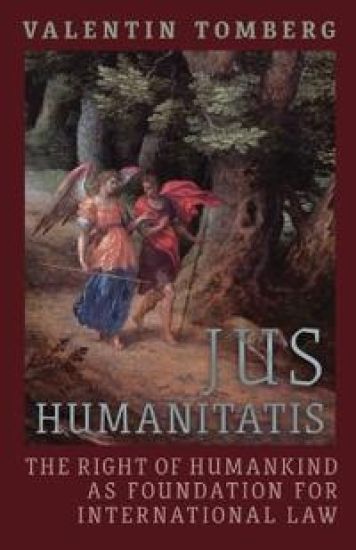
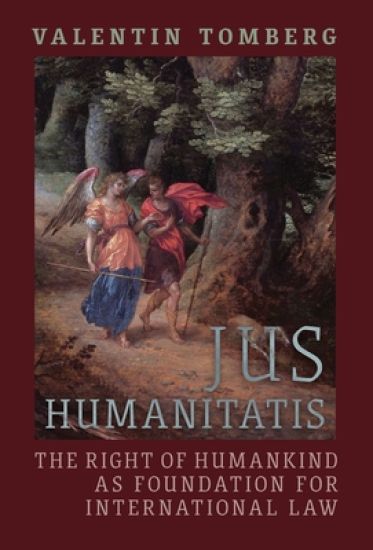
Jus Humanitatis

Jus Humanitatis

Valentin Tomberg

Angelico Press
2023
pokkari
At the beginning of 1944, Valentin Tomberg (1900-1973), best-known at the time for his Christological works, moved to Cologne at the invitation of legal scholar Ernst von Hippel, and that same year was awarded the title of Doctor of Law for his dissertation, published by Angelico Press as The Art of the Good: On the Regeneration of Fallen Justice. Tomberg had come to regard the modern path away from a natural law founded upon religion and towards a legal positivism oriented towards power as a degeneration of the different levels of law, a "fall" he sought to reverse in the direction of regeneration. In his second jurisprudential work, here published as Jus Humanitatis: The Right of Humankind as Foundation for International Law, Tomberg presents the history of international law more broadly in such a way that it can serve the peaceful coexistence of all nations on earth. Invoking Thomistic terms, he presents the step-by-step dismantling of the edifice of law as the eclipse of the lex divina and lex naturalis in the so-called "law of nations" or international law-to the point that the higher vocation of international law came to be understood as nothing more than a legitimizing of absolute power, which then led to the modern totalitarian state. In this inspired text, Tomberg equips us to set about reversing this degradation and establishing the right or law of humankind as foundation for international law." In Tomberg's eyes, the human catastrophe of the Second World War was a consequence of the degeneration of jurisprudence that had begun in the medieval controversy between Realism and Nominalism, continued in the Renaissance and Early Modern period, led to the European revolutions, and culminated in the modern totalitarian state. In the present text, he sought passionately to contribute to a regeneration of jurisprudence."-Michael Frensch, author of Weisheit in Person, Die Wiederkunft Christi, etc." In this book, written amid the final devastations of WWII, Valentin Tomberg, who along with some other German jurists was regarded as a leading representative of the idea of natural law, defended the position that international law-which he conceived as the right or law of humankind as a whole-had to stand above the law of states. For him, this meant that external intervention is justified when international law is violated." -Harrie Salman, author of Valentin Tomberg and the Ecclesia Universalis"Valentin Tomberg penned this great treatise on international law literally in the ruins of World War II, and one can sense his fear that we may have learned nothing from the horrific conflict. Here Tomberg traces what he calls Hitler's 'spiritual family tree' (which is essentially legal positivism), making the compelling case that only when divine law and natural law are restored to their place above a robust international law, will the international order remain stable and peaceful. Subsequent history has sadly proven his thesis to have been correct."-Brian M. McCall, Editor-in-Chief, Catholic Family News
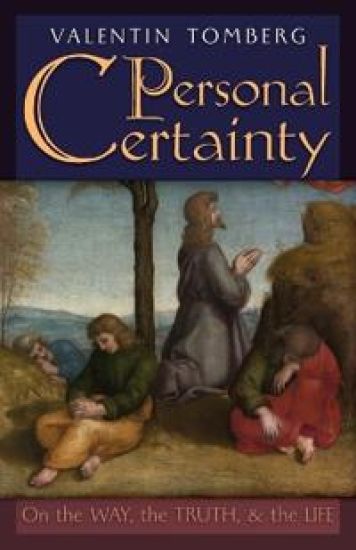
Personal Certainty

Personal Certainty

Valentin Tomberg

Angelico Press
2023
pokkari
On the Feast of the Assumption in 1956, Valentin Tomberg began to work on the hitherto unpublished text which is set before the reader in this book. Written in the second half of his life (a decade or so following his conversion to Catholicism), this text documents an essential, transitional stage in the development of his work. Here Tomberg gives an account of how far, and in what way, he might be truly certain of matters pertaining to the great questions humanity faces. He wanted to discover and set out the method by means of which other seekers might also arrive at authentic certainty regarding the great questions. Personal Certainty strikes me as a work of astonishing maturity, humility, texture, and insight. It maps the human-making curriculum required of and inhabited by a specific writer of consummate merit and unique destiny. Tomberg consistently moved forward-evolved-through internal and external experience of war and upheaval, turbulence and concentration, migration and choice, ideals and possibilities, hope and disappointment, truth and deception, strength and fragility, hypocrisy and integrity. Most of all, he was able to share intimately regarding the mystery of prayer, meditation, contemplation, liturgy, the rosary, while reflecting upon the communion of saints, the Risen Christ, Mary and all that is Sophianic, and more. As his perspectives widened and deepened, Certainty traces how and why new capacities rooted and were liberated in his life and how he sustained human, intellectual, psychological, and spiritual growth. In tracing how he learned to diagnose personal error, how he learned to change, how he found the courage to reconsider his personal religious commitment, how he learned to re-adjust and self-correct, we learn of the consciousness required to actually inhabit and shoulder freedom in a new and living way. Were he here today, he would face similar difficulties, requiring other conscious and costly "free" decisions, each heroic, valoric, and loving. Since history has labeled this the post-truth era, the testimony of one man's Personal Certainty could not be more urgently needed. As such, it is sacred medicine. -Therese Schroeder-Sheker, Chalice of Repose Project In his late work, Valentin Tomberg makes much clearer the relationship of his orthodox Christian esotericism to ancient and modern philosophical traditions. Somewhat like Vladimir Solovyov, he points to the paradox of invisible explanation of visible experience as something that unites science with religion. Out of this insight he develops a symbolist metaphysics that refuses any sundering of the personal from the cosmological, albeit in a distinctly post-Kantian fashion. No one concerned with philosophical theology should ignore this attempt at a rather more speculative Grammar of Assent-John Milbank, author of The Future of Love: Essays in Political Theology, etc. In Tomberg's view, personal certainty is not a science. It is wisdom, which for him is not compelled by "proofs" but is born and grows in the soil of freedom. Wisdom shows itself to be true in the course of life: it is not a matter of firmly circumscribed concepts, but of growth, achieved by what he called the "total method," which leads to the symbol. We find this emphasis on the symbol vastly expanded in the author's later, magisterial Meditations on the Tarot, now considered one of the classic spiritual texts of the twentieth century.-Michael Frensch, author of Weisheit in Person
Personal Certainty

Personal Certainty

Valentin Tomberg

Angelico Press
2023
sidottu
On the Feast of the Assumption in 1956, Valentin Tomberg began to work on the hitherto unpublished text which is set before the reader in this book. Written in the second half of his life (a decade or so following his conversion to Catholicism), this text documents an essential, transitional stage in the development of his work. Here Tomberg gives an account of how far, and in what way, he might be truly certain of matters pertaining to the great questions humanity faces. He wanted to discover and set out the method by means of which other seekers might also arrive at authentic certainty regarding the great questions. Personal Certainty strikes me as a work of astonishing maturity, humility, texture, and insight. It maps the human-making curriculum required of and inhabited by a specific writer of consummate merit and unique destiny. Tomberg consistently moved forward-evolved-through internal and external experience of war and upheaval, turbulence and concentration, migration and choice, ideals and possibilities, hope and disappointment, truth and deception, strength and fragility, hypocrisy and integrity. Most of all, he was able to share intimately regarding the mystery of prayer, meditation, contemplation, liturgy, the rosary, while reflecting upon the communion of saints, the Risen Christ, Mary and all that is Sophianic, and more. As his perspectives widened and deepened, Certainty traces how and why new capacities rooted and were liberated in his life and how he sustained human, intellectual, psychological, and spiritual growth. In tracing how he learned to diagnose personal error, how he learned to change, how he found the courage to reconsider his personal religious commitment, how he learned to re-adjust and self-correct, we learn of the consciousness required to actually inhabit and shoulder freedom in a new and living way. Were he here today, he would face similar difficulties, requiring other conscious and costly "free" decisions, each heroic, valoric, and loving. Since history has labeled this the post-truth era, the testimony of one man's Personal Certainty could not be more urgently needed. As such, it is sacred medicine. -Therese Schroeder-Sheker, Chalice of Repose Project In his late work, Valentin Tomberg makes much clearer the relationship of his orthodox Christian esotericism to ancient and modern philosophical traditions. Somewhat like Vladimir Solovyov, he points to the paradox of invisible explanation of visible experience as something that unites science with religion. Out of this insight he develops a symbolist metaphysics that refuses any sundering of the personal from the cosmological, albeit in a distinctly post-Kantian fashion. No one concerned with philosophical theology should ignore this attempt at a rather more speculative Grammar of Assent-John Milbank, author of The Future of Love: Essays in Political TheologyIn Tomberg's view, personal certainty is not a science. It is wisdom, which for him is not compelled by "proofs" but is born and grows in the soil of freedom. Wisdom shows itself to be true in the course of life: it is not a matter of firmly circumscribed concepts, but of growth, achieved by what he called the "total method," which leads to the symbol. We find this emphasis on the symbol and the attendant method of analogy vastly expanded in the author's later, magisterial Meditations on the Tarot, now considered one of the classic spiritual texts of the twentieth century.-Michael Frensch, author of Weisheit in Person
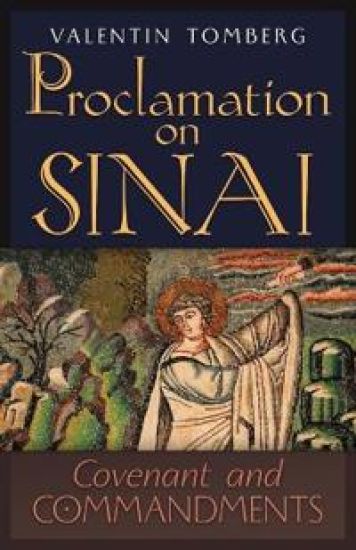
Proclamation on Sinai

Proclamation on Sinai

Valentin Tomberg

Angelico Press
2022
pokkari
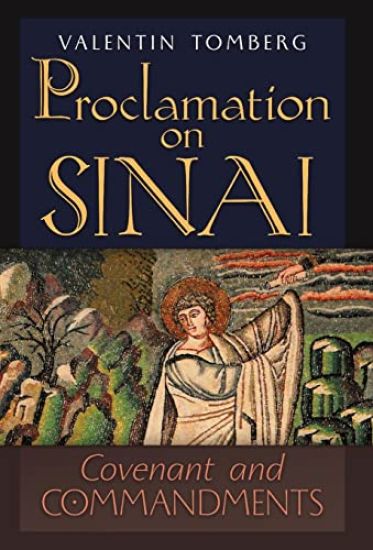
In his final years, Valentin Tomberg (1900-1973) completed three short works. The present book is the last of these. The first, Thy Kingdom Come: The New Evolution of the Good, and the second, Lazarus: The Miracle of Resurrection in World History, were published by Angelico Press in 2022. Why, towards the end of his life, after having already included a profound series of contemplations on the ten commandments in Letter XI of his magisterial Meditations on the Tarot: A Journey into Christian Hermeticism, did he return so intensively to this theme? Tomberg does not tell us directly, but the text itself suggests an answer. Here he looks back to major themes of the two phases of his life. The first of these themes, the origin of law (see his The Art of the Good: On the Regeneration of Fallen Justice), is discussed in this final book as a "path through the wilderness" such as he himself had to walk as a lifelong migr (see Valentin Tomberg and the Ecclesia Universalis: A Biography). The second theme, the fundamental path of the soul in quest of personal certainty(see his Personal Certainty: On the Way, the Truth, and the Life, in press), he returns to as "essentialism," which he now approaches from the perspective of knowledge as an analogical process steeped in symbols: the Jewish kabbalah, the Decalogue, the Names of God, the Catholic church, the meaning of the papacy, and much else besides. The choirs of the spiritual hierarchies receive fresh appreciation, in association with reiterated respect for the life-work of Rudolf Steiner, with which he had been deeply aligned during the first half of his life. Finally, the "transfiguration of the dark clouds into light" on Mt. Sinai, as here portrayed, signals Tomberg's renewed immersion in what he calls the moral chronicle of the world, leading him to culminating insights into the origin of Divine Law from the vantage-point of his own "ascent of Sinai." "In this deeply Christian esoteric work, Valentin Tomberg draws upon the wealth of his wisdom to elucidate the spiritual meaning of the Ten Commandments. One uniquely profound message of the book is that we are to honor our Father and our Mother, as she appears in her three aspects."-Harrie Salman, author of Valentin Tomberg and the Ecclesia Universalis: A Biography "Every sentence of this extraordinary work makes clear that Valentin Tomberg wears the mantle of Moses for our time. His stunning combination of sweeping metahistorical insights with exact and exacting fine-grained historical commentary bring forth the Ten Commandments as living principles for right now."-Kevin Dann, Contributing Editor, Public Domain Review "This multivalent meditation on the Ten Commandments marries elements from Rudolf Steiner's insights (above all in terms of the angelic hierarchies) with Tomberg's profound embrace of Catholic tradition and dogma. Here an authentic Christian genius seeks to set us free from "the house of bondage" of our deterministic, desacralized age."-Roger Buck, Cor Jesu Sacratissimum: From Secularism and the New Age to Christendom Renewed
Proclamation on Sinai

Proclamation on Sinai

Valentin Tomberg

Angelico Press
2022
sidottu
In his final years, Valentin Tomberg (1900-1973) completed three short works. The present book is the last of these. The first, Thy Kingdom Come: The New Evolution of the Good, and the second, Lazarus: The Miracle of Resurrection in World History, were published by Angelico Press in 2022. Why, towards the end of his life, after having already included a profound series of contemplations on the ten commandments in Letter XI of his magisterial Meditations on the Tarot: A Journey into Christian Hermeticism, did he return so intensively to this theme? Tomberg does not tell us directly, but the text itself suggests an answer. Here he looks back to major themes of the two phases of his life. The first of these themes, the origin of law (see his The Art of the Good: On the Regeneration of Fallen Justice), is discussed in this final book as a "path through the wilderness" such as he himself had to walk as a lifelong migr (see Valentin Tomberg and the Ecclesia Universalis: A Biography). The second theme, the fundamental path of the soul in quest of personal certainty(see his Personal Certainty: On the Way, the Truth, and the Life, in press), he returns to as "essentialism," which he now approaches from the perspective of knowledge as an analogical process steeped in symbols: the Jewish kabbalah, the Decalogue, the Names of God, the Catholic church, the meaning of the papacy, and much else besides. The choirs of the spiritual hierarchies receive fresh appreciation, in association with reiterated respect for the life-work of Rudolf Steiner, with which he had been deeply aligned during the first half of his life. Finally, the "transfiguration of the dark clouds into light" on Mt. Sinai, as here portrayed, signals Tomberg's renewed immersion in what he calls the moral chronicle of the world, leading him to culminating insights into the origin of Divine Law from the vantage-point of his own "ascent of Sinai." "In this deeply Christian esoteric work, Valentin Tomberg draws upon the wealth of his wisdom to elucidate the spiritual meaning of the Ten Commandments. One uniquely profound message of the book is that we are to honor our Father and our Mother, as she appears in her three aspects."-Harrie Salman, author of Valentin Tomberg and the Ecclesia Universalis: A Biography "Every sentence of this extraordinary work makes clear that Valentin Tomberg wears the mantle of Moses for our time. His stunning combination of sweeping metahistorical insights with exact and exacting fine-grained historical commentary bring forth the Ten Commandments as living principles for right now."-Kevin Dann, Contributing Editor, Public Domain Review "This multivalent meditation on the Ten Commandments marries elements from Rudolf Steiner's insights (above all in terms of the angelic hierarchies) with Tomberg's profound embrace of Catholic tradition and dogma. Here an authentic Christian genius seeks to set us free from "the house of bondage" of our deterministic, desacralized age."-Roger Buck, Cor Jesu Sacratissimum: From Secularism and the New Age to Christendom Renewed
Thy Kingdom Come

Thy Kingdom Come

Valentin Tomberg

Angelico Press
2022
pokkari
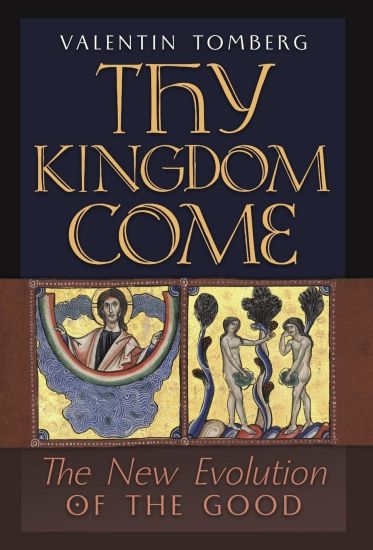
In this study, written largely during the winter of 1966-1967, Valentin Tomberg leads the reader into the strata of a deeper reality. The path begins with knowledge of the kingdom of nature, looked at from two points of view: Darwin's evolutionary "fallen nature" of the serpent (whose guiding principle is "the collective will to power") and the cooperation, association, and social collectivism also apparent in nature (pointing to a region of created beings rather than to an evolutionary "origin of species"). Tomberg then asks whether human beings are permitted to do everything they can do, which brings him to the kingdom of man. Here the "pure humanism" of this kingdom manifests itself. But we are further called to raise ourselves out of both the kingdom of nature and the "pure humanism" of the kingdom of man, to the kingdom of God. For this, the Sermon on the Mount informs us of our true nature and points our way. If, in the old natural evolution, the solution was "you shall be as God" (by which the serpent meant "you shall be as God without God"), then the Sermon on the Mount promises "you shall be as God in God." When humanity shall at last have understood this rightly, there will, according to Tomberg, be a new historiography telling first of temptations, deserts, errors, and the way of purification. In this book, Tomberg shows himself to be its forerunner.
Thy Kingdom Come

Thy Kingdom Come

Valentin Tomberg

Angelico Press
2022
sidottu
In this study, written largely during the winter of 1966-1967, Valentin Tomberg leads the reader into the strata of a deeper reality. The path begins with knowledge of the kingdom of nature, looked at from two points of view: Darwin's evolutionary "fallen nature" of the serpent (whose guiding principle is "the collective will to power") and the cooperation, association, and social collectivism also apparent in nature (pointing to a region of created beings rather than to an evolutionary "origin of species"). Tomberg then asks whether human beings are permitted to do everything they can do, which brings him to the kingdom of man. Here the "pure humanism" of this kingdom manifests itself. But we are further called to raise ourselves out of both the kingdom of nature and the "pure humanism" of the kingdom of man, to the kingdom of God. For this, the Sermon on the Mount informs us of our true nature and points our way. If, in the old natural evolution, the solution was "you shall be as God" (by which the serpent meant "you shall be as God without God"), then the Sermon on the Mount promises "you shall be as God in God." When humanity shall at last have understood this rightly, there will, according to Tomberg, be a new historiography telling first of temptations, deserts, errors, and the way of purification. In this book, Tomberg shows himself to be its forerunner.
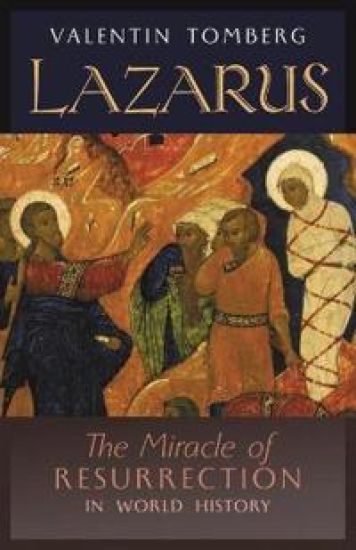
Lazarus

Lazarus

Valentin Tomberg

Angelico Press
2022
sidottu
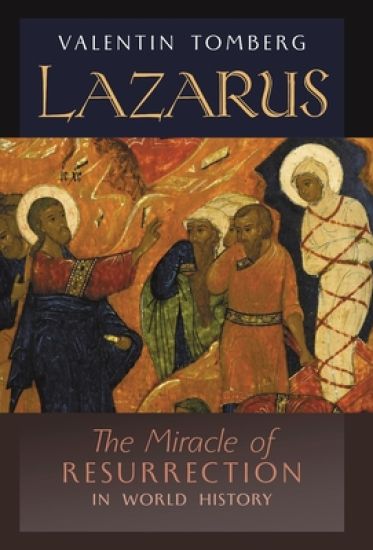
This final masterwork of Valentin Tomberg (1900-1973) consists of three parts. Part I, "The Seven Miracles of John's Gospel," probes deep correlations between the 7 Healing Miracles, the 7 Days of Creation, and the 7 Sacraments. Part II, "The Miracle of the Raising of Lazarus," juxtaposes the mysteries of forgetting, sleep, and death, with those of remembering, awakening, and resurrection, as a prelude to the eternal words: "Lazarus, Come Forth " Part III, "The Miracle of Lazarus in Divine-Human History," leads to the "blinding insight" that Christianity is nothing other than the ongoing resurrection of the totality of Divine-Human History, the Ecclesia universalis.
Lazarus

Lazarus

Valentin Tomberg

Angelico Press
2022
pokkari

Halvin toimitettuna 27,50 €

This final masterwork of Valentin Tomberg (1900-1973) consists of three parts. Part I, "The Seven Miracles of John's Gospel," probes deep correlations between the 7 Healing Miracles, the 7 Days of Creation, and the 7 Sacraments. Part II, "The Miracle of the Raising of Lazarus," juxtaposes the mysteries of forgetting, sleep, and death, with those of remembering, awakening, and resurrection, as a prelude to the eternal words: "Lazarus, Come Forth " Part III, "The Miracle of Lazarus in Divine-Human History," leads to the "blinding insight" that Christianity is nothing other than the ongoing resurrection of the totality of Divine-Human History, the Ecclesia universalis.
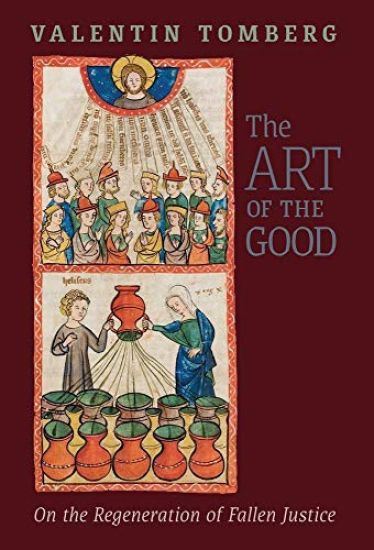
The Art of the Good

The Art of the Good

Valentin Tomberg

Angelico Press
2021
sidottu
Valentin Tomberg was born in St. Petersburg on February 26, 1900. Having been baptized a Protestant, he entered the Greek Orthodox church shortly before 1933, and, in 1945, became a Roman Catholic. In 1938 Tomberg emigrated to the Netherlands and began actively to lecture on Christological topics. At the beginning of 1944 he moved to Cologne, where he was awarded the title of Doctor of Law for the dissertation here published in English for the first time. This dissertation marked an important turning-point in Tomberg's life: humanistic studies he had presented during his thirties are now replaced by a strict orientation towards a Platonic model of knowledge, and a medieval, so-called "realism of universals." Tomberg came to regard the modern path away from natural law (founded upon religion) and toward legal positivism (oriented toward power) as a dismantling of the different levels of law (and at the same time a loss of both the idea and ideal of law)-that is, as a process of degeneration or "fall," which he seeks to reverse in the direction of regeneration. He also proposes a new way of organizing the academic study of law, in which the higher levels of law would be included, and in which access to the idea and the ideal of law would be restored.