Kirjojen hintavertailu – 12 903 725 kirjaa ja 27 kauppaa

Kirjailija

Valerie Estelle Frankel

Kirjat ja teokset yhdessä paikassa: 60 kirjaa, julkaisuja vuosilta 2010–2025, suosituimpiin kuuluu Katniss the Cattail: An Unauthorized Guide to Names and Symbols in Suzanne Collins' The Hunger Games. Vertaile teosten hintoja ja tarkista saatavuus suomalaisista kirjakaupoista.

60 kirjaa

Kirjojen julkaisuvuodet: 2010–2025.

Katniss the Cattail: An Unauthorized Guide to Names and Symbols in Suzanne Collins' The Hunger Games

Katniss the Cattail: An Unauthorized Guide to Names and Symbols in Suzanne Collins' The Hunger Games

Valerie Estelle Frankel

Createspace Independent Publishing Platform
2012
nidottu

Halvin toimitettuna 13,50 €

Who was Cinna? What do the hawthorn and primrose symbolize? Or President Snow's roses and Peeta's bread? What about Katniss's last name? Bringing details from myths, herbal guides, military histories, and the classics, English professor and award-winning pop culture author Valerie Estelle Frankel sheds light on the deeper meanings behind Panem's heroes and villains in this hottest of YA trilogies. In her series, Collins not only weaves a heroic tale of deep complexity but harnesses the power of Shakespeare and Rome to retell an ancient epic of betrayal, violence, and glory on the stage of an apocalyptic future. The perfect treat for fans of all ages. Everything Hunger Games, packed into one volume. From Alma Coin to Wiress you'll learn about -Why roses are a flower of death -How eighteen of the characters are used in Shakespeare's plays -Katniss's nickname Catnip -The meaning of "The Hanging Tree" -Peeta's pearl and Katniss's salvation -Effie the saint and Finnick the Irish hero
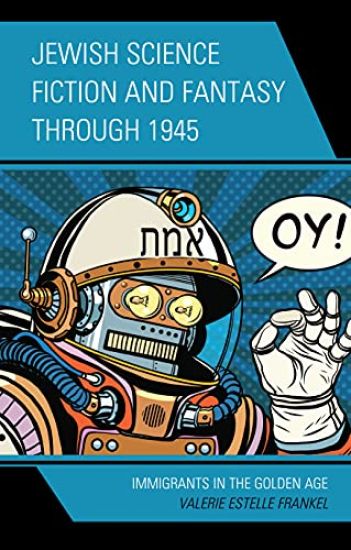
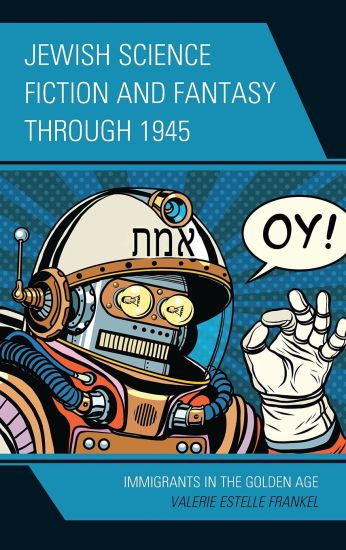
Jewish Science Fiction and Fantasy through 1945

Jewish Science Fiction and Fantasy through 1945

Valerie Estelle Frankel

BLOOMSBURY PUBLISHING PLC
2025
nidottu
Science fiction first emerged in the Industrial Age and continued to develop into its current form during the twentieth century. This book analyses the role Jewish writers played in the process of its creation and development. The author provides a comprehensive overview, bridging such seemingly disparate themes and figures as the ghetto legends of the golem and their influence on both Frankenstein and robots, the role of, Jewish authors and publishers in developing the first science fiction magazine in New York in the 1930s, and their later contributions to new and developing medial forms like comics and film. Drawing on the historical context and the positions Jews held in the larger cultural environment, the author illustrates how themes and tropes in science fiction and fantasy relate back to the realities of Jewish life in the face of global anti-Semitism, the struggle to assimilate in America, and the hope that was inspired by the founding of Israel.
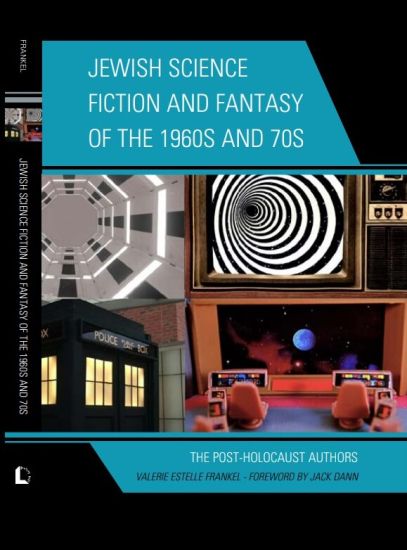
Jewish Science Fiction and Fantasy of the 1960s and 70s

Jewish Science Fiction and Fantasy of the 1960s and 70s

Valerie Estelle Frankel; Jack Dann

BLOOMSBURY PUBLISHING PLC
2024
sidottu
Following the Holocaust, American literature experienced a resurgence of Jewish themes, characters, and contributions. This book focuses on the genres of science fiction and fantasy of the post-Holocaust period and argues that while the era was colored by grief, it also offered a renaissance of Jewish creative expression. The author provides an overview of texts beginning with the rise of Jewish speculative fiction anthologies in science fiction and fantasy and delving into emerging subgenres such as alternate history, post-apocalyptic, cold war, second-wave feminism, counterculture parodies, new wave, postmodernism, and cyberpunk to illustrate how Jewish culture made its mark on popular culture. The book also covers the Silver Age and Bronze Age of comics which saw Stan Lee, Jack Kirby, Julius Schwartz, and Marv Wolfman form new superhero teams to battle prejudice and draws parallels with some of the most impactful shows made by Jewish creators, including Star Trek, Twilight Zone, and Doctor Who. The analysis also looks beyond the American context to include texts from Germany, the Soviet Union, Brazil, and Israel.
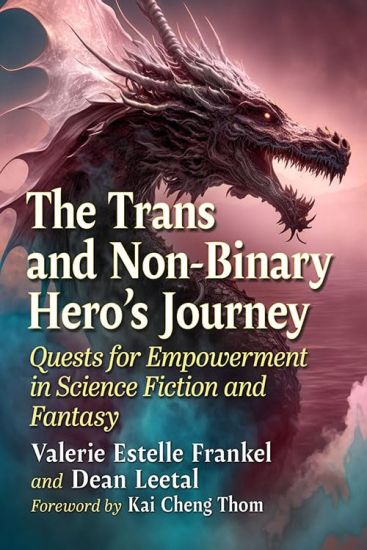
The Trans and Non-Binary Hero's Journey

The Trans and Non-Binary Hero's Journey

Valerie Estelle Frankel; Dean Leetal

MCFARLAND CO INC
2024
pokkari
A brave heroine whose quest involves living her true gender. A genderqueer knight who battles the transphobic court to save their prince. Often fearing discovery, the trans hero embarks on adventure, aided by an accepting mentor and other allies, and challenged by transphobic villains and sometimes uncomprehending family members. Ultimately, the trans hero triumphs, finding love, selfhood, and affirmation. This book adapts Joseph Campbell's classic pattern of comparative mythology and applies it to trans and non-binary heroes in modern popular media who are traversing multiple worlds. Analyzed are works for the screen such as Steven Universe, The Matrix, Sense8, and Sandman; print materials such as DC and Marvel comics; and television, fantasy books, and graphic novels from trans and non-binary creators worldwide.
Adapting Bridgerton

Adapting Bridgerton

Valerie Estelle Frankel

MCFARLAND CO INC
2024
nidottu
The beloved television show Bridgerton breaks racial barriers as it explores an alternate history in which biracial Queen Charlotte elevated people of color to dukes and earls, welcoming new perspectives in Regency London. Essays in this work examine in detail the hit Netflix series. Topics covered include Bridgerton's unique, racially conscious casting and its effect on common tropes and roles; the overt sexuality in the context of prim Jane Austen films and historical shows like Downton Abbey, Outlander, and recent nineteenth-century adaptations; dueling; art; manners; dress; social conventions; feminism; privilege; power; dreamcasting; colorism; and yes, the sex scenes.
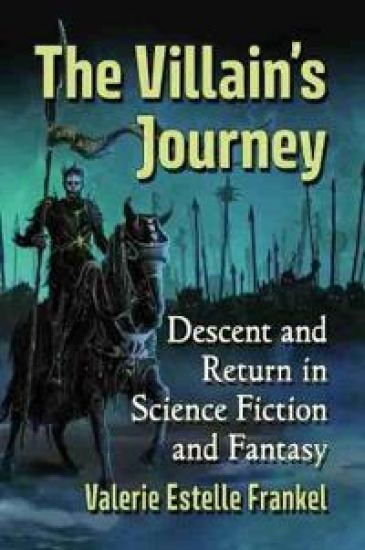
The Villain's Journey

The Villain's Journey

Valerie Estelle Frankel

MCFARLAND CO INC
2021
pokkari
The villain's journey is rare in popular culture--most characters are fully-formed tyrants with little to no story arc. However, a few particularly epic series take the time to develop complex villains, including Star Wars, Battlestar Galactica, Smallville, Babylon 5, Game of Thrones, and Buffy the Vampire Slayer. Increasingly, villains' origin stories have found new popularity through films like Wicked, Maleficent, and Despicable Me, alongside shows starring serial killers and Machiavellian schemers. This book examines the villain's decline and subsequent struggle toward redemption, asking why these characters are willing to cross moral lines that "good" characters are not. The first half follows characters like Loki, Jessica Jones and Killmonger through the villain's journey: an inverse or twisted version of scholar Joseph Cambell's hero's journey. The remainder of this book examines the many different villainous archetypes such as the trickster, the outcast, the tyrant, or the misunderstood hero in greater detail. Written for writers, creators, fans, and mythologists, this book offers a peek into the minds of some of fiction's greatest villains.
Jewish Science Fiction and Fantasy through 1945

Jewish Science Fiction and Fantasy through 1945

Valerie Estelle Frankel

Lexington Books
2021
sidottu
Science fiction first emerged in the Industrial Age and continued to develop into its current form during the twentieth century. This book analyses the role Jewish writers played in the process of its creation and development. The author provides a comprehensive overview, bridging such seemingly disparate themes and figures as the ghetto legends of the golem and their influence on both Frankenstein and robots, the role of, Jewish authors and publishers in developing the first science fiction magazine in New York in the 1930s, and their later contributions to new and developing medial forms like comics film. Drawing on the historical context and the positions Jews held in the larger cultural environment, the author illustrates how themes and tropes in science fiction and fantasy relate back to the realities of Jewish life in the face of global anti-Semitism, the struggle to assimilate in America, and the hope that was inspired by the founding of Israel.
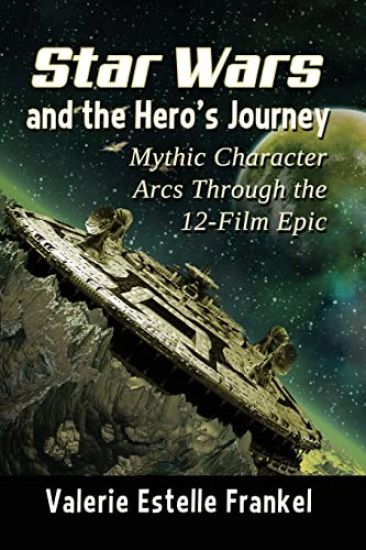
Star Wars and the Hero's Journey

Star Wars and the Hero's Journey

Valerie Estelle Frankel

McFarland Co Inc
2021
pokkari
The original Star Wars trilogy famously follows Joseph Campbell's model for the hero's journey, making Luke Skywalker's story the new hero quest for a modern age. With the nine-plus film saga complete, however, new story patterns have emerged as the hero's journey is imagined over and over for characters of different ages, genders, and backgrounds. The prequels offer the plot arc of the villain's journey through Anakin. Leia and Padme, while damsels in the men's story, break out to undergo their own ordeals. The heroine's journey is exemplified by Rey and Jyn. Obi-Wan, Yoda, and Vader must accept the loss of power and fade into spirit guardians, perpetuating the lifecycle. By the sequel era, the original trio become mentors to the younger generation and finally must do the same. Meanwhile, the Mandalorian explores a different form of the quest as he transforms from immature warrior to patriarch. This book tracks the journeys of over 20 characters throughout the franchise.
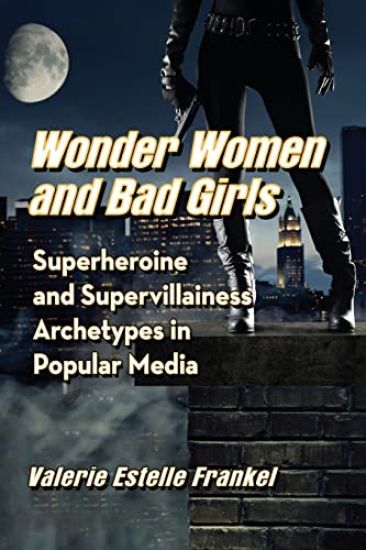
Wonder Women and Bad Girls

Wonder Women and Bad Girls

Valerie Estelle Frankel

McFarland Co Inc
2020
nidottu
Wonder Woman, Harley Quinn, Shuri, and Black Widow. These four characters portray very different versions of women: the superheroine, the abuse victim, the fourth wave princess, and the spy, respectively. In this in-depth analysis of female characters in superhero media, the authors begin by identifying ten eras of superhero media defined by the way they portray women. Following this, the various archetypes of superheroines are classified into four categories: boundary crossers, good girls, outcasts, and those that reclaim power. Modern superheroines fall under any of the categories and with the push from the feminist movement, superheroines are becoming more powerful and independent.
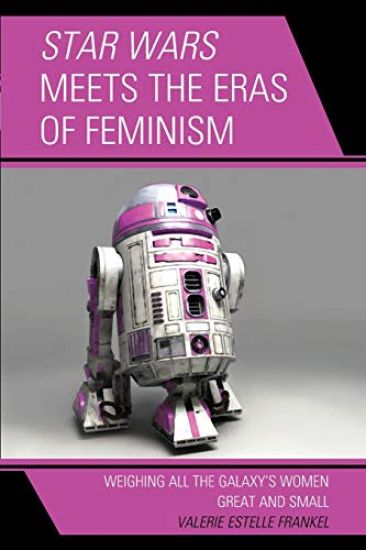
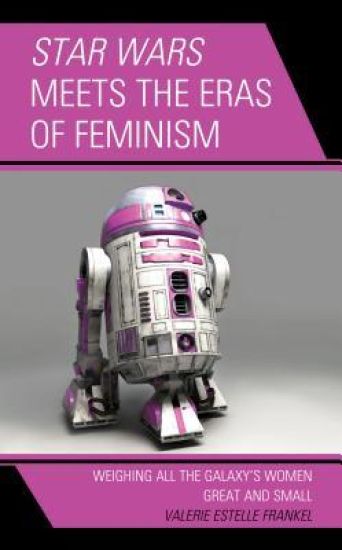
Star Wars Meets the Eras of Feminism

Star Wars Meets the Eras of Feminism

Valerie Estelle Frankel

Lexington Books
2020
nidottu
Star Wars defined popular, big-screen science fiction. Still, what many viewers best recall is assertive, hilarious Leia, the diminutive princess with a giant blaster who had to save them all. As the 1977 film arrived, women were marching for equality and demanding equal pay, with few onscreen role models. Leia echoed their struggle and showed them what they could be. Two more films joined in, though by the early eighties, post-feminism was pushing back and shoving the tough heroine into her pornographic gold bikini. After a sixteen-year gap, the prequels catered to a far different audience. Queen Amidala’s decoy power originates in how dominated she is by her massive royal gowns. This obsession with fashion but also costuming as a girly superpower fits well with the heroines of the time. The third wavers filled the screens with glamorous, mighty girls – strong but not too strong, like the idealistic teen Ahsoka of Clone Wars. However, space colonialism, abusive romance, and sacrifice left these characters a work in progress. Finally, the sequel era has introduced many more women to fill the galaxy: Rey, Jyn, Rose, Maz, Qi’ra, Val, L3-37, Captain Phasma, Admiral Holdo, and of course General Leia. Making women the central warriors and leaders while keeping them powerful and nonsexualized emphasizes that they can share in the franchise instead of supporting male Jedi. There’s also more diversity, though it’s still imperfect. Hera and Sabine on the spinoff cartoon Rebels and the many girls in the new franchise Forces of Destiny round out the era, along with toys, picture books, and other hallmarks of a new, more feminist fourth wave for the franchise.
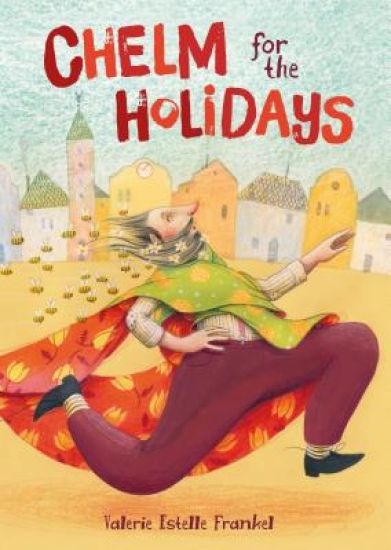
Chelm for the Holidays

Chelm for the Holidays

Valerie Estelle Frankel

Kar-Ben Publishing (R)
2019
sidottu
Celebrating Jewish holidays has never been sillier than in Chelm, the Village of Fools While the Chelmites try to solve problems--like outsmarting bees to get Rosh Hashanah honey, and keeping menorah candles lit without enough oil--their foolishness causes even more chaos. Enjoy these tall tales, old and new, one for each of ten holidays throughout the Jewish year.
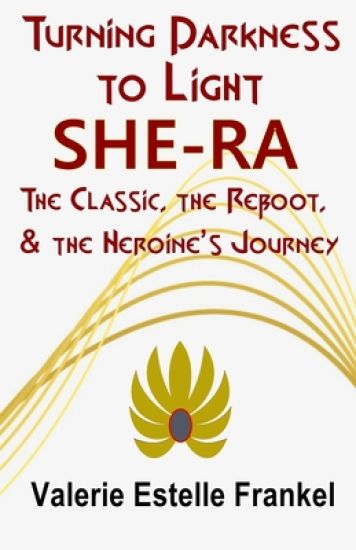
Turning Darkness to Light: She-Ra: The Classic, the Reboot, and the Heroine's Journey
She-Ra and the Princesses of Power, the 2018 Netflix show, takes many characters and themes from the beloved eighties cartoon. Nonetheless, clear distinctions appear in the more body-positive, diversity-friendly modern show, that avoid all the sexualized Barbie shapes and body builder physiques of the past. More interestingly, this version blurs the lines between friends and enemies as it carries young Adora on a precarious journey to face the family, now her enemies, whom she cannot bear to leave. With this, it adapts the classic heroine's journey for a new audience, reframing the adored characters and showcasing the stories a new generation wants to tell.
Murder Most Steampunk: or the Case of the Calamari Conundrum

Murder Most Steampunk: or the Case of the Calamari Conundrum

Valerie Estelle Frankel

Independently Published
2019
nidottu
Miss Eustacia Louisa Stout is most distressed to find a headless corpse on her doorstep, without so much as a calling card She flies to the terribly decorated flat of the painfully inept detective Hemlock Scones, and volunteers to accompany him on his equally inept inquiries. Along with Presto the Magician, Bongo the Clown, a mongoose with an elaborate backstory, Dashing Man (who always seems conveniently absent), and their troop of semi-competent Victorian superheroes, they begin cleaning up London's streets. Will the nefarious schemes of Doctor Cephalopod prove too much for them? Will aethyric London fall? Or at least not turn into a raging automaton? Forget all you know about steampunk superhero detective parodies and prepare for the silliness
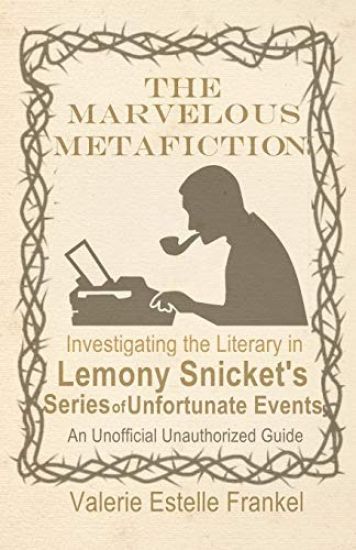
The Marvelous Metafiction: Investigating the Literary in Lemony Snicket's Series of Unfortunate Events
A Series of Unfortunate Events delighted readers young and old with far more than clever mysteries and harrowing hijinks. The books celebrate language itself, packed with wacky definitions and Sunny's playful puns. Idioms rise to a new level as the books curve their plots to literalize barking up the wrong tree or being in the belly of the beast. The Netflix show adds even more fun, while All the Wrong Questions blends a celebration of children's novels with noir parodies. All this helps juvenile readers expand their vocabularies while cultivating a love of clever wordplay. In this volume, it's all explained: the parodies of classics, the double entendres, the subtle references many have missed. It's a lighthearted romp through this deeply nuanced series, revealing how clever it truly is.
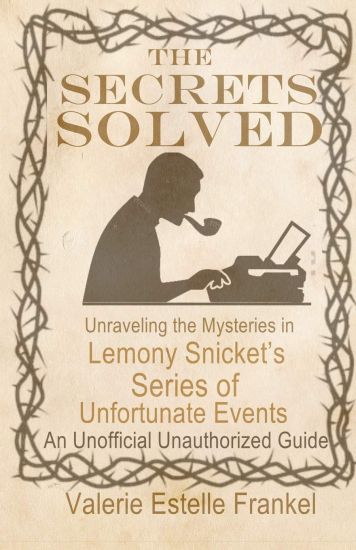
The Secrets Solved: Unraveling the Mysteries of Lemony Snicket's a Series of Unfortunate Events
The final season of A Series of Unfortunate Events premiered January 1, 2019 on Netflix. As many fans had hoped, it answered many questions, neatly tying up the mysteries never solved in the series. However, the rather pat history of the villains and their schism with the heroes doesn't match the shadowy multigenerational feud of the books. Now, The Secrets Solved: Unraveling the Mysteries of Lemony Snicket's A Series of Unfortunate Events examines the clues from novels, prequel series, interviews, and the best fan theories to unravel the major questions of the series. Do the Baudelaires really have a fortune? What crime did Lemony Snicket commit? Who is the mysterious taxi driver? What's really in the sugar bowl? For the first time in print, all these will be clearly, logically answered.
Star Wars Meets the Eras of Feminism

Star Wars Meets the Eras of Feminism

Valerie Estelle Frankel

Lexington Books
2018
sidottu
Star Wars defined popular, big-screen science fiction. Still, what many viewers best recall is assertive, hilarious Leia, the diminutive princess with a giant blaster who had to save them all. As the 1977 film arrived, women were marching for equality and demanding equal pay, with few onscreen role models. Leia echoed their struggle and showed them what they could be. Two more films joined in, though by the early eighties, post-feminism was pushing back and shoving the tough heroine into her pornographic gold bikini. After a sixteen-year gap, the prequels catered to a far different audience. Queen Amidala’s decoy power originates in how dominated she is by her massive royal gowns. This obsession with fashion but also costuming as a girly superpower fits well with the heroines of the time. The third wavers filled the screens with glamorous, mighty girls – strong but not too strong, like the idealistic teen Ahsoka of Clone Wars. However, space colonialism, abusive romance, and sacrifice left these characters a work in progress. Finally, the sequel era has introduced many more women to fill the galaxy: Rey, Jyn, Rose, Maz, Qi’ra, Val, L3-37, Captain Phasma, Admiral Holdo, and of course General Leia. Making women the central warriors and leaders while keeping them powerful and nonsexualized emphasizes that they can share in the franchise instead of supporting male Jedi. There’s also more diversity, though it’s still imperfect. Hera and Sabine on the spinoff cartoon Rebels and the many girls in the new franchise Forces of Destiny round out the era, along with toys, picture books, and other hallmarks of a new, more feminist fourth wave for the franchise.
Uncertain Destinies: Speculative Fiction from Silicon Valley

Uncertain Destinies: Speculative Fiction from Silicon Valley

Valerie Estelle Frankel

Createspace Independent Publishing Platform
2018
nidottu
Destiny transforms the heroes of science fiction and fantasy, impelling them to battle cataclysms, deadly foes, and even the hidden facets that make up their personalities. Now speculative fiction authors in Silicon Valley join to offer a collection of these ultimate conflicts - back to a hidden prehistoric truth, through the hidden magic of the Revolutionary War, and to the farthest stretches of horror-humor. There's a space adventure with a delightful pop culture twist and a retired heroine called on to save a trapped alien race. Characters from mythology's Psyche to a vengeful turkey get to redefine the world. Spanning all the speculative fiction genres, this shining eight-story journey mustn't be missed.
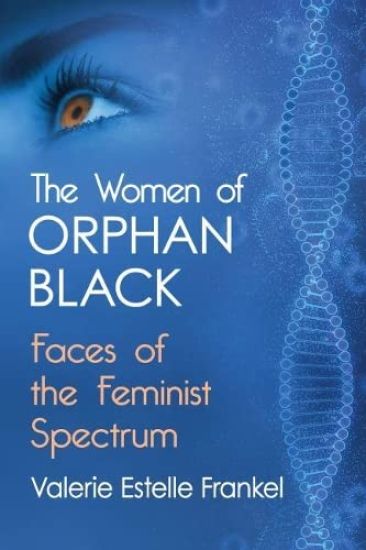
The Women of Orphan Black

The Women of Orphan Black

Valerie Estelle Frankel

McFarland Co Inc
2018
pokkari
Orphan Black's Tatiana Maslany plays a host of the show's main characters, all clones of an illegal experiment. The mighty heroines save one another and destroy the patriarchy while subverting gender expectations. The feminist clones are Sarah, who clashes with her radical feminist foster-mother; Alison, the quintessential post-feminist housewife; Cosima, a second-wave feminist lesbian; Beth, a third-wave feminist bogged down by addiction; and M. K., a fourth-wave feminist who tackles the hardships of disability through the Internet. The book explores the women's war against corporate power and how it relates to the science and ethics surrounding cloning.