Kirjojen hintavertailu – 12 903 735 kirjaa ja 27 kauppaa

Kirjailija

Valerie Viehoff

Kirjat ja teokset yhdessä paikassa: 4 kirjaa, julkaisuja vuosilta 2015–2019, suosituimpiin kuuluu Mega-event Cities: Urban Legacies of Global Sports Events. Vertaile teosten hintoja ja tarkista saatavuus suomalaisista kirjakaupoista.

4 kirjaa

Kirjojen julkaisuvuodet: 2015–2019.

Reframing Convenience Food

Reframing Convenience Food

Peter Jackson; Helene Brembeck; Jonathan Everts; Maria Fuentes; Bente Halkier; Frej Daniel Hertz; Angela Meah; Valerie Viehoff; Christine Wenzl

Springer Nature Switzerland AG
2019
nidottu
This book questions the simplistic view that convenience food is unhealthy and environmentally unsustainable. By exploring how various types of convenience food have become embedded in consumers’ lives, it considers what lessons can be learnt from the commercial success of convenience food for those who seek to promote healthier and more sustainable diets. The project draws on original findings from comparative research in the UK, Denmark, Germany and Sweden (funded through the ERA-Net Sustainable Food programme). Reframing Convenience Food avoids moral judgments about convenience food, and instead provides a refreshingly novel perspective guided by an understanding of everyday consumer practice. It will appeal to those with an interest in the sociology and politics behind health, consumerism, sustainability and society.

Reframing Convenience Food

Reframing Convenience Food

Peter Jackson; Helene Brembeck; Jonathan Everts; Maria Fuentes; Bente Halkier; Frej Daniel Hertz; Angela Meah; Valerie Viehoff; Christine Wenzl

Springer International Publishing AG
2018
sidottu
This book questions the simplistic view that convenience food is unhealthy and environmentally unsustainable. By exploring how various types of convenience food have become embedded in consumers’ lives, it considers what lessons can be learnt from the commercial success of convenience food for those who seek to promote healthier and more sustainable diets. The project draws on original findings from comparative research in the UK, Denmark, Germany and Sweden (funded through the ERA-Net Sustainable Food programme). Reframing Convenience Food avoids moral judgments about convenience food, and instead provides a refreshingly novel perspective guided by an understanding of everyday consumer practice. It will appeal to those with an interest in the sociology and politics behind health, consumerism, sustainability and society.
Mega-event Cities: Urban Legacies of Global Sports Events

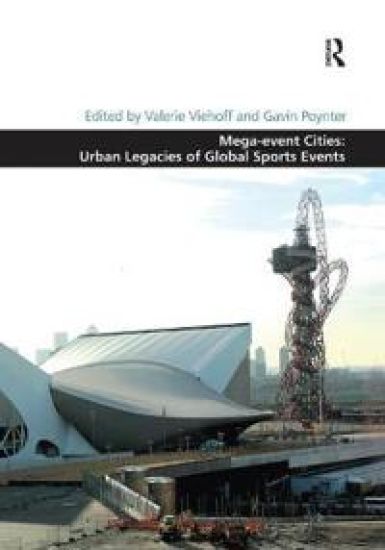
Mega-event Cities: Urban Legacies of Global Sports Events

Valerie Viehoff; Gavin Poynter

Routledge
2018
nidottu
Mega-events represent an important moment in the life of a city, providing a useful lens through which we may analyse their cultural, social, political and economic development. In the wake of the International Olympic Committee’s (IOC’s) concerns about ’gigantism’ and wider public concerns about rising costs, it was imperative in the C21st to demonstrate the long term benefits that arose for the city and nations from hosting premier sporting events. ’London 2012’ was the first to integrate the concept of legacy from the moment a bid to host the Olympic and Paralympic Games was being considered. London proposed an ambitious programme of urban renewal for East London. Subsequent host city bids have adopted the ’legacy narrative’ and, as this book demonstrates, aligned this to major schemes of urban development and renewal. Bringing together scholars, practitioners and policy makers, this book focuses upon the legacies sought by cities that host major sports events. It analyses how governments, the IOC and others define and measure ’legacy’. It also focuses upon the challenges and opportunities facing future host cities of mega-events, looking at their aspirations and the intended impact upon their domestic and international development. It questions what the global shift in geographical location of mega-events means for sports development and the business of sport, what the attractions are for cities seeking to harness the hosting of a mega-event, and whether there may be longer term consequences for the bidding and hosting major sporting events in the wake of the widespread social unrest that accompanied the preparations in Brazil for hosting the FIFA World Cup (2014) and the summer Olympics (2016) and in Turkey, where there was significant opposition to bid for the 2020 summer Olympiad.
Mega-event Cities: Urban Legacies of Global Sports Events

Mega-event Cities: Urban Legacies of Global Sports Events

Valerie Viehoff; Gavin Poynter

Routledge
2015
sidottu
Mega-events represent an important moment in the life of a city, providing a useful lens through which we may analyse their cultural, social, political and economic development. In the wake of the International Olympic Committee’s (IOC’s) concerns about ’gigantism’ and wider public concerns about rising costs, it was imperative in the C21st to demonstrate the long term benefits that arose for the city and nations from hosting premier sporting events. ’London 2012’ was the first to integrate the concept of legacy from the moment a bid to host the Olympic and Paralympic Games was being considered. London proposed an ambitious programme of urban renewal for East London. Subsequent host city bids have adopted the ’legacy narrative’ and, as this book demonstrates, aligned this to major schemes of urban development and renewal. Bringing together scholars, practitioners and policy makers, this book focuses upon the legacies sought by cities that host major sports events. It analyses how governments, the IOC and others define and measure ’legacy’. It also focuses upon the challenges and opportunities facing future host cities of mega-events, looking at their aspirations and the intended impact upon their domestic and international development. It questions what the global shift in geographical location of mega-events means for sports development and the business of sport, what the attractions are for cities seeking to harness the hosting of a mega-event, and whether there may be longer term consequences for the bidding and hosting major sporting events in the wake of the widespread social unrest that accompanied the preparations in Brazil for hosting the FIFA World Cup (2014) and the summer Olympics (2016) and in Turkey, where there was significant opposition to bid for the 2020 summer Olympiad.