Kirjojen hintavertailu – 12 903 724 kirjaa ja 27 kauppaa

Kirjailija

Vali Nasr

Kirjat ja teokset yhdessä paikassa: 11 kirjaa, julkaisuja vuosilta 2006–2026, suosituimpiin kuuluu Iran's Grand Strategy. Vertaile teosten hintoja ja tarkista saatavuus suomalaisista kirjakaupoista.

11 kirjaa

Kirjojen julkaisuvuodet: 2006–2026.

Iran's Grand Strategy

Iran's Grand Strategy

Vali Nasr

PRINCETON UNIVERSITY PRESS
2026
pokkari
From the New York Times bestselling author of The Shia Revival A gripping account that overturns simplistic portrayals of Iran as a theocratic pariah state, revealing how its strategic moves on the world stage are driven by two pervasive threats—external aggression and internal dissolution Iran presents one of the most significant foreign policy challenges for America and the West, yet very little is known about what the country’s goals really are. Vali Nasr examines Iran’s political history in new ways to explain its actions and ambitions on the world stage, showing how, behind the veneer of theocracy and Islamic ideology, today’s Iran is pursuing a grand strategy aimed at securing the country internally and asserting its place in the region and the world. Drawing on memoirs, oral histories, and original in-depth interviews with Iranian decision makers, Nasr brings to light facts and events in Iran’s political history that have been overlooked until now. He traces the roots of Iran’s strategic outlook to its experiences over the past four decades of war with Iraq in the 1980s and the subsequent American containment of Iran, invasion of Iraq in 2003, and posture toward Iran thereafter. Nasr reveals how these experiences have shaped a geopolitical outlook driven by pervasive fear of America and its plans for the Middle East. Challenging the notion that Iran’s foreign policy simply reflects its revolutionary values or theocratic government, Iran’s Grand Strategy provides invaluable new insights into what Iran wants and why, explaining the country’s resistance to the United States, its nuclear ambitions, and its pursuit of influence and proxies across the Middle East.
Iran's Grand Strategy

Iran's Grand Strategy

Vali Nasr

PRINCETON UNIVERSITY PRESS
2025
sidottu

Halvin toimitettuna 29,70 €

From the New York Times bestselling author of The Shia RevivalA gripping account that overturns simplistic portrayals of Iran as a theocratic pariah state, revealing how its strategic moves on the world stage are driven by two pervasive threats—external aggression and internal dissolutionIran presents one of the most significant foreign policy challenges for America and the West, yet very little is known about what the country’s goals really are. Vali Nasr examines Iran’s political history in new ways to explain its actions and ambitions on the world stage, showing how, behind the veneer of theocracy and Islamic ideology, today’s Iran is pursuing a grand strategy aimed at securing the country internally and asserting its place in the region and the world. Drawing on memoirs, oral histories, and original in-depth interviews with Iranian decision makers, Nasr brings to light facts and events in Iran’s political history that have been overlooked until now. He traces the roots of Iran’s strategic outlook to its experiences over the past four decades of war with Iraq in the 1980s and the subsequent American containment of Iran, invasion of Iraq in 2003, and posture toward Iran thereafter. Nasr reveals how these experiences have shaped a geopolitical outlook driven by pervasive fear of America and its plans for the Middle East. Challenging the notion that Iran’s foreign policy simply reflects its revolutionary values or theocratic government, Iran’s Grand Strategy provides invaluable new insights into what Iran wants and why, explaining the country’s resistance to the United States, its nuclear ambitions, and its pursuit of influence and proxies across the Middle East.
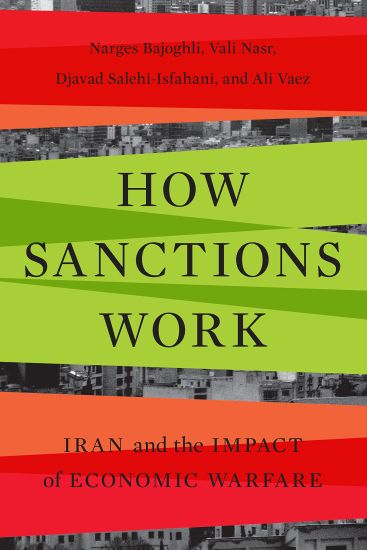
How Sanctions Work

How Sanctions Work

Narges Bajoghli; Vali Nasr; Djavad Salehi-Isfahani; Ali Vaez

STANFORD UNIVERSITY PRESS
2024
pokkari

Halvin toimitettuna 31,30 €

Sanctions have enormous consequences. Especially when imposed by a country with the economic influence of the United States, sanctions induce clear shockwaves in both the economy and political culture of the targeted state, and in the everyday lives of citizens. But do economic sanctions induce the behavioral changes intended? Do sanctions work in the way they should? To answer these questions, the authors of How Sanctions Work highlight Iran, the most sanctioned country in the world. Comprehensive sanctions are meant to induce uprisings or pressures to change the behavior of the ruling establishment, or to weaken its hold on power. But, after four decades, the case of Iran shows the opposite to be true: sanctions strengthened the Iranian state, impoverished its population, increased state repression, and escalated Iran's military posture toward the U. S. and its allies in the region. Instead of offering an 'alternative to war,' sanctions have become a cause of war. Consequently, How Sanctions Work reveals how necessary it is to understand how sanctions really work.
How Sanctions Work

How Sanctions Work

Narges Bajoghli; Vali Nasr; Djavad Salehi-Isfahani; Ali Vaez

STANFORD UNIVERSITY PRESS
2024
sidottu
Sanctions have enormous consequences. Especially when imposed by a country with the economic influence of the United States, sanctions induce clear shockwaves in both the economy and political culture of the targeted state, and in the everyday lives of citizens. But do economic sanctions induce the behavioral changes intended? Do sanctions work in the way they should? To answer these questions, the authors of How Sanctions Work highlight Iran, the most sanctioned country in the world. Comprehensive sanctions are meant to induce uprisings or pressures to change the behavior of the ruling establishment, or to weaken its hold on power. But, after four decades, the case of Iran shows the opposite to be true: sanctions strengthened the Iranian state, impoverished its population, increased state repression, and escalated Iran's military posture toward the U. S. and its allies in the region. Instead of offering an 'alternative to war,' sanctions have become a cause of war. Consequently, How Sanctions Work reveals how necessary it is to understand how sanctions really work.
The Shia Revival

The Shia Revival

Vali Nasr

WW Norton Co
2016
nidottu

Halvin toimitettuna 19,70 €

One of America’s leading commentators on current events in the Middle East, Iranian-born scholar Vali Nasr brilliantly dissects the political and theological antagonisms within Islam in this “smart, clear and timely” book (The Washington Post). Still essential and timely ten years after its original publication, The Shia Revival provides an objective understanding of the 1,400-year struggle between Shias and Sunnis and sheds light on its modern-day consequences. A new epilogue elucidates the rise of ISIS and on-going tensions between Iran and Saudi Arabia.
The Dispensable Nation: American Foreign Policy in Retreat
A Financial Times Best Book of the YearForcefully persuasive, The Dispensable Nation is a game changer for America as it charts a course in the Muslim world, Asia, and beyond. Vali Nasr shows how the Obama administration missed its chance to improve U. S. relations with the Middle East by continuing to pursue its predecessor's questionable strategies there. Nasr takes readers behind the scenes at the State Department and reveals how the specter of terrorism and the new administration's fear of political backlash crippled diplomatic efforts to boost America's foundering credibility with world leaders. Meanwhile, the true economic threats, China and Russia, were quietly expanding their influence in the region. Nasr argues that, as a result of the U. S.'s flawed strategy, a second Arab Spring is brewing--not a hopeful clamor for democracy but rage at the United States for its foreign policy of drones and assassinations.
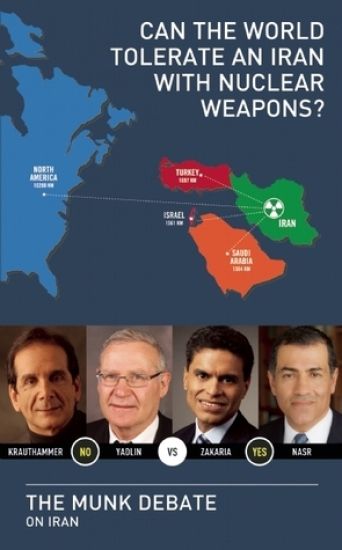
Can the World Tolerate an Iran with Nuclear Weapons?

Can the World Tolerate an Iran with Nuclear Weapons?

Amos Yadlin; Charles Krauthammer; Fareed Zakaria; Vali Nasr

House of Anansi Press Ltd ,Canada
2013
pokkari
With tensions between Iran, Israel, and Western powers reaching new highs over the Islamic Republic’s nuclear enrichment program, the tenth edition of the Munk Debates investigates how the world should respond to Iran’s nuclear ambitions. For some, the case for a pre-emptive strike on Iran is ironclad. An Iranian bomb would flood the volatile Middle East with nuclear weapons and trap Israel in a state of perilous insecurity — along with much of the world’s oil supply. Others argue that a nuclear Iran could be the very stabilizing force that the region needs, as the threat of nuclear war makes conventional conflicts more risky. These same voices also ask: can the West and Israel afford to attack Iran when doing so could roll back the Arab Spring and re-entrench reactionary forces throughout the Middle East? In this edition of the Munk Debates — Canada’s premier international debate series — former Israel Defense Forces head of military intelligence Amos Yadlin, Pulitzer Prize–winning political commentator Charles Krauthammer, CNN host Fareed Zakaria, and Iranian-born academic Vali Nasr debate the consequences of a nuclear-armed Iran. For the first time ever, this electrifying debate, which played to a sold-out audience, is now available in print, along with candid interviews with the debaters. With tempers flaring between governments, the world’s oil supply in peril, and global security at risk, the Munk Debate on Iran tries to answer: Can the world tolerate an Iran with nuclear weapons?
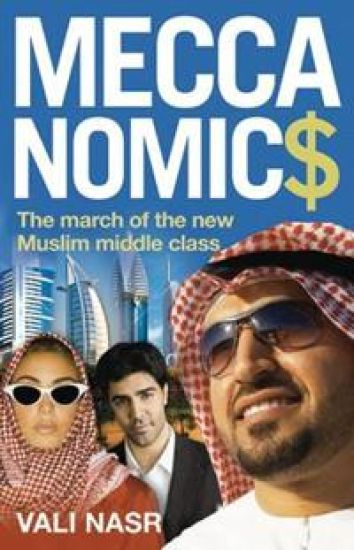
Meccanomics

Meccanomics

Vali Nasr

Oneworld Publications
2010
sidottu
Renowned Middle-East expert Vali Nasr combines historical narrative with contemporary on-the-ground research to introduce a Muslim World we’ve never seen. Meccanomics takes us behind the news, so dominated by the struggle against extremists and the Taliban, to reveal a new society, one that is being reshaped by an upwardly mobile middle class of entrepreneurs, investors, professionals, and insatiable consumers. His insights into the true situations in Iran, Pakistan, Afghanistan, and the crucial bright spots of Dubai and Turkey provide a whole new way of thinking about the troubles and prospects in the region. Nasr’s groundbreaking analysis offers a powerful reassessment of a region where financial might – not fundamentalism – does the talking.
Democracy in Iran

Democracy in Iran

Ali Gheissari; Vali Nasr

Oxford University Press Inc
2009
nidottu
Today Iran is once again in the headlines. Reputed to be developing nuclear weapons, the future of Iraq's next-door neighbor is a matter of grave concern both for the stability of the region and for the safety of the global community. President George W. Bush labeled it part of the "Axis of Evil," and rails against the country's authoritarian leadership. Yet as Bush trumpets the spread of democracy throughout the Middle East, few note that Iran has one of the longest-running experiences with democracy in the region. In this book, Ali Gheissari and Vali Nasr look at the political history of Iran in the modern era, and offer an in-depth analysis of the prospects for democracy to flourish there. After having produced the only successful Islamist challenge to the state, a revolution, and an Islamic Republic, Iran is now poised to produce a genuine and indigenous democratic movement in the Muslim world. Democracy in Iran is neither a sudden development nor a western import, Gheissari and Nasr argue. The concept of democracy in Iran today may appear to be a reaction to authoritarianism, but it is an old idea with a complex history, one that is tightly interwoven with the main forces that have shaped Iranian society and politics, institutions, identities, and interests. Indeed, the demand for democracy first surfaced in Iran a century ago at the end of the Qajar period, and helped produce Iran's surprisingly liberal first constitution in 1906. Gheissari and Nasr seek to understand why democracy failed to grow roots and lost ground to an autocratic Iranian state. Why was democracy absent from the ideological debates of the 1960s and 1970s? Most important, why has it now become a powerful social, political, and intellectual force? How have modernization, social change, economic growth, and the experience of the revolution converged to make this possible?
Democracy in Iran

Democracy in Iran

Ali Gheissari; Vali Nasr

Oxford University Press Inc
2006
sidottu
Today Iran is once again in the headlines. Part of President George W. Bush's "Axis of Evil" and next-door neighbor to tumultuous Iraq, Iran's future is a matter of grave concern both for the stability of the region and for the safety of the global community. In this book, Ali Gheissari and Vali Nasr look at the political history of Iran in the modern era, and offer an optimistic assessment of the prospects for democracy to flourish there. After having produced the only successful Islamist challenge to the state, a revolution and an Islamic Republic, Iran is now poised to produce the first genuine indigenous democracy in the Muslim world. Democracy in Iran is neither a sudden development nor a western import, Gheissari and Nasr argue. The concept of democracy in Iran today may appear to be a reaction to totalitarianism, but it is an old idea with a complex history, one that is tightly interwoven with the main forces that have shaped Iranian society and politics, institutions, identities, and interests. Indeed, the demand for democracy first surfaced in Iran a century ago at the end of the Qajar period, and helped produce Iran's surprisingly liberal first constitution in 1906. Gheissari and Nasr seek to understand why democracy failed to grow roots and lost ground to an autocratic Iranian state. Why was democracy absent from the ideological debates of the 1960s and 1970s? Most important, why has it now become a powerful social, political, and intellectual force? How have modernization, social change, economic growth, and the experience of the revolution converged to make this possible? Gheissari and Nasr trace the fortunes of the democratic ideal from the inchoate demands for rule of law and constitutionalism of a century ago to today's calls for individual rights and civil liberties. In the process they provide not just a fresh look at Iran's politics but a new understanding of the way in which democracy as an idea can develop in a Muslim country.